A first trip to Lithuania should cover Vilnius, Trakai Island Castle, Kaunas, the Curonian Spit and the Hill of Crosses. What shapes the trip is the base: Trakai and Kaunas work from Vilnius, while the coast and the Hill of Crosses need their own stop. Lake-and-forest travelers should swap the coast for Aukštaitija or Dzūkija national parks. Most visitors see Vilnius and leave, and miss the experiences that define the country: a Gothic castle on a lake island, drifting dunes on a narrow spit between the Baltic and a lagoon, a hill covered in crosses in the north, and national parks of lakes and pine forest.
This page picks the experiences worth building a trip around and groups them by base. Some are easy add-ons from Vilnius. Others need their own night, or several, and knowing which is which decides whether a short trip feels full or rushed. Each pick gets a plain verdict: what it is, what sets it apart from the rest of the list, and the traveler it suits. Town-level sight lists live in their own guides; this one decides where the days go.
Vilnius Is the Base, Not the Whole Trip: Trakai and Kernavė Sit Within Reach
Vilnius is the natural base, and Trakai and Kernavė are the easiest add-ons from it. The capital earns two or three days for its baroque Old Town. The stronger reason to stay is proximity: two of the country’s best picks (a lake castle and UNESCO hillforts) sit close enough for a half-day out.
Vilnius: the Capital in One Block
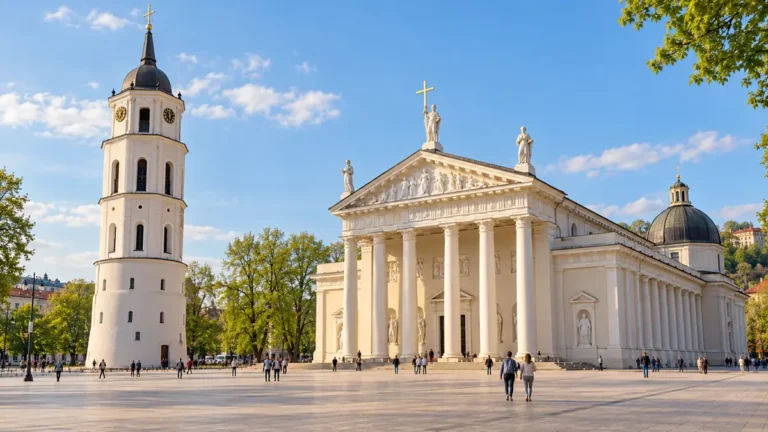
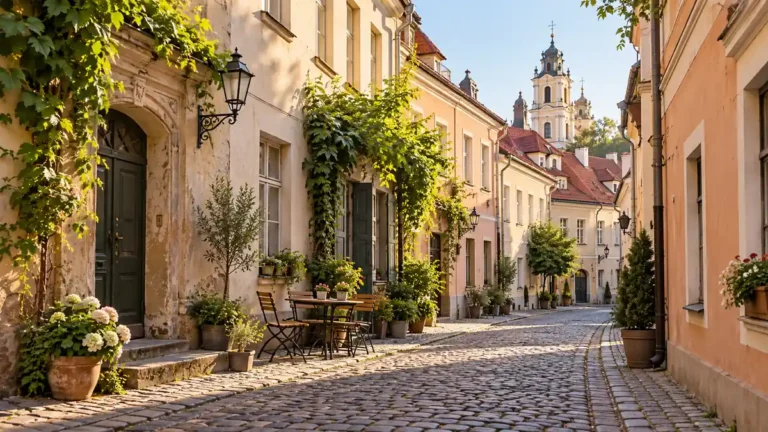
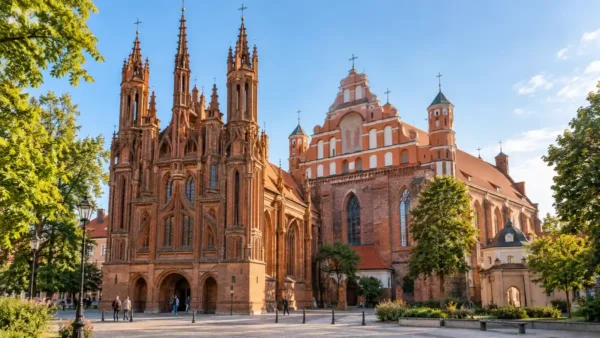
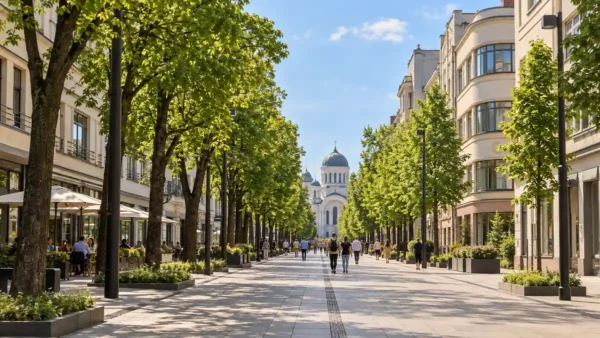
Vilnius anchors every first trip, because nowhere else in Lithuania packs so much into a walkable centre. The headline sights sit close together: the baroque Old Town, Gediminas Tower on its hill above the rooftops, the self-styled republic of Užupis and the Palace of the Grand Dukes. Its historic centre is on the UNESCO World Heritage list. Start here for the city layer of the trip (churches, cafés and courtyards) before heading out to lakes and coast.
Density is its edge over the other picks. The rest of this list asks for a train, a car or a night away. Vilnius asks only for walking shoes. The full sights list is in the guide to things to do in Vilnius, and the Vilnius guide covers planning a Vilnius base.
Trakai Island Castle
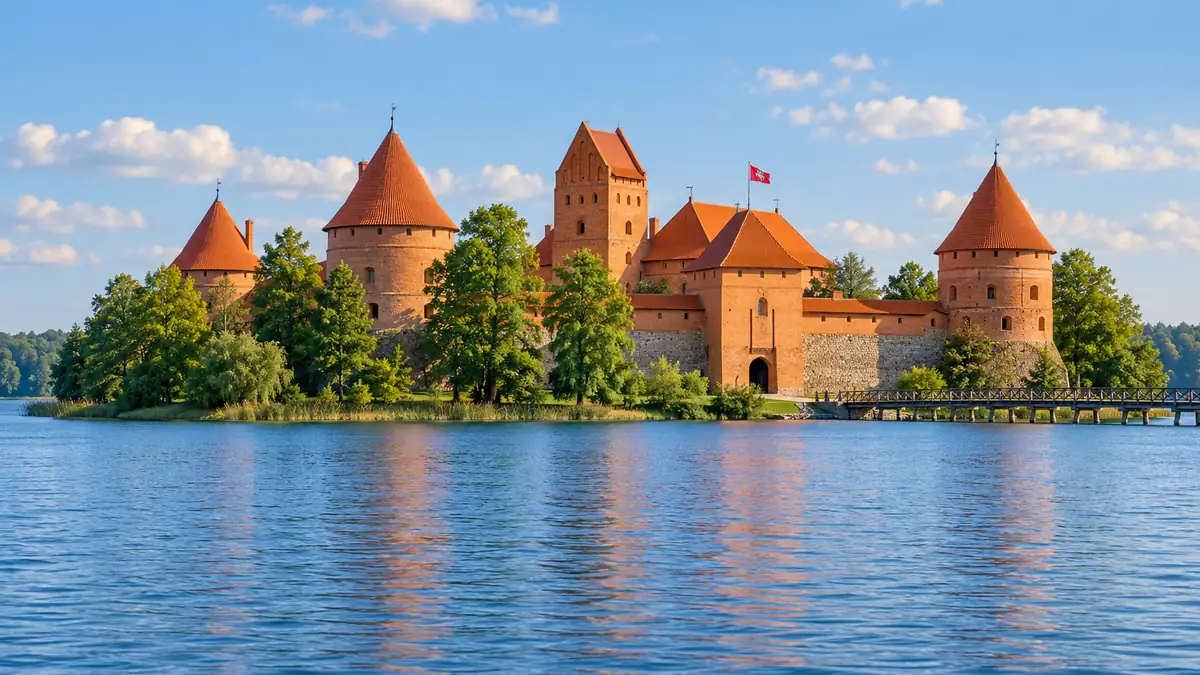
Trakai Island Castle is the easiest win outside the capital: a red-brick Gothic castle built in the 14th and 15th centuries on an island in Lake Galvė. The train from Vilnius takes about half an hour, so it fits a morning or an afternoon. Given one free half-day from Vilnius, spend it here for the country’s signature image.
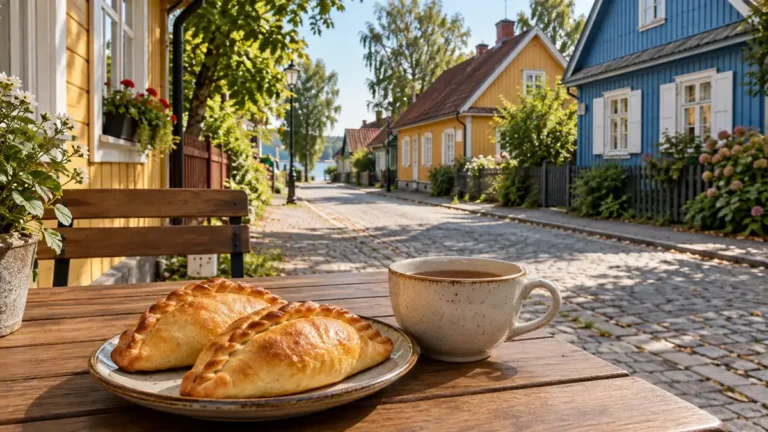
The water is the draw. The castle is reached by footbridge, and the lakes and wooden houses of the town frame it. Trakai is also the place to try kibinai, the crescent-shaped pastries of the local Karaim community. The best view of the castle is from a boat on the lake or the far shore, and that view beats the one from inside the courtyard.
Kernavė Hillforts
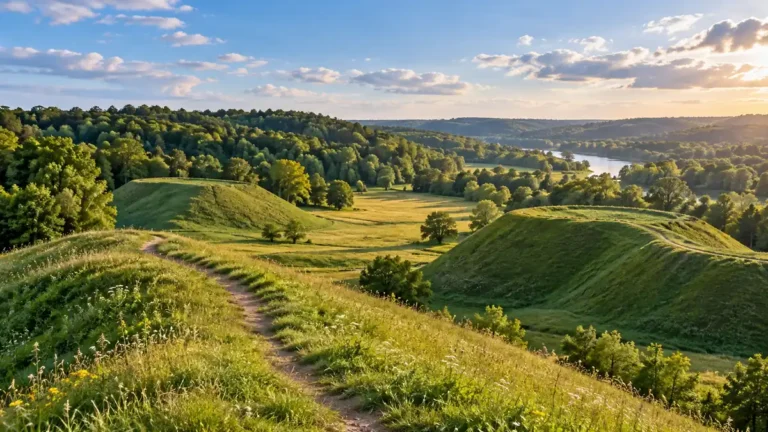
Kernavė is a UNESCO World Heritage site of grassy hillforts above the Neris valley, the seat of an early Lithuanian capital. There is no castle to walk through. The pull is the landscape itself — steep mounds, open meadows and a long view over the river. It rewards travelers who care more about where Lithuania’s story started than about restored interiors.
The contrast with Trakai is the point. Trakai offers a restored castle; Kernavė shows where the state began and asks the visitor to read the ground. It is quieter and more open. Go on a clear day: the whole point is the view from the mounds, and in low cloud the site loses most of its drama.
Tours and activities
Book skip-the-line tickets, day trips and local tours with free cancellation on most activities.
You can also browse everything on getyourguide.com.
Tripstou may earn a commission if you book through this link, at no extra cost to you.
Kaunas Is Worth a Full Day, and the Centre Adds an Open-Air Museum
Kaunas is worth a full day for its modernist architecture and compact Old Town. It served as Lithuania’s interwar capital and sits about an hour from Vilnius by train. It also works as a second base, with the Rumšiškės open-air museum close by and the Hill of Crosses easier to reach from here.
Kaunas
Kaunas is Lithuania’s second city and the pick for architecture. During the interwar decades, when it served as the capital, it built a modernist centre that still shapes its main streets. The Old Town and the brick castle at the river confluence sit at one end, and Pažaislis, a baroque monastery on the edge of town, makes a strong extra stop. It suits anyone for whom twentieth-century architecture is as interesting as medieval streets.
Next to Vilnius, Kaunas belongs to another era. Vilnius is baroque churches and crooked lanes; Kaunas is the clean lines of a young state building its capital. A night here pays twice: it turns a one-hour train ride into a relaxed day and puts the Hill of Crosses and Rumšiškės within easier reach. The guide to things to do in Kaunas covers the sights one by one.
Rumšiškės Open-Air Museum
The Rumšiškės open-air museum gathers farmsteads, windmills, churches and village houses from Lithuania’s regions into one large site near Kaunas. Walking it is a tour of rural Lithuania in a few hours, with the building styles of each region side by side.
Its value is the countryside the rest of this list only passes through. The coast, the parks and the cities show landscapes. Rumšiškės shows how people lived in them. The site is spread out, so it rewards a slow half-day over a quick stop, and it fits neatly into a Kaunas stay. Families travelling with children, and anyone after rural Lithuania without driving between villages, get the most from it.
The Coast Needs Its Own Base: Curonian Spit and Klaipėda
The coast is the one region that does not work as a day trip from Vilnius. It sits on the far western edge of the country and deserves a few nights. The Curonian Spit, with its drifting dunes and pine forest, is the reason to go; Klaipėda is the port city that serves as its gateway.
Curonian Spit
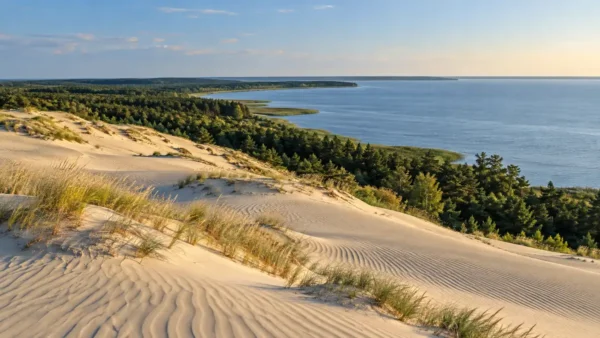
The Curonian Spit is a thin strip of sand and forest between the Baltic Sea and a lagoon, listed by UNESCO and home to Europe’s tallest drifting dunes. Nida is the main village, and the Parnidis dune above it is the classic viewpoint over sand, water and pine. Anyone happy to trade a city day for dunes, pine forest and a bike should make room for it.
Here the landscape moves. The dunes shift, the villages are low wooden fishing houses, and the best way to see it is by bike along the path that runs down the spit. Base in Nida if the spit is the point: the dunes sit at the far end, and evening on Parnidis is the moment day visitors miss. Summer is the coast season, and the guide to the best time to visit Lithuania covers the months. Access and where to stay are in the Curonian Spit guide.
Klaipėda
Klaipėda is a port city on the coast and the gateway to the spit, with a compact old town near the river. It suits travelers who want a city base first and the spit as an outing from it.
Against Nida, it trades scenery for practicality. It has more places to eat and sleep than the spit villages, and its old town and harbour fill an easy evening after a day on the dunes. It is a base, not a destination. That is fine on a coast week, where comfort between spit days matters.
Which is Lithuania’s beach town, Palanga or Klaipėda?
Palanga is a beach resort town, while Klaipėda is a port city and gateway to the Curonian Spit. Choose Palanga for a classic seaside stay with a pier and an amber museum. Choose Klaipėda for a city base, and Nida on the spit when the dunes and pine forest matter more than resort life.
Hill of Crosses Is the North’s One Unmissable Stop
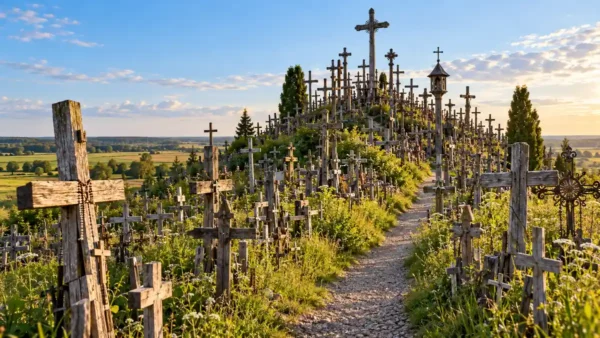
The Hill of Crosses is a low mound near Šiauliai covered in crosses left by pilgrims and visitors. It earns a place on a first trip because nothing else in Lithuania looks like it. It is also a quiet record of persistence: crosses kept returning after repeated Soviet-era attempts to clear the hill.
It is a place of devotion, not a monument. People still bring crosses, rosaries and small carvings, and the hill keeps growing. The visit itself is short. The detour is long.
That detour is the catch. The hill is a long day trip from Vilnius, easier paired with a night in Kaunas or an overnight in the north. An hour on the hill can cost most of a day from the capital, so it belongs on a route heading north or west, never on a return trip squeezed between Vilnius days. When your route already runs through the north, it is the country’s most moving stop. The Hill of Crosses guide covers how to visit.
Lakes, Forests and a Spa Town: Aukštaitija, Dzūkija and Druskininkai
Lithuania’s nature picks are Aukštaitija for lakes, Dzūkija for pine forest and Druskininkai for spa-town rest. Aukštaitija was the country’s first national park; Dzūkija is its largest. Together they suit travelers who prefer paddling, walking and slow days over beaches, and they replace the coast on a short trip.
- Aukštaitija: a lake district in the northeast, for paddling and lakeside stays.
- Dzūkija: pine forest and inland dunes in the south, for walking and foraging.
- Druskininkai: a resort town with spas, for nature with hotel comfort.
Aukštaitija National Park
Aukštaitija National Park, in the northeast, was Lithuania’s first national park: a mosaic of lakes, forest and small wooden villages. Paddling from lake to lake and walking between hilltop viewpoints are the core of a visit, so it is the pick for anyone who would take a canoe on a quiet lake over any museum.
Water is what separates it from Dzūkija. Aukštaitija is a lake district, and the forest frames it. It needs its own base, ideally a lakeside guesthouse. A car changes this trip more than any other on the list, because the lakes and villages are spread across the park and linking them without one eats the day.
Dzūkija National Park
Dzūkija National Park, in the south, is Lithuania’s largest national park: pine forest on sandy ground, inland dunes and villages known for mushroom and berry gathering. Walking forest trails and stopping in small forest villages set the rhythm, which makes it the choice for long forest walks and village life over lakes and boats.
Here the forest leads, and lakes play a smaller role. The pine woods and the foraging culture are the draw, and the park feels older and quieter than the lake district. It pairs naturally with Druskininkai, which gives it a comfortable base close by.
Druskininkai
Druskininkai is Lithuania’s main spa town, set on the Nemunas river in the far south among pine forest. Mineral-water spas, riverside parks and a slow resort rhythm are the draw, with Grūtas Park close by.
Comfort is the difference. It is the one nature pick with hotels, restaurants and spas in a proper town. That makes it the easiest base for travelers who want forest without roughing it, and the natural base for Dzūkija. Few picks on this list combine rest and sightseeing so easily. Choose it when rest and a good spa matter more on this trip than ticking off sights.
Unusual Picks That Justify a Detour: Grūtas Park, Hill of Witches and the Treetop Path
Three detours change how a Lithuania trip feels: Grūtas Park, the Hill of Witches and the Anykščiai treetop path. One gathers Soviet statues among pine trees, one lines a hillside trail with carved wooden folklore figures, and one lifts visitors above the canopy. Each pairs with a pick already on this list.
Grūtas Park
Grūtas Park is a forest park near Druskininkai where Soviet-era statues taken down after independence were gathered. The figures of the communist period stand along wooded paths, turning a walk in the pines into an open-air display.
The tone is the point. It is part history lesson, part dark satire, and it presents the Soviet period more bluntly than a conventional museum. This is the Soviet chapter of Lithuania’s story shown without polish. It fits into a Druskininkai stay without a separate trip. Allow unhurried time. A quick walk-through sees the statues and misses the story they tell together.
Hill of Witches
The Hill of Witches is a forest trail at Juodkrantė, on the Curonian Spit, lined with carved wooden sculptures of witches, devils and characters from Lithuanian folklore. It works as an outdoor gallery, a little eerie under the pines. Folklore lovers get a spit stop that is not about sand.
Unlike the rest of the spit, it is made by hand. The dunes are the headline, and this is the folk-art footnote that is easy to skip on the road to Nida. Stop anyway. It fits into a spit day without changing the plan, and it shows a side of the coast that sand and sea do not.
Anykščiai Treetop Path
The Anykščiai treetop path is a walkway raised above the forest canopy near the town of Anykščiai, in the northeast, leading to an observation tower with views over the pines and the river valley.
What sets it apart is the angle. Every other nature pick here is seen from the ground or the water; this one turns a forest into a view. It sits in the same corner of the country as Aukštaitija, so it slots into a lakes trip in the northeast. The walk itself is easy, which makes it one of the few picks that suits every age and fitness level, and the one easy outing to add to a lakes-and-forest route.
How to Combine the Picks: Day Trips From Vilnius vs Your Own Base
Trakai, Kernavė and Kaunas work as day trips from a Vilnius base; the coast needs its own. The Hill of Crosses works best paired with a night in Kaunas or the north. On a first trip, cover Vilnius, Trakai, Kaunas and either the coast or the lakes, and save the unusual picks for later.
Three trip shapes cover most visits:
- City-break add-on: Vilnius, with Trakai, Kernavė and Kaunas as day trips. It fits a long weekend with no packing and unpacking, but misses the coast and the north entirely. Doing Trakai and Kaunas on the same day is possible but rushed; give each its own day.
- Coast week: Vilnius, then a night or two in Kaunas with the Hill of Crosses, then the Curonian Spit from Nida or Klaipėda. This is the summer shape, and more of the week goes to moving between bases.
- Lakes and nature: Vilnius, then Aukštaitija with the Anykščiai treetop path, or Druskininkai with Dzūkija and Grūtas Park. Slow travelers and drivers suit it best, and a car makes it far easier.
Pick the coast or the lakes on a trip shorter than a week, not both. The Curonian Spit and Aukštaitija sit at opposite ends of the country, and splitting the days leaves each one rushed.
The first-trip shortlist is Vilnius, Trakai, Kaunas, the Hill of Crosses and the Curonian Spit, with Aukštaitija as the lakes swap for the coast. Second-trip picks are Kernavė, Rumšiškės, Dzūkija, Druskininkai and the three unusual detours. The Lithuania travel guide covers transport, money and where to stay, and the guide to the best time to visit Lithuania explains when the coast and lake seasons matter.
| Pick | Region | Best for | From Vilnius |
|---|---|---|---|
| Trakai Island Castle | Lake country just west of Vilnius | The country’s signature castle image | Half-day trip by train |
| Kernavė | Neris valley north of Vilnius | Early history and open landscape | Half-day trip from the capital |
| Kaunas | Central Lithuania, the second city | Interwar modernism and a student city | Full day trip, or a second base |
| Hill of Crosses | The north, near Šiauliai | A moving, one-of-a-kind stop | Long day trip; easier from Kaunas |
| Curonian Spit | The western coast, between sea and lagoon | Dunes, pine forest and cycling | Needs its own base for several nights |
| Aukštaitija | Lake district in the northeast | Paddling, lakeside stays and slow days | Needs its own lakeside base, ideally a car |
How many days do you need in Lithuania?
Plan about a week for a first trip that reaches the coast. Three days covers Vilnius with Trakai and Kaunas as day trips, a long-weekend shape. A week adds the Hill of Crosses and a few nights on the Curonian Spit. Ten days or more leaves room for the lakes as well as the coast.
About These Lithuania Picks
This page is a curated selection of Lithuanian experiences, from Trakai Island Castle to the Curonian Spit and the national parks, picked for what each adds to a trip and whether it needs its own base. It is not a country guide to Lithuania, a day-by-day itinerary or a full list of Vilnius sights.
For the Tripstou editorial team, Alex Perrut, working in tourism since 2015, signed off on this Lithuania shortlist. Produced with AI assistance, it follows the checks set out in our editorial process.
Official sources consulted: Lithuania Travel, Lithuanian Ministry of the Economy and Innovation.
Did this guide save you time or money? Tripstou is independent and reader-funded — if you'd like to give something back, you can support the site with a crypto contribution of any size.