Trakai’s island castle is the best day trip from Vilnius: it sits about half an hour away by train or bus and works as a half day or a full one. After it, the picks rank by travel time. Kernavė and Europos Parkas are close-in half days, Kaunas is about an hour away and is the alternative for a second city instead of a castle, and the Hill of Crosses takes a long full day. Most work car-free; Kernavė, Aukštaitija and Druskininkai suit a car or a tour.
A spare day or two in Vilnius raises one practical question: which trip out of the city is worth it, and can you do it without a car? The candidates are few, and they differ in two ways that matter. The first is how long the journey takes. The second is whether a train or a bus gets you there, or whether you need a car or a tour.
The rest of this page ranks what comes next: the short half-day trips, the one-hour city day in Kaunas, and the long day to the Hill of Crosses. It also names the trips that need a car or a tour, and the places that look like day trips on a map but belong on an overnight plan.
Where These Picks Come From
A curated pick of day trips out of Vilnius, ranked by travel time and by whether a train or a bus gets you there; it is not a Vilnius city guide, an itinerary or a list of tour products.
The bus route to Europos Parkas and the opening pattern of Trakai’s castle museum were checked against the sources below by Alex Perrut, working in tourism since 2015, for the Tripstou editorial team. Produced with AI assistance, these picks went through that check as one step of our editorial process.
Official sources consulted: Lithuania Travel, Lithuanian Ministry of Economy and Innovation, Europos Parkas, Trakai History Museum.
On This Page
Trakai is the day trip to do first
Trakai is the day trip to do first from Vilnius. Its island castle stands on a lake about half an hour from the city, the trip works without a car, and the peninsula, Užutrakis manor and Karaite kibinai fill a full day if you want one. First-time visitors with one spare day should start here.
No other pick within commuting range combines a castle and a lake. Kernavė is a landscape, Europos Parkas is an art park, and Kaunas is a city. Trakai is the only trip that delivers the red-brick castle on the water most travelers picture when they think of Lithuania. Travelers who find restored castles uninspiring may prefer Kernavė’s open landscape instead.
It also flexes. A short winter visit covers the castle and a lakeside walk. A summer day adds boats, the manor across the water and a long lunch.
Trakai Island Castle and the lakeside
Trakai Island Castle is a restored Gothic castle on an island in the lake, reached by footbridges from the town. Inside, the castle museum tells the story of the fortress and the grand dukes who used it. The museum opens daily in summer, closes on Mondays the rest of the year, and runs a shorter week in the deepest winter months.
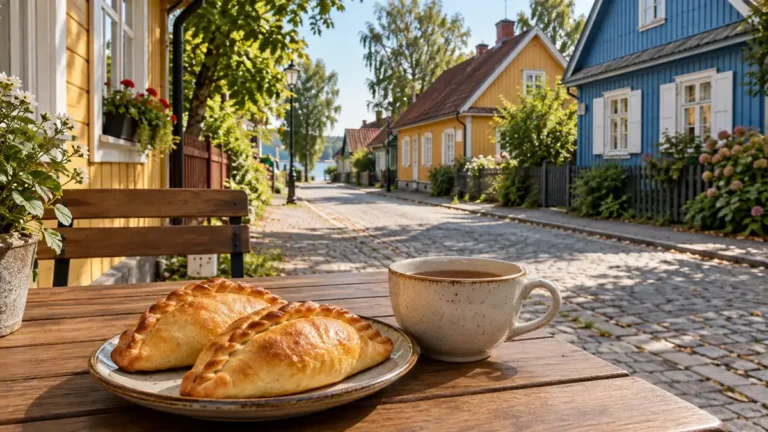
The lakeside is half the visit. The older peninsula castle ruins sit on the mainland side of town. Across the lake, Užutrakis manor adds a park and a quieter walk. The Karaite community gives Trakai its signature food: kibinai, baked pastries filled with meat or vegetables.
In season, boat and kayak hire and hot-air balloon flights over the lakes extend the day. Both are summer activities. Without them, the castle and the lakeside still take half a day at minimum.
How to get to Trakai without a car
Trakai is reachable by train or bus from Vilnius, and the bus is usually the more practical choice. The train is a short ride, but departures are sparse, so check the LTG Link timetable before you commit. Buses from Vilnius bus station run more often.
The arrival point matters more than the ride. Trakai train station is a walk of half an hour or more from the castle. The bus station is closer to the town centre and the lakeside.
The train saves nothing over the bus once you add the walk from Trakai station to the castle, so take it only when its timetable suits your day.
For the return, note the last convenient departure before you set off. A sparse timetable punishes a late lunch.
Half day or full day in Trakai?
A half day in Trakai covers the island castle and a lakeside loop; a full day adds the peninsula, Užutrakis and a lake outing. Summer favours the full day, when boats run and the lakeside is at its best. Winter favours the half day, when the castle keeps a shorter week and daylight is short.
- Half day: castle museum, footbridges and a lakeside walk; suits a winter visit or a pairing with Europos Parkas.
- Full day: castle, peninsula ruins, Užutrakis manor, kibinai lunch and a boat or kayak; suits a summer visit with no second trip planned.
Pairing Trakai with Kernavė on a tour pushes the day to full length without the lake outing. That is the tradeoff: breadth or lakeside time.
Train and bus tickets
Compare routes, schedules and prices across rail and bus operators in one search, with mobile tickets on your phone.
New to Omio? Code NEW10 takes 10% off your first booking — or APPNEW10 if you book inside the Omio app. Both apply to bookings up to €80.
Search routes and compare prices on Omio →
Tripstou may earn a commission if you book through this link, at no extra cost to you.
Travel time from Vilnius decides the shortlist
Travel time decides the order of day trips from Vilnius, ahead of fame or photo appeal. The picks fall into three tiers: close-in half days (Trakai, Kernavė, Europos Parkas), about an hour (Kaunas), and a long day (Hill of Crosses). The shorter the trip, the more of your stay you keep for Vilnius itself.
Each tier costs a different share of a spare day. A close-in pick takes a morning or an afternoon. Kaunas takes a full day. The Hill of Crosses takes a full day and most of your energy, because the journey is the bulk of it.
Public transport is the default for this shortlist. Trakai, Europos Parkas, Kaunas and the Hill of Crosses all work by train or bus, so a car is optional for most travelers. For where to stay and how to arrive before you plan any of this, the Vilnius guide covers the base itself.
Kernavė breaks the car-free pattern: it is close on the map, yet it is the one short trip best done by car or on a combined tour with Trakai.
| Pick | Travel time from Vilnius | How to get there | Half or full day |
|---|---|---|---|
| Trakai | About half an hour by train or bus | Train or bus from central Vilnius | Half day, or a full day in summer |
| Kernavė | About 35 km away, a short drive | Tour or car, often combined with Trakai | Half day, easily paired with Trakai |
| Europos Parkas | Roughly 35 minutes on city bus 66 | City bus 66 from the Žalgirio stop | Half day on the sculpture trails |
| Kaunas | Just under an hour by express train | Express or regular train from Vilnius | Full day for a second city |
| Hill of Crosses | Long day, much of it in transit | Train plus a local leg, or a tour | Full day with little left over |
Tours and activities
Book skip-the-line tickets, day trips and local tours with free cancellation on most activities.
You can also browse everything on getyourguide.com.
Tripstou may earn a commission if you book through this link, at no extra cost to you.
Kernavė and Europos Parkas: the other close-in half-day picks
Kernavė and Europos Parkas are the other close-in picks from Vilnius, and each fills a half day. Kernavė is a UNESCO landscape of hill forts on the Neris; Europos Parkas is an open-air sculpture park on a city bus route. Choose by interest: early history or contemporary art.
Kernavė: the UNESCO hill forts on the Neris
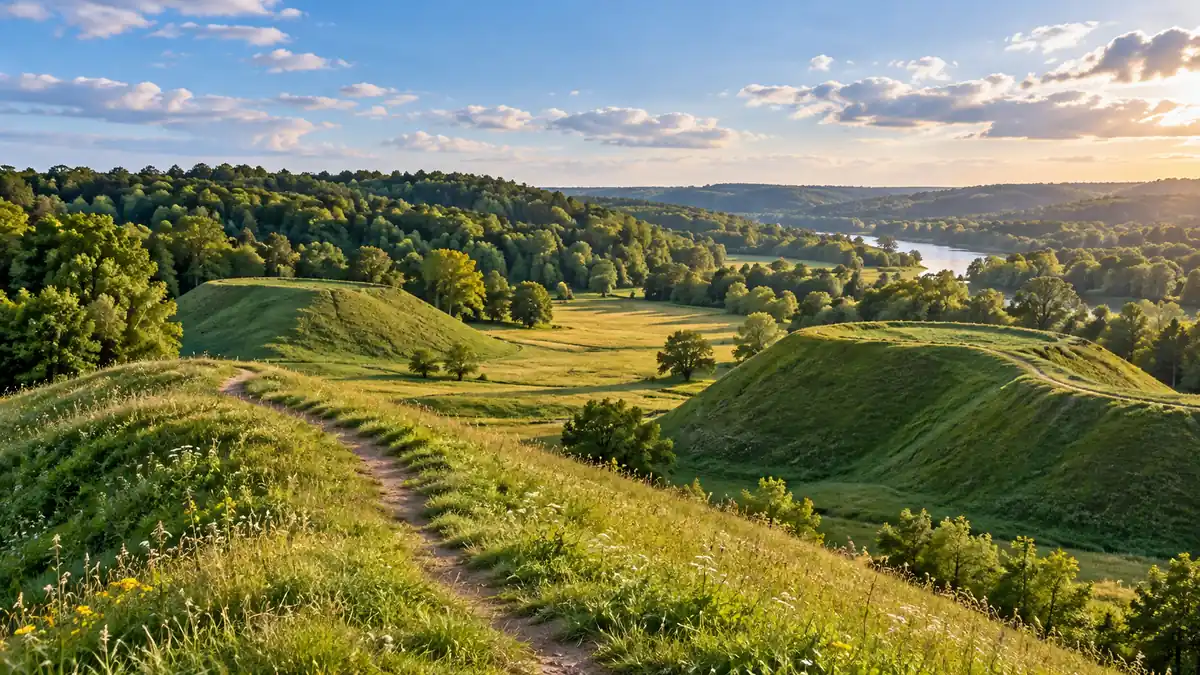
Kernavė is the pick for early Lithuanian history seen as landscape. It sits about 35 km from Vilnius on the Neris, where grassy hill-fort mounds mark the site of a medieval capital, and it is a UNESCO World Heritage Site.
What sets it apart is that there is no building to tour. The draw is the terrain: the mounds, the river valley below them and the view from the top. Admission fees apply to the visit.
Kernavė is easiest by car or on a combined Trakai tour. That shapes how it fits a stay. On a tour, it becomes the second half of a Trakai day. With a car, it works as a quiet half day on its own.
Europos Parkas: the sculpture park you reach by city bus
Europos Parkas is an open-air museum of contemporary sculpture set in forest north of Vilnius. Large works stand along trails through the trees and across open ground, and the walk between them is part of the experience.
It is the only pick on this page reached by a city bus. Bus 66 leaves from the Žalgirio stop on Kalvarijų Street and takes roughly 35 minutes. In the warmer months it serves the park gates. In winter, get off at Skirgiškės and walk back to the entrance.
The visit is outdoors from start to finish. Dry weather and good shoes matter more here than at any other pick.
Kaunas is the one-hour city day
Kaunas is the pick when you want a second city instead of a castle or a landscape. The non-stop express train takes just under an hour and regular trains about an hour, a little more with stops. Give it a full day, since the city rewards slow walking between its interwar buildings.
Kaunas is Lithuania’s second city, and its character is different from the capital’s. Its interwar modernist architecture sets it apart from Vilnius’s Baroque Old Town. It feels like a working city.
That makes it the day trip that holds up best in rain, because most of what you go for is streets, interiors and museums. The lake trips lose their point under a grey sky; Kaunas barely changes.
For the same reason, Kaunas is the best winter day trip from Vilnius: cold, grey weather takes little from it. Choose it over Trakai when you prefer a city to the countryside, or when the forecast is wet.
A half day is possible on the express, but it leaves the trip mostly train time. For what to see once you arrive, the guide to things to do in Kaunas covers the city in full.
Hill of Crosses is the long day, and tours make it simpler
Hill of Crosses is worth seeing, but it is the one trip here that uses a whole day from Vilnius. Going independently means a long train ride plus a local leg to the site; a tour removes the changeovers. Choose it only with a full spare day and patience for transit.
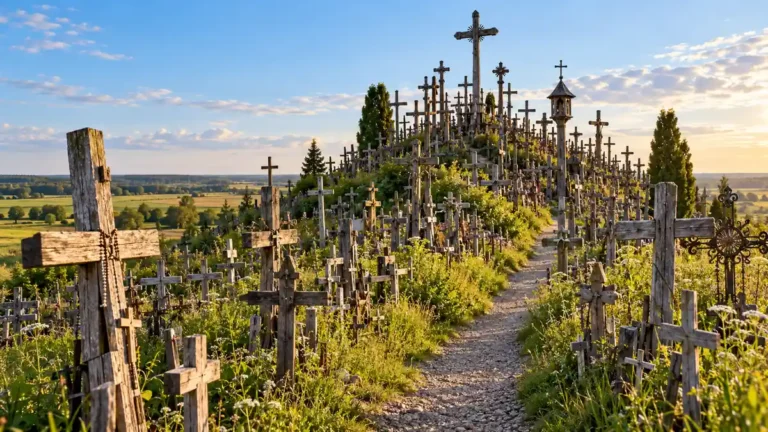
The Hill of Crosses is a pilgrimage site in northern Lithuania. It is a small hill covered in crosses left by pilgrims and visitors over generations. It is a landscape of devotion, not a town, and the visit itself is short.
The site needs little explaining, so a tour earns its cost here through the changeovers it removes. Two ways to do it:
- Tour: one clean day with no connections to manage, on the tour’s fixed schedule.
- Independent: for travelers comfortable with a long train ride and a local connection, at the cost of a day spent mostly in transit.
Which day trips from Vilnius need a car or a tour?
Aukštaitija National Park, Druskininkai with Grūtas Park and Rumšiškės open-air museum need a car or a tour. Trakai, Europos Parkas, Kaunas and Hill of Crosses all work by public transport; Kernavė sits in between, simplest by car or on a combined Trakai tour. Treat the car-or-tour set as a second tier for longer stays.
Aukštaitija National Park is lake and forest country north-east of Vilnius, with small wooden villages between the lakes. Its sights are spread out. A car or a tour is what turns it into a full day; without one, you see a single corner.
Druskininkai with Grūtas Park pairs a spa town in southern Lithuania with a park of Soviet-era statues. Grūtas Park lies outside the town, so seeing both in one day works best by car or on a tour. Plan a full day. It is the longest drive in this tier.
Rumšiškės open-air museum gathers rural farmsteads and buildings from across Lithuania’s regions near Kaunas. Village life and folk architecture are the draw. With a car, it adds a half day to a Kaunas trip.
Is a guided tour worth it for day trips from Vilnius?
A guided tour is worth it for Kernavė and the Hill of Crosses, and optional for the rest. Kernavė is easiest reached by car or tour, and the Hill of Crosses involves changeovers a tour removes. Trakai, Europos Parkas and Kaunas are simple by train or bus, so a tour there buys commentary, not convenience.
Riga and the Curonian Spit are overnight trips, not day trips
Riga and the Curonian Spit show up in day-trip searches, yet neither works as a day trip from Vilnius. Riga sits around four hours each way, and the Curonian Spit lies on the far western coast. Plan Riga as an onward stop and the Spit as an overnight from the coast.
Riga makes most sense as the next stop when you leave Lithuania, with at least one night there. A round trip in one day leaves too little time for the city.
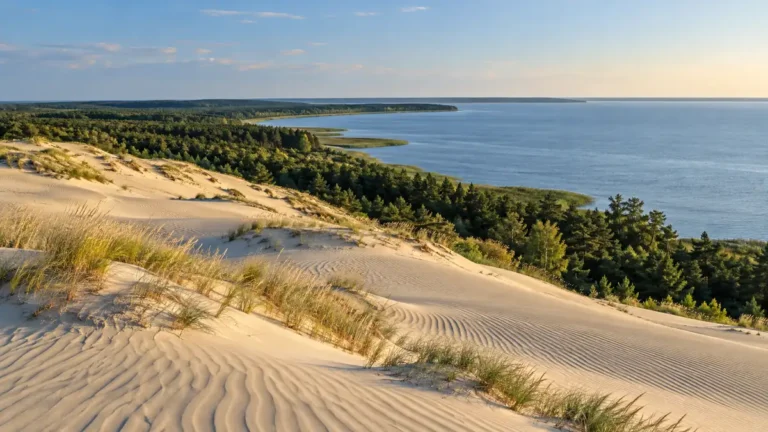
The Curonian Spit is a coastal overnight. Its dunes and villages reward a slow stay near the sea. A same-day return from Vilnius wastes the trip.
For the best of Lithuania beyond day-trip range, the guide to things to do in Lithuania covers the wider country.
How many day trips from Vilnius fit your stay?
The number of spare days sets how far down the list to go: one buys Trakai, two buy Trakai and Kaunas on separate days, and three or more leave room for the rest. Same-day pairings stay with the short picks, so Trakai goes with Kernavė or Europos Parkas, while Trakai with Kaunas makes a rushed day.
- One spare day: Trakai, at a half-day or full-day pace depending on season.
- Two spare days: Trakai and Kaunas, on separate days, one lake and one city.
- Three or more: add Kernavė or Europos Parkas as a half day, or the Hill of Crosses as a full one.
Pairing two picks in one day works only when both are short:
- Trakai with Kernavė: the pairing tours run most often, and the easiest way to see Kernavė at all.
- Trakai with Europos Parkas: two half days on public transport, with a pass back through Vilnius in between.
- Trakai with Kaunas: possible, but rushed; both deserve more time than the combination leaves.
Every day trip is a day away from the city. Before you give up a second or third day, check the things to do in Vilnius that the day trip would replace.
Did this guide save you time or money? Tripstou is independent and reader-funded — if you'd like to give something back, you can support the site with a crypto contribution of any size.