The Alhambra is the best thing to do in Granada, and it must be booked well ahead. Most of the city’s remaining payoff is street-level and free — wandering the Albaicín, free tapas with every drink, and viewpoints facing the Alhambra. For one paid evening, choose a Sacromonte cave zambra over a generic flamenco show.
Granada rewards a short list done well. One world-class monument towers over the city — literally and in every ranking — but the real depth is at street level: a Moorish quarter built for getting lost, a tapas custom that turns drinks into dinner, and flamenco performed in caves minutes from the centre. Most visitors overweight the monument and underweight everything around it. This guide ranks Granada’s experiences by payoff: what is genuinely unmissable, what earns a place if you have spare hours, and what to swap for a better version nearby. It also settles the one decision that shapes the whole trip — booking the Alhambra ahead of time. Keep one lens as you read: Granada is two cities stacked in plain sight, the Moorish one and the Catholic one built over it, and the best experiences here let you feel the seam between them.
The Alhambra Is Worth It — but Only If You Book Ahead
Yes, the Alhambra is worth it — the catch is the booking, not the visit. It is Granada’s one unmissable experience, and the only one that punishes spontaneity. Walk-up entry is unrealistic; the decision that matters is made weeks before you arrive.
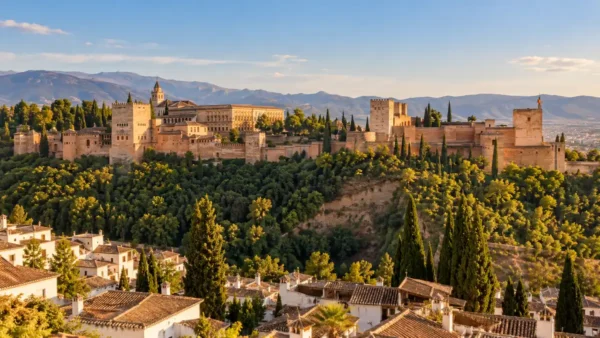
The Alhambra is a UNESCO World Heritage Site and the reason most trips to Granada exist — a fortress, palace complex, and garden sequence that no photo oversells. Three facts decide whether you actually get in:
- Official tickets are sold by the Patronato de la Alhambra y Generalife at tickets.alhambra-patronato.es — start there before any reseller.
- Nasrid Palaces entry is a fixed timed slot, strictly enforced. Miss the window and you miss the palaces.
- Tickets are released up to around three months ahead, and popular dates sell out well before travel.
Book the Nasrid Palaces slot before you settle anything else about the trip — that one timed hour is the fixed point every other plan in the city bends around. If you pre-book exactly one thing per trip, make it this one. For how the visit fits into the wider trip, lean on our Granada travel guide, and for the visit itself, on our guide to how to visit the Alhambra; this page stays with the experiences themselves.
Is Granada worth visiting if you can’t get Alhambra tickets?
Yes — Granada still rewards a visit even without Alhambra tickets. The free-tapas custom, the Albaicín, the Sacromonte zambra, and the miradores facing the fortress carry the trip on their own. You will see the Alhambra from the outside constantly; only the Nasrid Palaces interior needs the timed slot you missed.
Tours and activities
Book skip-the-line tickets, day trips and local tours with free cancellation on most activities.
You can also browse everything on getyourguide.com.
Tripstou may earn a commission if you book through this link, at no extra cost to you.
Besides the Alhambra: The Albaicín, Miradores, and Teterías
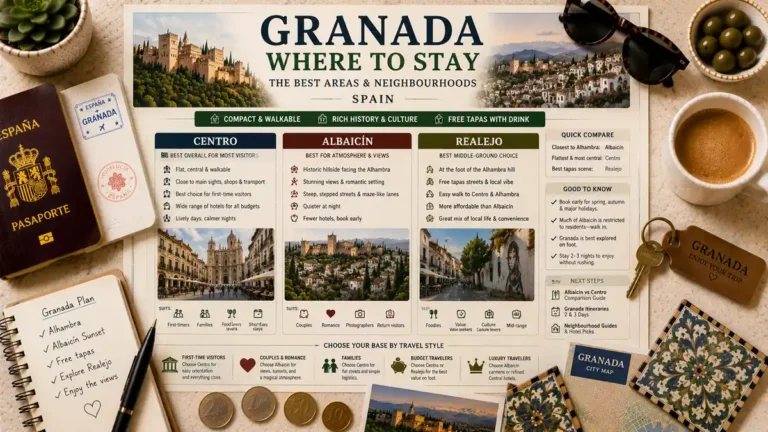
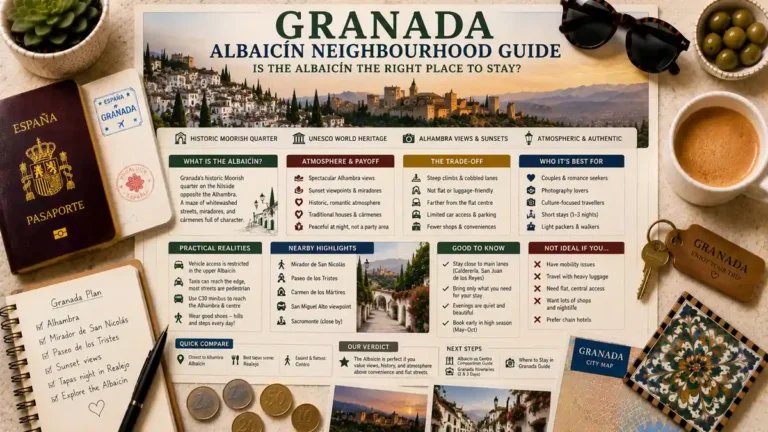
The best things to do besides the Alhambra cluster in and around the Albaicín. Granada’s second act is its Moorish street layer — steep whitewashed lanes, viewpoints facing the fortress, and tea houses that feel lifted from Fez. Entry costs nothing. The payoff depends on how willingly you get lost.
Wander the Albaicín’s Moorish Lanes
The Albaicín is best explored without a route. The old Moorish quarter is a maze of stepped lanes, whitewashed walls, and sudden plazas, and its signature pleasure is being briefly, safely lost. Watch for the carmen walls — high, blank facades hiding private houses and gardens — and for the plaza life that spills out wherever the lanes widen enough for a café. Every wrong turn eventually ends at a viewpoint or a square. Treat the quarter as an experience, plan nothing, and let it take as long as it takes. It is the pick for anyone happiest exploring with no plan, no list, and no map open.
Catch the Alhambra View from Mirador de San Nicolás
San Nicolás is the classic Alhambra viewpoint for a reason: the fortress sits dead ahead with the Sierra Nevada stacked behind it, and no other terrace frames the postcard as cleanly. The tradeoff is sunset. Golden hour draws guitar players, tour groups, and a shoulder-to-shoulder crowd, and holding a front-rail spot takes patience. The view is identical earlier in the day — only the crowd changes — so go early for the same postcard nearly to yourself, or accept the crush as part of the show. Quieter miradores dot the upper Albaicín for those who want the view without the audience. San Nicolás earns its place when the one photo that defines the trip matters more to you than the crowd around it.
Drink Mint Tea on Calle Calderería Nueva
Calderería Nueva is a steep lane of teterías — Moroccan-style tea houses — often called Granada’s little Morocco. Duck into one, order a pot of sweet mint tea, and take the low-cushion seat: it is the cheapest immersion the city offers and the best recovery stop between hill climbs. The experience is the tea and the room — dim, tiled, and unhurried. The souvenir stalls lining the same lane are the skippable half of it, and get their verdict in the final section. When you need a low-effort break that still feels unmistakably like Granada, this is it.
How Does Free Tapas Work in Granada?
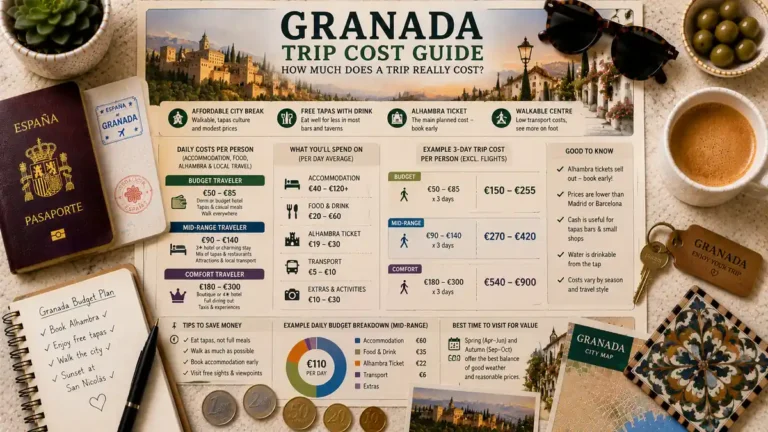
Order a drink in Granada and a free tapa arrives with it — that is the custom, citywide. You pay for the beer, wine, or soft drink; the plate is the bar’s gift. It is a living custom that makes Granada one of the cheapest places in Spain to eat well.
The plate arrives unasked, chosen by the kitchen, not by you. How the custom plays out over an evening:
- First round — a modest plate: olives, a slice of tortilla, a small stew.
- Later rounds at the same bar — plates tend to step up in size and ambition.
- The reliable signal — a bar crowded with locals ordering rounds; the custom runs strongest where the menus aren’t translated.
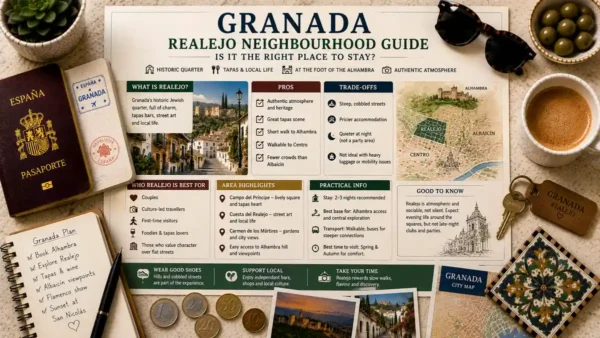
Staying put usually beats bar-hopping: because plates improve with each round at the same bar, every move resets you to the opener. For a crawl anyway, the Realejo quarter has the densest run of tapas bars in the city. Measured against the best things to do in Spain, Granada’s free tapas is the rare one that costs nothing beyond the drink you were buying anyway. Treat it as a custom, though — each bar sets its own habits, and no plate is owed to you. For eating well in Spain on the smallest possible budget, nothing else on this list comes close.
The Best Flamenco in Granada Is a Sacromonte Zambra
Skip the generic tablao — see a zambra in a Sacromonte cave instead. Zambra is the flamenco tradition born in Sacromonte’s cave houses, and the caves are still where it hits hardest. The whitewashed walls put you an arm’s length from the dancers, close enough to feel the footwork.
The difference is setting and lineage. A tablao is the staged dinner-show format sold in every Spanish city; it can be polished, but you could watch much the same performance in Madrid or Seville. The zambra exists only here. In a cave there is no elevated stage and no back row — the show happens in the narrow aisle between two rows of chairs, with the percussion carrying through the rock itself.
The cave is doing half the work: an ordinary night in a Sacromonte cave lands harder than a polished show watched from a theatre seat. If you’re paying for exactly one evening show in Granada and want the most atmosphere for it, book a zambra. Book ahead for evening shows, and judge venues by the room, the intimacy, and the tradition they perform, since programmes change often.
Are Granada Cathedral and the Royal Chapel Worth It?
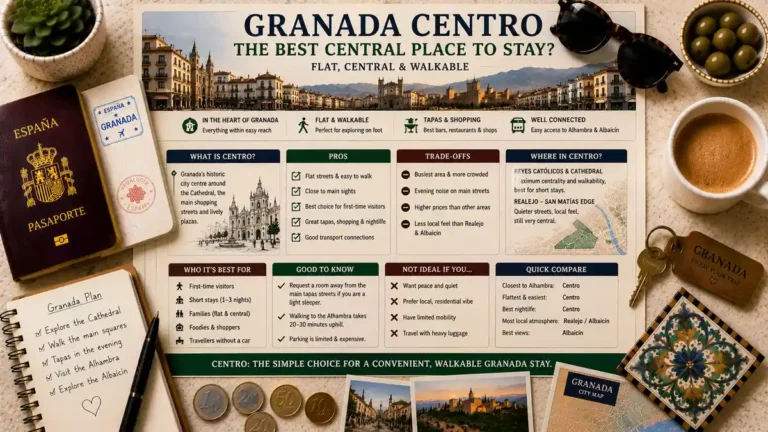
Yes for the Royal Chapel — the Catholic Monarchs’ tombs are the payoff; the Cathedral is the bonus. Together they complete the half of Granada’s story the Alhambra doesn’t tell: the city that replaced the emirate. If you only step inside one, make it the chapel.
The Royal Chapel, beside the Cathedral, holds the tombs of Ferdinand and Isabella — the Catholic Monarchs who took the city from its last emir and chose to be buried in it. Standing over that crypt shortly after walking the Nasrid Palaces is the sharpest way to feel Granada’s two identities collide. The Cathedral next door is grand and worth a walk-through once you’re there, but it is the supporting act. Plenty of Spanish cities have a great cathedral. Only Granada has this chapel. It is the stop for the history-first traveler set on seeing both halves of Granada’s identity.
Granada at Night: Views, Zambra, and the Tapas Crawl
Granada’s evenings are the free show — the lit Alhambra from the miradores and the tapas crawl. After dark the monument glows gold above the valley, the Albaicín cools down, and the bars fill with locals on their second round. The city’s best hours cost nothing at all.
Start at a mirador after dark: the illuminated Alhambra trades the sunset crush for a calmer terrace and a warmer scene, and it is a different image from the daytime postcard covered earlier. From there, drop into the tapas crawl — rounds run late by northern standards, and the bars are at their best once locals outnumber visitors. The zambra above is the night’s one paid anchor; everything else on a Granada evening is free. The Alhambra itself also opens after dark for separate night visits — a quieter, stranger way to see the palaces, worth checking when you book your main slot.
What to Skip in Granada — and What to Do Instead
Granada’s misses are mostly substitutes — a better version of each sits a short walk away. The city has few outright tourist traps, just default choices with a stronger local original close by. Trade each skip for its upgrade and nothing in Granada wastes your time.
- Skip the generic tablao — the staged format is interchangeable across Spain. Book a Sacromonte zambra instead; it is Granada’s own tradition, performed in the rooms it was born in.
- Skip the souvenir browsing on Calderería Nueva — the trinkets match any bazaar street anywhere. Sit down in a tetería instead; the lane is better drunk than shopped.
- Downgrade the Basílica de San Juan de Dios — its gilded interior is a jolt for travelers who already love baroque churches, and for them it earns a detour. For everyone else it is an if-you-have-time pick, not a must-do; another hour in the Albaicín pays more.
If the triage makes you wonder how much of a Spain trip Granada deserves at all, that call belongs with the best places to visit in Spain — this page assumes you’re already committed to the city.
How We Checked This
This is a curated selection of Granada experiences — the Alhambra, the Albaicín’s lanes and miradores, free tapas, Sacromonte zambra and the Royal Chapel — ranked by payoff for a visitor already committed to the city. It is not a Granada city guide with logistics, a day-by-day itinerary, or a full Alhambra ticketing tutorial.
Alex Perrut, working in tourism since 2015, checked these picks for the Tripstou editorial team. Produced with AI assistance; our editorial process explains how.
Last factual review: July 18, 2026.
Official sources consulted: Spain.info, Turespaña.
Before You Go: Hammam, Days and Hills
Is the hammam (Arab baths) in Granada worth it?
The hammam is worth it if you want a slow, restorative break rather than another sight to tick off. Granada’s Arab baths suit a rest afternoon between hill climbs and monument visits, especially for travelers who value atmosphere over activity. Skip it if your time is tight and packed with must-dos.
How many days do you need in Granada?
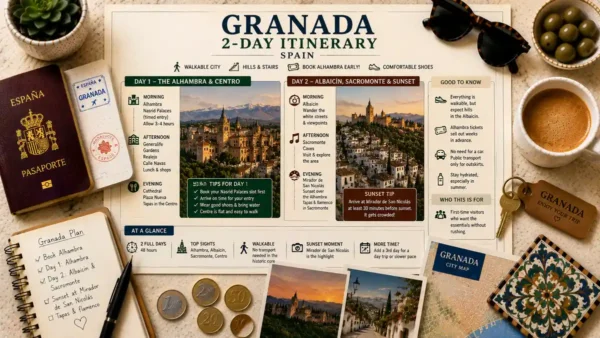
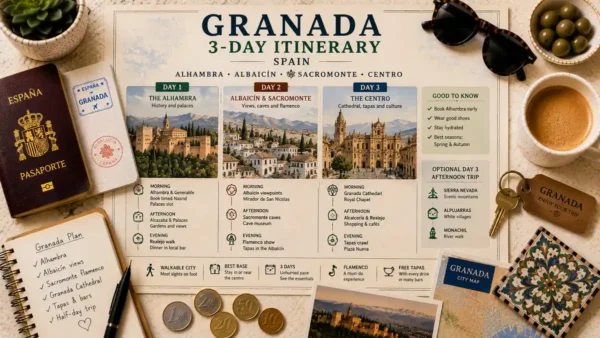
Two days covers Granada’s essentials — the Alhambra, the Albaicín, and a zambra evening. A third day adds Sacromonte, more miradores, and an unhurried tapas crawl without rushing. Which fits depends on your pace. For the day-by-day breakdown, see our 2-day Granada itinerary and 3-day Granada itinerary.
Is Granada walkable?
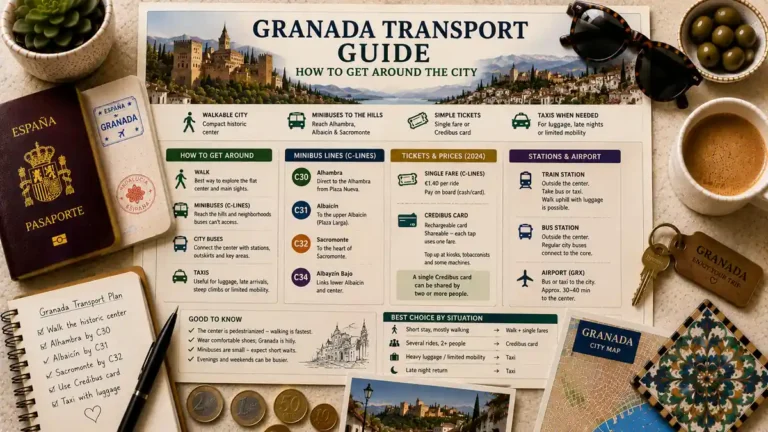
Granada is very walkable, but it is a city of hills, and that shapes which experiences you choose. The Albaicín and Sacromonte are steep climbs on uneven, stepped lanes, so wear real shoes and pace the ascents. Central sights sit close together, but the best views always cost you a climb.
Did this guide save you time or money? Tripstou is independent and reader-funded — if you'd like to give something back, you can support the site with a crypto contribution of any size.