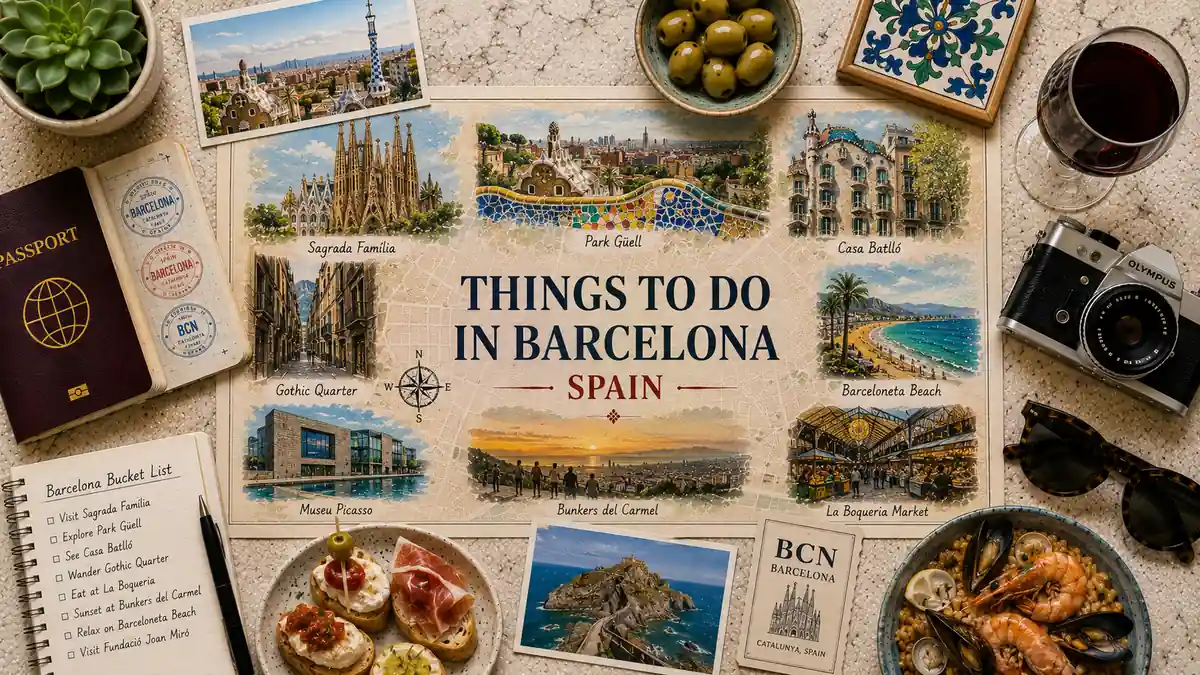
Barcelona has more worth-doing experiences than any trip has time for, and that oversupply is the real planning problem. Lists that inventory forty attractions don’t solve it; they restate it. This guide ranks the city’s experiences by payoff — what each one actually delivers for the time, money, and queueing it demands. The Gaudí icons come first, with honest verdicts on which deserve a booked ticket. Then come the food and market experiences, the best of the city at night, the free experiences that rival the paid ones, and the offbeat picks for travelers past the postcard stage. One section names what to skip, because declining a famous experience is the fastest way to upgrade a short trip. Every pick carries a “Pick this if:” line, so you can match each experience to your kind of trip instead of someone else’s.
Quick Answer
The Sagrada Família is the highest-payoff experience in Barcelona, followed by Park Güell and Gaudí’s houses. This guide ranks the city’s experiences by payoff — icons, food, night, free, and offbeat — so limited trip time goes to the right tier. Crowd-averse travelers get comparable payoff free at Bunkers del Carmel and the local markets.
Trust Layer
Tripstou selection guide for travelers choosing between multiple places. Covers selection criteria, traveler fit, and trip value.
Produced with AI assistance and reviewed by Alex Perrut, working in tourism since 2015, for the Tripstou editorial team. See our editorial process for details.
Last factual review: July 18, 2026.
Official sources consulted: spain.info, tourspain.es.
Key Takeaways
- The Sagrada Família is Barcelona’s highest-payoff experience, and the one attraction worth building a booked, timed ticket around.
- Bunkers del Carmel delivers a wider, higher panorama than Park Güell for free, so pay for Gaudí, not the view.
- Book the ticketed Gaudí sites well ahead; timed slots sell out and walk-up visits waste a scarce morning.
- For food, skip the restaurant hunt and eat through Mercat de Sant Antoni, where locals shop instead of tour groups.
- Treat Las Ramblas as a one-time walk-through, never a place to eat or linger; better versions sit nearby.
- For a calm counterweight to the Gaudí circuit, the Fundació Joan Miró on Montjuïc is the strongest offbeat pick.
Table of Contents
The Gaudí Icons Are Barcelona’s Biggest Payoff
The Gaudí sites deliver Barcelona’s biggest payoff, and the Sagrada Família is the one non-negotiable. No other city concentrates one architect’s imagination this densely, and the queues reflect it. Booked ahead, every visit runs smoothly; walk up unplanned and you risk sold-out boards and a wasted morning.
Sagrada Família
The Sagrada Família is worth visiting — it is the rare world-famous building that beats its own photographs. Skepticism is normal. Then you step inside, the stone columns branch overhead like a forest, and the stained glass floods the nave with color no camera holds. Even travelers indifferent to architecture tend to walk out converted.
It tops this list because nothing else in Barcelona resembles it, and because the payoff holds at any age, in any weather, on any budget of trip. Entry is timed and in-demand slots regularly sell out, so book well ahead; this is not a ticket to gamble on at the door.
Pick this if: you have time for only one ticketed experience in Barcelona.
Park Güell
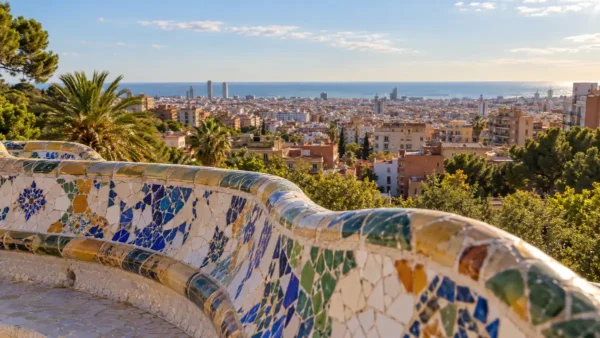
Park Güell is worth it when Gaudí is the draw; for views alone, it is not. The ticketed monumental zone — the mosaic salamander, the serpentine bench, the gingerbread gatehouses — is Gaudí at his most playful, and it earns its place here. The surrounding free parkland is pleasant hillside, nothing more.
Be honest about why you’re going. The panorama over the city is good, yet Barcelona has a free viewpoint that beats it, covered in the free section below. The monumental zone also runs on timed entry, so book ahead here too instead of trusting the gate.
Pick this if: you want Gaudí working outdoors — mosaic, terrace, and landscape as one piece.
Casa Batlló or La Pedrera
Tour one Gaudí house and let the second go — a second house adds far less than the first, which is why this list caps the houses at one. Casa Batlló is the theatrical pick: a marine, dreamlike interior that feels designed for wonder. La Pedrera (Casa Milà) is the architectural one — calmer rooms, an attic of brick arches, and the famous warrior-chimney rooftop.
Choose by temperament. Batlló suits travelers who want drama; Pedrera suits those who want structure and fewer sensory fireworks. La Pedrera also stages an evening rooftop show, covered in the night section below.
Pick this if: you want to stand inside a Gaudí building at domestic scale — a home, not a monument.
| Gaudí site | Book ahead? | Best for |
|---|---|---|
| Sagrada Família | Essential — timed slots regularly sell out | The one non-negotiable first-visit ticket |
| Park Güell | Needed for the timed monumental zone | Gaudí outdoors — mosaics, terraces, landscape |
| Casa Batlló | Wise — walk-up queues build at peak times | The theatrical, immersive Gaudí interior |
| La Pedrera | Wise — day visits and night show differ | The calmer, more architectural Gaudí house |
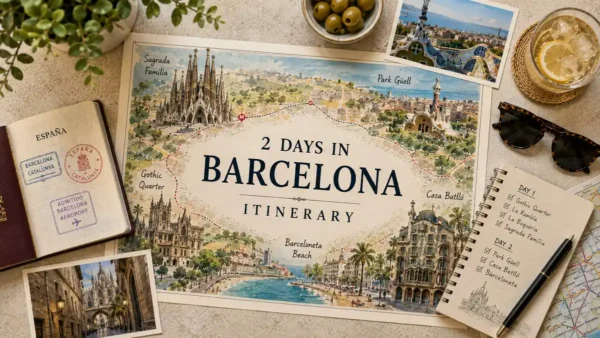
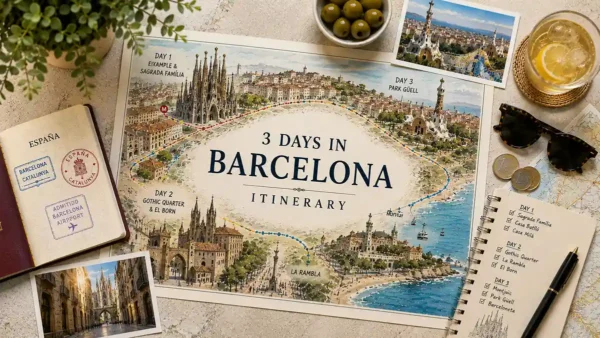
With two or three days in the city, two icons fit comfortably and three feel rushed. The 2-day Barcelona itinerary and 3-day Barcelona itinerary sequence them so the bookings fall in the right order.
Tours and activities
Book skip-the-line tickets, day trips and local tours with free cancellation on most activities.
You can also browse everything on getyourguide.com.
Tripstou may earn a commission if you book through this link, at no extra cost to you.
Best Food and Market Experiences in Barcelona
Eating through a market hall is Barcelona’s best food experience, and it beats most restaurant meals in the city. The real decision is which market: La Boqueria sells spectacle at famous-name prices, while Mercat de Sant Antoni serves the food scene locals actually use. Do one properly instead of rushing both.
La Boqueria
La Boqueria earned its place as spectacle — go for the show, not the shopping. The fruit pyramids, the seafood on ice, and the juice stalls make it one of Europe’s great market theatres, and its location just off Las Ramblas puts it on every first-timer’s path anyway.
The honest caveat: it stays crowded most of the day, and stalls near the entrance price for tourists. Walk deeper into the hall — the counters improve and so do the prices. Treat it as a sight that happens to serve snacks, and plan your real meal elsewhere.
Pick this if: you want the theatre of a famous market and accept the crowds fame brings.
Mercat de Sant Antoni
Mercat de Sant Antoni is where the market experience turns real. The restored iron hall, a short walk from the old town, serves its neighborhood — grocery stalls, unhurried counters, and tapas bars around the perimeter that feed locals instead of tour groups.
This settles the trade-off cleanly: Boqueria for the show, Sant Antoni for the meal. Travelers who try both usually concede that Sant Antoni fed them better for less — the fame premium at the Boqueria is real, and it is priced into every counter.
Pick this if: you want to shop and eat where the neighborhood actually does.
Beyond the halls, two experiences turn eating into an activity: a guided tapas crawl through the old town, and a cooking class that begins with a market shop. Both suit first visits and solo travelers well; choose whichever fits your evening or your lunch.
Things to Do in Barcelona at Night
Sunset from Bunkers del Carmel is the best thing to do in Barcelona at night. Evening changes the payoff calculus: ticketed icons close or empty out, while viewpoints, plazas, and the old town come into their own. The best of Barcelona after dark costs little or nothing.
Three night experiences stand clear of the rest:
- Sunset at Bunkers del Carmel — the hilltop platform above the Carmel neighborhood, with the whole city spread below. It suits golden-hour photographers and anyone ending a day on a high; the trade-off is the uphill walk and the company, since clear evenings draw a crowd. Arrive early and claim a spot.
- La Pedrera’s rooftop night show — the warrior chimneys lit and set to sound and projections. It suits couples and architecture fans who want a Gaudí house without daytime crowds; it runs on its own program, so check the current schedule before building an evening around it.
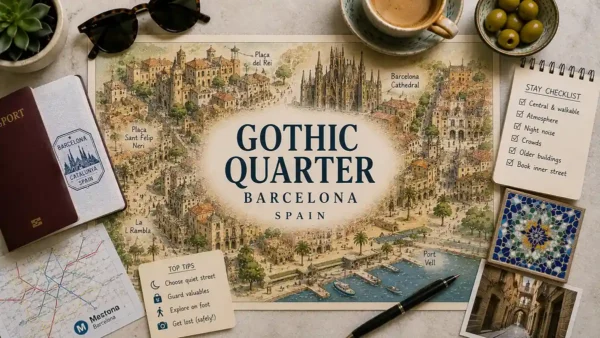
- The Gothic Quarter after dark — lamplit lanes and plazas that feel centuries older at night. It suits aimless wanderers with no agenda; the trade-off is that restaurants on the showpiece squares trade quality for setting, so eat a street or two away.
The Best Free Things to Do in Barcelona
Barcelona’s best free experiences rival its ticketed ones, and Bunkers del Carmel leads the list. Few major cities give this much away — a full panorama, a medieval quarter, city beaches, and a museum hill you can climb on foot. Budget travelers lose remarkably little here.
- Bunkers del Carmel — the verdict this page owes you: for views, Bunkers beats Park Güell. The panorama is wider, higher, and full-circle, with no ticket and no time slot. Pay for Park Güell for Gaudí; climb Bunkers for Barcelona.
- Barceloneta and the city beaches — sand minutes from the old town. In warm months an afternoon here is a genuine experience in its own right; out of season it becomes a seafront walk, which is still a good one.
- Getting lost in the Gothic Quarter — the medieval core costs nothing and rewards no plan. The cathedral exterior, the hidden plazas, and the fragments of Roman wall are the experience; early morning gives you the lanes at their emptiest.
- Montjuïc on foot — the museum hill climbs through gardens and viewpoints, and the walk itself is the free experience. It also positions you for the strongest paid pick in the next section.
Unusual Things to Do Beyond the Icons
The Fundació Joan Miró is the strongest Barcelona experience beyond the icons, and most first-timers never consider it. This section serves second visits, icon-fatigued travelers, and anyone with a specific obsession — art, football, or mountains. None of these involve a queue worth dreading.
- Fundació Joan Miró — a purpose-built hilltop museum on Montjuïc holding Miró’s playful, color-saturated work. It suits art-inclined travelers who want a calm, uncrowded counterweight to the Gaudí circuit, and it pairs naturally with the Montjuïc walk above.
- Camp Nou — for football fans, the stadium tour and museum are a pilgrimage; for everyone else, it is a stadium. If the club means something to you, go without hesitation. If it doesn’t, give those hours to Montjuïc.
- Montserrat — the serrated mountain and monastery outside the city, and the one experience here worth trading Barcelona hours for. It asks for the better part of a day; the worth-it verdict lives in the FAQ below.
Travelers extending beyond the city can work from the country-wide list — the guide to things to do in Spain ranks experiences across the country the same way this page ranks Barcelona’s.
What Should You Skip in Barcelona?
Skip Las Ramblas as a destination: walk it once in passing and build no meal or evening around it. It is the famous Barcelona experience that most reliably underdelivers — crowded, overpriced, and aimed at people who will never come back. Everything it promises exists somewhere better nearby.
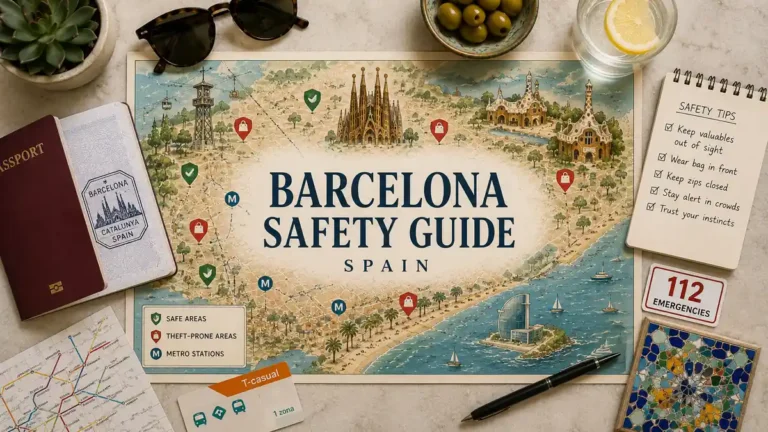
The boulevard is famous mostly for being famous: human statues, souvenir stalls, and terrace menus priced for one-time customers. It is also dense enough that you should keep bags zipped and belongings in front of you. Walk it once, satisfy the curiosity, and move on.
Every skip on this page has a better twin already covered above:
- Skip eating on Las Ramblas — eat at Mercat de Sant Antoni, or at the Boqueria’s deeper counters, instead.
- Skip Park Güell if the mosaics leave you cold — Bunkers del Carmel gives a better view free.
- Skip Camp Nou if football means nothing to you — give those hours to Montjuïc and the Miró foundation.
Cutting one underdeliverer funds an entire top-tier experience: dropping a Ramblas lunch and stroll buys the whole Bunkers sunset. On a short trip, that is the cheapest upgrade available.
This page ranks experiences only. Where to stay, when to visit, and how to get around live in the full Barcelona guide; and if the open question is Barcelona itself, weigh it against the best places to visit in Spain.
Frequently Asked Questions
Do you need to book Sagrada Família tickets in advance?
Yes. Book Sagrada Família tickets well in advance, because entry is timed and popular slots sell out regularly. Buying ahead locks a guaranteed time and skips the risk of a sold-out board at the door. Walking up without a ticket is the one gamble worth avoiding on a short Barcelona trip.
What are the best things to do in Barcelona with kids?
The best things to do in Barcelona with kids are the city beaches at Barceloneta, the playful mosaics of Park Güell, and a market hall like La Boqueria for sights and snacks. All three reward short attention spans, mix outdoor space with spectacle, and need little planning beyond a booked Park Güell slot.
What is Barcelona famous for?
Barcelona is famous for Antoni Gaudí’s architecture — above all the Sagrada Família, Park Güell, and Casa Batlló. Beyond Gaudí, the city is known for its Mediterranean beaches, its market-driven food and tapas culture, the medieval Gothic Quarter, and a football club, FC Barcelona, with a global following.
Is Montserrat worth a day trip from Barcelona?
Montserrat is worth a day trip if serrated mountain scenery and a hilltop monastery appeal to you more than another day in the city. It rewards hikers and travelers craving nature and calm. If your time is tight or your list is city-focused, spend those hours on Montjuïc or a second Gaudí site instead.
Is Park Güell or Bunkers del Carmel better for views?
For views alone, Bunkers del Carmel wins: its panorama is wider, higher, and full-circle, with no ticket or timed entry. Park Güell still earns its ticket, but for its Gaudí mosaics and terraces, not the outlook. Pay for Park Güell when you want the artistry; climb Bunkers when you just want Barcelona spread below.
Is Camp Nou worth visiting if you’re not a football fan?
Only if the club means something to you. For committed football fans, the Camp Nou stadium tour and museum are a genuine pilgrimage. For everyone else, it is simply a large stadium, and those hours pay off better on Montjuïc or at the Fundació Joan Miró. Let your interest in the club decide.
Related Guides
- Barcelona travel guide — where to stay, when to visit, and how to get around the city.
- 2 days in Barcelona itinerary — a sequenced plan that fits the top-tier picks into a weekend.
- 3 days in Barcelona itinerary — the extra day that makes room for Montjuïc or Montserrat.
- Things to do in Spain — the country-wide experience list, ranked the same way.
- Best places to visit in Spain — for deciding where in Spain to go in the first place.
- Best Day Trips from Barcelona
Did this guide save you time or money? Tripstou is independent and reader-funded — if you'd like to give something back, you can support the site with a crypto contribution of any size.