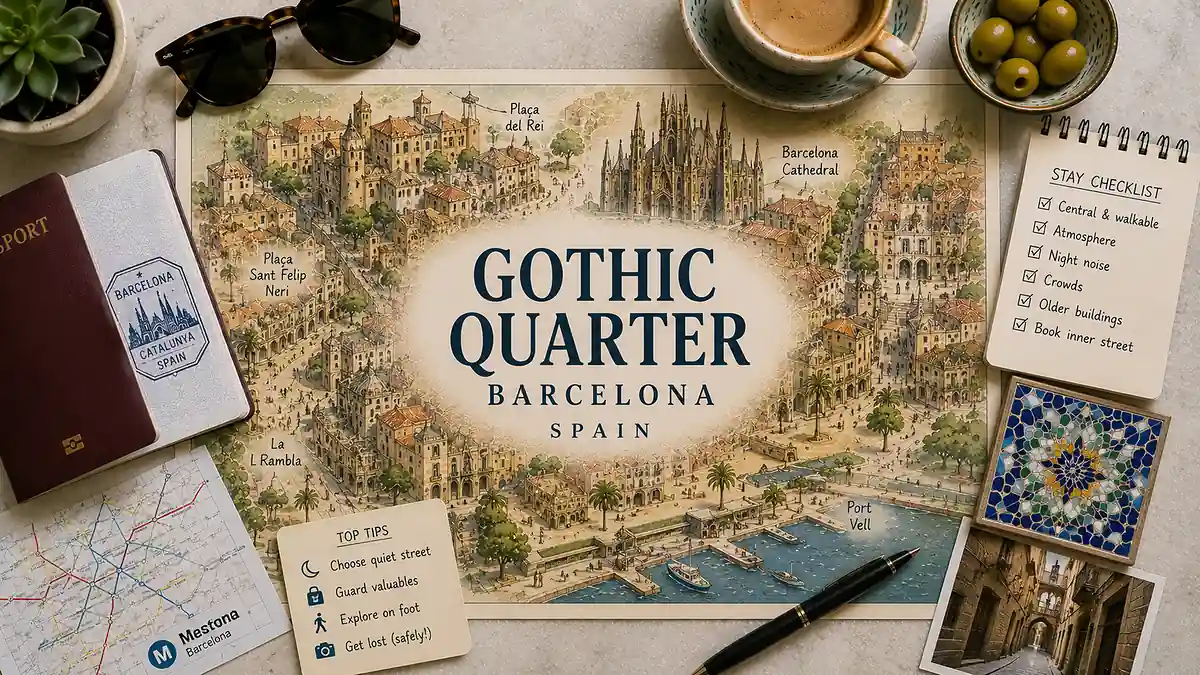
The Gothic Quarter is the question almost every Barcelona visitor asks first: should I base myself in the historic core, right in the middle of everything? This guide answers that as a stay decision, not a sightseeing primer. The Barri Gòtic puts you inside Barcelona’s medieval heart, within walking distance of major sights, dining, and nightlife. That centrality is unbeatable, but it comes with a real tradeoff: night noise, dense crowds, and older, narrower buildings. The right call depends entirely on what kind of traveler you are and what you need from a base. Below, we cover what staying here actually feels like, the honest case for and against it, who it suits and who should look elsewhere, plus how to refine your choice between the quarter’s quieter pockets and its busiest edges. The aim is a clear verdict before you book.
Quick Answer
The Gothic Quarter is an excellent central base for first-time visitors and anyone wanting sights on the doorstep. The core tradeoff is maximum centrality and atmosphere against night noise, crowds, and older, denser buildings. Light sleepers and families wanting calm should choose a quieter micro-zone within the quarter or a different neighborhood entirely.
Trust Layer
Tripstou stay guide for travelers choosing where to base. Covers area atmosphere, budget, convenience, noise, and traveler fit.
Produced with AI assistance and reviewed by Alex Perrut, working in tourism since 2015, for the Tripstou editorial team. See our editorial process for details.
Last factual review: June 3, 2026.
Official sources consulted: travel-europe.europa.eu, european-union.europa.eu.
Key Takeaways
- The Gothic Quarter is Barcelona’s most central, walkable base, putting major sights, dining, and nightlife within an easy walk of your door.
- The defining tradeoff is centrality and atmosphere against night noise, dense crowds, and older buildings with narrow, often stepped streets.
- It suits first-time visitors, couples, and nightlife travelers most; light sleepers and families needing space and calm should weigh other areas.
- Booking a room one block off La Rambla and the main squares keeps the walkability while avoiding the loudest, most disappointing streets.
- Quieter inner pockets like Santa Anna and Barri del Pi let you stay central without exposing yourself to the worst late-night noise.
- The most common booking regret is choosing the busiest tourist arteries while expecting a calm, residential-feeling night.
Table of Contents
The Gothic Quarter is Barcelona’s most central, atmospheric base
The Gothic Quarter is Barcelona’s most central and atmospheric place to stay. Basing here puts you inside the city’s historic core, a maze of medieval streets where most major sights, restaurants, and squares sit within an easy walk. No other neighborhood compresses so much of Barcelona’s character and convenience into one walkable footprint.
Staying in the Barri Gòtic means waking up surrounded by centuries of architecture instead of commuting into it. The quarter is Barcelona’s old town, bordered by La Rambla, El Raval, the cathedral, and Plaça Catalunya, the city’s main transport hub. From a base here you reach the seafront, the Eixample, and the wider city quickly, on foot or by metro, without ever feeling far from where you started.
The atmosphere is the draw. Narrow stone lanes open onto hidden plazas, Gothic facades, and tucked-away cafes, and the sense of being inside the living history of the city is hard to replicate from a hotel further out. For a stay built around walkability and immersion, this is the benchmark central base.
What it’s like to stay inside the Barri Gòtic
Staying inside the Barri Gòtic means living in a dense, pedestrian-first medieval quarter. Expect narrow stone streets, tight blocks, older buildings, and a rhythm that shifts sharply between day and night. By day it is atmospheric and busy; after dark, central streets stay lively well into the night.
The quarter is built for walking, not driving. Most lanes are pedestrianized or barely wide enough for a car, which makes wandering effortless but means rolling luggage over cobbles and climbing stairs in buildings without lifts is common. Daytime brings a steady flow of visitors around the cathedral and main squares; quieter corners exist, but the busiest arteries rarely empty out.
Day and night feel like two different neighborhoods. Mornings can be calm and almost residential in the smaller pockets, while evenings concentrate diners, drinkers, and foot traffic onto the main routes. Understanding that rhythm is the single most useful thing to grasp before booking. For broader context on the city around your base, see our Barcelona guide.
Why base yourself in the Gothic Quarter
Base yourself in the Gothic Quarter for unmatched centrality and walkability. From here, major sights, dining, and nightlife sit on your doorstep, and the rest of Barcelona is a short walk or quick metro ride away. For travelers who want to maximize time on foot and minimize transit, it is the strongest base in the city.
The practical case is simple: almost everything you came to see is close. The cathedral, the main squares, La Rambla, and the seafront are walkable, and Plaça Catalunya connects you to metro, regional trains, and airport links without a long approach. You lose very little time getting anywhere, which is exactly what a first-time visitor with a packed list wants.
The quarter also concentrates restaurants, tapas bars, and nightlife within a few minutes’ walk, so evenings need little planning. You can step out the door and find dinner, a drink, or live atmosphere without a destination in mind. That density of options is part of what makes the Gothic Quarter feel less like a place you stay and more like a place you live for a few days. For how it fits the wider city, our Barcelona guide sets the scene.
The downsides: noise, crowds, and narrow streets
The Gothic Quarter’s downsides are real: night noise, dense crowds, and the constraints of old, narrow streets. The same central energy that makes it appealing keeps the main lanes loud and busy late, and the medieval building stock can mean less comfort than newer neighborhoods. These are tradeoffs to weigh honestly before booking.
Noise is the most common complaint. Rooms facing busy streets or square-side bars can stay loud well into the early hours, and older buildings often have thinner insulation than purpose-built hotels elsewhere. Crowds compound this by day, with foot traffic heavy around the cathedral and main routes, so the busiest pockets rarely feel peaceful.
The physical fabric brings its own friction. Narrow, cobbled, often stepped streets can be awkward with heavy luggage, strollers, or limited mobility, and many older properties lack lifts. Short-term rental and noise rules in central Barcelona have tightened over time and can affect availability and street atmosphere, so check current local conditions and your specific property instead of assuming. None of this rules the quarter out, but going in clear-eyed prevents the most common booking regret.
Who should stay in the Gothic Quarter (and who shouldn’t)
The Gothic Quarter suits travelers who prioritize centrality, atmosphere, and walkability over quiet and space. It works best for first-time visitors, couples, nightlife-focused travelers, and curious explorers happy to trade calm for being in the middle of everything. Light sleepers and families needing room and quiet should weigh other areas.
It is a strong fit if you want to walk everywhere and stay close to the action:
- Best for first-time visitors who want the historic core and major sights within walking distance — see our first-time visitors stay guide.
- Best for couples drawn to atmospheric streets and easy evenings out — more in our couples stay guide.
- Best for nightlife travelers who want bars and late energy at the door — details in our nightlife stay guide.
- Workable for budget travelers seeking central value, with caveats on noise and comfort — see our budget travelers stay guide.
It is a weaker fit, or needs careful zone choice, if quiet and space matter most:
- Look elsewhere if you have young children or need room, lifts, and calm — our families stay guide covers better-suited areas.
- Look elsewhere for high-end comfort if you want spacious, modern luxury stock — see our luxury stay guide.
If you are still deciding which Barcelona neighborhood fits you overall, start with our hub on staying in Barcelona, which compares the main areas side by side.
Where to stay within the Gothic Quarter: quieter vs busier zones
Within the Gothic Quarter, quieter and busier pockets differ enough to change your stay. The La Rambla edge and main tourist arteries stay loud and crowded, while smaller inner zones like Santa Anna and Barri del Pi feel calmer. Choosing the right micro-zone is how you keep the centrality without the worst of the noise.
The decision splits along where you book within the quarter:
- Busier zones — streets along and near La Rambla and the main squares put you closest to the action but expose you to the most foot traffic and late noise. Best if energy is the point and you sleep through anything.
- Quieter pockets — inner streets around Santa Anna and Barri del Pi sit a little off the busiest routes, trading a few steps of distance for calmer nights while keeping everything walkable.
The practical rule is to stay central but step one block off the loudest arteries. You keep the walkability and atmosphere that make the quarter worth choosing, while avoiding the rooms most likely to disappoint light sleepers. Where exactly you land is worth checking against your specific property and its street position, not the zone alone.
Hotels and places to stay
Compare hotels, apartments and stays for your dates in one search.
Search hotels and stays on hotels.com →
Tripstou may earn a commission if you book through this link, at no extra cost to you.
Is staying central in the Gothic Quarter worth it?
Staying central in the Gothic Quarter is worth it for travelers who value walkability and atmosphere over quiet. If being in the historic core with sights and dining at the door matters most, the tradeoff in noise and crowds pays off. If calm and space rank higher, it likely does not.
The verdict comes down to what you are optimizing for. Centrality saves time and turns the city into a place you walk rather than commute through, which is hard to value too highly on a short trip. Against that, you accept livelier nights and tighter, older spaces. For most first-time visitors and atmosphere-seekers, that is a trade worth making, especially if you pick a quieter micro-zone.
If the noise-versus-quiet question is your real sticking point, the closest alternative debate is the Gothic Quarter against the more spacious, grid-planned Eixample. We resolve that side by side in our Gothic Quarter vs Eixample comparison. And if you would rather weigh every central area at once, our hub on staying in Barcelona lays out the full set of choices.
Frequently Asked Questions
Is the Gothic Quarter safe to stay in at night?
The Gothic Quarter is generally considered safe for visitors, with busy, well-lit central streets late into the evening. The main caution is pickpocketing in crowded tourist areas rather than serious crime. Stay aware of belongings around La Rambla and packed squares, and the busy nighttime atmosphere itself tends to keep central lanes feeling populated.
Is the Gothic Quarter too noisy to sleep in?
It can be, depending on exactly where you book. Rooms facing busy streets, La Rambla, or square-side bars often stay loud into the early hours, and older buildings have thinner insulation. Choosing an inner, quieter pocket and a room set back from the main arteries makes a noticeable difference for light sleepers.
Is the Gothic Quarter a good place to stay with kids?
It is a weaker fit for families needing space and quiet. Narrow, cobbled, often stepped streets are awkward with strollers, many older buildings lack lifts, and central noise can disrupt early bedtimes. Families wanting calmer, roomier surroundings usually do better in another area, covered in our families stay guide.
How walkable is the Gothic Quarter to Barcelona’s main sights?
Very walkable. The cathedral, main squares, La Rambla, and the seafront all sit within an easy stroll, and Plaça Catalunya connects you to metro and regional lines for sights further out. This compact, on-foot reach to the historic core is the single strongest reason travelers choose the quarter as a base.
Where is the quietest part of the Gothic Quarter to stay?
The quieter pockets sit on inner streets away from the main arteries, around areas like Santa Anna and Barri del Pi. These sit a block or two off La Rambla and the busiest squares, trading a few steps of walking for calmer nights while keeping the whole quarter and city within reach.
Is the Gothic Quarter or Eixample better for staying in Barcelona?
It depends on your priorities: the Gothic Quarter wins on central atmosphere and walkability, while Eixample offers more space, quiet, and modern rooms. Neither is universally better, and the right pick hinges on whether you value being in the historic core or roomier calm. We resolve that tradeoff in detail in our Gothic Quarter vs Eixample comparison.
Related Guides
- Where to stay in Barcelona — compare every main area before you commit to a base.
- Gothic Quarter vs Eixample — the side-by-side verdict on central atmosphere versus space and quiet.
- Where to stay for first-time visitors — best-fit areas for a first Barcelona trip.
- Where to stay for families — calmer, more spacious areas suited to traveling with children.
- Where to stay for nightlife — areas built around bars and late energy.
- Barcelona guide — the wider city context around your stay choice.
Did this guide save you time or money? Tripstou is independent and reader-funded — if you'd like to give something back, you can support the site with a crypto contribution of any size.