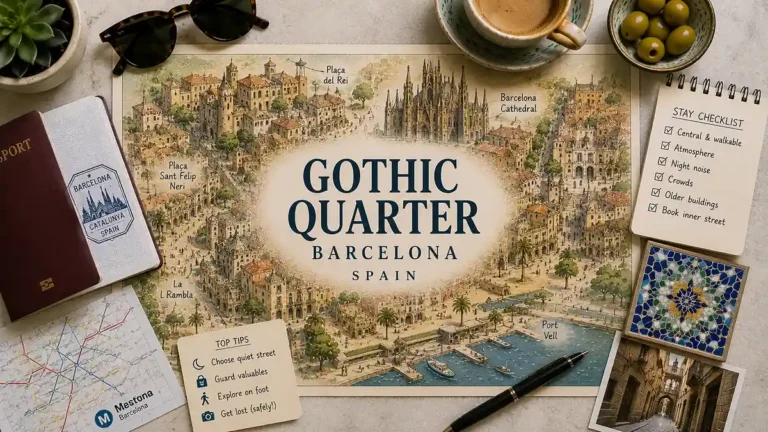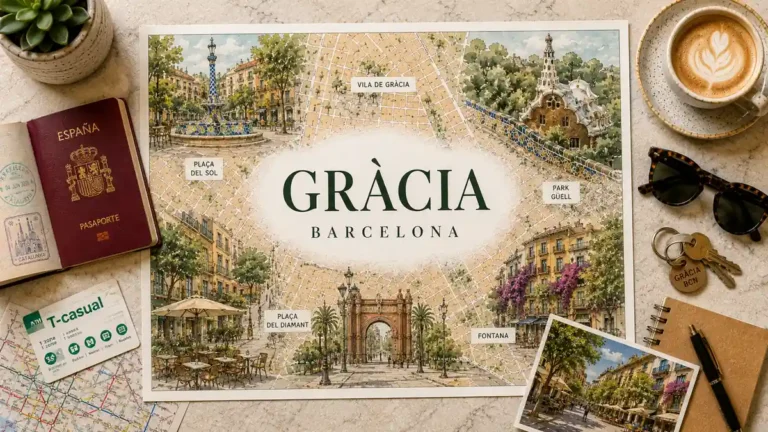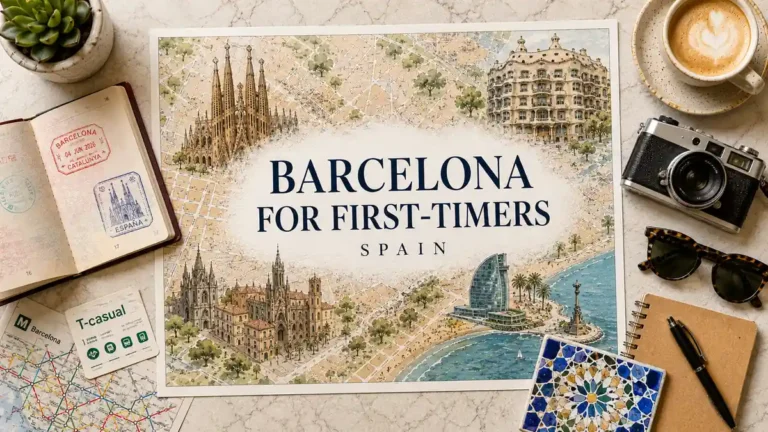
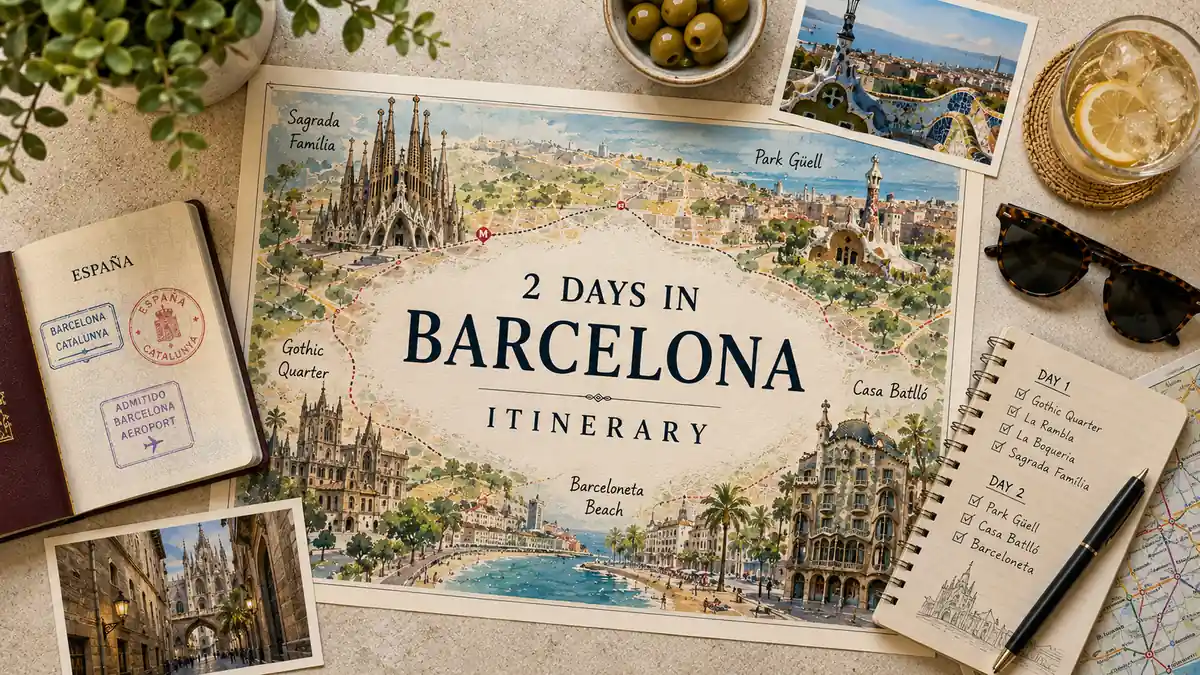
Two days in Barcelona is tight, and the difference between a great trip and an exhausting one comes down to sequence. The city’s essential sights split into two natural clusters: the walkable Old Town core and the Gaudí-plus-Eixample belt. Plan them as two clean geographic loops and you stop wasting hours crossing the city to backtrack. This is a day-by-day route built around honest pacing, not an attraction checklist. It lands the Gothic Quarter, La Rambla, Sagrada Família, Park Güell, Casa Batlló, and a waterfront finish at Barceloneta, with one clear heads-up baked in: book the timed-entry Gaudí sights well ahead, or the whole 48-hour plan falls apart at the door.
Quick Answer
Spend Day 1 in the Old Town and end at Sagrada Família. Cover the Gothic Quarter, La Rambla, and La Boqueria on foot, then save Day 2 for Gaudí and Eixample — Park Güell and Casa Batlló — finishing at Barceloneta. Cluster each day by geography and book timed-entry Gaudí sights ahead so the route never backtracks.
Trust Layer
Tripstou itinerary guide for travelers planning a route. Covers pacing, stop count, stop order, base logic, and trip length.
Produced with AI assistance and reviewed by Alex Perrut, working in tourism since 2015, for the Tripstou editorial team. See our editorial process for details.
Last factual review: June 3, 2026.
Official sources consulted: travel-europe.europa.eu, european-union.europa.eu.
Key Takeaways
- Split the trip into two geographic loops: an Old Town day and a Gaudí-plus-Eixample day, never mixing the two.
- Day 1 stays in the walkable Old Town core and ends with a late-afternoon Sagrada Família timed entry.
- Day 2 starts high at Park Güell, descends through Eixample to Casa Batlló, and finishes at Barceloneta.
- Book timed entry for Sagrada Família, Park Güell, and Casa Batlló well ahead, as day-of tickets routinely sell out.
- In 48 hours, protect the Gaudí essentials and Old Town core, and cut day trips and second-tier museums.
- Two days delivers the icons at a brisk pace; add a third day for breathing room and extras.
Table of Contents
The Best Way to Spend 2 Days in Barcelona
The best way to spend two days in Barcelona is one Old Town day and one Gaudí-and-Eixample day. Group sights by geography so each day becomes a single walkable loop. This order beats hopping across the city, because Barcelona’s highlights cluster naturally and crossing between them wastes scarce time.
The logic is simple: Day 1 stays inside the dense Old Town core, where the Gothic Quarter, La Rambla, and La Boqueria sit within a short walk of each other, before you push uptown to Sagrada Família in the late afternoon. Day 2 starts high at Park Güell and flows downhill through Eixample’s Modernisme to Casa Batlló, then out to the waterfront at Barceloneta.
This shape works because it converts a sprawling city into two tight routes with one transit “jump” per day rather than constant zigzagging. First-timers benefit most, since the plan protects the must-see Gaudí and Old Town sights without forcing a punishing pace. The tradeoff is real: at this density you see the headline sights, not the city’s quieter corners, and there is little slack for long detours or spontaneous side trips.
Day 1 — Gothic Quarter, La Rambla, and Sagrada Família
Day 1 runs through the Old Town and ends at Sagrada Família. Start in the Gothic Quarter, walk down La Rambla to La Boqueria for lunch, then travel to Sagrada Família for a late-afternoon timed entry. Keeping the morning compact and walkable minimizes backtracking before the one uptown jump.
Morning: Gothic Quarter and the Cathedral area
Begin in the Gothic Quarter, Barcelona’s medieval heart and the most walkable part of the city. Its narrow lanes around the Barcelona Cathedral pack centuries of history into a few compact blocks, so you cover a lot on foot without any transport. Wander the squares, see the cathedral exterior, and let the morning stay slow and unstructured.
If you are arriving on your first morning, getting in from the airport efficiently protects this whole block of time; our guide to getting from Barcelona airport into the city covers the realistic options.
Midday: La Rambla and La Boqueria
Walk down La Rambla toward the waterfront and stop at La Boqueria market for lunch. The famous tree-lined promenade flows directly out of the Gothic Quarter, so this leg needs no transport and keeps the morning’s momentum. La Boqueria, just off La Rambla, is the easiest place to eat without breaking the route.
La Rambla, the Boqueria, and the metro are also Barcelona’s best-known pickpocket spots, so keep bags zipped and phones out of back pockets; our Barcelona safety guide explains where to stay alert without ruining the day.
Afternoon and evening: Sagrada Família
Travel to Sagrada Família in the late afternoon for a pre-booked timed entry. Gaudí’s basilica is the single sight worth building the day around, and the light through its stained glass is strongest in the afternoon. This is the day’s one uptown jump, made cleanly after the Old Town is done rather than mid-route.
Book the timed slot well ahead — entry is reserved and popular slots disappear quickly. Aim to arrive a little before your window, since the line for ticket-holders still moves slowly at peak times.
Day 2 — Park Güell, Casa Batlló, and Barceloneta
Day 2 starts high at Park Güell and flows downhill to the sea. See Park Güell first thing, come down into Eixample for Casa Batlló around midday, then finish at Barceloneta and the beach in the evening. Working top-to-bottom turns the day into one descending line instead of a back-and-forth.
Morning: Park Güell (book ahead)
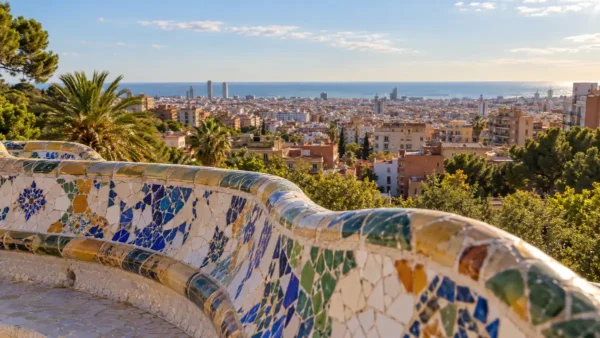
Start the day at Park Güell, the highest point on the route, with a pre-booked morning entry. Gaudí’s mosaic park sits above the city, so arriving early beats both the crowds and the midday heat. Setting it first also means the rest of the day runs downhill toward the centre and the coast.
The monumental zone uses timed entry, so reserve a morning slot in advance. From the park you head back down into the Eixample grid for the next stop.
Midday: Eixample and Casa Batlló
Come down into Eixample around midday for Casa Batlló on Passeig de Gràcia. The wide, grid-planned Eixample is Barcelona’s Modernisme showcase, and Casa Batlló is its most striking façade. Slotting it midway keeps you moving steadily from the heights toward the waterfront without doubling back.
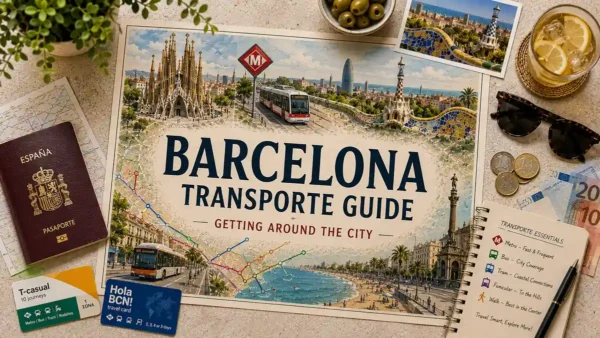
Park Güell, Eixample, and Barceloneta are spread out enough that the metro carries you between them; our Barcelona transport guide covers how to get around the city between sights.
Afternoon and evening: Barceloneta and the beach
Finish at Barceloneta for the waterfront and the beach. After two dense sightseeing days, ending at the sea gives the trip a natural wind-down, and the neighbourhood’s seafood spots make an easy last dinner. It is the lowest point on the route, so the day’s downhill flow lands you here without backtracking.
Time the arrival for late afternoon so you catch the light over the water, then linger for dinner near the marina.
What to Book Ahead and How to Pace Two Tight Days
Book timed entry for Sagrada Família, Park Güell, and Casa Batlló well before you arrive, and pace each day morning to evening. These three sights use reserved slots and sell out fast, so they anchor the schedule. Pacing one cluster per day keeps 48 hours full without becoming a sprint.
Treat the three Gaudí reservations as the fixed pillars of the trip and build everything else around them. Place Sagrada Família in Day 1’s late afternoon and Park Güell in Day 2’s morning, then let the walkable stops fill the gaps. Slots, opening hours, and which days museums close all shift over time, so check the current details and book ahead rather than relying on fixed times here.
A simple pacing rule keeps the route honest:
- Morning: the walkable cluster — Gothic Quarter on Day 1, Park Güell on Day 2.
- Midday: a relaxed lunch on-route, at La Boqueria or in Eixample.
- Afternoon and evening: the day’s anchor sight, then a slow finish.
For broader first-timer practicalities — what to pack into the gaps, etiquette, and small time-savers — see our Barcelona travel tips. The one warning that matters most: never count on buying day-of tickets for the Gaudí sights.
A two-day route at a glance, by daily block.
| Day | Block | Stop | Route note |
|---|---|---|---|
| Day 1 | Morning | Gothic Quarter and Cathedral area | All on foot, no transport needed |
| Day 1 | Midday | La Rambla and La Boqueria | Flows straight from the Gothic Quarter |
| Day 1 | Afternoon | Sagrada Família | One uptown jump; book timed entry |
| Day 2 | Morning | Park Güell | Start high; reserve a morning slot |
| Day 2 | Afternoon | Casa Batlló to Barceloneta | Downhill toward the waterfront finish |
Tours and activities
Book skip-the-line tickets, day trips and local tours with free cancellation on most activities.
You can also browse everything on getyourguide.com.
Tripstou may earn a commission if you book through this link, at no extra cost to you.
What to Skip (and What to Prioritise) in Just 48 Hours
In 48 hours, prioritise the Gaudí essentials and the Old Town core, and skip day trips and second-tier museums. Sagrada Família, Park Güell, Casa Batlló, and the Gothic Quarter are the sights that define the city. Everything else competes for time the route simply does not have.
Protect the anchors first: the three booked Gaudí sights plus a walkable Old Town morning are non-negotiable in a two-day plan. After that, cut hard. Day trips to Montserrat or the Costa Brava eat a half-day of travel each way and break the two-loop structure, so they belong in a longer trip. Smaller museums and a second beach afternoon are pleasant but not worth displacing a headline sight.
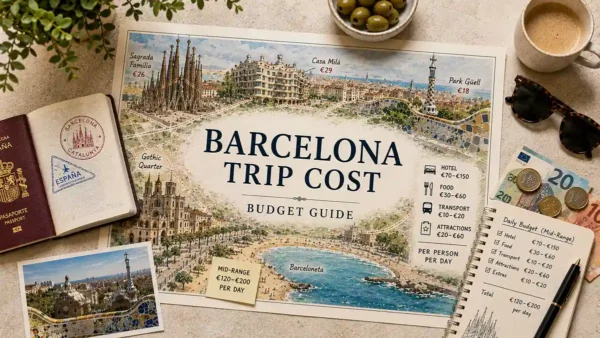
The route also assumes you base centrally to keep these loops short; for a two-day trip, staying near the Old Town or Eixample saves the most transit time, and our Barcelona where-to-stay guide covers the area choice in depth. If budget is shaping what you keep or cut, our Barcelona trip cost guide breaks down where the money goes.
What to prioritise versus skip, in short:
- Prioritise: Sagrada Família, Park Güell, Casa Batlló, the Gothic Quarter, one waterfront finish.
- Skip: full-day excursions, second-tier museums, a second beach afternoon, sights far off the two loops.
Hotels and places to stay
Compare hotels, apartments and stays for your dates in one search.
Search hotels and stays on hotels.com →
Tripstou may earn a commission if you book through this link, at no extra cost to you.
Is Two Days Enough, or Should You Add a Third?
Two days is enough for Barcelona’s essentials, but a third day adds welcome breathing room. Forty-eight hours covers the headline Gaudí and Old Town sights at a brisk, satisfying pace. A third day removes the rush and opens space for extras like Montjuïc or a day trip.
If your only goal is to see the icons, two days delivers — that is exactly what this clustered route is built for. The tradeoff is pace: the plan is full, with little slack for lingering, slow lunches, or unplanned detours. Travellers who prefer to wander, or who want Montjuïc, the Picasso Museum, or an excursion to Montserrat, will feel two days squeeze.
A third day changes the math: you keep the same two-loop core and add one relaxed day for the extras, turning a brisk trip into a comfortable one. If you have the time, our 3-day Barcelona itinerary shows how to spend it without redoing the essentials.
Frequently Asked Questions
Can you see Sagrada Família and Park Güell in the same day?
You can, but it is not the smoothest plan for two days. The two Gaudí sights sit on opposite sides of the city, so pairing them forces extra transit and backtracking. This route splits them instead — Sagrada Família anchors Day 1’s late afternoon and Park Güell opens Day 2 — keeping each day a single clean loop.
Do you need to book Barcelona attractions in advance?
Yes, for the major Gaudí sights. Sagrada Família, Park Güell, and Casa Batlló all use timed entry, and popular slots routinely sell out before you arrive. Book these online well ahead and treat the reservation times as the fixed pillars of your schedule. The Old Town sights need no booking and can stay flexible around them.
What is the best area to stay for a 2-day Barcelona trip?
For a short trip, base centrally near the Old Town or Eixample. A central base keeps both daily loops short and cuts the transit time that would otherwise eat into 48 tight hours. Staying near the route’s core means you start each day on foot rather than commuting in. Our where-to-stay guide compares the areas in depth.
How do you get around Barcelona between sights?
Mostly on foot within each day, with the metro for the longer jumps. Day 1’s Old Town stops connect by walking, and Day 2 descends gradually toward the coast. You only need transit for the uptown leg to Sagrada Família and for moving between Park Güell, Eixample, and Barceloneta. Our transport guide covers tickets and routes.
Is it worth taking a day trip with only 2 days in Barcelona?
No, not with just two days. Excursions to Montserrat or the Costa Brava swallow a half-day of travel each way and break the tight two-loop structure this route depends on. With 48 hours, your time is better spent on the city’s headline sights. Save day trips for a third day or a longer stay.
Is 2 days long enough to see Barcelona’s highlights?
Yes, two days covers the essential highlights at a brisk pace. A clustered route lands Sagrada Família, Park Güell, Casa Batlló, the Gothic Quarter, and the waterfront without backtracking. What you trade is slack — there is little room to wander or add extras like Montjuïc or the Picasso Museum, which a third day would comfortably absorb.
Related Guides
Use these guides to plan the broader trip and execute each stop on the route:
- Barcelona travel guide — the full city hub for orientation and broader context.
- 3-day Barcelona itinerary — add a third day without redoing the essentials.
- Where to stay in Barcelona — pick a central base that keeps the two loops short.
- Barcelona transport guide — how to get around between sights.
- Barcelona airport transport — get from the airport into the city on day one.
- Barcelona travel tips — first-timer practicalities and time-savers.
- Barcelona safety guide — staying pickpocket-aware on La Rambla and the metro.
- Barcelona trip cost — budget the trip and see where the money goes.
Did this guide save you time or money? Tripstou is independent and reader-funded — if you'd like to give something back, you can support the site with a crypto contribution of any size.