Two days in Florence means one compact, walkable city and a short list of essentials you can actually see without sprinting between them. The challenge isn’t distance — the historic center is small enough to cross on foot in about twenty minutes — it’s sequencing. Get the stop order right and 48 hours feels unhurried; get it wrong and you burn the trip backtracking or queuing. This guide gives you one sequenced Day 1 / Day 2 walking route built for first-timers, plus a straight verdict on whether two days is genuinely enough. Day 1 anchors on the Duomo and the Renaissance core; Day 2 crosses the river to the Oltrarno and climbs to a Piazzale Michelangelo sunset. No attraction catalogue, no history essay — just a realistic route, the pacing behind it, and the handful of decisions that make or break your two days.
Quick Answer
Two days is enough for Florence’s first-timer essentials on foot. Spend Day 1 on the Duomo and Renaissance core, Day 2 on the Oltrarno and a Piazzale Michelangelo sunset. The route hinges on stop order and booking marquee sights ahead, not transport. It suits first-timers who accept one tradeoff: the Accademia or a deep Uffizi visit.
Trust Layer
Tripstou itinerary guide for travelers planning a route. Covers pacing, stop count, stop order, base logic, and trip length.
Produced with AI assistance and reviewed by Alex Perrut, working in tourism since 2015, for the Tripstou editorial team. See our editorial process for details.
Last factual review: July 15, 2026.
Official sources consulted: Italia.it, ENIT.
Key Takeaways
- Two days is enough for Florence’s first-timer essentials if you accept highlights over completeness and keep the route walkable.
- Spend Day 1 in the Renaissance core around the Duomo and Uffizi, then cross the Arno for Day 2’s Oltrarno.
- Walkability is the whole transport plan — a central base puts every stop within a short stroll over 48 hours.
- When time is tight, commit to one marquee gallery — the Accademia or a deep Uffizi — instead of forcing both.
- Pre-book the Uffizi, Accademia, and Duomo dome climb in peak season to protect the day’s flow from queues.
- To shrink the trip cut the second gallery first; to grow it add slower Oltrarno depth, not a crammed third day.
Table of Contents
Is 2 Days in Florence Enough?
Yes — two days is enough for Florence if you focus on the first-timer essentials. The historic center is small and walkable, so you lose almost no time in transit. The catch is depth: two days buys you the highlights, not every museum. You trade completeness for a route you can actually enjoy.
The one decision that shapes a tight two-day trip is the Accademia versus a deep Uffizi visit. Both are marquee galleries, and doing each properly takes real time — the Accademia line to see David can swallow a morning, while the Uffizi rewards a slow two hours. When your schedule is genuinely tight, commit to one gallery and let the other go. Forcing both is what turns a calm 48 hours into a march.
First-timers who mainly want the David photo can keep the Accademia short and give the Uffizi the extra hours. Anyone who prefers painting over sculpture should flip that. If you want broad orientation beyond this route, our Florence guide covers the wider city and how a two-day trip fits into it.
Your 2-Day Florence Route at a Glance
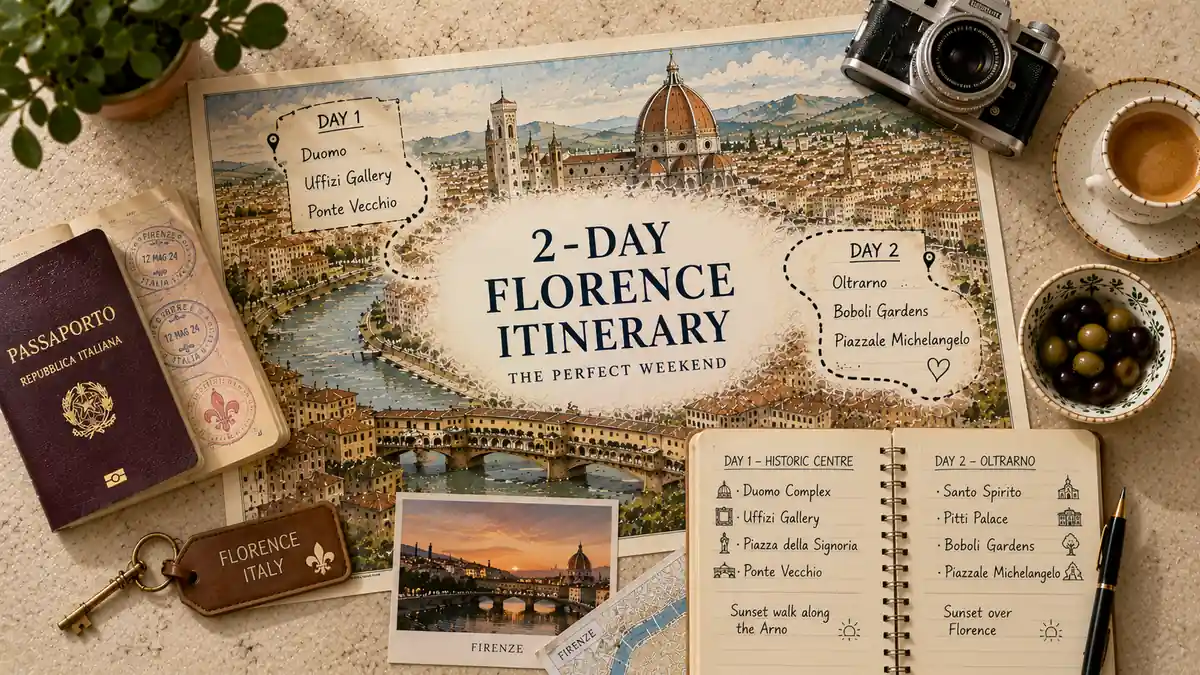
The route loops the compact center on Day 1, then crosses the Arno to the Oltrarno on Day 2. Day 1 anchors on the Duomo and Renaissance core, all within a few walkable blocks. Day 2 works south and uphill, ending at a Piazzale Michelangelo sunset. Everything is done on foot.
- Day 1 morning: Duomo complex and Accademia
- Day 1 afternoon: San Lorenzo lunch, then Uffizi
- Day 1 evening: Ponte Vecchio at dusk
- Day 2 morning: Cross to the Oltrarno gardens
- Day 2 afternoon: Artisan streets around Santo Spirito
- Day 2 evening: Piazzale Michelangelo sunset climb
The order matters more than the map. Each day moves in one direction so you never double back across the river — Day 1 stays north of the Arno, Day 2 stays south of it until the final climb. Mornings hold the ticketed heavyweights, when lines are shortest and your energy is highest; afternoons ease into markets and streets; evenings end on a view.
Saving the river crossing for Day 2 is what keeps the walking clean: you cross the Arno once with purpose instead of bouncing over the bridges all day. Day-trippers who pair the Uffizi with the Pitti Palace on the same morning lose real time to the back-and-forth. Because the whole center fits inside a rough twenty-minute walk end to end, you spend your two days in places, not in transit.
Day 1: The Renaissance Core (Duomo to the Uffizi)
Day 1 starts at the Duomo and ends near Ponte Vecchio at dusk. In between you fit the cathedral complex, the Accademia and David, a market lunch at San Lorenzo, and the Uffizi. The morning-to-evening flow keeps you moving in one loop through the densest square kilometer in Florence, entirely on foot.
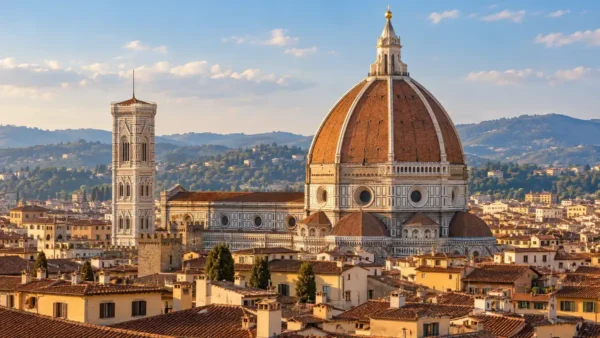
Morning — Duomo to David. Begin at Piazza del Duomo while the light is good and the crowds are thinner, taking in Santa Maria del Fiore, the Baptistery, and Giotto’s bell tower from the square. From there it’s a five-minute walk north to the Accademia for Michelangelo’s David. Keep this leg tight; the goal is the two headline sights, not every chapel between them.
Afternoon — market lunch to the Uffizi. Walk back down toward San Lorenzo and the Mercato Centrale for lunch, then continue south to the Uffizi for the Botticelli rooms and the Renaissance collection. This is Day 1’s long stop, so give it the whole afternoon rather than rushing it.
Evening — down to the river. Drift south from the Uffizi to Ponte Vecchio and watch the light drop over the Arno. You end the day at the river, perfectly placed for tomorrow’s crossing. For the full menu of what each of these sights holds inside, see our guide to things to do in Florence.
Day 2: Oltrarno, San Lorenzo & a Piazzale Michelangelo Sunset
Day 2 crosses the Arno into the Oltrarno and climbs to a sunset. You start among the Boboli and Bardini gardens or the Pitti Palace, wander the artisan streets around Santo Spirito, then finish the trip with the golden-hour view from Piazzale Michelangelo. It balances Day 1’s museum density with a slower, greener pace.
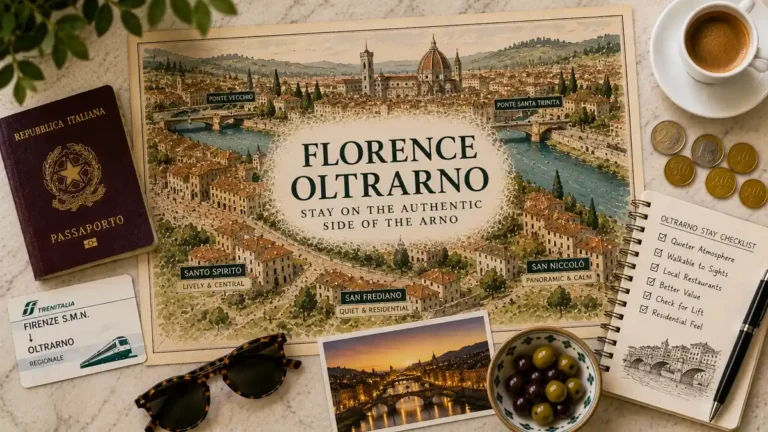
Morning — across the bridge. Cross Ponte Vecchio early into the Oltrarno and pick one green anchor: the Boboli Gardens behind the Pitti Palace, or the smaller, quieter Bardini Gardens with its terrace view. Both give you a calm start after Day 1’s intensity, and you don’t need both.
Afternoon — the artisan Oltrarno. Come back down into the streets around Santo Spirito, the workshop-and-leather heart of the left bank. This leg is for walking, not ticket lines: browse the artisan studios, take a long lunch on the piazza, and let the pace drop.
Evening — the climb to sunset. Time the walk up to Piazzale Michelangelo for the last hour before sunset, when the whole city turns gold beneath the Duomo’s dome. It’s a fifteen-to-twenty-minute uphill walk from the Oltrarno, and it’s the view that sends most first-timers home happy. Arrive early enough to claim a spot on the steps.
Which Sights to Book Before You Go
Book the big three ahead: the Uffizi, the Accademia, and the Duomo dome climb. In peak season, walk-up entry to these can cost you hours in line — time this route can’t spare. A timed reservation locks your slot and protects the day’s flow. Everything else on the route you can do without a ticket.
Reserve as early as your dates are firm, especially from spring through early autumn when Florence is busiest. The dome climb is the one people forget: it takes a separate timed reservation from the rest of the cathedral complex, and slots often go before same-day visitors reach the door. Treat all of these as booking-ahead sights and verify current rules on the official channels before you travel.
If you pre-book only one thing, make it whatever your route hits first that morning — usually the Accademia or the Uffizi — so a missing ticket can’t derail the whole day before it starts. Booking the first stop protects everything downstream of it.
Tours and activities
Book skip-the-line tickets, day trips and local tours with free cancellation on most activities.
You can also browse everything on getyourguide.com.
Tripstou may earn a commission if you book through this link, at no extra cost to you.
Where to Stay and Getting Around in 2 Days
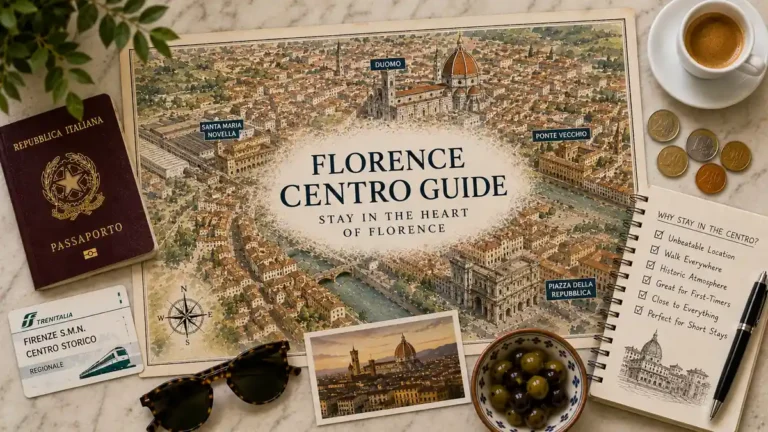
Stay central and walk everything — that’s the whole transport plan for two days in Florence. A base inside or beside the historic center puts the Duomo, the Uffizi, and the river within a short stroll. Over 48 hours you won’t need a taxi, bus, or car; the city is walked, not driven.
The choice that matters is proximity over polish: any central base makes this route work door to door, and a room ten minutes from the Duomo saves you more time than any upgrade. For a two-night stay, sleeping inside the center or just across the river in the Oltrarno both keep everything walkable. Cabs and buses exist, but over two days you’ll rarely open a transit app.
For neighborhood-by-neighborhood picks, see our guide on where to stay in Florence. To plan the numbers, our Florence trip cost breakdown covers what two days here typically runs.
Hotels and places to stay
Compare hotels, apartments and stays for your dates in one search.
Search hotels and stays on hotels.com →
Tripstou may earn a commission if you book through this link, at no extra cost to you.
How to Adapt This Route with More or Fewer Days
The second gallery flexes first when time is short. This one route bends both ways without being rebuilt. With only a day, drop the deep museum stop and keep the walking loop. With a third day, slow the pace and add Oltrarno depth or a day trip out of the city.
Two rules keep the route intact instead of rebuilt:
- Less time (one day): cut the second gallery first. Keep the Duomo, one gallery you actually want, and the Ponte Vecchio–to–Piazzale sunset. You lose depth, not the shape of the trip.
- More time (three days): add slowness before you add sights. A relaxed Oltrarno morning, both gardens instead of one, and an unhurried Mercato Centrale afternoon all soak up a third day before you ever leave the city.
Don’t try to cram a full third day into these two. For a properly paced longer plan, follow our 3 days in Florence itinerary. And if Florence is one stop in a bigger trip, our Italy itinerary shows how two days here slots into the wider route.
Frequently Asked Questions
Can you see Florence in one day?
You can see Florence’s headline sights in one day, but it will feel rushed. Stick to the Duomo exterior, one gallery you truly want, and a Ponte Vecchio-to-Piazzale Michelangelo sunset. You’ll get the shape of the city, but not the calm second-day pace that lets the Oltrarno and a slower museum visit land.
Should you spend 2 or 3 days in Florence?
Two days covers the first-timer essentials; a third day is for depth, not more headline sights. Choose two if you want the core route at a comfortable pace. Choose three if you’d rather slow down, add both Oltrarno gardens, or take a Tuscan day trip. Three days rewards a return visitor more than a first-timer.
Do you need to book the Uffizi and Accademia in advance?
Yes, book the Uffizi and Accademia ahead in peak season, roughly spring through early autumn. Walk-up lines at both can swallow much of a morning, which a tight two-day route cannot absorb. A timed entry locks your slot and protects the day’s flow. Verify current booking rules on the official channels before you travel.
What can you do in Florence in 2 days with kids?
Florence works well with kids over two days because it’s compact and walkable, so nobody faces long transfers. Climb the Duomo dome or bell tower for a reward view, keep gallery visits short, and let the Boboli Gardens and Piazzale Michelangelo burn off energy. Gelato stops and the Ponte Vecchio keep younger children engaged between sights.
How much walking does this 2-day route involve?
Expect a fair amount of walking, but nothing extreme, since the historic center crosses in about twenty minutes on foot. Each day is a gentle loop, not a march, with sit-down breaks built into meals and gallery visits. The one real climb is the uphill walk to Piazzale Michelangelo, easily paced before sunset.
When should you start each day to fit everything in?
Start early both mornings, ideally at opening time, to fit everything without rushing. Morning holds the ticketed heavyweights when lines are shortest and your energy is highest, so front-load the Duomo, Accademia, or Uffizi. Afternoons ease into markets and streets, and each evening ends on a view — Ponte Vecchio on Day 1, Piazzale Michelangelo on Day 2.
Related Guides
- Things to do in Florence — the full menu of sights behind this route.
- Where to stay in Florence — neighborhood-by-neighborhood base picks.
- Florence trip cost — what two days in the city typically runs.
- 3 days in Florence — a slower, longer route if you add a day.
- Florence guide — broad orientation and trip planning.
- Italy itinerary — fit Florence into a wider Italy trip.
Did this guide save you time or money? Tripstou is independent and reader-funded — if you'd like to give something back, you can support the site with a crypto contribution of any size.