You have narrowed your Barcelona base down to Gràcia, and now you need to know what staying there is actually like and whether it fits your trip. This guide gives you the verdict: how Gràcia feels day to day, who it suits and who it doesn’t, the trade-offs of basing here, and where within the neighbourhood to focus. It is a single-area stay decision, not a city guide or a head-to-head comparison. By the end you will know whether Gràcia is your base and roughly where in it to look.
Quick Answer
Gràcia is a strong base for a local, village-like, less touristy Barcelona stay. The trade-off is real: you gain charm, neighbourhood life, and better value, but sit further from the old town and the beach. It best suits couples, repeat visitors, and anyone prioritising atmosphere over being beside the main sights.
Trust Layer
Tripstou stay guide for travelers choosing where to base. Covers area atmosphere, budget, convenience, noise, and traveler fit.
Produced with AI assistance and reviewed by Alex Perrut, working in tourism since 2015, for the Tripstou editorial team. See our editorial process for details.
Last factual review: June 4, 2026.
Official sources consulted: travel-europe.europa.eu, european-union.europa.eu.
Key Takeaways
- Gràcia suits couples, repeat visitors, and travellers who value local village atmosphere over being steps from the main sights.
- The core trade-off is charm and better value against greater distance from the Gothic Quarter, Rambla, and the beach.
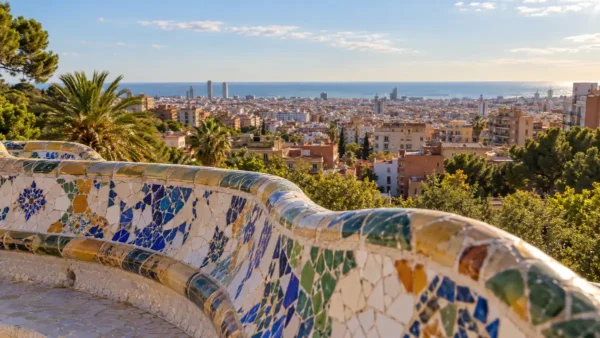
- Base in lower Gràcia around Fontana for the easiest metro access and the liveliest squares; upper edges near Park Güell stay quieter.
- Accommodation skews boutique hotels, design-led hostels, and apartment rentals rather than large international chain hotels.
- First-time visitors who want to walk to the old town or the seafront will usually be better served by a more central base.
- If you are still weighing areas or want the Eixample head-to-head, route out to the dedicated comparison and where-to-stay guides.
Table of Contents
Gràcia feels like a village inside Barcelona
Gràcia feels like a self-contained village folded into a big city. Its narrow streets open onto leafy plazas where neighbours gather over coffee and vermouth, giving the district a local, slightly bohemian rhythm that the central tourist zones have largely lost. Daily life here happens outdoors, at a human pace.
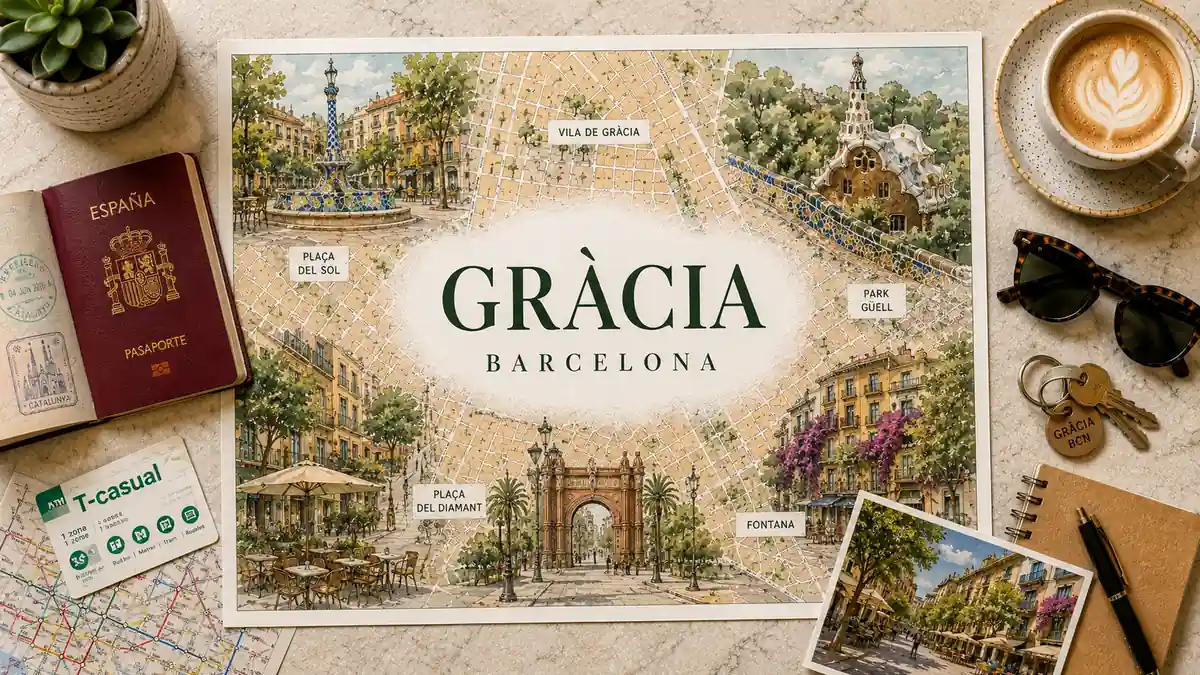
The village feel is not an accident of marketing. Gràcia was an independent town until the late nineteenth century, when Barcelona expanded and absorbed it, and that history still shapes the street plan. The grid loosens into a tangle of low-rise lanes and small squares such as the ones around Plaça de la Vila de Gràcia and Plaça del Sol, which act as the district’s open-air living rooms.
Atmosphere is the reason most people choose Gràcia over the more obvious central addresses. Independent shops, family-run bars, artisan bakeries, and small theatres sit alongside one another, and the crowd skews local and creative rather than transient. If you want a base that feels lived-in, this is the appeal. For wider city context beyond the neighbourhood, our Barcelona travel guide sets the scene.
Who should stay in Gràcia (and who shouldn’t)?
Gràcia is best for travellers who want local life and atmosphere over being steps from the headline sights. It rewards people who enjoy slow mornings in a square, evenings in neighbourhood bars, and a short metro ride to the centre. It is weaker for anyone set on walking straight to La Rambla, the beach, or a large chain hotel.
The clearest way to read the fit is by traveller type:
- Strong fit: couples who want a romantic, low-key base, budget travellers chasing better value than the centre, and repeat visitors who have already done the main sights and want to live like a local.
- Workable fit: families who value quieter, leafy streets and don’t mind using the metro, and travellers who want some nightlife in the form of relaxed plaza bars rather than late beachfront clubs.
- Weaker fit: first-time visitors who want to walk to the Gothic Quarter and Rambla, beach-focused travellers, and anyone set on luxury stays in big-brand hotels, which Gràcia largely lacks.
If your priority is proximity to the old town or the seafront, a more central base will serve you better. If your priority is character, value, and a neighbourhood you can settle into, Gràcia is hard to beat.
The trade-offs of basing yourself in Gràcia
The central trade-off of Gràcia is local charm and value against distance from the old town and beach. You get quieter streets, a genuine neighbourhood feel, and generally better prices than the tourist core, but you give up walk-everywhere proximity to the Gothic Quarter, La Rambla, and the seafront, plus the choice of large hotels.
It helps to weigh both sides directly:
- In Gràcia’s favour: a relaxed village atmosphere, leafy squares, independent food and nightlife, lower tourist density, and accommodation that often offers more space or character for the money.
- Against it: the Gothic Quarter, Rambla, and beach are a metro ride rather than a walk away; large-hotel supply is limited; and the quietest upper streets can feel removed from the action.
None of these trade-offs is a dealbreaker, but they decide the fit. Gràcia connects to the rest of the city by metro, so distance is a matter of a short ride rather than a long journey. The question is simply whether you would rather wake up in a living neighbourhood or on the doorstep of the main sights.
Where within Gràcia to base yourself
Base yourself in lower Gràcia, around the Fontana area, for the best mix of metro ease and atmosphere. This core sits closest to the city centre, puts the liveliest squares and bars on your doorstep, and gives you the most direct connections. The quieter upper edges, nearer Park Güell, trade some of that buzz and convenience for calm.
To orient yourself, Gràcia is served by a handful of metro stations on the Green line (L3) and the Yellow line (L4):
- Fontana (L3): the heart of lower Gràcia and the best all-round base for first-time stays, with squares, dining, and a direct central connection close by.
- Joanic (L4): a slightly calmer, residential pocket on the eastern side that still keeps you within easy reach of the action.
- Lesseps (L3): higher up and handy for Park Güell, but further from the centre and the busiest squares; better for travellers who want quiet over buzz.
The general rule is simple: the lower and more central you stay, the easier your days and nights; the higher you climb toward Park Güell, the quieter and more residential it gets. Choose your spot based on whether buzz or calm matters more to you.
What kind of accommodation you’ll find in Gràcia
Gràcia’s lodging is dominated by boutique hotels, design-led hostels, and apartment rentals rather than big international chains. The neighbourhood’s low-rise, residential character means accommodation tends to be smaller in scale and stronger on personality, which fits the local, village atmosphere that draws people here in the first place.
In practice, you will find a few patterns. Small boutique hotels and guesthouses occupy converted townhouses and offer character over uniformity. Stylish, independent hostels cluster in the livelier lower streets and suit social or budget-minded travellers. Apartment rentals are widespread and often the natural choice for couples and families who want kitchen space and a settle-in stay.
What you generally will not find is a cluster of large-brand chain hotels with big lobbies and full-service amenities; for that, a more central area works better. Because supply here is character-led rather than standardised, it is worth booking a base that matches your travel style early. Gràcia leans toward independent stays over hotel roundups, so treat lodging here as part of the neighbourhood experience.
Hotels and places to stay
Compare hotels, apartments and stays for your dates in one search.
Search hotels and stays on hotels.com →
Tripstou may earn a commission if you book through this link, at no extra cost to you.
How does Gràcia compare to other Barcelona areas?
Gràcia is more local and residential than Barcelona’s central tourist areas, trading proximity to the main sights for atmosphere and value. Where the old-town districts put you in the thick of the action, Gràcia gives you a quieter, more authentic base a short metro ride away. It is a lifestyle choice as much as a location one.
This page keeps Gràcia in focus rather than ranking every district, so the comparison stays high level. If you are still weighing all the options, our guide to where to stay in Barcelona lays out the full set of areas and who each one suits. To settle the most common head-to-head for this neighbourhood, see Gràcia vs Eixample, which resolves that specific choice in detail.
For the broader picture of the city around your base — sights, getting around, and trip planning — our Barcelona travel guide covers context this stay page deliberately leaves out. Use those routes to decide between areas; use this page to confirm whether Gràcia itself is right for you.
Frequently Asked Questions
Is Gràcia a good area to stay in Barcelona?
Yes, Gràcia is a good area to stay if you want local atmosphere over tourist-core convenience. It offers leafy squares, independent bars and shops, lower crowd density, and generally better value than the centre. The trade-off is a metro ride to the old town and beach rather than a short walk.
Is Gràcia a safe neighbourhood to stay in?
Gràcia is generally considered one of Barcelona’s calmer, more residential districts, with a strong local presence and quieter streets than the busy tourist core. As anywhere in a major city, stay alert in crowded squares and on transport at night. Use normal urban precautions and you should feel comfortable here.
How far is Gràcia from the city centre and the beach?
Gràcia sits a short metro ride from the old town and a slightly longer one from the seafront, rather than within walking distance of either. Lower Gràcia, near Fontana, gives the most direct connections. The further up toward Park Güell you stay, the longer your journeys into the centre become.
Is Gràcia a good place to stay for families?
Gràcia works well for families who value quieter, leafy streets and plaza life over being beside the main sights, provided they don’t mind using the metro. It is a workable rather than perfect fit. For a fuller breakdown of family bases across the city, see our guide on families.
What is the best part of Gràcia to stay in?
Lower Gràcia, around the Fontana area, is the best part to stay for most visitors. It sits closest to the centre, puts the liveliest squares and bars on your doorstep, and offers the most direct metro connections. Quieter upper streets near Park Güell trade that buzz and convenience for calm.
Does Gràcia have hotels or mostly apartments?
Gràcia leans toward boutique hotels, design-led hostels, and apartment rentals rather than large chain hotels. Apartments are widespread and often suit couples and families wanting kitchen space, while small hotels and guesthouses offer character. For big-brand, full-service hotels, a more central area generally gives you more choice.
Related Guides
- Where to stay in Barcelona — compare every area and find your overall base.
- Gràcia vs Eixample — settle the most common head-to-head for this part of the city.
- Barcelona travel guide — sights, getting around, and wider trip planning.
- Where to stay for first-time visitors — best bases when it’s your first trip.
- Where to stay for couples — romantic, low-key area picks.
- Where to stay for families — practical, family-friendly bases.
- Where to stay for nightlife — areas built around going out.
- Where to stay for budget travellers — best value bases in the city.
- Where to stay for luxury stays — top-end areas and hotels.
Did this guide save you time or money? Tripstou is independent and reader-funded — if you'd like to give something back, you can support the site with a crypto contribution of any size.