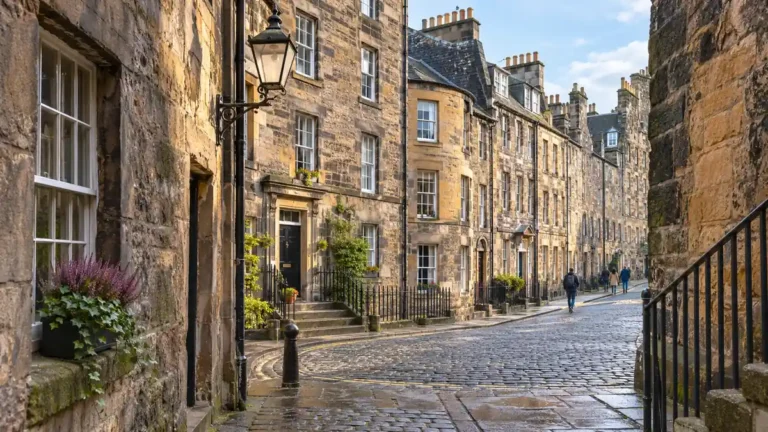
The best things to do in Scotland on a first trip are Edinburgh, the Scottish Highlands through Glencoe, and the Isle of Skye: the capital gives you the castle and the Old Town, Glencoe gives you the mountain glen, and Skye gives you the island landscapes Scotland is known for. A car changes the answer. Without one, or on a short trip, the stronger set is the one the train reaches: Edinburgh, Stirling, St Andrews, Glasgow and Inverness for Loch Ness.
The picks below are for first-time visitors who do not yet know where anything sits in Scotland. They are grouped by what it takes to reach them: the train alone, a car, a ferry and extra days, or an experience that clips onto a route you already have.
The Best First Trip to Scotland: Edinburgh, Glencoe and the Isle of Skye
Edinburgh, Glencoe and the Isle of Skye make the first-trip shortlist because together they cover the three things people travel to Scotland for: a historic capital, Highland mountain scenery and island landscapes. They also sit on one line of travel, west and north from Edinburgh. The cost is plain. Glencoe and Skye work best with a car.
The three join up naturally: Edinburgh first, then the road north-west through Glencoe towards Fort William, then on to Skye by bridge or ferry. How many nights each one gets, and in what order, is the job of the Scotland itinerary; this page only decides what is worth the trip.
Edinburgh
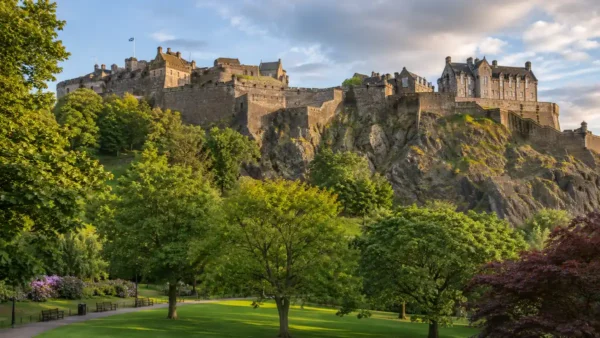
Edinburgh is where most first trips start, and it is the one pick that works for every traveler, car or no car. Edinburgh Castle sits above the Royal Mile and the Old Town, Arthur’s Seat gives you a hill walk without leaving the city, and the Palace of Holyroodhouse and the National Museum of Scotland fill a wet afternoon. The Edinburgh Festival Fringe takes over the city for three weeks in August, which is either the reason to come or the reason to pick another month.
After dark, the Old Town’s underground vaults and Greyfriars Kirkyard are the setting of the city’s evening ghost tours. Those, and the rest of the capital’s sights, are covered in the guide to things to do in Edinburgh.
Glencoe
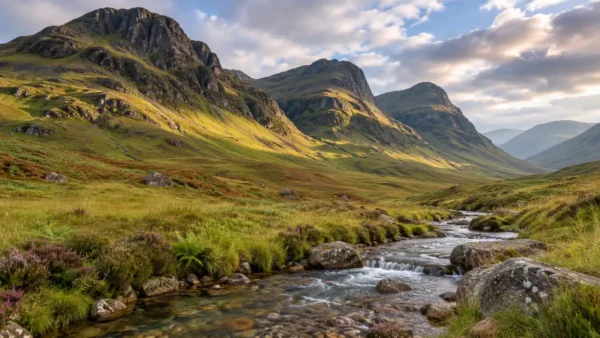
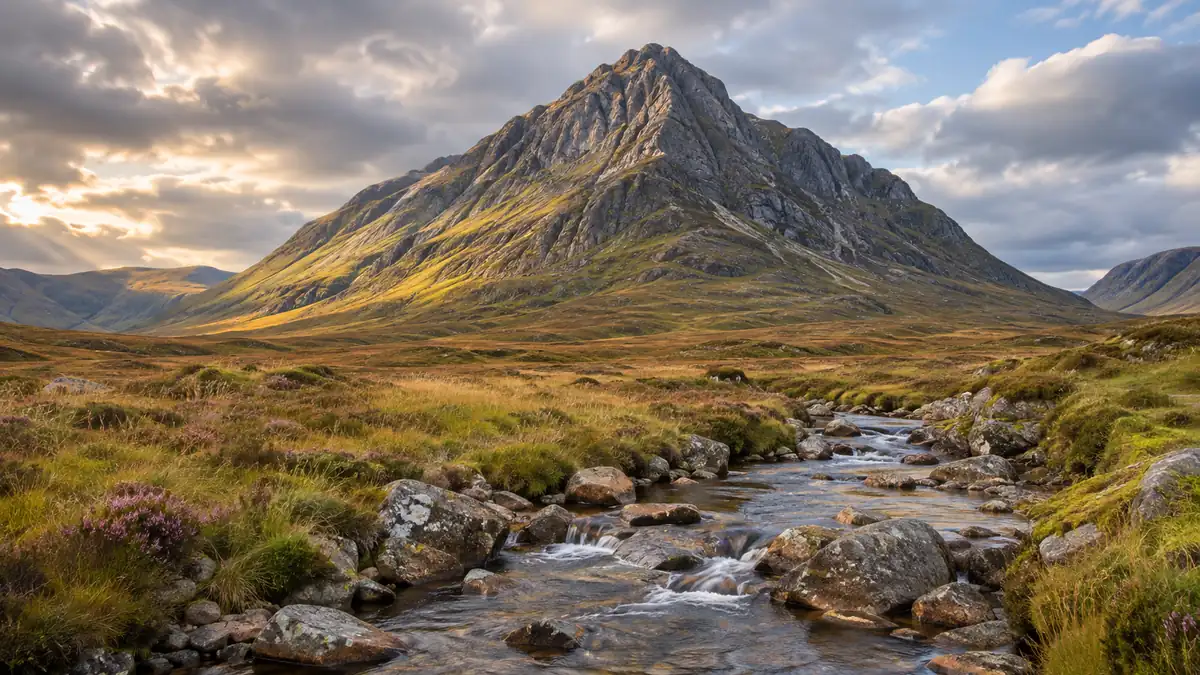
Glencoe is the Highland glen most first-timers see, because it lies on the road north-west towards Fort William and Skye. The Glencoe National Nature Reserve protects the valley, Buachaille Etive Mòr is the peak everyone photographs, and the Glencoe Lochan walks take you into the woods below the mountains. Ben Nevis and Fort William are close by.
Fort William, the gateway town for Glencoe and Ben Nevis, is about 3 h by car from Glasgow and about 3 h 30 from Edinburgh. That makes the glen a natural overnight on the way to Skye. It is the pick for walkers and drivers who want big mountain scenery without committing to an island. Without a car, a coach day out from Edinburgh is the simplest way to see the glen: book this day trip if you will not be driving.
Isle of Skye
The Isle of Skye is the strongest single landscape on a first trip, and the one that most rewards staying a few nights. The Old Man of Storr and the Quiraing are its famous rock formations, the Fairy Pools and the Cuillin mountains draw the walkers, Dunvegan Castle adds history, and Portree is the obvious base.
Skye is reached by road over the Skye Bridge from Kyle of Lochalsh, or by CalMac ferry from Mallaig to Armadale. Portree is a 5 h 30 drive from Edinburgh, 5 h from Glasgow and 3 h from Inverness, which is why a day visit from either city does not work.
Summer is the pressure point. Advance booking for the Mallaig ferry is strongly advised in that season, and some roads are single-track with passing places, so the driving is slow when traffic builds. Skye stays worth it in summer for travelers who give it nights and are comfortable on narrow roads. A day squeezed into a tight route is the version that disappoints.
Skye punishes a rushed visit more than any other pick here: the hours on single-track roads are the same whether you stay one night or three, so the extra nights are where the island pays you back.
Tours and activities
Book skip-the-line tickets, day trips and local tours with free cancellation on most activities.
You can also browse everything on getyourguide.com.
Tripstou may earn a commission if you book through this link, at no extra cost to you.
Where to Go in Scotland Without a Car
Glasgow, St Andrews and Inverness (for Loch Ness) are the picks you can reach by train from Edinburgh, and Stirling Castle sits on the same rail network (see the castles section below). This is the set for a short trip, or for anyone who will not drive in Scotland.
Glasgow
Glasgow is Scotland’s biggest city and the counterpoint to Edinburgh: museums and architecture where the capital has a castle skyline. Kelvingrove Art Gallery and Museum, the Riverside Museum, the Burrell Collection and Glasgow Cathedral are the four headline stops.
It suits museum-goers, and travelers who want a second city alongside an Edinburgh stay. The full list of sights is in the guide to things to do in Glasgow.
St Andrews
St Andrews is the coastal town of the rail set, built around the Old Course, the cathedral ruins and the beach at West Sands. From Edinburgh, the train runs to Leuchars and a 10-minute bus covers the rest, around 1 h 30 overall. Golfers come for the Old Course; everyone else comes for a sea-air day out of the capital that needs no car at all.
Inverness and Loch Ness
Loch Ness is worth visiting as a stop when Inverness is already on your route, and thin as a destination on its own. Inverness is the base for the loch and the start of the North Coast 500, so many Highland trips pass through anyway. The monster is folklore; the reason to stop on the shore is Urquhart Castle, by Drumnadrochit.
Inverness is 3 h 45 by train from Edinburgh or Glasgow, and 3 h 30 by car from Edinburgh or 3 h 15 from Glasgow. Urquhart sells timed tickets, covered with the other castles below.
Which Castles in Scotland Are Worth Visiting?
Five castles cover the range, and the right one follows your route: Edinburgh and Stirling for anyone on the rail network, Urquhart on Loch Ness, Eilean Donan on the road to Skye, and Dunnottar on the east coast for the most dramatic setting of all.
- Edinburgh Castle is the one nobody skips, sitting in the middle of the capital. It is also the one that sells out.
- Stirling Castle is the second castle for a traveler without a car: the train gets you there in around 45 min from Edinburgh or around 30 min from Glasgow.
- Eilean Donan stands at Dornie, near Kyle of Lochalsh, right on the road to Skye, so drivers heading for the Skye Bridge pass it anyway.
- Dunnottar Castle is cliff-top ruins on a 160-foot rock with the North Sea on three sides, 1.6 miles south of Stonehaven. It is where the Honours of Scotland, the Scottish crown jewels, were saved from Cromwell’s army. Photographers and anyone driving the east coast should make the detour.
- Urquhart Castle, by Drumnadrochit on the shore of Loch Ness, turns a loch stop into a proper visit.
Booking matters more here than at most sights. Edinburgh Castle tickets often sell out far in advance, and booking online is how you guarantee entry; reserve a guided visit if you want the history explained as you go. Stirling and Urquhart sell standard tickets for a specific date and time. Dunnottar opens seasonally and can close in bad weather, so keep it flexible.
The Most Beautiful Places in Scotland for a Longer Trip
Beyond Glencoe and Skye, the landscapes that repay extra days are the North Coast 500, Orkney, the Outer Hebrides and Scotland’s two national parks. Each needs a car, a ferry or both, which is why none of them makes a first-trip shortlist, and why each is the better choice once you have the time.
North Coast 500
The North Coast 500 (NC500) is a 516-mile driving loop that starts and ends in Inverness. The stops that define it:
- Bealach na Bà, the Applecross pass
- Applecross and Torridon
- Ullapool
- Smoo Cave at Durness
- John o’ Groats
The NC500 is worth it for confident drivers with a week or more, and it is busy in summer. It does not fit a trip that also wants Edinburgh and Skye in under ten days: trying to do all three turns the loop into a race. Take it as the trip itself, not an add-on.
Orkney
Orkney is worth visiting for travelers drawn by prehistory. Skara Brae and the rest of the Heart of Neolithic Orkney form a UNESCO World Heritage Site, St Magnus Cathedral stands in Kirkwall, and Stromness is where the NorthLink ferry docks.
Two crossings reach the islands from the far north of the mainland: the NorthLink ferry from Scrabster to Stromness takes around 90 min, and Pentland Ferries runs from Gills Bay to St Margaret’s Hope in around 1 h. It rewards repeat visitors with days to spare far more than a first-timer on a tight route.
Outer Hebrides
The Outer Hebrides are a chain of Atlantic islands about 130 miles long, and they are the pick for beaches and emptiness. Lewis and Harris hold the Calanais Standing Stones and the Harris mountains, the Uists hold the beaches, and St Kilda sits far out as the outlier. CalMac ferries sail to the islands from Oban, Mallaig, Uig and Ullapool.
Orkney is about archaeology; the Outer Hebrides are about landscape. Choose the Hebrides if you want sand, sea light and very few people.
Cairngorms and Loch Lomond
Scotland’s two national parks give two different kinds of scenery. Cairngorms National Park, with Aviemore as the base, is the high mountain plateau, with snow sports in winter. Loch Lomond and The Trossachs National Park, around Luss and Balloch, is the gentler, loch-side one, and the closer of the two to Glasgow.
Whisky, the Jacobite Steam Train or the West Highland Way: Which Fits Your Trip
Each of these attaches to a place already on the list: a distillery visit goes with Speyside or Islay, the steam train with Fort William, the walk with a spare week. Pick the one your route already passes, instead of bending the route around it.
Whisky: Speyside or Islay
Speyside is the easier whisky region to add to a trip. It has the highest concentration of distilleries in Scotland and the Malt Whisky Trail, with names like Glenfiddich along it, so a mainland route can take it in. Islay is the island detour for peat smoke, home to Lagavulin, and it rewards drinkers who already know they like that style. Campbeltown, small and home to Springbank, is the specialist’s footnote.
Glenfinnan Viaduct and the Jacobite Steam Train
The Jacobite is a steam train from Fort William to Mallaig and back, 84 miles in all, and its highlight is the Glenfinnan Viaduct: 21 arches about 100 feet above the River Finnan. It runs as a seasonal summer service and sells out, so book well ahead. Rail fans and families get the most from it, and it fits any route that already stops in Fort William.
West Highland Way
The West Highland Way is a 96-mile walk from Milngavie to Fort William. It suits walkers who want the trip to be the walk. The route ends in Glencoe and Ben Nevis country, so it delivers the Highlands of the shortlist on foot.
Highland games are the summer event worth catching if one falls on your route.
How to Choose What to See in Scotland by Transport and Trip Length
The Edinburgh, Glencoe and Skye shortlist is the wrong choice for three kinds of traveler, and each has a clear alternative: with no car or a short trip, take the rail set; with a week or more and a taste for driving, take the NC500; if you are crowd-averse or returning, take Orkney, the Outer Hebrides or the Cairngorms.
- No car, or only a few days: base in Edinburgh and add Stirling, St Andrews, Glasgow and Inverness by train. You keep the castles and the cities, and give up Skye and the big glens.
- A week or more, happy driving: the NC500 from Inverness replaces the Skye run. You gain the empty north coast and lose time in Edinburgh.
- Crowd-averse or on a second trip: Orkney, the Outer Hebrides or the Cairngorms. You trade the famous sights for space, at the price of ferry crossings or long drives.
| Place | What it opens up | Journey |
|---|---|---|
| Stirling | Stirling Castle | Train from Edinburgh around 45 min, from Glasgow around 30 min |
| St Andrews | Old Course, cathedral ruins | Train from Edinburgh to Leuchars plus a 10-minute bus, around 1 h 30 |
| Inverness | Loch Ness, start of the NC500 | Train from Edinburgh or Glasgow 3 h 45; drive 3 h 30 from Edinburgh, 3 h 15 from Glasgow |
| Fort William | Glencoe, Ben Nevis, the Jacobite | Drive about 3 h from Glasgow, about 3 h 30 from Edinburgh |
| Portree | Isle of Skye | Drive 5 h 30 from Edinburgh, 5 h from Glasgow, 3 h from Inverness |
| Stromness | Orkney | NorthLink ferry from Scrabster around 90 min |
When to go, whether to hire a car and what the trip costs are answered in the Scotland travel guide. If you take the rail option, Edinburgh is your base, and the Edinburgh travel guide covers the city as a place to stay.
How We Chose These Scotland Picks
This is a curated selection of Scottish places and experiences for a first trip, chosen on what each adds that the others do not and on how hard it is to reach from Edinburgh, Glasgow or Inverness. It is not a country guide, a day-by-day route or a sight list for Edinburgh or Glasgow.
The journey times, distances and booking rules on this page were checked against the sources below by Alex Perrut, working in tourism since 2015, for the Tripstou editorial team. We drafted the page with AI assistance, as our editorial process sets out.
Official sources consulted: VisitScotland, Historic Environment Scotland, West Coast Railways, Dunnottar Castle and West Highland Way.
More Questions About Visiting Scotland
When is midge season in Scotland?
Midge season runs from May to October and peaks in mid-summer. Midges are worst early in the morning and in the evening on calm, overcast days, mainly in the west Highlands, on the islands and in damp rural areas, which puts Glencoe, Skye and the Outer Hebrides squarely in midge country.
What is there to do in Scotland in winter?
Winter is the season for the cities, the snow and Hogmanay, the Scottish New Year celebration. Edinburgh and Glasgow carry short days well with their museums and galleries, and the Cairngorms around Aviemore turn to snow sports. Some castles close for the season, so check opening before you build a winter day around one.
Can you see the northern lights in Scotland?
Yes, though never on a schedule. Your chances are best in the dark months, on clear nights, in the far north of the mainland and on the northern isles such as Orkney. Treat a sighting as a bonus on a trip planned for something else, not as the reason to book.
Which Harry Potter places can you visit in Scotland?
The Glenfinnan Viaduct is the stop Harry Potter fans come to Scotland for, and the Jacobite steam train from Fort William crosses it. Edinburgh also has Harry Potter-themed walking tours, which sit with the capital’s other sights.
What are the best things to do in Scotland with kids?
Castles, the Jacobite steam train, Loch Ness and Glasgow’s museums are the picks here that suit families best. Edinburgh and Stirling castles are reachable by train, Glasgow’s Riverside Museum and Kelvingrove fill a day without long drives, and Urquhart Castle turns a Loch Ness stop into something to explore. Skye and the NC500 ask for long hours in the car, which is harder going with children.
Did this guide save you time or money? Tripstou is independent and reader-funded — if you'd like to give something back, you can support the site with a crypto contribution of any size.