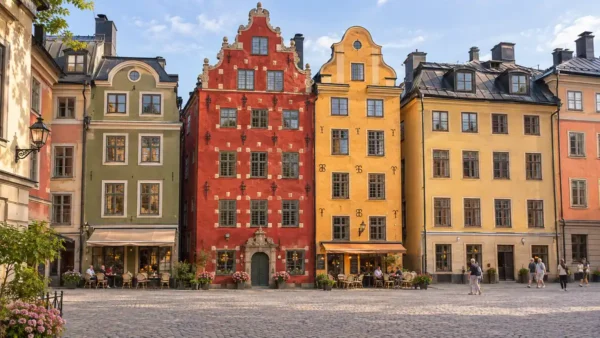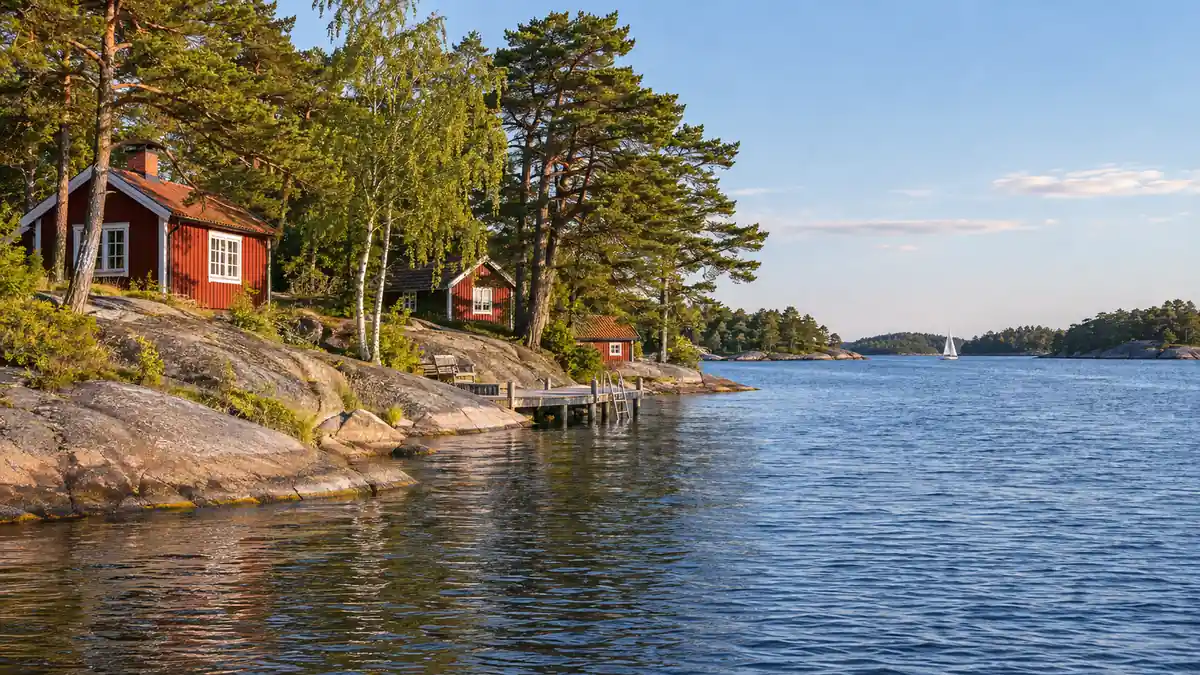
For a first trip to Sweden, spend your base days in Stockholm, give one full day to a boat trip into the archipelago, and add one other region. Season decides which region. In summer, add Gothenburg and the West Coast or the island of Gotland. In winter, add Swedish Lapland for the northern lights. This suits most long-haul first-timers with about a week. A nature-first traveler can turn it around and go north first, with Stockholm as a short stop or not at all.
Your First-Trip Shortlist
- The best first trip is Stockholm with a full boat day in the archipelago, plus just one other region chosen by season.
- In summer, the strongest second region is Gothenburg and the West Coast or the island of Gotland, with Dalarna and the High Coast as the nature-first alternatives.
- In winter, Swedish Lapland is the add-on, for the northern lights, the Icehotel and dog sledding, with Stockholm cut to a short stay.
- The far north and the south do not fit well into one short trip, because Swedish Lapland is a flight or night train away and its best seasons do not match the south’s summer.
- Wherever you go, a daily fika, a sauna followed by a cold dip and a swim in a lake are what make the trip feel Swedish.
Stockholm Plus One Region Is the Right First Trip to Sweden
Stockholm plus one region is the right first trip because the capital alone covers the city, the museums and the archipelago, and a second region adds the coast, an island or the Arctic. Try to fit in more and a week gets stretched across a very long country. Most of it then goes on transit.
The picks below are grouped by what the trip is for, then by season. Stockholm comes first because almost every first trip starts there. The southern cities follow, then the summer island and inland picks, then the Arctic north. Skåne and Gothenburg lie south and west of the capital, and Dalarna sits north-west, inland around Lake Siljan. The High Coast runs up the Baltic shore. Swedish Lapland is the far north, a separate journey in its own right.
| Pick | Best season | Trip style | How far from Stockholm |
|---|---|---|---|
| Stockholm & archipelago | All year; islands in summer | City, museums, boat days | The base; boats leave from the centre |
| Gothenburg & West Coast | Summer | Relaxed city, seafood, fishing villages | A few hours by fast train |
| Malmö & Skåne | Late spring to early autumn | Small towns, flat countryside, cycling | A few hours by fast train |
| Gotland | Summer | Island, medieval town, beaches | Ferry from the mainland or a flight |
| Dalarna | Summer, Midsummer above all | Lakes, folk tradition, “classic Sweden” | Inland to the north-west by train or car |
| High Coast | Summer | Coastal scenery, driving, boat trips | Up the Baltic coast, best with a car |
| Swedish Lapland | Winter or high summer | Arctic nature, aurora, hiking | A flight or night train |
Season and getting around are the two planning questions this shortlist leaves open on purpose. The Sweden travel guide covers when to go and how to move between regions. Pick from the table first, then plan the route there.
The second region is the real decision on a Swedish trip. Stockholm is nearly always in, so the useful question is which one region your season and your appetite for travel days can carry.
Stockholm and the Archipelago: the City Pick and Its Boat Trip
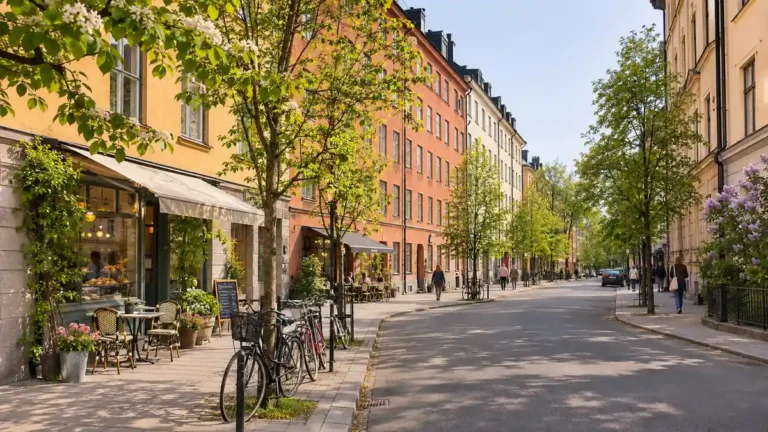
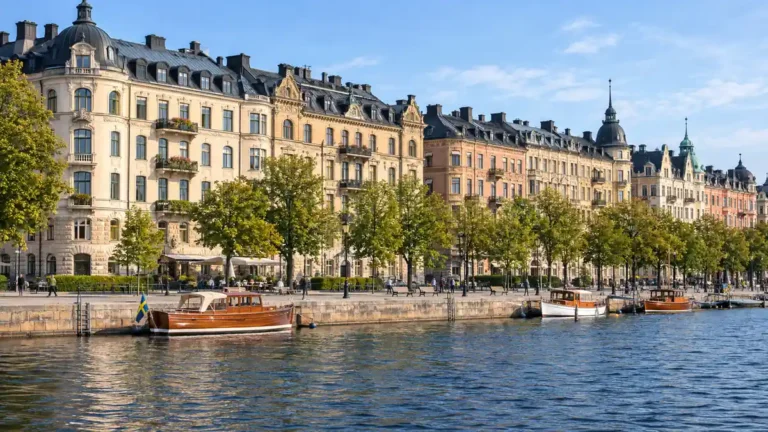
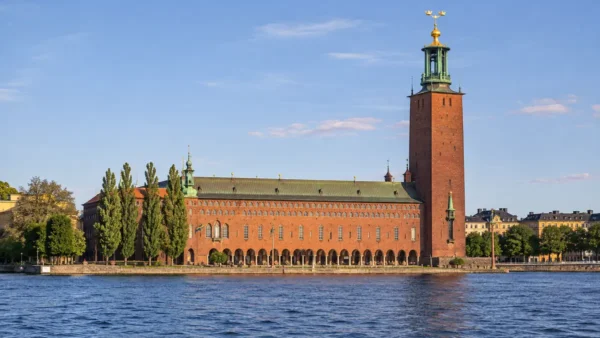
Stockholm is worth visiting because it packs three trips into one city: a medieval old town, a museum island and a capital built across water. The archipelago is what makes it Swedish. Few capitals let you leave the centre by boat and be among granite islands and summer cottages the same morning.
Stockholm
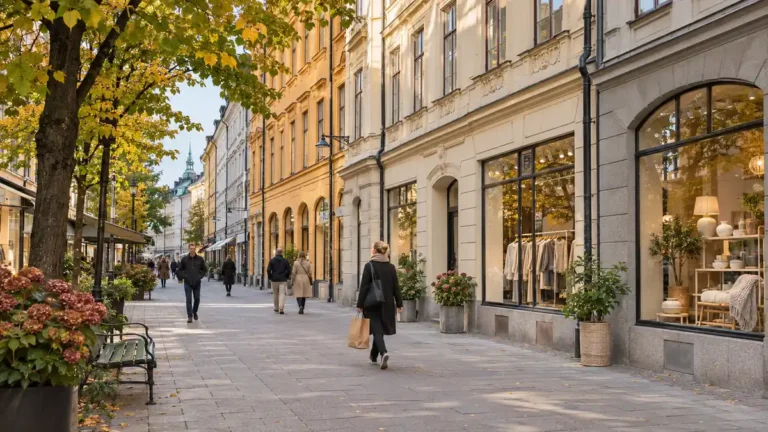
Three names define a first visit: Gamla Stan, the old town on its island; the Vasa Museum, built around a recovered warship; and Skansen, the open-air museum on Djurgården. The city suits almost any first-timer, since it pairs easy walking with a full museum day and water at every turn. The full sight list is in our guide to things to do in Stockholm. For where to base yourself and how to get in from the airport, read the Stockholm travel guide. Our three-day Stockholm itinerary sets out how to spend the days.
The archipelago
The Stockholm archipelago is the one day trip every first visit should keep. Boats leave from central Stockholm, so there is no transfer to plan, and the islands get quieter the further out you go. Summer is its season, when sailings run most often and the swimming rocks warm up.
- Fjäderholmarna: the closest islands, a half day out and back, good for a first taste.
- Vaxholm: a harbour town that works as an easy lunch trip.
- Grinda: a green island for walking and swimming, worth a full day.
- Möja: further out and more remote, the pick for an overnight stay.
Anyone with one spare day in the capital should spend it here. A half day on Fjäderholmarna beats skipping the water entirely.
Uppsala, Sigtuna and Birka
The best history day trips from Stockholm are Uppsala, Sigtuna and Birka, and each tells a different part of Sweden’s early story. Uppsala has its cathedral in town and, at Gamla Uppsala, the great burial mounds of the Viking age. Sigtuna is a small lakeside town with an old main street made for a slow walk. Birka sits on the island of Björkö in Lake Mälaren and is reached by boat, the site of a Viking-age trading town. Uppsala and Sigtuna pair easily in one day; Birka takes a day of its own.
Tours and activities
Book skip-the-line tickets, day trips and local tours with free cancellation on most activities.
You can also browse everything on getyourguide.com.
Tripstou may earn a commission if you book through this link, at no extra cost to you.
Gothenburg or Malmö: Which Southern City Earns the Second Half of the Trip?
Choose Gothenburg for the sea, the seafood and the Bohuslän coast. Choose Malmö for Skåne’s flat farmland, the university town of Lund and the bridge across to Copenhagen in Denmark. Both are a few hours by fast train from Stockholm, and neither needs more than two or three days. The choice comes down to what you want beside the city: rocky islands to the north, or open countryside and small towns to the south.
Gothenburg and the West Coast
Gothenburg is Sweden’s easy-going second city, and it is worth visiting for the coast that starts at its edge. Haga’s wooden houses and cafés, the Liseberg amusement park and the big green spread of Slottsskogen fill a day or two in town. Seafood is the reason to eat here.
The Bohuslän coast is where the West Coast earns its place. Marstrand, Fjällbacka and the Smögen area are fishing villages set on bare granite shores. Kosterhavet, up towards the Norwegian border, is the wilder sea. This pick suits a traveler who wants a relaxed second city with island-hopping on the side.
Malmö and Skåne
Malmö is the more continental of the two cities — compact, cycle-friendly and looking across the water to Denmark. The twisting Turning Torso marks the skyline, Lilla Torg is the old square for an evening drink, and Malmö Castle anchors the park side of the centre. Ribersborgs Kallbadhus, the open-air bathhouse on the pier, is where locals take a sauna and a sea dip. The Øresund Bridge is part of the view from the city’s beaches.
Skåne itself is the draw beyond the city. Lund, next door, has a great cathedral and a student-town feel. Österlen, to the south-east, is a stretch of farmland, orchards and fishing villages, and the Ales stenar stone ship stands near Ystad. Small-town lovers do best here, in country flat and gentle enough to cycle.
Gotland, Dalarna and the High Coast Are Summer Picks Worth Building a Trip Around
Gotland, Dalarna and the High Coast are the summer alternatives to a southern city: an island, a lake district and a UNESCO-listed coast. Each can replace Gothenburg or Skåne as your one region if you want nature more than another city. All three are at their best in the long days of summer and much quieter out of season.
Gotland
Gotland is Sweden’s summer island, and Visby is the reason most visitors go. Its medieval walls still ring the town, which UNESCO lists as the Hanseatic Town of Visby. Beyond the walls, the island has raukar (limestone sea stacks shaped by the waves), long beaches and Fårö, the quieter island off its northern tip. Ferries leave from Nynäshamn, south of Stockholm, and from Oskarshamn further down the coast, and flights also connect it with the mainland. Medeltidsveckan, Visby’s medieval festival week, fills the town in summer. Plan around it if you want the costumes; avoid it if you want a calm stay.
Dalarna
Dalarna is the pick for a traveler who wants the “classic Sweden” of red cottages, lakes and folk tradition. It is the heartland of Midsummer celebrations, and summer is when to go. Three things carry a visit:
- Lake Siljan: the lake and its towns (Mora, Rättvik and Leksand), linked by lakeside roads.
- The Dala horse: the carved, painted wooden horse, still made at Nusnäs.
- Falun: the copper mine, a UNESCO World Heritage site.
The High Coast
The High Coast is a UNESCO natural site between Härnösand and Örnsköldsvik, listed for its post-glacial land uplift: the land is still rising after the weight of the Ice Age ice lifted. That uplift is why steep hills drop straight into the Baltic here. It is best seen by car, with ferries and boat trips out to the islands, and rewards anyone happy to drive between viewpoints and small harbours.
The south-east offers one more summer option. If you take the Gotland ferry from Oskarshamn, Kalmar Castle, the long island of Öland and the Glasriket glassworks villages all sit on the same stretch of coast. They work as an add-on to Gotland, not as a region to build a first trip around.
What Is There to Do in Swedish Lapland, and in Which Season?
Swedish Lapland is a separate trip, reached by flight or night train, and the season decides what you do there. Winter brings the northern lights, the Icehotel and dog sledding. Summer brings the midnight sun and hiking from Abisko. Choose the season first and the shortlist follows from it.
Winter: northern lights, Icehotel and Sámi culture
Winter in Swedish Lapland is built around the dark, clear nights when the northern lights appear. Abisko is the classic base, and its Aurora Sky Station is a viewing point on the mountain above the national park. Near Kiruna, the Icehotel at Jukkasjärvi is built from ice and snow each winter. Days fill with dog sledding through the forest. For Sámi culture, Jokkmokk is the centre: the Ájtte museum tells the story of the Sámi and the mountains, and the town’s market is a long-standing winter event.
Summer: midnight sun and Kungsleden
Summer above the Arctic Circle means the midnight sun, when the sun stays up through the night around Midsummer. Abisko National Park becomes a hiking base, and the Kungsleden trail starts there and runs south through the mountains. Sarek is the wilder national park, for experienced hikers who carry everything they need. On the coast, Luleå and the Gammelstad church town, a UNESCO site, make a gentler stop.
- Go in winter if the aurora, the Icehotel and a sled team are the point of the trip.
- Go in summer if you want to walk the mountains in endless daylight and pair the north with the coast.
Swedish Lapland in summer and in winter are close to two different destinations. Most first-timers should pick the season they want and treat the other as a reason to come back.
You Cannot Do the Far North and the South Well in One Short Trip
A short trip to Sweden cannot cover both the far north and the south well, because distance and season both work against it. Swedish Lapland is a flight or a night train away, and its two best faces, winter aurora and midsummer light, do not line up with the south’s summer. A week buys Stockholm plus one region, not Stockholm plus the Arctic plus the coast.
Whichever way you choose, you give something up. Going north means trading the West Coast villages and Gotland’s beaches for empty mountains and dark skies. Staying south means leaving out the wilderness most travelers picture when they think of Sweden.
- A week in summer: Stockholm and the archipelago plus Gothenburg, Skåne, Gotland or Dalarna.
- A week in winter: a short stay in Stockholm and the rest in Swedish Lapland.
- Ten days or more: room for a summer trip that reaches both a southern region and Abisko, with an overnight train between them.
Adding the north also changes the shape of the budget. The flight or sleeper north is a cost a south-only trip never carries, and the Sweden trip cost guide sets out what each version adds up to.
When Is Stockholm Not the Place to Start?
Stockholm is the wrong starting point in three cases: a winter trip built around the aurora, a summer trip built around beaches and islands, and a nature-first trip with only a few days. In each case, going straight to the region saves days the capital would otherwise eat.
- A winter aurora trip: fly north to Kiruna for Abisko and the Icehotel, and treat Stockholm as a one-night stop on the way in or out.
- A summer beach-and-island trip: start on Gotland or on the West Coast and keep the capital for the end, if at all.
- A nature-first trip with limited days: go directly to Abisko or the High Coast, and skip the city.
Each alternative keeps the nights in the place you came for and loses the archipelago, the main thing Stockholm adds. Some travelers should still start in the capital: anyone in Scandinavia for the first time, anyone with less than a week, and families who want short travel days and easy logistics.
Fika, Sauna and Wild Swimming Define Sweden Wherever You Go
The experiences that define Sweden go with you to whichever region you pick: a daily fika, a sauna followed by a cold dip, and a swim in a lake. They shape the trip more than any one sight, because they happen in Stockholm, on Gotland and in Swedish Lapland alike.
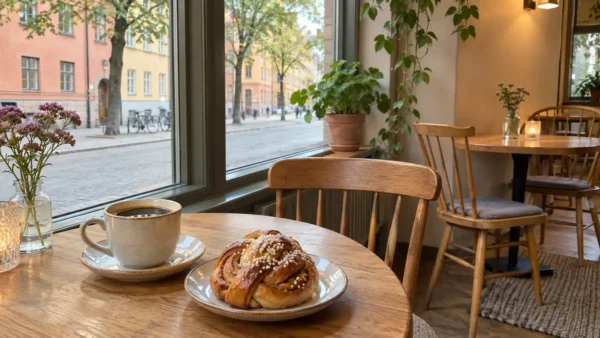
Food. Fika is the coffee break with something sweet, most often a kanelbulle (cinnamon bun), and every town has a café built around it. A smörgåsbord and pickled herring cover the traditional table. Late summer brings the crayfish season, when the shellfish turn up at parties and on restaurant menus.
Sauna and cold dip. Heat followed by cold water is a national habit. Ribersborgs Kallbadhus in Malmö is the best-known example, with a sauna on a pier and the sea right below. Up north, the same ritual carries on through the snow.
Wild swimming. Sweden’s lakes and rocky shores are where most people swim in summer, from the archipelago islands near Stockholm to Lake Siljan in Dalarna. A swim off the rocks is the easiest way to see the country the way Swedes spend their holidays.
Hiking and the right of public access. The national parks, from Abisko to Sarek, are open to walkers under allemansrätten, the right of public access. The environmental agency Naturvårdsverket sums up the principle in four words: “Don’t disturb – don’t destroy”.
Slow trains. Inlandsbanan, the inland railway from Mora to Gällivare, crosses the forests and lakes of the interior at an unhurried pace. It is the slow-travel route between Dalarna and the north, for travelers who want the journey to count as part of the trip.
How We Chose These Places
This page picks the Swedish regions and experiences that suit a first trip, groups them by season and trip style, and sends each one on to the right planning page; it is not a Stockholm sight list, an itinerary or a country planner, and it prints no prices or dates.
Written with AI assistance, these picks were then read through by Alex Perrut, working in tourism since 2015, for the Tripstou editorial team. How that works is set out in our editorial process.
Official sources consulted: Visit Sweden, Naturvårdsverket, Höga Kusten.
Sweden First-Trip Questions
Can you camp anywhere in Sweden?
In much of the countryside, yes: a short stay in a tent is part of allemansrätten, the right of public access, as long as you respect the landowner, the people living nearby and the land itself. The limits, such as how close to homes you may pitch and how long you may stay, are set out by Naturvårdsverket, the Swedish Environmental Protection Agency. National parks and nature reserves can also have their own rules, so check them before you pitch a tent there.
How many days do you need in Sweden?
About a week is enough for a first trip: time for Stockholm, a boat day in the archipelago and one other region. With only a few days, stay with Stockholm and keep the archipelago day, since splitting a short stay with a distant region leaves most of it on trains. Adding Swedish Lapland to a summer trip in the south is where a longer stay starts to pay off.
Plan the Rest of Your Sweden Trip
- Sweden travel guide: when to go, how to get around and how the whole country fits together.
- Sweden trip cost: every price this page leaves out, from trains to the flight north.
- Stockholm travel guide: where to base yourself and how to arrive in the capital.
Did this guide save you time or money? Tripstou is independent and reader-funded — if you'd like to give something back, you can support the site with a crypto contribution of any size.