The best use of a first day in Pristina is a walk through the compact centre — Mother Teresa Boulevard, the view from the cathedral’s bell tower, the National Library and the Newborn monument — followed by the old bazaar quarter with its mosques and the Ethnographic Museum, all on foot and grouped by area so nothing needs a ride. With a second day, the strongest addition is a trip out to Gračanica Monastery or Bear Sanctuary Prishtina.
The picks below are sorted by where they sit in the city, each with the reason it earns the time and the traveler it suits. The last two sections choose for you: which picks fit which kind of trip, and which famous stops you can pass on a short stay.
What to Do in Pristina in One Day or Two
One day in Pristina covers the centre walk and the old bazaar quarter, all on foot. A second day goes to one trip out of the centre, either Gračanica Monastery or the Bear Sanctuary, and each of those needs a bus or taxi and about half a day.
- One day: start on Mother Teresa Boulevard, go up the cathedral’s bell tower for the layout of the city, see the National Library and the Newborn monument, then walk north into the bazaar quarter for the market, the mosques and the Ethnographic Museum. Finish in a café.
- Two days: keep the first day as above and give the second to Gračanica Monastery for frescoes and history, or to the Bear Sanctuary for families and animal lovers. Walkers can reach the sanctuary from Germia Park on a marked trail.
Pristina’s walkable sights are modest in scale. The two experiences visitors remember most are the ones that need a ride, so a traveler with only one day sees the city well but misses its strongest moments.
On food, this page stops at the cafés covered below. Where to sleep, how to arrive, where to eat, how many days to plan and the day trips to Prizren and Peja are all covered in the Pristina travel guide.
Pristina’s Centre on Foot: The Sights to See First
The first sights to see in Pristina sit along and just off one pedestrian boulevard, so they can be walked in sequence: Mother Teresa Boulevard itself, the bell tower of the cathedral for the view, the National Library and the Newborn monument. The whole sequence is a walk, with no vehicle needed at any point.
The route is easy to follow alone with a map. A guide earns their place here only for the stories behind the buildings, and visitors who want that can reserve a guided tour of these same landmarks.
Mother Teresa Boulevard and Skanderbeg Square
Mother Teresa Boulevard is the city’s spine: a long pedestrian promenade where Pristina meets, walks and sits outside. It ends at Skanderbeg Square, the natural turning point of the walk. The boulevard made the list because it is how a visitor reads the city and reaches almost everything else on it. Treat it as the route itself; everyone walks it, whatever else they came for.
The Bell Tower View at the Cathedral of Saint Mother Teresa
The bell tower of the Cathedral of Saint Mother Teresa gives the best overview of Pristina. A lift runs up the tower to a viewing platform, and from there the boulevard and the streets around it fall into place.
Go up early in the walk. Seeing the layout first makes every later stop easier to place, which is why this is the pick for first-timers who want the map in their head before they walk it. Whether the lift is running that day is worth confirming at the door.
The National Library of Kosovo
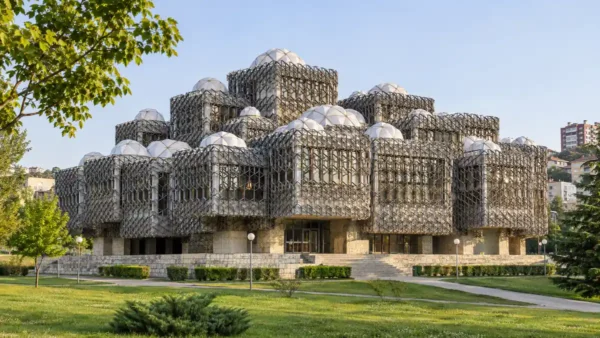
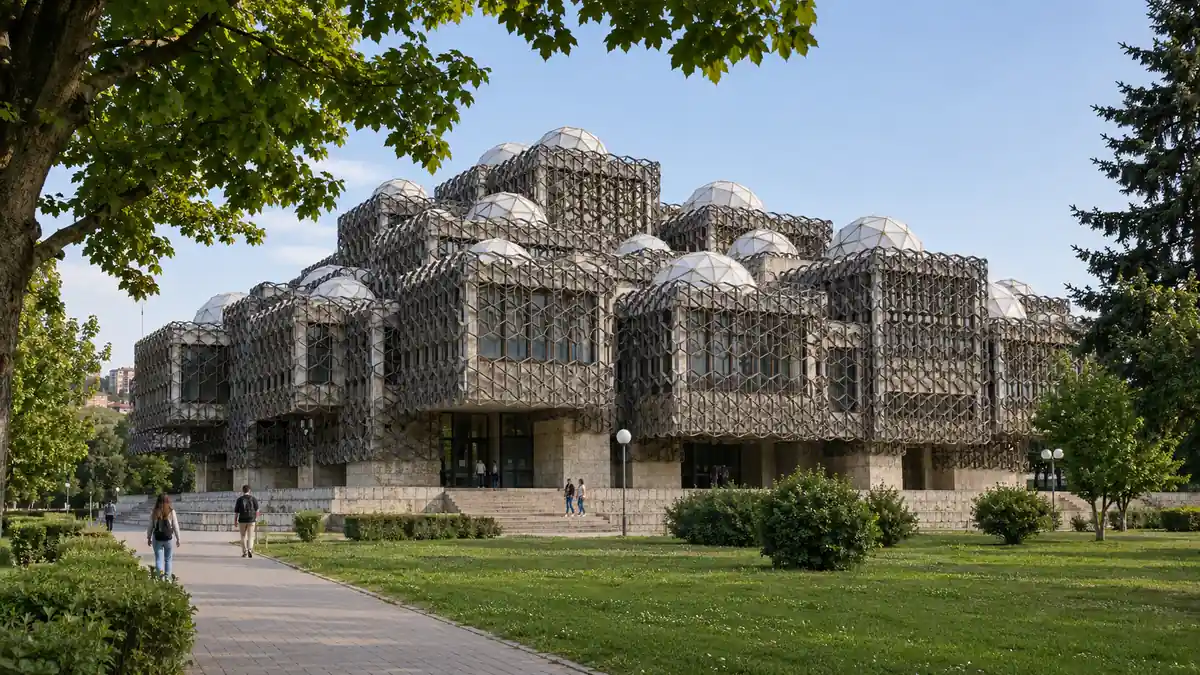
The National Library of Kosovo is the most distinctive building in Pristina. It is a brutalist block crowned by a cluster of domes and wrapped in a metal lattice skin, and no photograph quite prepares you for how strange it looks up close.
The outside is the reason it made the list. Architecture fans and photographers should give it more time than any other building in the centre and walk all the way round it, because the lattice and the domes change with every angle.
The Newborn Monument
Anyone collecting a quick souvenir shot will want the Newborn monument: large letters spelling NEWBORN, repainted with a new design each year, so the picture you take will not match the one in older travel photos. It is a short photo stop. The Palace of Youth and Sports stands beside it, and a look at its exterior on the way past is all it needs.
Tours and activities
Book skip-the-line tickets, day trips and local tours with free cancellation on most activities.
You can also browse everything on getyourguide.com.
Tripstou may earn a commission if you book through this link, at no extra cost to you.
The Old Bazaar Quarter Is Pristina’s Ottoman Side
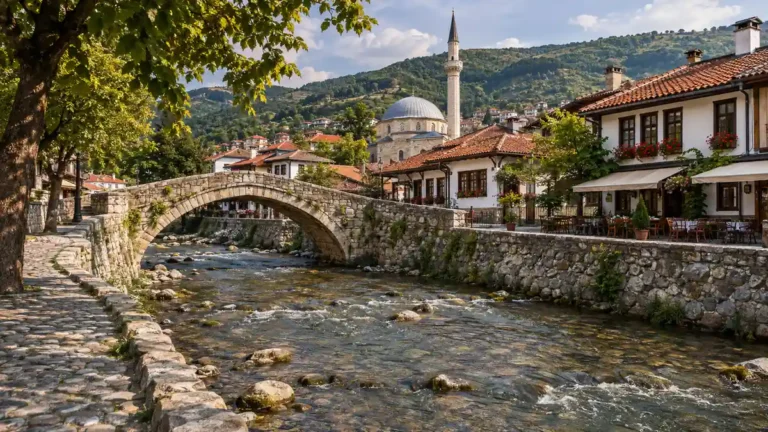
The small area north of the centre, around the old bazaar, holds what remains of Ottoman-era Pristina: a working market, three mosques and the Ethnographic Museum in a complex of period houses. It is small and scattered, and it is the part of the walk with the most texture.
Expect gaps between the sights. The quarter rewards a slow wander more than a checklist.
The Old Bazaar and the Green Market
The old bazaar is a lived-in market, not a restored showpiece. The streets of the green market (Tregu i vjetër) serve the people who live in Pristina, and that is the appeal. Travelers who prefer street life to monuments will get more from a wander here than from anything on the boulevard.
The Bazaar Mosques
Three Ottoman-era mosques stand in the bazaar quarter and can be seen on one loop:
- Sultan Mehmet Fatih Mosque, also called the Imperial Mosque.
- Çarshi Mosque, known as the Bazaar Mosque.
- Jashar Pasha Mosque, the third stop on the same walk.
The Clock Tower (Sahat Kulla) stands on the same route and is seen from outside on the way between them.
The Ethnographic Museum in the Emin Gjiku Complex
The Ethnographic Museum is the museum to choose in Pristina. It occupies the Emin Gjiku complex, a group of Ottoman-era houses that show how a wealthy household lived. It suits visitors after history who would trade a string of exteriors for one interior.
For art, the National Gallery of Kosovo, on the university campus, is the second museum worth a visit.
Kurrizi, Street Art and Café Culture on Pristina’s Modern Side
Pristina feels most itself on its modern side: the long raised housing complex of Kurrizi, the painted walls around the centre, and a café habit built on the macchiato. None of these is a headline sight, and together they show how the city lives.
Kurrizi, “the Spine”
Kurrizi is a long raised housing complex known as “the Spine”. It is the lived-in counterpart to the National Library, and architecture fans who liked the library should walk its length.
Street Art Around the Centre
Street art is one of the pleasures of walking Pristina: murals cover walls around the centre, and many visitors find them without looking. A guided street-art walk is the easiest way to learn who painted them and why; on your own, they are something you come across between other stops. They reward a slower pace, but they are not a reason to add a day.
Café Culture and Where to Sit Down
Sitting over a macchiato is the most local thing to do in Pristina. An hour in a café is part of the visit, not a break from it. Three names come up again and again:
- Soma Book Station
- Prince Coffee House
- Dit’ e Nat’
The Strongest Sights Near Pristina Need a Bus or Taxi
Gračanica Monastery and Bear Sanctuary Prishtina are the most memorable things to do from Pristina, and neither is walkable: each takes a bus or taxi and about half a day. Germia Park, on the city’s edge, is the closer green option and links to the sanctuary on foot.
Gračanica Monastery
Gračanica Monastery is a medieval Serbian Orthodox monastery known for its frescoes, and it is the strongest single sight within easy reach of Pristina. It lies a short bus or taxi ride south-east of the centre on the road to Gjilan. Travelers drawn to history and religious art should put it first on a second day.
Bear Sanctuary Prishtina
Bear Sanctuary Prishtina is home to rescued brown bears and is run by Four Paws. It sits at Mramor, near Badovc Lake, 20 km from Pristina, and it is the pick for families and animal lovers.
| Ticket | Price | Detail |
|---|---|---|
| Adults | EUR 4 | Standard admission |
| Children 4–14 | EUR 2 | Ages 4 to 14 |
| Under 4 | Free | No ticket charge |
| Guided tour | EUR 10 | On request at reception, 1 to 1.5 hours |
Winter shortens the visiting day: the sanctuary closes earlier from November to March, so a cold-season visit needs an earlier start from the city. The sanctuary lists three ways to get there:
- By road via Gračanica, on the Prishtina–Gjilan road; the sanctuary’s partner taxi company quotes EUR 12 one way from Pristina.
- By local bus from Pristina’s Plepat bus station to Mramor.
- On foot or by bike along the Bear Trail, a marked 5.6 km route from Germia Park.
The guided tour is requested at reception on the day. Travelers who would sooner arrange the visit before they leave the city can book a guided visit instead.
Germia Park
Germia Park is the large wooded park on Pristina’s edge, with trails through the trees and a pool that opens in summer. It is the start of the Bear Trail to the sanctuary. Walkers, and anyone who wants shade after a morning on the boulevard, get the most from it.
Prizren, Peja and the Rugova Canyon lie beyond the city’s edge and belong to a wider plan for the country; the Kosovo travel guide shows how they fit together.
Best Things to Do in Pristina by Traveler Type
The centre walk is the right first choice for most visitors, but not for all. Families, travelers after history and religious art, and keen walkers get more from trading part of the centre for the Bear Sanctuary, Gračanica Monastery or Germia Park.
| Pick | Where it is | Time it needs | Who it suits |
|---|---|---|---|
| Centre walk | Mother Teresa Boulevard and around | Half a day | First-timers with one day |
| Old bazaar quarter | North of the centre | An hour or two | Market lovers curious about the Ottoman-era town |
| Modern side | Around the centre | An hour or two | Café sitters and modern-architecture fans |
| Germia Park | The city’s edge | An hour or two | Walkers looking for shade and trails |
| Bear Sanctuary Prishtina | Mramor, near Badovc Lake | Half a day | Families and animal lovers |
| Gračanica Monastery | South-east, on the road to Gjilan | Half a day | History and religious-art travelers |
The top pick stops being the best choice in three cases. With a second day, the centre has already given what it has, and the day belongs to Gračanica or the bears. With children, the sanctuary beats a museum morning outright. Architecture fans should treat the National Library, the exterior of the Palace of Youth and Sports and Kurrizi as one set, walked together.
Walkers can join two picks into one outing. The Bear Trail starts in Germia Park and runs 5.6 km to the sanctuary, turning the city’s green edge and its best animal visit into a single day out on foot.
What Can You Skip in Pristina on a Short Stay?
On a single day, the Clock Tower and the Palace of Youth and Sports need no time of their own. Both are a look from outside while walking past: the Clock Tower on the bazaar walk, the Palace of Youth and Sports on the way to the Newborn monument.
The Clock Tower needs only a glance; seeing it between the mosques is enough. The Palace of Youth and Sports reads in a glance from the street, so a stop of its own adds little to a short day.
Some picks are worth postponing, not dropping. Street art and Kurrizi suit a longer stay, when there is time to wander without a list. Germia Park is at its best in the warm months, so outside them it can wait for another trip.
More Questions About Visiting Pristina’s Sights
What are the free things to do in Pristina?
The sights you take in from the street cost nothing: walking Mother Teresa Boulevard to Skanderbeg Square, the Newborn monument, a circuit of the National Library’s exterior, the old bazaar and green market, and the street art around the centre. Together they fill most of a first day. For the bell tower and the museums, ask at the door; the Bear Sanctuary’s prices are in the table above.
Are the Ulpiana Roman ruins near Pristina worth a visit?
Ulpiana is worth adding only for travelers interested in antiquity who are already making the trip to Gračanica Monastery. The Roman archaeological site lies near Gračanica, so the two fit on one outing, but the ruins are not a reason to leave the city on their own.
How This Shortlist Was Put Together
This page picks the Pristina sights, and the three places just outside the centre, that earn a place in a first visit of one or two days, judged on how easily each is reached on foot and what it gives a visitor; it is not a city guide to sleeping, arriving and eating, and not a day-by-day itinerary.
This shortlist was drafted with AI assistance and checked for the Tripstou editorial team by Alex Perrut, working in tourism since 2015; the editorial process sets out how.
Official sources consulted: Bear Sanctuary Prishtina (how to find us), Bear Sanctuary Prishtina (tickets and hours), Four Paws.
Did this guide save you time or money? Tripstou is independent and reader-funded — if you'd like to give something back, you can support the site with a crypto contribution of any size.