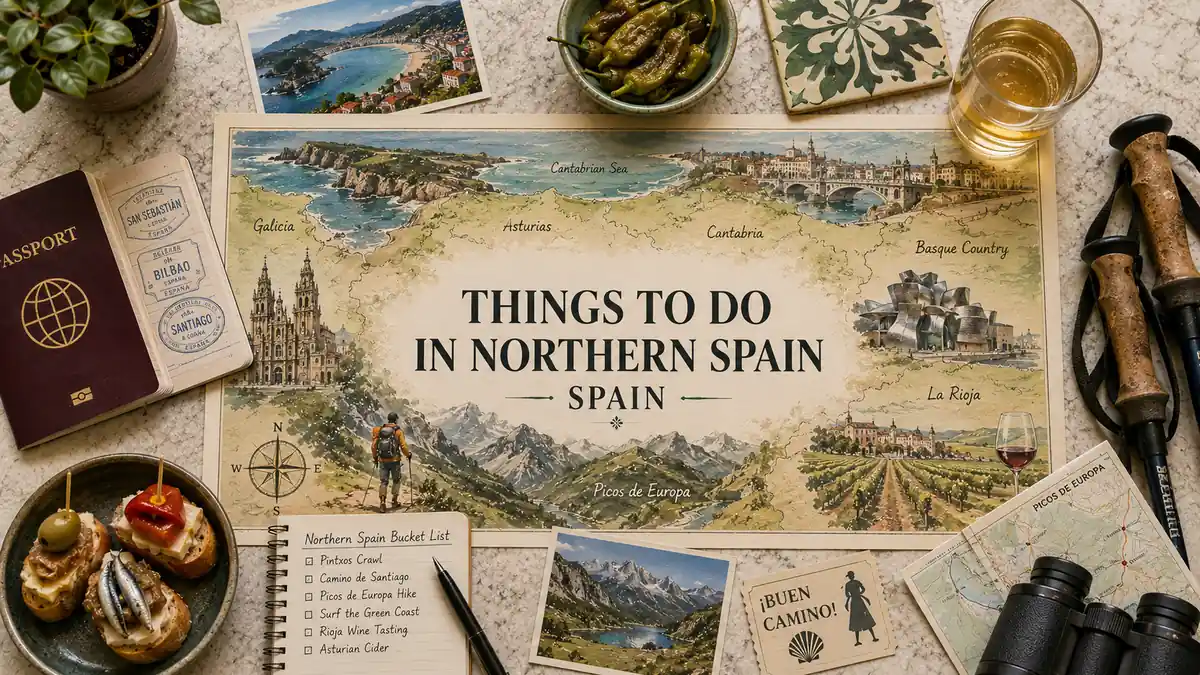
Northern Spain is Green Spain — cooler, wetter, and greener than the sun-baked south, and its real draw is what you do there, not just where you go. The region stacks up a handful of distinct experience pillars: Basque pintxos culture, the Camino de Santiago, hiking in the Picos de Europa, surf and beaches along the Atlantic coast, and Rioja wine paired with Asturian cider. The problem is rarely finding things to do. It is choosing which pillar to build a trip around, because few travelers cover all of them well in one visit. This guide sorts the north’s best experiences by interest so you can shortlist fast. Foodies, hikers, surfers, and culture travelers each get a clear strongest pick, plus the tradeoffs that decide between them.
Quick Answer
The best things to do in Northern Spain center on food, walking, mountains, coast, and wine. Basque pintxos, the Camino, Picos de Europa hiking, Green Coast surf, and Rioja and cider tastings anchor the region. Foodies and culture travelers base in San Sebastián and Bilbao; hikers and surfers head for the Picos and coast.
Trust Layer
Tripstou selection guide for travelers choosing between multiple places. Covers selection criteria, traveler fit, and trip value.
Produced with AI assistance and reviewed by Alex Perrut, working in tourism since 2015, for the Tripstou editorial team. See our editorial process for details.
Last factual review: July 19, 2026.
Official sources consulted: spain.info, tourspain.es.
Key Takeaways
- Basque pintxos and food culture is Northern Spain’s signature experience, best explored as a bar-to-bar crawl through San Sebastián’s old town.
- Pick one lead interest and let it set your base: foodies choose San Sebastián, hikers the Picos de Europa, surfers the Green Coast, culture travelers Bilbao.
- This is Green Spain — cooler, wetter, and food-driven — so pack for rain and plan around Atlantic weather in any season.
- The north rewards depth over breadth: two experience pillars done slowly beat five rushed, because its best moments are paced, not queued.
- Skip pairing Galicia and La Rioja in one short trip — they sit at opposite ends of the north, so leave the far corner for another visit.
Table of Contents
What Are the Best Things to Do in Northern Spain?
Northern Spain’s best experiences fall into five pillars: food, walking, mountains, coast, and wine. Those are Basque pintxos, the Camino de Santiago, hiking the Picos de Europa, Green Coast surf, and Rioja and cider tasting. Approach the region by interest, not by ticking off towns — each pillar suits a different traveler.
The fastest way to plan is to pick a lead interest and let it choose your base. Food and culture travelers gravitate to the Basque coast; walkers and mountain travelers orient around Galicia, Asturias, and Cantabria. The pillars overlap geographically, so one trip can pair two — pintxos and a Picos day-hike, or the Camino and the coast — with little backtracking.
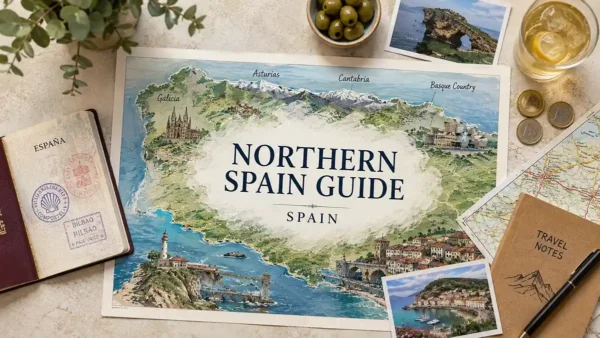
This page covers only the northern regions: Galicia, Asturias, Cantabria, the Basque Country, and La Rioja. For the country-wide experience set, including Andalusia and the Mediterranean, see our guide to things to do in Spain.
The north rewards depth over breadth: two pillars done slowly beat five done in a rush, because its best moments — a long cider lunch, a mountain trailhead at dawn — are paced, not queued.
Basque Pintxos and Food Culture: Northern Spain’s Best Eating
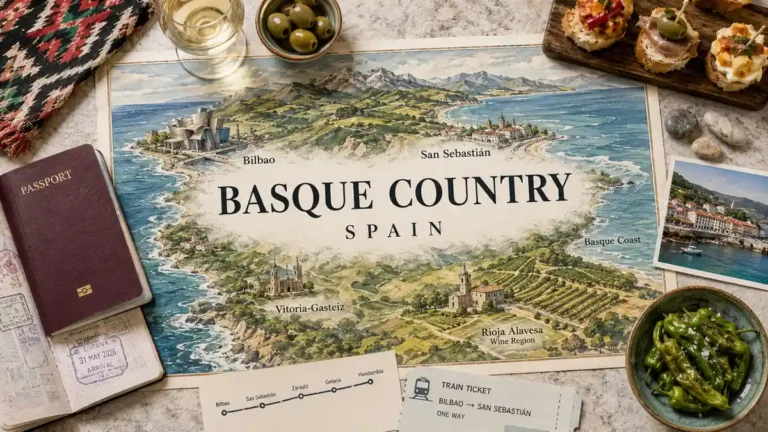
Basque food is Northern Spain’s signature experience, and a pintxos crawl through San Sebastián is its purest form. The region packs bar-top pintxos, seafood grills, and one of the world’s densest runs of Michelin kitchens into a small coastal stretch. It suits travelers who plan trips around eating and want variety in a single evening.
What sets Basque eating apart is how casual and communal it is. You graze standing up, moving bar to bar, ordering one or two pintxos and a small glass before the next place. Highlights across the region:
- San Sebastián’s Old Town (Parte Vieja) — the densest concentration of pintxos bars, best worked as a crawl.
- Bilbao’s Plaza Nueva and Ledesma — a slightly less touristed but equally serious pintxos scene.
- Coastal Gipuzkoa — wood-fired seafood grills where whole turbot and rib steaks are the draw.
Michelin density here is unusually high for the region’s size, but the everyday bar food is where the culture actually lives. Expect to stand, share space, and pay per pintxo — costs add up quietly, so treat any figure you see as a rough guide and check current menus.
Pick this if: eating is the main reason you travel and you want the region’s densest run of pintxos bars and Michelin kitchens within walking distance.
Can You Walk the Camino de Santiago in Northern Spain?
Yes — you can walk the Camino de Santiago in Northern Spain, and two major routes cross the region. The coastal Camino del Norte and the classic Camino Francés both pass through the north on their way to Santiago de Compostela. Most visitors walk a single stage over a few days rather than the full route.
What makes the Camino distinct among the north’s experiences is that it gives a trip a spine — a direction and a daily rhythm — instead of a scatter of separate outings. You don’t need weeks. Popular short options include:
- The final stretch into Santiago de Compostela — the most walked, with the cathedral as the payoff.
- Coastal stages of the Camino del Norte through the Basque Country and Cantabria — sea views, quieter than the Francés.
- Galician stages inland — green, misty, and studded with waymarked villages.
Walking is most comfortable in the milder, drier stretches of the year. The north stays wetter than inland Spain, so pack for rain whatever the month and check current stage conditions before setting out.
Pick this if: you want your trip built around a route and a rhythm, with a clear destination to walk toward.
Hiking the Picos de Europa
The Picos de Europa are Northern Spain’s premier hiking experience, a compact limestone range straddling Asturias, Cantabria, and León. Sharp peaks, glacial lakes, and deep gorges sit within a short drive of the coast, so you can hike serious terrain and still sleep near the sea. It suits everyone from casual day-walkers to committed multi-day trekkers.
What makes the Picos distinct is the range of difficulty packed into a small area — gentle valley walks and exposed ridge routes often share the same trailheads. Standout options:
- The Ruta del Cares — a dramatic gorge path, the region’s most famous day hike, mostly level and family-friendly.
- The Fuente Dé area — a cable car (check current operating status and queues) lifts you to high alpine terrain fast.
- The Covadonga Lakes — glacial lakes and shorter loops with big scenery for modest effort.
High trails are best in the warmer, drier part of the year; snow, cloud, and closures are common outside it, so confirm current trail and cable-car conditions before you commit. The Cares gorge draws crowds midday — starting early buys you the trail almost to yourself.
Pick this if: you want real mountain scenery and proper trails within a short drive of the coast.
Beaches and Surfing on the Green Coast
Northern Spain’s Green Coast is the region’s beach-and-surf experience, stretching along the Atlantic from the Basque Country to Galicia. Cool, powerful surf and dramatic, often uncrowded beaches define it — a world away from the warm Mediterranean south. It suits surfers, cold-water swimmers, and travelers who want coast without the heat.
What sets the Green Coast apart is that it is a genuine surf coast. The Atlantic delivers consistent swell and the water stays cool year-round, which keeps the crowds thinner than the south. Notable spots:
- Mundaka (Bizkaia) — a world-famous left-hand river-mouth wave, for experienced surfers.
- Zarautz and Zurriola in San Sebastián — reliable beach breaks and surf schools for beginners.
- Playa del Silencio (Asturias) — a strikingly beautiful, cliff-backed beach for scenery over surfing.
- Costa da Morte (Galicia) — wild, rugged, and better for walking and views than swimming.
Surf works across much of the year, with bigger, more challenging swells in the cooler months and mellower conditions when it warms; check current forecasts and water temperatures before booking lessons. Wetsuits are standard here in every season.
Pick this if: you want Atlantic surf and dramatic sand without Mediterranean crowds or heat.
Wine and Cider: Rioja Bodegas and Asturian Sidrerías
Rioja wine and Asturian cider are Northern Spain’s drink-led experiences, and they make a natural pair. La Rioja offers bodega tours and tastings among some of Spain’s most celebrated vineyards; Asturias serves cider poured theatrically from height in lively sidrerías. Together they suit travelers who build days around long, regional meals and unhurried tasting.
What makes this pillar distinct is the contrast between two drinking cultures a couple of hours apart — polished and cellar-focused in Rioja, rustic and communal in Asturias. The experiences:
- La Rioja bodegas — guided tastings and cellar visits, from historic wineries to striking modern architecture; book tours ahead.
- Haro and the Rioja Alta — a dense cluster of wineries walkable or a short drive apart.
- Asturian sidrerías — cider houses where servers pour from overhead to aerate the glass; a social night out.
- Cider country around Villaviciosa and Gijón — the heart of Asturian apple-orchard culture.
Tour and tasting prices vary widely by winery and format, so treat any quoted figure as a rough guide and confirm current rates when you book. Cider houses are generally the more casual and affordable of the two.
Pick this if: tastings, bodegas, and long regional lunches are your idea of a day well spent.
Tours and activities
Book skip-the-line tickets, day trips and local tours with free cancellation on most activities.
You can also browse everything on getyourguide.com.
Tripstou may earn a commission if you book through this link, at no extra cost to you.
Culture in Bilbao and San Sebastián: Guggenheim and Old Towns
The Guggenheim Museum and the cities’ walkable old towns are Northern Spain’s cultural core, concentrated in Bilbao and San Sebastián. Frank Gehry’s titanium landmark anchors Bilbao’s arts scene, while San Sebastián pairs belle-époque elegance with the sweep of Playa de la Concha. This suits travelers who want art and architecture as their daily base.
Treated as settings for experiences, these two cities deliver the north’s densest run of culture. What to do:
- The Guggenheim Bilbao — the building itself is the headline; check current opening hours and ticket options before visiting.
- Bilbao’s Casco Viejo — the medieval old town, best for wandering, pintxos, and the Sunday markets.
- San Sebastián’s Parte Vieja and La Concha — old-town streets that open onto one of Europe’s most admired urban beaches.
- Belle-époque San Sebastián — grand riverside architecture from the city’s resort heyday.
For a ranked look at where these cities sit among the country’s top destinations — and how to choose a base — see our guide to the best places to visit in Spain. The culture here is walkable and compact: both old towns reward slow, aimless hours more than a ticking itinerary.
Pick this if: you want world-class art and walkable old towns as your daily base.
Which Northern Spain Experiences Suit Your Travel Style?
Match the pillar to your travel style — each traveler type has one clear strongest pick in Northern Spain. Foodies choose the Basque coast, hikers the Picos de Europa, surfers the Green Coast, and culture travelers Bilbao and San Sebastián. Pick your lead interest first, then let it choose your base.
The mapping below turns interest into an itinerary shortlist:
| Traveler type | Strongest experience | Suggested base | Pairs well with |
|---|---|---|---|
| Foodie | Basque pintxos and Michelin dining | San Sebastián | City culture and old towns |
| Hiker | Picos de Europa trails | Cangas de Onís or Potes | Green Coast beaches nearby |
| Surfer | Green Coast breaks and beaches | San Sebastián or Zarautz | Basque food scene |
| Culture traveler | Guggenheim and city old towns | Bilbao | Pintxos crawls and markets |
| Road-tripper | Coast-and-mountains driving loop | No fixed base | Cider houses and beaches |
Most travelers fit more than one row, and the pillars pair naturally — food with culture on the Basque coast, hiking with beaches in Asturias. To choose which regions and bases host these experiences, see our Northern Spain guide. The one combination that rarely works is Galicia and La Rioja in the same short trip — they sit at opposite ends of the north, so let your lead interest set the route and leave the far corner for another visit.
Frequently Asked Questions
How many days do you need in Northern Spain?
Five to seven days lets you build a trip around one or two experience pillars — say Basque food plus a Picos day-hike — without rushing. Ten days adds a second region comfortably. For how to sequence these experiences into a day-by-day route, see our Spain itinerary ideas.
Is Northern Spain worth visiting?
Yes, Northern Spain is well worth visiting, especially if you value food, mountains, and coast over guaranteed sun. Green Spain trades the Mediterranean’s heat and crowds for pintxos culture, dramatic Atlantic beaches, and serious hiking. It rewards travelers who want depth and variety over a beach-resort holiday.
What is the best time of year for things to do in Northern Spain?
The warmer, drier months are generally best for hiking, surfing, and long coastal days. Green Spain stays wetter than the south year-round, though, so pack for rain in any season. Food, wine, and city culture work well throughout the year. Always check current conditions before booking outdoor experiences.
Do you need a car to explore Northern Spain?
A car is worth it for the mountains, cider country, and quieter beaches, though it isn’t essential everywhere. You can enjoy the Basque cities, pintxos, surf towns, and the Guggenheim car-free, since San Sebastián and Bilbao are walkable and well connected by train and bus. Match transport to your lead interest.
Can you combine hiking and beaches in a Northern Spain trip?
Yes, and Asturias makes it easy. The Picos de Europa sit a short drive from the coast, so you can hike a gorge trail in the morning and reach a beach the same afternoon. Cantabria works similarly. Pairing mountains and sand from one base is one of the north’s easiest combinations.
Is Northern Spain a good choice for families?
Yes, Northern Spain suits families well. Gentle Picos walks like the Covadonga Lakes, calm city beaches, the Guggenheim, and relaxed cider houses all work with children. The cooler climate makes summer more comfortable than the hot south. Rougher surf beaches and long tasting menus are the experiences better saved for adults.
Related Guides
Plan the rest of your Northern Spain trip with these guides:
- Northern Spain travel guide — regions, bases, and how to plan a trip around these experiences.
- Things to do in Spain — the national experience set, including the south and the Mediterranean.
- Best places to visit in Spain — where these experiences sit among the country’s top destinations.
- Spain itinerary ideas — how to sequence Northern Spain’s experiences into a route.
Did this guide save you time or money? Tripstou is independent and reader-funded — if you'd like to give something back, you can support the site with a crypto contribution of any size.