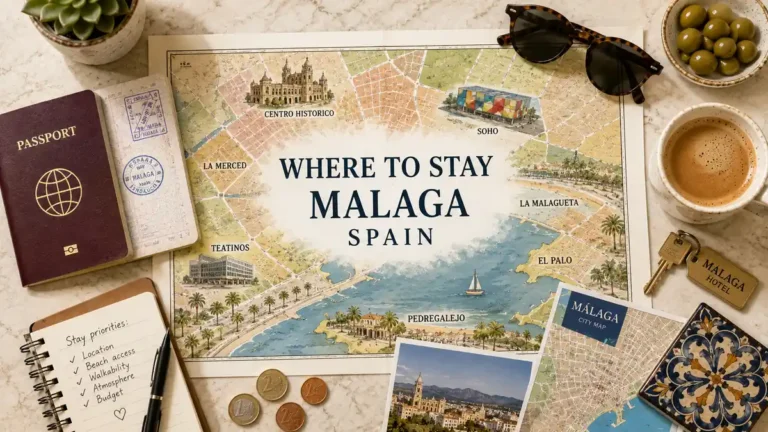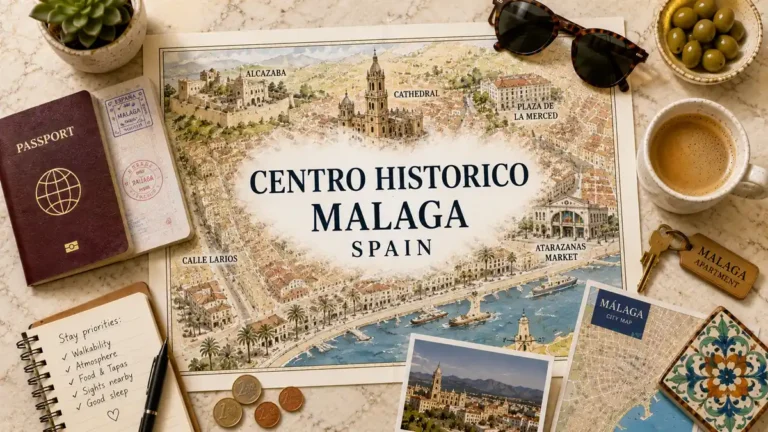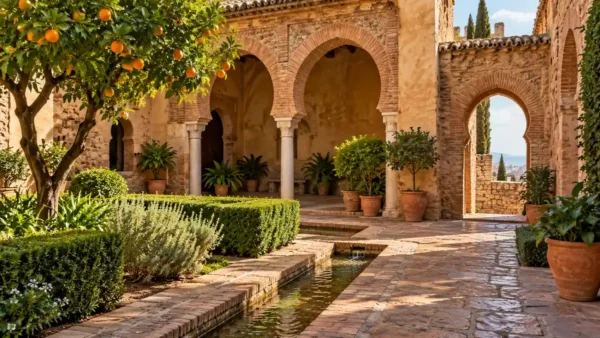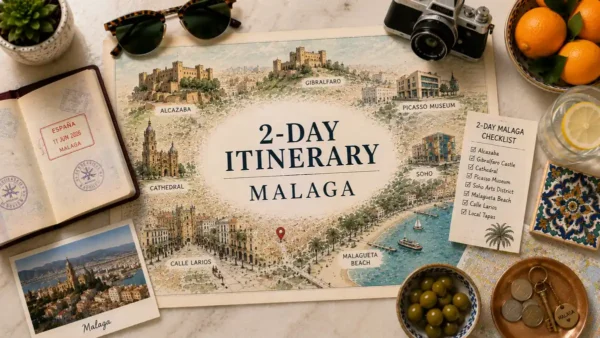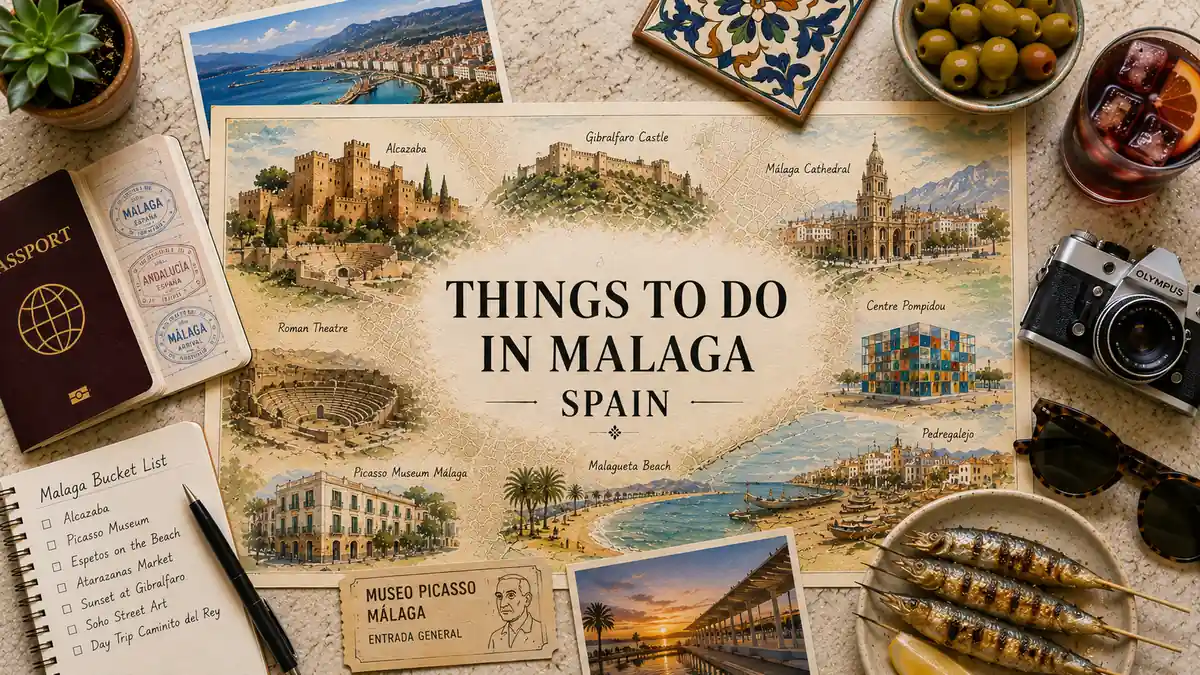
Malaga has more worthwhile experiences than a short trip can hold. An 11th-century Moorish fortress, more than 30 museums, two beaches with opposite personalities, and a night scene that peaks at sunset all compete for the same two or three days. Most lists respond by naming everything. This one doesn’t. Every experience here is ranked by payoff — the return you get for the hours and euros you put in — and sorted into worth it, pleasant, or skippable. You’ll get a clear verdict on the Picasso Museum, an honest answer to the Malagueta-versus-Pedregalejo beach question, the free experiences that beat paid tickets, and the only three day trips that justify leaving the city. Where booking ahead matters, it’s flagged. Where it doesn’t, that’s flagged too.
Quick Answer
Start with the Alcazaba, the Museo Picasso Málaga, and espetos at a beach chiringuito — Malaga’s highest-payoff trio. Your split between history-and-art and beach-and-food decides the rest — the compact old town lets you mix both in one day. Budget or repeat visitors should work the free layer first: Soho street art, Atarazanas Market, and the Roman Theatre.
Trust Layer
Tripstou selection guide for travelers choosing between multiple places. Covers selection criteria, traveler fit, and trip value.
Produced with AI assistance and reviewed by Alex Perrut, working in tourism since 2015, for the Tripstou editorial team. See our editorial process for details.
Last factual review: July 18, 2026.
Official sources consulted: Spain.info, Turespaña.
Key Takeaways
- The Alcazaba is Malaga’s one unmissable paid ticket; borrow Gibralfaro’s panorama free from the mirador partway up the hill.
- Prioritize the Museo Picasso Málaga among 30-plus museums that turn a rainy Malaga day into genuinely good news.
- Pick Malagueta for a quick afternoon dip, Pedregalejo for a calmer, more local full-day espeto lunch.
- Malaga’s free layer — Soho street art, Atarazanas Market, the Roman Theatre — often beats mid-tier paid attractions.
- Time sunset from a rooftop or the Gibralfaro mirador — it’s the free high point of any Malaga evening.
- Book the Caminito del Rey ahead for its timed entry, and reserve Picasso Museum slots in busy periods.
Table of Contents
Is Malaga Worth Visiting?
Yes — Malaga is worth visiting, and it repays a short trip better than most Spanish cities. A Moorish fortress, Picasso’s museum in the city of his birth, and sardines grilled on the sand all sit within one compact, walkable center. Few places pack history, art, and beach food this tightly.
This page ranks everything by payoff per hour. Each experience gets one of three verdicts — worth it, pleasant, or skippable — so you can build a trip around the first group, fill gaps with the second, and drop the third without a second thought. Malaga’s compactness is what makes ruthless picking work here: almost every headline experience sits inside one walkable circle, so a mediocre choice costs you minutes, not half a day.
If you’re still deciding whether Malaga makes the cut at all, see where it sits among the best places to visit in Spain. And this page deliberately skips logistics — for where to stay, getting around, and everything practical, the Malaga city guide covers it all.
Old Town Landmarks Worth the Ticket
The Alcazaba is the one paid landmark in Malaga nobody should skip. Gibralfaro rewards those willing to climb, the Roman Theatre costs nothing and takes minutes, and the Cathedral works best from outside for most visitors. Rank them that way and you will not waste a ticket.
Alcazaba
The Alcazaba is Malaga’s 11th-century Moorish fortress and the best paid experience in the city. It climbs the hillside at the edge of the old town in layers of gates, patios, and gardens, with the port appearing and disappearing as you ascend.
What sets it apart on this list is completeness — no other ticket in Malaga combines architecture, gardens, and views in one visit. It is also gentler than it looks from below. The walk up is a stroll with pauses, not a hike, and an hour or two covers it well.
Pick this if: you buy only one ticket in Malaga.
Gibralfaro Castle
Gibralfaro Castle is the ramparts-and-views counterpart perched above the Alcazaba. The reward is not the interior — it’s the circuit of the walls, with the port, the bullring, and the coastline laid out below you.
It earns its place through the climb: the path up is steep enough to thin the crowds, and the panorama at the top is the best in the city. A combined ticket covering both the Alcazaba and Gibralfaro is normally sold and is usually the better buy if you plan to do both — verify current prices and opening hours locally before you go.
Pick this if: the view over the port matters more to you than historic interiors.
Roman Theatre
The Roman Theatre sits at the foot of the Alcazaba and can be appreciated fully from street level. It is the rare headline landmark that costs nothing and demands almost no time.
Its distinction is exactly that — a genuine ancient monument you absorb in passing, on the way to the fortress entrance. Stop, take in the setting, take the photo, move on. Nothing about it punishes brevity.
Pick this if: you want a landmark that fits between two other plans.
Malaga Cathedral
Malaga Cathedral — nicknamed La Manquita, “the one-armed lady” — is famous for the second tower that was never finished. It anchors the non-Moorish half of the old town’s story.
For most visitors, the exterior delivers the memorable part: circle the building, find the missing tower, and the story lands without a ticket. Go inside if grand church interiors are your thing; skip it without guilt if the Alcazaba has already claimed your sightseeing budget.
Pick this if: you want Malaga’s Christian-era landmark after a morning of Moorish ones.
The Alcazaba and Gibralfaro answer different questions — the Alcazaba is about what stands inside the walls, Gibralfaro about what you can see from them. Forced to choose, take the fortress; you can borrow much of Gibralfaro’s panorama from the free mirador partway up the hill.
Which Malaga Museums Are Actually Worth It?
Yes — the Museo Picasso Málaga is worth it, in the city where Picasso was born. The Centre Pompidou Málaga and CAC Málaga also reward a visit. With more than 30 museums in town, Malaga is one of the few beach cities where a rainy day is genuinely good news.
Museo Picasso Málaga
The Museo Picasso Málaga is the museum to prioritize. Picasso was born in this city, and seeing his work a few streets from his birthplace adds a context no other collection can copy.
The collection favors range across his whole career over a parade of greatest hits — better for understanding the artist than for ticking off famous canvases. It has periodically offered free entry in the final hours on Sundays; treat any free window as crowded and verify the current schedule before planning around it.
Pick this if: you see one museum in Malaga.
Centre Pompidou Málaga
The Centre Pompidou Málaga is the only Pompidou outpost outside France, sitting under the multicoloured glass cube at Muelle Uno. The building announces the experience — modern, bright, and quick to visit.
It works as the modern-art counterweight to the Picasso Museum: a tighter, changing selection instead of a deep permanent archive, easy to fold into a harbor-front walk. You leave energized, not exhausted.
Pick this if: you want modern art in a short, vivid dose, not an all-morning commitment.
CAC Málaga
CAC Málaga is the city’s contemporary art center and a big reason the Soho district became an art quarter at all. It shows living artists in a raw, warehouse-style space.
Its edge is accessibility — admission has traditionally been free or close to it, though you should confirm the current policy — which makes it the lowest-risk museum experiment in the city. Wander in after seeing the Soho murals; the two experiences explain each other.
Pick this if: you’d try contemporary art but won’t pay to gamble on it.
Malagueta or Pedregalejo: Which Beach Is Best?
Choose La Malagueta for convenience and Pedregalejo for the better overall beach experience. Malagueta sits a short walk from the old town and fills up fast; Pedregalejo, east of the center, trades that convenience for calmer sand and better chiringuitos. Either way, the espetos matter more than the beach itself.
La Malagueta
La Malagueta is the city beach, a short walk from the old town past the port. Convenience is its entire pitch — and on a short trip, convenience wins.
The trade-off is company. It fills quickly in season, the sand is urban, not idyllic, and the atmosphere is closer to a busy city plaza than an escape. As an afternoon add-on to a sightseeing day, though, it does exactly what you need.
Pick this if: your beach time is an afternoon slotted between museums.
Pedregalejo
Pedregalejo is a former fishing neighborhood east of the center, with a string of small coves and the city’s best chiringuito strip. It is calmer, more local, and built for a full unhurried day.
The cost is the trip out — a bus or taxi ride instead of a stroll — and that small friction is precisely what keeps the crowds thinner. Families eating long Sunday lunches on the sand are the quality signal you’re looking for.
Pick this if: a long seafood lunch by calm water is the point of the day.
Espetos at a Chiringuito
Espetos — sardines skewered on cane and grilled over open fire pits on the beach — are Malaga’s signature food experience. They are the reason either beach is worth scheduling around lunch.
Order them at a chiringuito, eat them with your hands, and watch the fire: the wood-smoke grilling is the whole trick. Chiringuitos run strongest through the warm months; outside high season, check that your target beach bar is actually open before making the trip.
Pick this if: you eat one meal in Malaga you’ll still describe a year later.
Pedregalejo’s real advantage isn’t the sand — it’s that malagueños eat there themselves, which turns an espeto lunch from a tourist snack into the local ritual it was always meant to be.
Free Things to Do in Malaga That Beat the Paid Ones
Soho’s MAUS street art is the best free experience in Malaga. The free layer here is unusually strong — a covered market, a subtropical park, a harbor promenade, and a Roman theatre — and several of these outdo mid-tier paid attractions. Skip a ticket before you skip these.
Treat this list as the connective tissue of a Malaga trip — the things you do between tickets, on the walk from one paid attraction to the next.
- Soho street art (MAUS project): the MAUS initiative turned the district’s walls into an open-air gallery of large-scale murals. The payoff is museum-grade art at street level. Suits travelers who like their art free, outdoors, and uncrowded.
- Atarazanas Market: Malaga’s central covered food market. Go mid-morning when the fish counters are loudest — the payoff is the city at its least performed. Suits food travelers and photographers.
- Parque de Málaga: a shaded subtropical park between the old town and the port. The payoff is genuine recovery time in deep shade. Suits anyone melting in the afternoon heat.
- Muelle Uno: the harbor promenade beneath the Pompidou’s coloured cube. The payoff is an easy waterfront walk with the fortress hill behind you. Suits evening strollers who want the port without a ticket.
- Cathedral exterior: circle La Manquita and spot the never-finished second tower. The story is free even when the interior isn’t. Suits budget travelers doing the old town on foot.
- Roman Theatre: already covered above, but it belongs here too — an ancient monument at zero cost, passed on the way to nearly everything else.
Things to Do in Malaga at Night
Sunset from a rooftop bar or the Gibralfaro mirador is Malaga’s best free show. After dark the old town shifts from sightseeing to eating — terraces fill, tapas bars run late, and the monuments glow under floodlights. Add a show at Teatro Cervantes or a film at Cine Albéniz for a cultural night.
Time sunset deliberately. It is the hinge of a Malaga evening, and both the free and the paid versions face the same golden view over the port.
- Rooftop or mirador at sunset: the mirador on the Gibralfaro hill costs nothing; the old town’s rooftop bars charge the price of a drink for the same light. The payoff is the city’s single best photograph, taken sitting down.
- The old town after dark: floodlit monuments, streets handed over to terraces, and the Alcazaba walls glowing above it all. The payoff is seeing the daytime sights again for free, in better light.
- Teatro Cervantes: the city’s historic theater and its main stage for concerts and performances. Check the program — a show here turns a good evening into a memorable one.
- Cine Albéniz: a much-loved city-center cinema that gives a too-hot or rained-out evening an instant plan.
- Late tapas: eat the local way — later than feels natural, and in more than one place. The payoff is the evening itself becoming the activity.
Day Trips from Malaga Worth Booking
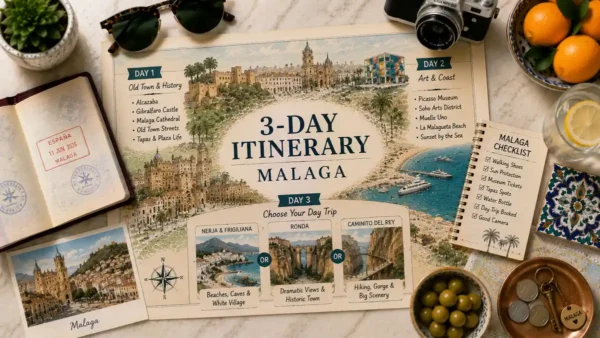
Ronda, Nerja, and the Caminito del Rey are the only three day trips worth a full day. Each trades Malaga time for something the city cannot offer — a gorge-top town, a slow coastal escape, and a cliff-walk thriller. Everything else on the day-trip menu costs a day for a smaller payoff.
- Ronda: a clifftop town split by a plunging gorge. The payoff is scenery no coastal city can match, and it works both independently and as a guided tour from Malaga. Pick this if: you’d trade a beach day for the best photograph of the trip.
- Nerja: a whitewashed seaside town down the coast. The payoff is a slower, prettier coastal day that needs almost no planning, bookable as a tour or done on your own. Pick this if: you want the postcard version of the coast with zero logistics stress.
- Caminito del Rey: a walkway pinned high along the walls of a gorge inland from Malaga. The payoff is controlled adrenaline with spectacular views. Entry is by timed ticket and popular dates can sell out — book before you build the day around it. Pick this if: you want the one experience near Malaga that raises your pulse.
The Caminito del Rey is the one Malaga decision spontaneity ruins — timed entry means it gets chosen days ahead, not over breakfast.
| Experience | Book ahead? | Why |
|---|---|---|
| Caminito del Rey | Yes, for any date | Timed entry only, and popular dates sell out early |
| Museo Picasso Málaga | Yes, in busy periods | Entry slots fill on peak days and around free windows |
| Alcazaba and Gibralfaro | Usually not needed in advance | Walk-up entry is normally straightforward outside peak weeks |
| Centre Pompidou Málaga | Rarely needed at any time | Visitor flow rarely outpaces the building’s capacity |
Day trips only make sense on a trip of three days or more. If you’re working out how a shorter visit fits together, the 2-day Malaga itinerary shows what a tight trip already demands, while the 3-day Malaga plan is the shortest version that absorbs a day trip comfortably. For experiences beyond the Malaga area, start with the best things to do across Spain.
Tours and activities
Book skip-the-line tickets, day trips and local tours with free cancellation on most activities.
You can also browse everything on getyourguide.com.
Tripstou may earn a commission if you book through this link, at no extra cost to you.
Frequently Asked Questions
What can you do in Malaga when it rains?
Head to the museums — Malaga has more than 30, so a rainy day becomes a genuine upgrade. Start with the Museo Picasso Málaga, then add the Centre Pompidou or CAC. The covered Atarazanas Market and long tapas lunches indoors round out a wet-weather day without touching a beach.
Is Malaga good for kids?
Yes, Malaga suits families well. The Alcazaba’s ramparts and gardens play like a castle adventure, the beaches at Malagueta and Pedregalejo are calm and shallow, and Parque de Málaga offers shaded space to run. Watching espetos grilled over open fire pits on the sand entertains children as much as adults.
Is Gibralfaro Castle worth the climb?
Yes, if wide views matter more to you than historic interiors. The path up is steep enough to thin the crowds, and the panorama over the port, bullring, and coastline is the best in the city. If the climb feels like too much, the free mirador partway up delivers much of the same view.
Do you need to book Alcazaba or Picasso Museum tickets in advance?
Usually only the Picasso Museum, and only in busy periods. The Alcazaba typically accepts walk-up entry outside peak weeks, while Museo Picasso Málaga slots can fill on peak days and around free-entry windows. Booking ahead does no harm in high season; always check current availability before you rely on walking up.
Is the Centre Pompidou Málaga worth it after the Picasso Museum?
Yes, because the two barely overlap. The Picasso Museum gives you a deep, career-spanning permanent collection; the Centre Pompidou offers a tighter, changing selection of modern art in a quick, bright visit under its coloured cube. Pair them when you want both depth and variety, or pick Pompidou alone for a short art hit.
When is the best time to try espetos in Malaga?
Espetos are best in the warm months, when the beachside chiringuitos run their open-fire grills at full strength. They are served year-round at many spots, but service thins outside high season, so confirm your target beach bar is open before making the trip. Eat them fresh off the cane with your hands.
Related Guides
- Malaga city guide — where to stay, getting around, and every practical detail this page deliberately skips.
- 2 days in Malaga — a tight, sequenced plan for a short city break.
- 3 days in Malaga — the shortest plan with room for a day trip.
- Best places to visit in Spain — where Malaga sits among Spain’s top destinations.
- Things to do in Spain — the country-wide experience shortlist.
Did this guide save you time or money? Tripstou is independent and reader-funded — if you'd like to give something back, you can support the site with a crypto contribution of any size.