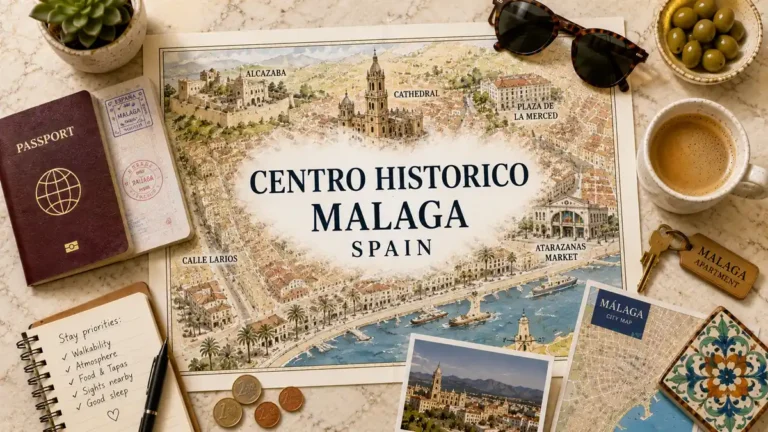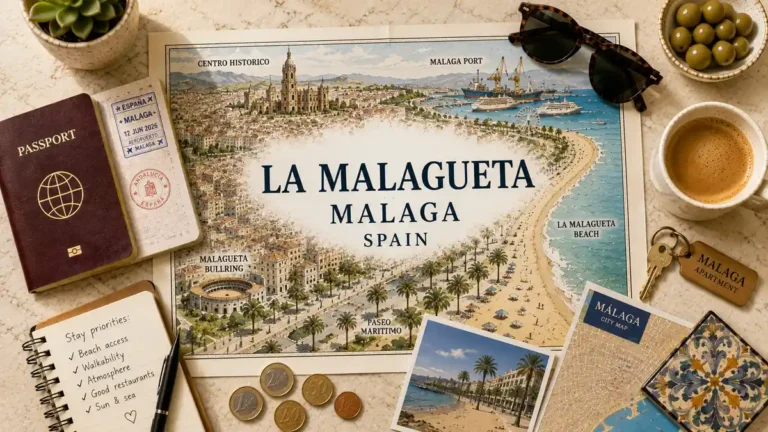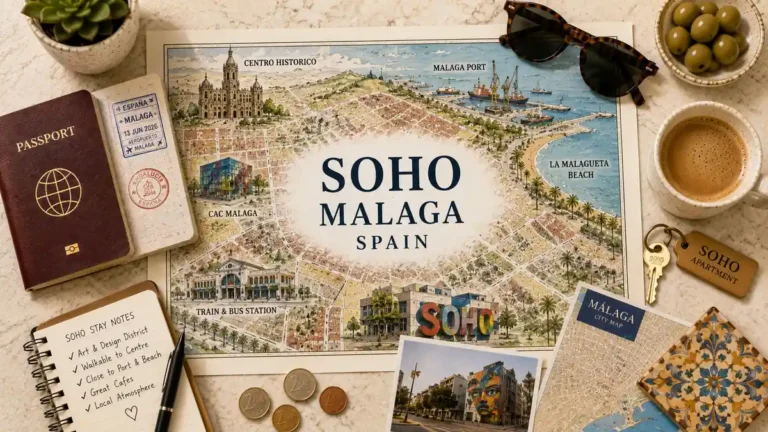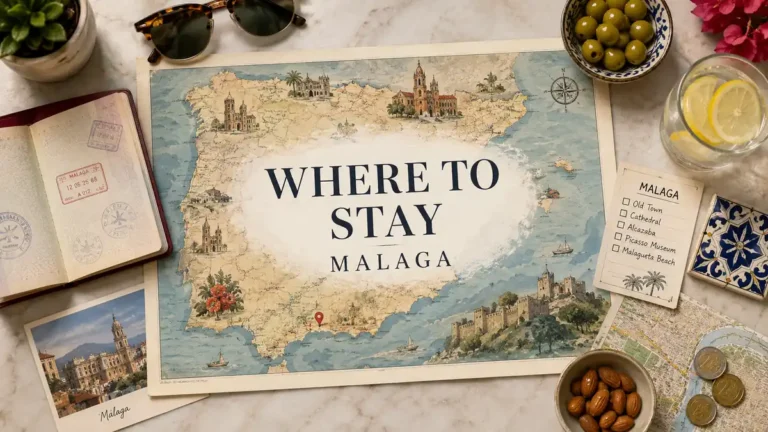
You’ve chosen Malaga, you’ve got about two days, and the only real question left is how to order them. This guide lays out the tight, must-see-only version of Malaga — the highlights done well, in a sequence that keeps you walking, not backtracking. It groups the city into two clean days: Moorish history first, art and coast second. Travelers with more time can take a slower route and add day trips, but for a focused 48 hours, this is the plan.
Quick Answer
Spend Day 1 on Malaga’s historic Moorish old town and Day 2 on its art and coast. Malaga’s centre is compact and walkable, so grouping sights by area beats backtracking across the city. Two days covers the highlights comfortably; add a third for day trips or a slower pace.
Trust Layer
Tripstou itinerary guide for travelers planning a route. Covers pacing, stop count, stop order, base logic, and trip length.
Produced with AI assistance and reviewed by Alex Perrut, working in tourism since 2015, for the Tripstou editorial team. See our editorial process for details.
Last factual review: June 11, 2026.
Official sources consulted: European Union official portal, EU travel information.
Key Takeaways
- Split the trip cleanly: spend Day 1 on Malaga’s Moorish old town and Day 2 on its art and coast.
- Group each day around one area so you walk a loose loop instead of backtracking across the compact centre.
- Pace each day in morning, afternoon and evening legs, treating the timings as a rhythm rather than a fixed schedule.
- Keep Day 1 on foot, climbing from the Alcazaba up to Gibralfaro before dropping into the old-town core.
- Skip day trips and outer neighbourhoods in 48 hours; save those for a third day if your pace allows.
Table of Contents
Is 2 days enough to see Malaga?
Yes, two days is enough to see Malaga’s highlights. The historic centre is compact and walkable, so its headline sights — the Alcazaba, the Picasso Museum, the cathedral and the seafront — sit within an easy stroll of each other. A 48-hour visit covers the must-sees comfortably without rushing.
Two days works because Malaga rewards depth over distance. The old town, the cathedral, the Picasso Museum and the seafront sit close together, so you spend your time seeing sights rather than commuting between them. That makes Malaga an ideal short-break city for first-timers and weekend travelers.
The trade-off is that 48 hours stays inside the city itself. Day trips to nearby towns and a slower, more local pace need a third day. If you want the bigger picture before you plan — its neighbourhoods, history and food scene — the full Malaga guide covers that broader context.
Your 2-day Malaga itinerary at a glance
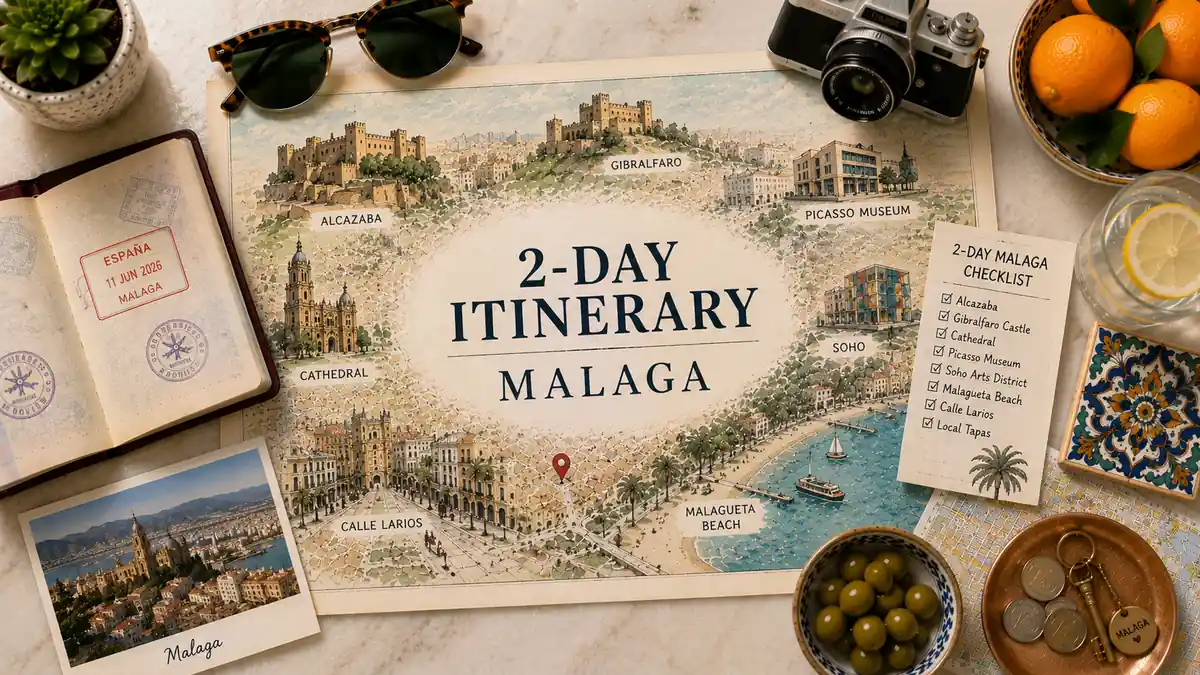
Your two-day Malaga plan splits cleanly: Day 1 is the old town, Day 2 is art and coast. Day 1 covers the Moorish and Roman core, Day 2 the museums and seafront. Grouping each day around one area keeps the trip walkable and cuts out backtracking between sights.
| Time of day | Day 1: old town and history | Day 2: art and coast |
|---|---|---|
| Morning leg | Alcazaba and the Roman Theatre | Picasso Museum and Soho street art |
| Afternoon leg | Gibralfaro and the cathedral quarter | Centre Pompidou and Muelle Uno |
| Evening leg | Calle Larios and a central dinner | Malagueta beach and seafront dining |
The shape is deliberate: each day clusters around one part of the city, so you walk a loose loop instead of crossing back and forth. Day 1 climbs from the Alcazaba up to Gibralfaro before dropping into the old town, and Day 2 traces the museum district out to the waterfront. Treat the timings as a rhythm, not a stopwatch — linger where you like and trim where you don’t.
Day 1: Alcazaba, Gibralfaro and the historic centre
Day 1 puts Malaga’s Moorish and Roman highlights on foot, in one efficient old-town loop. The Alcazaba, Gibralfaro castle, the Roman Theatre and the cathedral cluster within the historic centre, so you can move between them without transport. The day builds from morning history to an evening stroll down Calle Larios.
Morning: Alcazaba and the Roman Theatre
Start at the Alcazaba early, before the heat and crowds build. This Moorish fortress-palace is Day 1’s centerpiece, and the Roman Theatre sits right at its foot, so you take in both at one stop. A combined ticket usually covers the Alcazaba and Gibralfaro together, which is worth buying here to save a second queue.
- Alcazaba: Moorish fortress-palace with gardens and city views.
- Roman Theatre: ancient ruins directly below the Alcazaba entrance.
- Buy the combined Alcazaba and Gibralfaro ticket at the start.
Afternoon: Gibralfaro and the old-town streets
Climb to Gibralfaro next, since it connects to the Alcazaba and shares the same ticket. The hilltop castle delivers Malaga’s widest panoramic views over the city and port. Afterwards, drop back down into the old town for the cathedral and the lanes around it.
- Gibralfaro: hilltop castle with the city’s broadest views.
- Reach it on foot via the connecting path, or a short bus.
- Malaga Cathedral: landmark church anchoring the old-town core.
Evening: Calle Larios and dinner in the centre
Wind down on Calle Larios, Malaga’s grand pedestrian avenue, as it fills up in the evening. The surrounding old-town squares are lined with tapas bars and restaurants for dinner. It’s the natural place to end a day spent entirely on foot.
- Calle Larios: marble pedestrian street through the centre.
- Plaza de la Constitución: lively square just off Larios.
- Dinner: tapas in the old-town streets nearby.
Tours and activities
Book skip-the-line tickets, day trips and local tours with free cancellation on most activities.
You can also browse everything on getyourguide.com.
Tripstou may earn a commission if you book through this link, at no extra cost to you.
Day 2: Picasso Museum, Soho and the seafront
Day 2 trades history for art and the sea, flowing from the museum district to the waterfront. The Picasso Museum, Soho’s street art, the Centre Pompidou and Malagueta beach line up in a loose west-to-east arc, so the day stays walkable. It ends with sunset and dinner by the seafront.
Morning: Picasso Museum and Soho street art
Begin Day 2 at the Picasso Museum, dedicated to Malaga’s most famous son. It’s the city’s signature art stop and anchors the morning. From there, walk into Soho, the district known for large-scale murals and open-air street art.
- Picasso Museum: the city’s flagship art collection.
- Check the museum’s closing day before you go.
- Soho: open-air street art and contemporary murals.
Afternoon: Centre Pompidou and Muelle Uno waterfront
Head to the waterfront for the Centre Pompidou and Muelle Uno in the afternoon. The Pompidou’s colourful glass cube sits right on the redeveloped port. Muelle Uno lines the quay with shops, restaurants and sea views on an easy, flat walk.
- Centre Pompidou: modern art beneath the landmark glass cube.
- Muelle Uno: waterfront promenade with shops and dining.
- La Farola lighthouse: marks the far end of the port walk.
Evening: Malagueta beach and seafront dinner
Finish at Malagueta, the city beach a short walk from the port. It’s the easiest place to end the day with sand, sea air and a seafront dinner. In the warmer months it’s swimmable; off-season it’s still a pleasant stroll.
- Malagueta: Malaga’s main city beach beside the centre.
- Espetos: sardine skewers grilled at beachfront chiringuitos.
- Seasonality: best for swimming in the warmer months.
Where to stay for a 2-day Malaga trip
Stay in or near Malaga’s historic centre so both days run entirely on foot. A central base puts the old town, the cathedral and Calle Larios on your doorstep and the seafront a short walk away. For a 48-hour trip, walkability matters more than a sea view or a quieter neighbourhood.
The historic centre and the streets around it make the strongest base, because everything on this itinerary radiates from there. The old town suits travelers who want to walk everywhere; the seafront near Malagueta suits those happy to trade a few minutes’ walk for a beach view. The trade-off is price — central rooms cost more and book up faster. For a full breakdown of neighbourhoods and picks, see where to stay in Malaga.
Hotels and places to stay
Compare hotels, apartments and stays for your dates in one search.
Search hotels and stays on hotels.com →
Tripstou may earn a commission if you book through this link, at no extra cost to you.
Getting around Malaga and from the airport
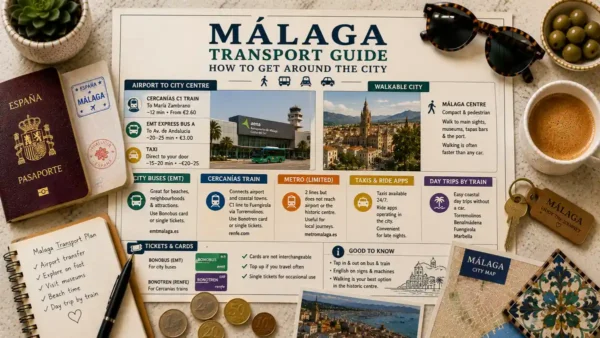
This two-day route is almost entirely walkable, so you rarely need public transport inside the centre. Both days link their sights on foot, and the airport sits close to the city, with a quick train and bus connection into the centre. Save transit for arrival, departure or tired legs.
Because the route is walkable, the only transport you’ll likely use is the airport connection at the start and end of the trip. Malaga’s airport is one of the closest to a city centre in Spain, linked by a frequent train and bus. For routes, tickets and the airport options in detail, see getting around Malaga.
Train and bus tickets
Compare routes, schedules and prices across rail and bus operators in one search, with mobile tickets on your phone.
New to Omio? Code NEW10 takes 10% off your first booking — or APPNEW10 if you book inside the Omio app. Both apply to bookings up to €80.
Search routes and compare prices on Omio →
Tripstou may earn a commission if you book through this link, at no extra cost to you.
Practical tips: budget, safety and what to know
Malaga is an easy, safe and affordable city for a short trip. Costs sit below Spain’s priciest cities, the centre feels secure day and night, and the main practical task is simply pacing your two days. A little planning around tickets and timing is all most first-timers need.
On budget, Malaga stays gentle on a short trip: tapas, museums and walking keep costs down, though central hotels and peak-season dates push them up. For a realistic sense of daily spend, see our guide to Malaga trip cost.
On safety, the centre is welcoming day and night, with petty pickpocketing in crowded tourist spots the main thing to watch. Our guide on is Malaga safe covers the specifics.
A few first-timer habits help: book the headline museum and Alcazaba tickets ahead, start your mornings early, and carry water in summer. For more, see our Malaga travel tips.
Should you add a third day in Malaga?
Add a third day only for day trips or a slower pace; two days covers Malaga’s highlights. A 48-hour visit handles the old town, art and the coast without rushing. A third day is what unlocks trips beyond the city — exactly the content this tight itinerary leaves out.
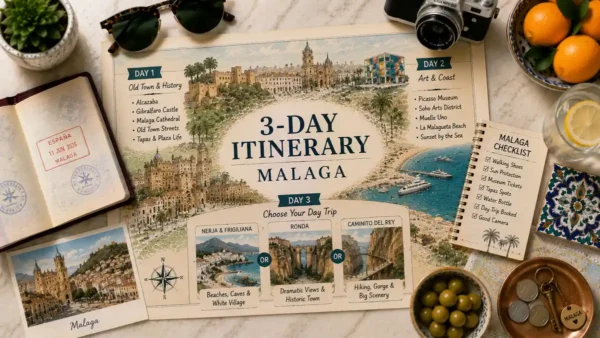
Stick with two days if your goal is Malaga itself, done well and unhurried. Extend to three when you want to pair the city with a day trip or simply slow the pace. A third day is what makes room for Nerja, Ronda or the Caminito del Rey — destinations this condensed itinerary intentionally skips. The 3-day Malaga itinerary builds those extra options into the plan.
Frequently Asked Questions
Can you see Malaga in 2 days without a car?
Yes, Malaga is fully walkable for a two-day trip, so you don’t need a car. The historic centre, museums and seafront sit within an easy stroll of each other, and the nearby airport connects to the centre by frequent train and bus for arrival and departure.
Is one day enough to see Malaga?
One day lets you sample Malaga’s highlights but feels rushed. You could see the Alcazaba, the cathedral and Calle Larios in a single day, but you’d miss the art side and the coast. Two days splits the city comfortably into history first, then art and seafront, without hurrying between sights.
What should you skip in Malaga with only 2 days?
With two days, skip day trips beyond the city, outer neighbourhoods and long museum marathons. The tight itinerary focuses on the Moorish old town, the Picasso Museum, the waterfront and Malagueta beach. Save Nerja, Ronda and the Caminito del Rey for a third day, when there’s room for excursions.
Is Malaga a good destination for a weekend break?
Yes, Malaga suits a weekend break well. Its compact, walkable centre packs Moorish history, world-class art and a city beach into a small area, so 48 hours covers the highlights without rushing. The short airport-to-centre connection also makes it easy to arrive and start exploring on the same day.
Should you book Malaga attraction tickets in advance?
Booking the headline sights ahead is wise for a short trip. Reserving tickets for the Alcazaba and the Picasso Museum online helps you skip queues and protects your tight two-day schedule. It also lets you confirm opening times and any closing days before you arrive, so neither day stalls unexpectedly.
How early should you start each day in Malaga?
Start early, ideally soon after the main sights open. Reaching the Alcazaba or Picasso Museum near opening helps you beat both the midday heat and the busiest crowds, especially in summer. An early start also gives each day a relaxed rhythm, leaving the evenings free for Calle Larios or the seafront.
Related Guides
- The 3-day Malaga itinerary — adds day trips and a slower pace on top of this plan.
- Where to stay in Malaga — neighbourhoods and picks for a walkable central base.
- The full Malaga guide — broader city context, history and food scene.
Did this guide save you time or money? Tripstou is independent and reader-funded — if you'd like to give something back, you can support the site with a crypto contribution of any size.