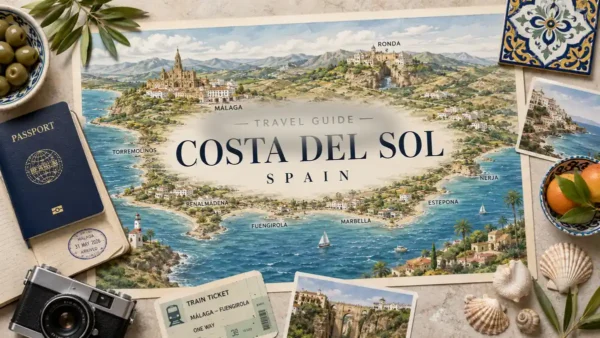
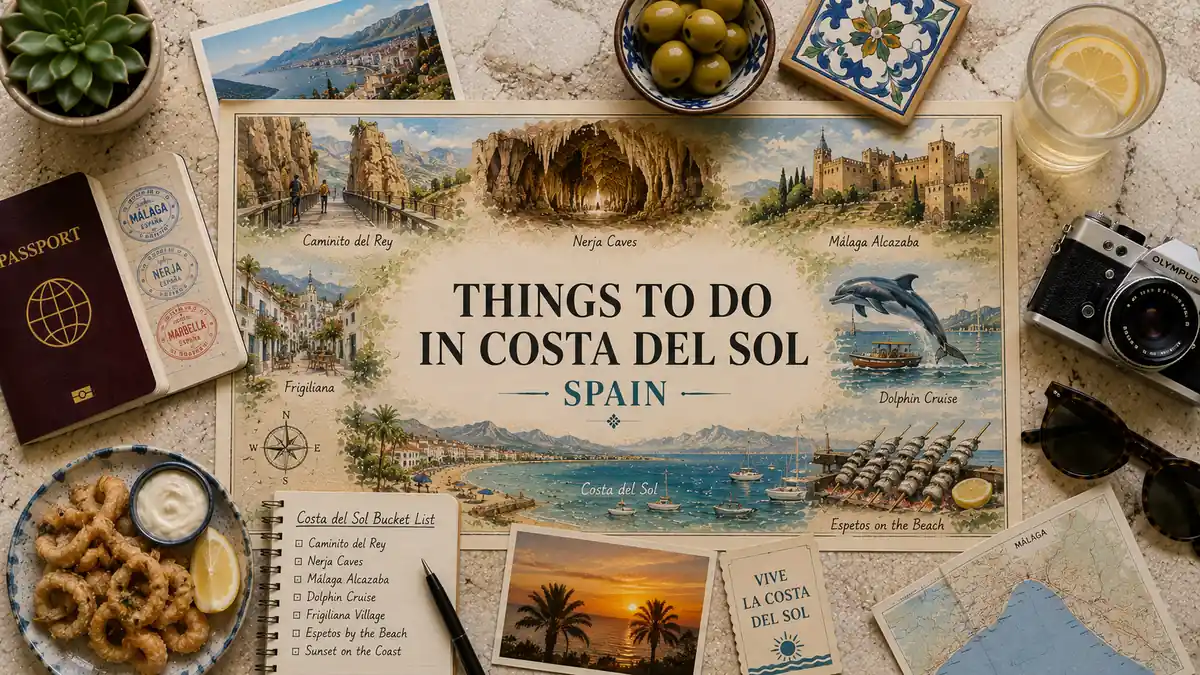
The Costa del Sol is far more than a beach destination, and the real planning task is choosing which experiences deserve your limited days. Between Málaga and the Gibraltar strait, the coast packs a world-class gorge walk, illuminated sea caves, a Moorish fortress, dolphin cruises, white hill villages, and beach-grilled seafood — enough to fill a week without repeating a theme. This guide organises the best things to do by experience type, so you can build a shortlist that matches your travel style instead of a generic bucket list. Each pick comes with a clear who-it-suits cue and, for the bookable experiences, a note on reserving ahead. Active hikers, culture seekers, families, and food lovers all get a defined lane. Use the groupings below to skim straight to the experiences that fit your trip, and treat the beach as one option among many — not the whole holiday.
Quick Answer
The standout thing to do in Costa del Sol is walking the Caminito del Rey, a cliff-edge gorge boardwalk. Experiences group into beaches and water, hiking and nature, culture, food, and family — the core selection logic. Active travelers, culture seekers, and families each get a clear lane, and bookable experiences like cruises reward booking ahead.
Trust Layer
Tripstou selection guide for travelers choosing between multiple places. Covers selection criteria, traveler fit, and trip value.
Produced with AI assistance and reviewed by Alex Perrut, working in tourism since 2015, for the Tripstou editorial team. See our editorial process for details.
Last factual review: July 18, 2026.
Official sources consulted: spain.info, tourspain.
Key Takeaways
- The Caminito del Rey is the coast’s one unmissable experience — a low-effort gorge boardwalk that rewards booking a timed ticket well ahead.
- Match experiences to your group: Nerja Caves and a dolphin cruise for families, the Alcazaba for culture seekers, La Concha for hikers.
- Book the bookable ones early, since Caminito del Rey slots and peak-summer sunset cruises sell out fastest and reward advance reservation.
- Treat the beach as one option among many, because the coast’s fortress, white villages, and gorge walk sit within an hour’s drive.
- Espeto sardines grilled on a beach fire are the signature food experience, best paired with a Málaga old-town tapas crawl.
- Non-beach experiences like the Nerja Caves, museums, and cable car protect your trip on rainy or shoulder-season days.
Table of Contents
The Unmissable Costa del Sol Experiences
The Caminito del Rey is the Costa del Sol’s one unmissable experience, a vertigo-inducing gorge walk for confident, active travelers. Beyond it, the region’s signature experiences run from the Nerja Caves and Málaga’s Alcazaba to the glossy marina at Puerto Banús and a dolphin-watching cruise. Each suits a different mood and pace.
Keep this shortlist as your quick-hit picks; the themed sections below carry the depth on each one.
- Caminito del Rey — a boardwalk pinned to a gorge wall; best for active, head-for-heights travelers.
- Nerja Caves — vast illuminated caverns near a cliffside town; best for families and all-weather days.
- Málaga’s Alcazaba and old town — a Moorish fortress and walkable historic centre; best for culture seekers.
- Puerto Banús — a superyacht marina and designer strip; best for people-watching and nightlife.
- Dolphin-watching cruise — a half-day sail from the coast’s marinas; best for families and first-timers.
The mistake most first-timers make is treating the Costa del Sol as a beach and nothing else. The stretch between Málaga and Marbella packs a Moorish fortress, a world-class gorge walk, and white villages within an hour’s drive of the sand — the coast pays off for travelers who leave the sunlounger for at least half of their days.
To decide where to base yourself for reaching these experiences, see our Costa del Sol guide, and for slotting them into a wider trip, our Spain itinerary shows how the days fit together.
| Traveler type | Top experience | Why it fits |
|---|---|---|
| Active and outdoorsy | Caminito del Rey gorge walk | Cliff-edge boardwalks and gorge scenery reward the effort |
| Culture seekers | Málaga Alcazaba and old town | Moorish history and museums in a walkable centre |
| Families with kids | Nerja Caves and a dolphin cruise | Weatherproof caverns plus a gentle boat outing |
| Food lovers | Espeto sardines and a tapas crawl | Beach-grilled fish and old-town bars in one evening |
| First-time visitors | Puerto Banús marina and seafront stroll | Easy people-watching and a relaxed seafront walk |
Best Beaches and Water Activities on the Costa del Sol
Maro is the Costa del Sol’s best beach for water activities, a cove-strewn stretch ideal for snorkelling and kayaking. Its clear, cliff-backed water suits swimmers and paddlers who want more than a towel on the sand. Elsewhere, wide town beaches like those at Fuengirola and Marbella favour easy swimming and sunbathing.
The coast splits neatly into two kinds of beach day: active coves to the east and easy resort sand to the west. Pick by what you want from the water.
Maro Beach and the Cliffs of Maro-Cerro Gordo
Maro is the best snorkelling and kayaking spot on the coast, set below protected cliffs east of Nerja. Sea-kayak tours paddle past hidden coves and a waterfall that spills straight onto the shoreline, with water clear enough to see the seabed. Pick this if you want active, in-the-water time instead of a packed resort beach.
Wide Town Beaches: Fuengirola, Marbella and Benalmádena
The long town beaches of Fuengirola, Marbella and Benalmádena are the easiest option for a classic swim-and-sunbathe day. Gentle shelving, sunbed rentals, and beachfront chiringuitos make them low-effort and family-proof. Paddleboards and pedalos are widely available in the calm summer sea. Pick this if you want convenience and amenities over seclusion.
Water is warmest and calmest from roughly June to September; spring and autumn swims are doable but cooler, so check conditions before booking any paddle tour. West-facing town beaches hold the late sun longest, which is why sunset chiringuito dinners cluster around Marbella and Estepona instead of the shaded eastern coves.
Boat Trips and Dolphin & Catamaran Cruises
A dolphin-watching catamaran cruise is the Costa del Sol’s signature boat trip, best for families and first-time sailors. Wild dolphins are seen year-round in the Alborán Sea, and most sailings leave from the marinas at Benalmádena, Fuengirola and Marbella. Calmer catamaran cruises add swim stops and sunset sailings for a slower pace.
Two boat experiences dominate the coast: fast dolphin-spotting trips and relaxed catamaran cruises with swim stops. Both are easy half-days from the main marinas.
Dolphin sightings are common but never guaranteed. Reputable operators offer a free repeat trip if none appear, which is worth confirming when you book. Morning departures usually mean flatter water and shorter queues; afternoons get breezier as the coastal wind builds, and that matters if anyone in the group is prone to seasickness.
Dolphin and catamaran trips are the coast’s most-booked bookable experience, and popular sunset sailings fill up in peak summer, so reserving a slot online ahead of time secures your preferred marina and departure. Prices sit in the budget half-day range; treat any quote as a guide and confirm the current fare and duration before booking. Sailings run most frequently from spring through early autumn, thin out in winter, and can be cancelled in rough weather — check the forecast and the operator’s cancellation terms.
Best Hikes and Nature Escapes: Caminito del Rey and La Concha
The Caminito del Rey is the region’s standout hike, an exposed boardwalk best for confident walkers. It threads through the El Chorro gorge on walkways pinned high above the river. For a tougher challenge, climbing La Concha above Marbella rewards fit hikers with panoramic coastal views.
The two headline hikes sit at opposite ends of effort. One is a low-exertion walk with big drops; the other is a genuine summit climb.
The Caminito del Rey
The Caminito del Rey is a one-way boardwalk trail through the Guadalhorce gorge, once notorious as one of the world’s deadliest paths before its full restoration. Today it is safe, helmeted, and walked in a single direction from north to south, with the boardwalks hanging about a hundred metres above the river. The full route runs around eight kilometres including the approach. Access is by timed official ticket only, and slots are limited. Pick this if you want a dramatic, low-effort walk with unforgettable views.
La Concha above Marbella
La Concha is a demanding summit hike rising to just over a thousand metres above Marbella, named for its shell-like shape. The full ascent is a strenuous, exposed scramble near the top and best attempted with a guide or solid route knowledge; lower trails offer easier out-and-back options. On clear days the view stretches to Gibraltar and the Moroccan Rif across the strait. Pick this if you are a fit hiker who wants a real climb and a view to match.
The Caminito rewards planning far more than fitness. The walk itself is gentle, but the timed-entry cap means an unbooked visit almost always turns into a wasted drive out to El Chorro. Guided Caminito del Rey tickets that bundle transport from the coastal towns are a popular bookable option and remove the logistics of reaching the remote trailhead. Because entry is capped and timed, spots go quickly in peak months, so book ahead and treat any advance-booking window or price as something to confirm directly.
Tours and activities
Book skip-the-line tickets, day trips and local tours with free cancellation on most activities.
You can also browse everything on getyourguide.com.
Tripstou may earn a commission if you book through this link, at no extra cost to you.
Cultural and Historical Experiences: Flamenco, Alcazaba and Old Towns
Málaga’s Alcazaba is the Costa del Sol’s top cultural experience, a hilltop Moorish palace-fortress best for history lovers. Its terraced gardens and horseshoe arches sit steps from the Roman theatre and the city’s dense old town. Add a live flamenco show and a slow wander through white pueblos, and the coast’s history opens up.
Culture on the Costa del Sol clusters in Málaga city, then radiates out to the white villages. Three experiences carry it.
The Alcazaba and Málaga’s Old Town
The Alcazaba is the finest Moorish monument on the coast, a fortified palace of gardens, arches, and fountains climbing the hill above central Málaga. It connects by a footpath to the Gibralfaro castle for wide harbour views, and sits beside a Roman theatre in the old town’s maze of tapas lanes. Pick this if you want walkable history without leaving the city.
A Live Flamenco Show
A live flamenco performance is the coast’s most atmospheric evening experience, delivered either in polished coastal tablaos or rawer inland venues. Coastal shows are slick and easy to book with dinner; the inland rooms around Málaga city feel less scripted. Pick this if you want a genuine cultural night out over a passive dinner show.
Wandering the White Pueblos
Frigiliana and Mijas deliver the white-village experience within easy reach of the coast: steep cobbled lanes, blue-pot balconies, and hilltop viewpoints over the sea. Treat them as a half-day wander, not a base to sleep in. Pick this if you want postcard scenery and a slower pace between beach days.
Costa del Sol flamenco splits sharply between the polished tourist tablaos on the coast and the rawer, less scripted peñas inland around Málaga city. The inland rooms cost less and feel more authentic, but they start late and rarely cater to a fixed dinner slot. For culture beyond the coast, our guide to things to do in Spain sets these experiences against the country’s wider highlights.
Food and Wine Experiences in Costa del Sol
Eating espetos — sardines skewered and grilled over driftwood fires on the beach — is the Costa del Sol’s signature food experience. It suits every traveler and is best enjoyed at a beachfront chiringuito with your feet near the sand. Beyond it, tapas crawls, market tours, and inland wine tastings round out the region’s food scene.
Food here is coastal and unpretentious, built around grilled fish, small plates, and sweet local wine. A few experiences capture it best.
- Espeto sardines — beach-grilled on open fires; a must-eat from late spring onward.
- Tapas crawl in Málaga — hop between old-town bars for small plates and local wine.
- Sweet Málaga wine tasting — sample barrel-poured muscatel at a historic city bodega.
- Market and food tour — graze the Atarazanas market’s stalls with a guide.
- Inland wine country day — vineyards in the Axarquía and Ronda hills for tastings.
Málaga’s signature wine is sweet, not the dry white many visitors expect. The old bodegas in the city centre pour it straight from the barrel, and it pairs with the region’s fried fish better than any imported bottle. Book a tapas or market tour for your first evening; it maps the old town’s best bars fast and saves you from the tourist-trap plazas.
Things to Do with Kids and Family
Water parks and gentle town beaches are the Costa del Sol’s best family experiences, ideal for kids of all ages. The coast is built for family travel, with shallow swimming, short boat trips, and weatherproof attractions within easy reach. Toddlers, big kids, and teens each have low-stress options that keep everyone happy.
The coast makes family days easy because the big attractions cluster close together and stay open in most weather. Mix one active outing with one indoor backup.
- Water parks — Aqualand Torremolinos and Aquamijas for a full day of slides and pools.
- Wildlife parks — Selwo Aventura near Estepona and Fuengirola’s Bioparc for close-up animals.
- Nerja Caves — a weatherproof cavern walk that keeps younger kids engaged.
- A gentle dolphin cruise — a short, calm boat trip that suits most ages.
- Cable car and beaches — Benalmádena’s cable car plus shallow town beaches for downtime.
The coast’s family value peaks outside July and August, when the water parks and cruises still run a full timetable but queues and prices ease. Late June and early September hit the sweet spot of warm sea and thinner crowds. Base your days around one big attraction each and leave the afternoons loose for the beach.
Unique and Non-Beach Things to Do
Riding the Benalmádena cable car to the summit of Monte Calamorro is the coast’s standout non-beach experience, great for view-seekers. From the top, marked trails and birds-of-prey displays open up a side of the Costa del Sol many beach visitors miss. Add a Nerja Caves concert or a Ronda day trip for more off-sand variety.
When the beach loses its pull, the coast still has plenty in reserve — dramatic viewpoints, quirky venues, and short trips inland. These are the experiences that surprise repeat visitors.
- Benalmádena cable car — ride to Monte Calamorro for summit trails and falconry displays.
- Ronda day trip — the cliff-top Puente Nuevo bridge and the El Tajo gorge.
- Selwo Aventura — a safari-style wildlife reserve with open-range animals near Estepona.
- A concert in the Nerja Caves — live music staged beneath vast stalactites.
- Torcal de Antequera — a short hike through surreal limestone rock formations.
The Costa del Sol’s best rainy-day and shoulder-season plans are almost all non-beach. The caves, museums, and cable car run regardless of the forecast, which is exactly why building one or two into your list protects the trip when the coast clouds over. If you want to turn these into actual places to visit beyond the coast, our roundup of the best places to visit in Spain points you to the towns and cities worth the detour.
Frequently Asked Questions
Do you need to book Caminito del Rey tickets in advance?
Yes, booking Caminito del Rey tickets ahead is strongly advised. Entry is by timed official ticket only and daily numbers are capped, so slots for popular months fill quickly. Guided tickets that bundle transport from the coast are a convenient option. Confirm current availability and any advance-booking window directly before you travel.
What is there to do in Costa del Sol when it rains?
When it rains, head for the region’s weatherproof experiences. The illuminated Nerja Caves, Málaga’s museums and Alcazaba, indoor food and wine tastings, and an evening flamenco show all run regardless of the forecast. A tapas crawl through covered old-town lanes also works well. Building one or two indoor options into your list protects rainy days.
How many days do you need for Costa del Sol activities?
Plan four to five days to cover the Costa del Sol’s main experiences comfortably. That leaves room for the Caminito del Rey, a culture day in Málaga, a beach or cruise day, and one white-village or inland excursion without rushing. Add days if you want a slower pace between activities.
Is the Costa del Sol good for a family holiday?
Yes, the Costa del Sol is one of Spain’s most family-friendly coasts. Shallow town beaches, water parks near Torremolinos and Mijas, gentle dolphin cruises, and the weatherproof Nerja Caves keep a range of ages happy. Attractions cluster close together, so days stay low-stress. Late June and early September bring warm sea with thinner crowds.
What are the best free things to do in Costa del Sol?
The best free things to do centre on the coast’s beaches, viewpoints, and old towns. Swimming and sunbathing on the town beaches costs nothing, and wandering Málaga’s historic centre, Frigiliana’s white lanes, or the Marbella seafront is free. Many coastal promenades and church courtyards are open to all, and beach sunsets stay the best free show.
When is the best time of year for Costa del Sol activities?
Late spring and early autumn are the best times for Costa del Sol activities. May, June, and September pair warm, calm seas for cruises and water sports with comfortable weather for hiking the Caminito del Rey or La Concha. Peak July and August suit beach days but bring heat, crowds, and higher tour demand.
Related Guides
- Costa del Sol guide — where to base yourself and how to plan the wider region.
- Spain itinerary — sequence these experiences into a day-by-day trip.
- Best places to visit in Spain — which towns and cities are worth the detour.
- Things to do in Spain — national-scope experiences beyond the coast.
Did this guide save you time or money? Tripstou is independent and reader-funded — if you'd like to give something back, you can support the site with a crypto contribution of any size.