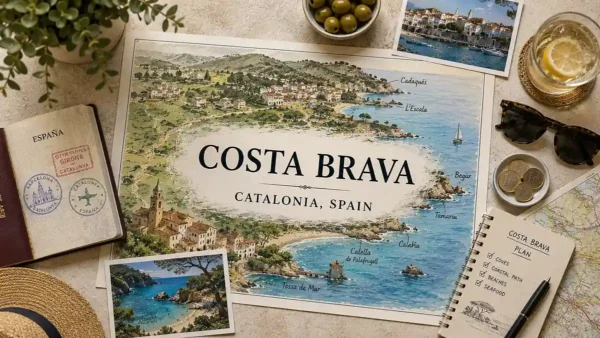
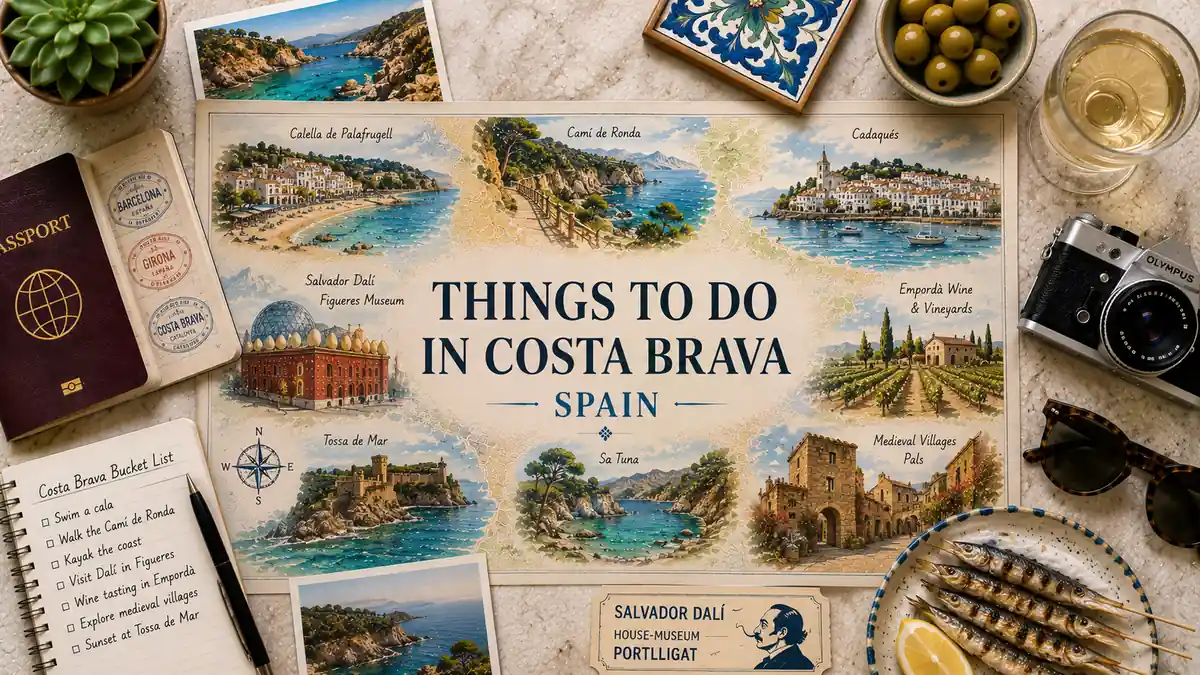
The best things to do in Costa Brava are swimming the coves, walking the Camí de Ronda and following the Dalí trail. Your choice splits by traveler: active visitors get most from the coast and water, while couples and foodies lean toward culture and Empordà food and wine. Families have gentle beaches and short boat trips. Active travelers, couples and families all find enough to fill several days.
Costa Brava packs a wide fan of experiences into one stretch of Catalan coast, and the hard part is choosing which deserve your days. You can spend a morning swimming a hidden cove, an afternoon walking cliff paths between beaches, and an evening over Empordà wine — or trade all of it for the Salvador Dalí trail and a wander through medieval hilltop villages. Families, active travelers and culture-and-food couples each pull the itinerary a different way, and few visitors have time for everything. This guide sorts the best things to do by the traveler each one suits — the active coast, the slow inland days of art, villages and wine, and family days — with enough context on each to know whether it fits you. Where you’d base yourself and when to come are logistics; here the focus stays on what’s actually worth doing.
Editorial Note
This page picks the Costa Brava experiences worth your days (the coves, the water, the Camí de Ronda, the hilltop villages, the Dalí trail, Empordà wine and family days) and sorts them by who each suits. It is not a destination guide to which towns to visit, where to stay or how to get around, and not a day-by-day itinerary.
Produced with AI assistance. Alex Perrut, working in tourism since 2015, reviewed this selection for the Tripstou editorial team, following our editorial process.
Last factual review: July 19, 2026.
Official sources consulted: spain.info, Turespaña.
For Active Travelers: Coves, Kayaks and the Camí de Ronda
Active travelers get the most from Costa Brava’s coast: swimming the coves, kayaking and snorkelling the inlets, and walking the cliff-edge Camí de Ronda from beach to beach. The three join up on the ground, because the path runs between the coves and the water reaches the ones the path cannot.
Best Beaches and Swimming Coves
Costa Brava’s signature swim is a small rocky cove, not a wide resort beach. The coastline hides dozens of calas — sheltered inlets of clear water framed by pine and cliff, reached on foot or by boat. Expect turquoise water, pebbles or coarse sand, and a wilder feel than the flat southern costas.
The coves range from busy to almost secret. The larger, sandier bays sit beside the resort towns and come with sunbeds, showers and easy parking — the safe choice with young kids or a lot of gear. The small calas tucked between headlands trade all of that for clear water, quiet and drama; you earn them with a short walk down steps or a coastal path, and a few are only reachable by kayak or boat.
The coves that stay quiet are almost always the ones with no road to them. A ten-minute walk on the coastal path is the whole filter between a packed cala and an empty one, so pack water shoes for the pebbles and a mask, and you can turn any of them into a snorkelling stop.
Kayaking and Snorkelling the Coves
The best on-the-water experiences in Costa Brava are sea kayaking, snorkelling the coves, and short boat trips along the coast. Each opens up cliffs and inlets you cannot reach by road. Kayaking and snorkelling suit active travelers who want to be in the water; boat trips suit anyone wanting the views without the effort.
The coastline is built for getting on the water. Its granite headlands hide sea caves, arches and pocket beaches with no land access, which is exactly what makes a paddle or a boat hop worth the time here rather than just a beach day. How much effort you want to spend is the whole decision.
Sea kayaking and snorkelling let you explore the coast from the water, reaching arches, sea caves and tiny beaches that stay empty because they have no land access. Outfitters run guided paddles along dramatic stretches such as the Cap de Creus natural park and the northern calas, typically in the warmer months. The water is clear enough that a mask turns almost any cove into a snorkelling spot. What sets it apart here is the geology: the coast is a maze of granite inlets, so a two-hour paddle passes more hidden corners than a full day on foot. It is the pick for active days in the water, when discovery matters more to you than lounging.
The Camí de Ronda Is Costa Brava’s Best Coastal Walk
The Camí de Ronda is Costa Brava’s best coastal walk. The path threads the cliff edge between coves along much of the shoreline. You hike from beach to beach past sea caves, watchtowers and pine-clad headlands, with a swim never far away. Most sections are moderate and easily walked in an hour or two.
The path is old — a coastguard trail once used to watch for smugglers — and that history is why it hugs every inlet instead of cutting inland. It rewards short bursts more than long-distance ambition. Some stretches are paved and gentle; others are rocky and narrow with real drops, so wear proper shoes and go carefully with children on the exposed parts.
The trick most visitors miss is that you don’t have to commit to a whole stage. Pick two adjacent coves, walk the half-hour of path between them, and you collect the best scenery plus a swim at each end — the single most efficient way to sample the coast on foot.
Tours and activities
Book skip-the-line tickets, day trips and local tours with free cancellation on most activities.
You can also browse everything on getyourguide.com.
Tripstou may earn a commission if you book through this link, at no extra cost to you.
For Couples and Foodies: Dalí, Hilltop Villages and Empordà Wine
Couples, foodies and culture-seekers get the most from the land behind the coast: the Salvador Dalí trail, an unhurried afternoon in the medieval hilltop villages, and Empordà wine with a long Catalan lunch. All three are slow-day experiences, and the villages and the vineyards share the same inland countryside.
Following the Salvador Dalí Trail
The Salvador Dalí trail is Costa Brava’s signature cultural day, linking three sites the artist made his own. The Dalí Theatre-Museum in Figueres is the surreal centrepiece; his whitewashed home in Portlligat and the fishing town of Cadaqués that shaped him complete the picture. Together they turn a museum visit into a landscape you can walk through.
Each site does a different job. Figueres is the spectacle — a whole building conceived as one artwork, and the most visited. Portlligat, a warren of a house on a quiet bay, is intimate and personal. Cadaqués is simply where you slow down: a white-washed harbour town of steep lanes that explains half of Dalí’s imagery just by being there.
The Portlligat house is small and admits visitors in timed slots, so booking ahead matters more there than at the main museum. Treat opening seasons and entry rules as things to confirm before you go, since they shift through the year. Do the day in the right order and it compounds: see Portlligat and Cadaqués first, then the Figueres museum reads as the work of a man who painted this exact coast.
Wandering the Medieval Hilltop Villages
Wandering Costa Brava’s medieval hilltop villages is a half-day experience of stone lanes and long views. Arcaded squares and terraces look out over the Empordà plain. You come to walk slowly and soak up the atmosphere — getting lost in car-free old quarters that have barely changed in centuries. Most cluster a short drive inland from the coast.
Framed as an activity, this is unhurried, sensory and photogenic: honey-coloured stone, flower-hung balconies, a castle or church at the top, and a terrace café for a long coffee. It pairs naturally with the Empordà food and wine below, since the same inland countryside holds both. A car makes hopping between two or three villages in an afternoon far easier than relying on buses.
The experience changes completely with the time of day. Arrive for the last couple of hours before sunset, once the coach groups have moved on, and a walled village feels almost entirely yours. Which villages to prioritise and where to base yourself for them is logistics rather than experience; our Costa Brava travel guide covers where to stay and how to get around.
Empordà Wine Tasting and Food Experiences
Empordà wine tasting and long Catalan lunches are Costa Brava’s best slow-day experience. They suit couples, foodies and anyone happy to linger. The DO Empordà region behind the coast pours crisp whites, rosés and characterful reds, often at family cellars among the vines. Pair it with seafood, rice dishes and the local anchovies for the full table.
This is a deliberately unhurried day. A cellar visit usually runs as a guided tasting with a few pours, sometimes with a platter or a full meal, and costs vary widely by cellar and format — treat any price as a range and book tastings ahead in peak season. A car helps here, since the best small wineries sit off the coast road among the vineyards.
Wine here rewards going inland. The tasting rooms a fifteen-minute drive from the beach are where you meet the winemaker and taste the range at source, while the coast-town wine bars mostly resell what those same cellars make. If food is the point, this section pairs perfectly with a village afternoon.
What Can You Do in Costa Brava with Kids?
Costa Brava works well with kids, thanks to calm coves, short boat trips and big water parks. The gentler, sandier beaches around the resort towns suit young children, while shallow coves give confident swimmers safe places to snorkel. Add a boat hop or a theme-park day and you have an easy family week.
The mix is what makes it easy. Sandy resort beaches with shallow water and facilities anchor the day for little ones; short glass-bottom boat trips add novelty without a long commitment; and older kids get their first taste of snorkelling in the clear coves. The Camí de Ronda’s gentler paved stretches work for a manageable family walk between two beaches.
The big water parks near the coast open seasonally, mainly across the summer, so check operating dates before building a day around one. Boat trips and beach days flex more easily around nap times and weather, which makes them the reliable backbone of a family itinerary.
Boat Trips Along the Coast
Boat trips deliver the same coastline with almost no effort — glass-bottom tourist boats, small-group excursions and self-drive rental boats all run between the main resort towns. They link coves and towns you would otherwise need a car to reach, and show off the cliff-and-pine scenery from its best angle: the sea. Operating seasons and departure frequency shrink outside the summer months, so treat schedules as seasonal and check locally before planning a whole day around one.
Choose a boat for the scenery and the coastal hops without paddling or hiking; it is the easy option with kids or on a slow day.
Distance Is the Big Trade-Off: Car, Season and Booking
The biggest trade-off is distance — experiences spread along the coast and inland, so a car turns two into one easy day. Few Mediterranean stretches combine clear-water calas, the cliff-edge Camí de Ronda, the Salvador Dalí trail and Empordà wine within an hour’s drive, but each day still depends on how you plan to move between them, when you come and what you book.
- The car. A car isn’t essential, but it opens up far more of Costa Brava. Resort towns, main beaches and some boat trips are reachable by bus and on foot. The inland wineries, medieval villages and quieter coves, though, are much easier to reach with your own wheels, especially if you’re combining several in a day.
- The season. Late spring through early autumn is the best time for Costa Brava’s activities, when the sea is warm enough for swimming, kayaking and boat trips. Summer brings the fullest schedule but the biggest crowds; the shoulder months trade some warmth for quieter coves and paths. Wineries and villages reward visits year-round.
- Booking ahead. For the most popular experiences, booking ahead is worth it in peak season. The Portlligat house admits visitors in timed slots, and summer boat trips, kayaking outfitters and cellar tastings fill quickly. Elsewhere you can often be spontaneous.
For where to base yourself, when to visit and how to get around, the Costa Brava travel guide covers the logistics. To fit Costa Brava into a longer route through the country, use our Spain itinerary; for the wider national set of experiences beyond this coast, see things to do in Spain, and best places to visit in Spain shows where Costa Brava sits among Spain’s top destinations.
Did this guide save you time or money? Tripstou is independent and reader-funded — if you'd like to give something back, you can support the site with a crypto contribution of any size.