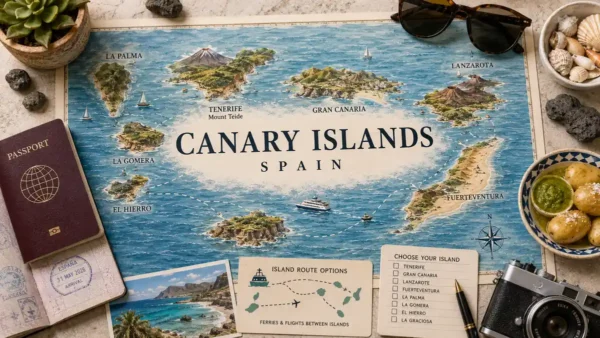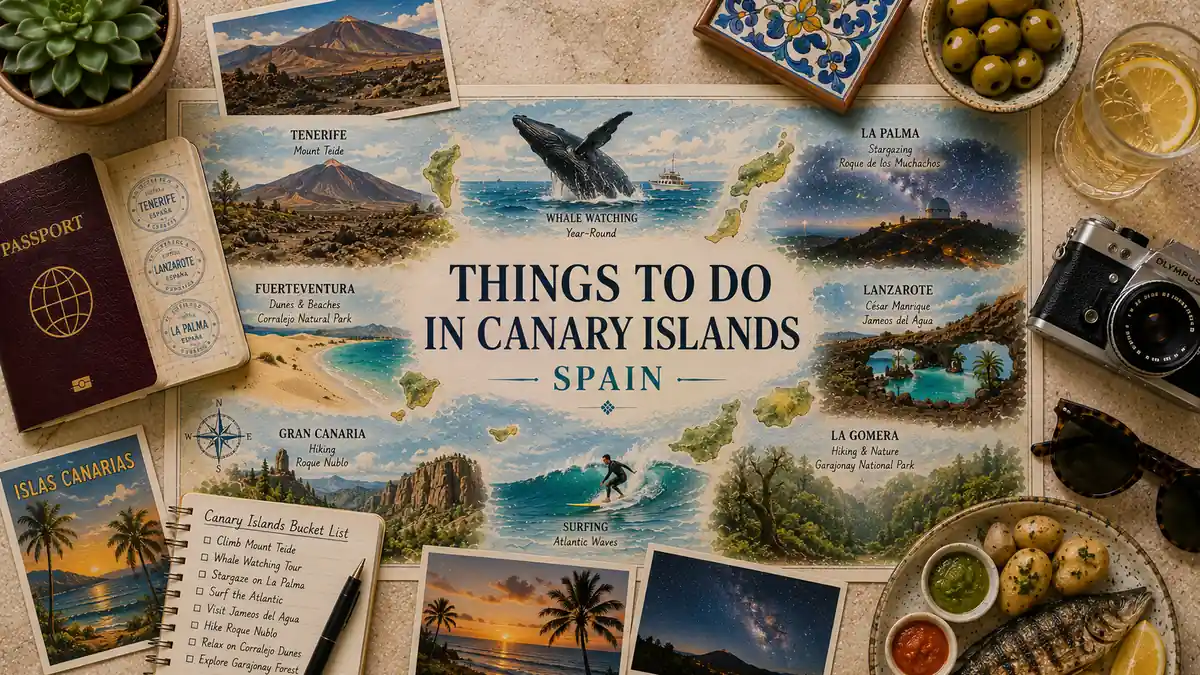
The Canary Islands pack an unusually wide range of things to do into one Atlantic archipelago. In a single trip you can climb Spain’s highest volcano, watch pilot whales offshore, stand under some of the darkest skies on the planet, catch Atlantic surf, and lie on both golden and black-sand beaches. The real challenge isn’t finding something to do — it’s choosing what deserves your limited time. This guide cuts the archipelago down to its signature experiences and organizes them two ways: by experience type, so you can weigh volcanic hikes against ocean days and stargazing, and by island, so you can see what each one does best. Skip the encyclopedic sight-list. What follows is a curated shortlist of the experiences that define the Canaries, matched to the kind of traveler each one suits.
Quick Answer
The Canary Islands’ best experiences are volcanic hikes, whale watching, dark-sky stargazing, surfing, and beach days spread across the islands. Group them by experience type and by island so you match activities to your interest. Climb Teide on Tenerife, stargaze on La Palma, and surf or laze on Fuerteventura.
Trust Layer
Tripstou selection guide for travelers choosing between multiple places. Covers selection criteria, traveler fit, and trip value.
Produced with AI assistance and reviewed by Alex Perrut, working in tourism since 2015, for the Tripstou editorial team. See our editorial process for details.
Last factual review: July 18, 2026.
Official sources consulted: spain.info, Turespaña.
Key Takeaways
- Plan the Canaries around experiences you actively do — volcanoes, whales, stars, surf — not a checklist of scattered monuments.
- Climbing Mount Teide is the archipelago’s headline hike, but lock the free summit permit well before you travel.
- For ocean days, choose Tenerife for year-round whales, the windward coasts for surf, and Fuerteventura for beaches.
- Head to La Palma for world-class dark-sky stargazing and Lanzarote for César Manrique’s volcanic art and architecture.
- Match your top interest to the island that does it best, then settle which island to visit using the region guide.
Table of Contents
The Canaries Reward Experiences, Not Just Sightseeing
The Canary Islands pay off most when you plan around experiences, not a checklist of sights. Each island specializes in something you actively do — climbing a volcano, watching whales, tracking stars — so the strongest trips chase a handful of standout activities instead of ticking off landmarks.
Sightseeing-led trips underuse the archipelago. The classic monuments are few and scattered, so a day spent hunting them returns less than a day hiking a caldera or heading offshore for pilot whales. The islands reward doing over seeing.
This guide groups the signature experiences two ways: by type — volcanic hiking, ocean days, dark skies, and island art — and by island, so you can scan for what you actually want. If the Canaries are one stop on a bigger trip, they slot neatly into the wider set of things to do in Spain, and pair well with a Spain-wide best places to visit in Spain shortlist for context.
Volcanic Peaks and Lava Fields Built for Hiking
Teide and Timanfaya are the two must-do volcanic experiences in the Canaries. One is a summit climb on Tenerife; the other is a guided walk across raw lava fields on Lanzarote. Both put you inside active volcanic terrain, and each suits a different appetite for effort.
The catch most climbers miss is the summit permit: the free quota to stand on the very top of Teide is limited and fills well ahead, so it’s the one thing to lock before your trip, not on the day.
Mount Teide: Climbing Spain’s Highest Peak
Mount Teide is Spain’s highest peak at 3,718 metres and the archipelago’s marquee climb. It crowns a UNESCO-listed national park on Tenerife, where a cable car covers most of the ascent and marked trails cross a plateau that looks closer to the moon than the Mediterranean.
What sets it apart is the altitude payoff — few walks in Europe finish above a sea of clouds on an active volcano. Reaching the final summit cone requires a free access permit with a capped daily quota, and cable-car and permit terms and prices change, so arrange both ahead and confirm current rules before you go.
Pick this if: you want the archipelago’s headline hike and don’t mind planning permits and transport in advance.
Timanfaya: Walking a Living Volcanic Landscape
Timanfaya is a volcanic national park on Lanzarote where the ground still runs hot beneath the surface. Its Fire Mountains form a field of craters and frozen lava rivers, toured mostly by an official route with guided walking options, since free-roaming is restricted to protect the terrain.
The draw here is geology you can feel, not just see — heat demonstrations turn ground temperature into instant effect, and the treeless russet plains feel genuinely otherworldly. Access is managed and the visiting format and hours can shift seasonally, so check the current arrangements before arriving.
Pick this if: you want raw volcanic scenery with minimal effort and prefer a guided route to a strenuous climb.
Tours and activities
Book skip-the-line tickets, day trips and local tours with free cancellation on most activities.
You can also browse everything on getyourguide.com.
Tripstou may earn a commission if you book through this link, at no extra cost to you.
Ocean Days: Whales, Surf, and the Best Beaches
The Canary ocean delivers world-class whale watching, reliable surf, and some of Spain’s best beaches. The waters off Tenerife hold resident whales all year, the windward coasts catch Atlantic swell, and the eastern islands run to pale dune beaches. Your pick depends on whether you want wildlife, adrenaline, or rest.
One quirk sets the Canaries apart from most whale destinations: you don’t chase a migration season here. Pilot whales and dolphins live off south Tenerife permanently, so calm morning water matters far more than the calendar when you plan a trip.
Whale and Dolphin Watching Off Tenerife and La Gomera
Whale and dolphin watching off southern Tenerife and La Gomera ranks among the most reliable in Europe. A resident population of pilot whales and bottlenose dolphins lives in the channel between the two islands, so sightings stay consistent rather than seasonal.
What makes it distinct is that permanence — many destinations offer only a narrow migration window, while here the animals are present year-round. Boats range from large catamarans to small eco-certified vessels; operators, sailing times, and prices vary, so compare tours and book directly with a licensed operator.
Pick this if: you want a high chance of wild cetaceans without gambling on a migration window.
Surfing and Water Sports on the Windward Islands
Surfing and water sports center on the windward and northern coasts, where Atlantic swell and steady trade winds do the work. Fuerteventura and Lanzarote draw surfers, windsurfers, and kitesurfers, with breaks and schools for every level from first-timer to expert.
The distinctive part is the wind itself — the same trades that cool the islands make them a European hub for wind- and kitesurfing, well beyond board surfing alone. Conditions swing by coast and by day, so beginners should book a lesson on a sheltered beach and let a local school read the forecast.
Pick this if: you want dependable wind and waves and prefer active water time to lying on the sand.
The Best Beaches Worth Building a Day Around
The best Canary beaches reward building a whole day around them, not a quick stop. The archipelago spans pale Saharan-style dunes, sheltered family coves, and dramatic black volcanic sand, so the experience shifts sharply from island to island.
Fuerteventura’s long light-sand strands suit space and swimming, while Lanzarote and Tenerife show off black-sand beaches born from lava. Instead of ranking them, match the beach to the day you want — dunes and warm shallows for families, wind-brushed stretches for walkers, volcanic coves for the scenery.
Pick this if: you want a full beach day and care more about the kind of coast than one famous name.
Night Skies and Manrique’s Island Art
La Palma’s dark skies and Lanzarote’s Manrique landmarks are the Canaries’ signature after-dark and cultural experiences. La Palma protects some of the clearest night skies on Earth, while Lanzarote is shaped by an artist who fused buildings into lava. Both reward travelers who want more than sun and sea.
La Palma and Lanzarote sit at opposite ends of the archipelago, so combining stars and Manrique in one visit means real travel between islands — most people commit to one and go deep rather than splitting a short trip across both.
Stargazing on La Palma, a World-Class Dark-Sky Island
La Palma is one of the world’s premier stargazing destinations, protected as a Starlight Reserve with strict lighting laws. Its ridgeline hosts the Gran Telescopio Canarias, among the largest optical telescopes anywhere, and the high altitude lifts you above most cloud and light pollution.
What sets La Palma apart is the mix of protected darkness and easy access — you can join a guided astronomy tour or drive to a marked viewpoint on the same night. Tour availability and observatory visiting rules shift, so check current options and book stargazing sessions ahead in busy periods.
Pick this if: you want genuinely dark skies and a real observatory over a casual look up from the beach.
César Manrique’s Lanzarote: Jameos del Agua and Beyond
César Manrique’s Lanzarote turns the island itself into an artwork, and Jameos del Agua is its centerpiece. Manrique built inside volcanic tubes and craters, and his sites — Jameos del Agua, Mirador del Río, and the cactus garden among them — blur the line between architecture and lava.
The distinctive draw is that nothing here feels like a standard museum: you walk through a lava tube holding a natural lagoon and a concert auditorium. Opening hours and combined-ticket options vary by site and season, so confirm current times before planning a full Manrique day.
Pick this if: you want design and culture woven into volcanic landscape, not a conventional gallery visit.
Each Canary Island Has a Signature Experience
Each Canary island specializes in a different signature experience. Tenerife owns Teide and whale watching, La Palma owns the stars, Fuerteventura owns beaches and surf, and Lanzarote owns volcanoes and Manrique’s art. Matching your top interest to the right island is the quickest way to plan what to do.
The islands that photograph alike are often the least alike to do. Lanzarote and Fuerteventura sit side by side, yet one is built for art and volcanoes and the other for wind and sand — so scan by the experience you want, not the map.
| Island | Signature experience | Also good for | Best-suited traveler |
|---|---|---|---|
| Tenerife | Climbing Mount Teide, Spain’s highest peak | Whale watching and varied coastline | Hikers and first-time visitors |
| La Palma | World-class dark-sky stargazing | Volcanic ridge hiking and green north | Stargazers and nature walkers |
| Fuerteventura | Long light-sand beaches and surf | Windsurfing and family swimming | Beach lovers and water-sports fans |
| Lanzarote | Timanfaya volcanoes and Manrique art | Wine country and black-sand coves | Culture and landscape seekers |
| Gran Canaria | Dunes, beaches, and mountain villages | Hiking, nightlife, and day variety | Travelers wanting a bit of everything |
Treat this as experience-to-island matching, not a verdict on which island to visit — that choice depends on flights, time, and season. For the full comparison and inter-island logistics, use our Canary Islands guide. To fold these experiences into a wider route, see how they fit a broader Spain itinerary.
Frequently Asked Questions
Are the Canary Islands worth visiting?
Yes — the Canary Islands are worth visiting for their rare mix of experiences in one compact region. Few places let you climb an active volcano, watch resident whales, and stand under some of Earth’s darkest skies in a single trip. The archipelago rewards travelers who plan around activities instead of sightseeing.
What are the best things to do in the Canary Islands with family?
Family-friendly favorites include the Teide cable car on Tenerife, whale and dolphin boat trips, and Fuerteventura’s sheltered light-sand beaches with warm shallows. Lanzarote’s César Manrique sites, like the lava-tube lagoon at Jameos del Agua, entertain older children. Choose calm-water beaches and short guided outings for the youngest travelers.
What are the best free things to do in the Canary Islands?
The best free experiences are the landscapes themselves: hiking marked trails through Teide National Park, walking Fuerteventura’s dune beaches, and stargazing from La Palma’s roadside viewpoints. Wandering César Manrique’s outdoor viewpoints and exploring old town centers cost nothing. Many national-park trails and public beaches carry no entry fee, though guided tours and cable cars do.
Do you need a car in the Canary Islands?
Yes, a rental car helps on most islands. The best hikes, viewpoints, and beaches sit away from the resorts, and public buses run infrequently to remote trailheads. On smaller islands like La Palma, driving unlocks stargazing spots and coastal villages. In compact resort areas, buses, taxis, and tours are enough.
Do you need to book Mount Teide in advance?
Yes, reaching Teide’s summit cone requires a free access permit with a limited daily quota that often fills weeks ahead, so book it before you travel. Cable-car tickets to the upper station also sell out in peak periods. Permit and ticket rules change, so confirm current requirements on the official channels before your trip.
Related Guides
Once you know what you want to do, plan where and how with these guides.
- Canary Islands guide: which island to visit — compare the islands and sort out inter-island logistics.
- Spain itinerary — sequence these experiences into a wider trip.
- Things to do in Spain — the full national shortlist of experiences.
- Best places to visit in Spain — a Spain-wide WHERE shortlist for context.
Did this guide save you time or money? Tripstou is independent and reader-funded — if you'd like to give something back, you can support the site with a crypto contribution of any size.