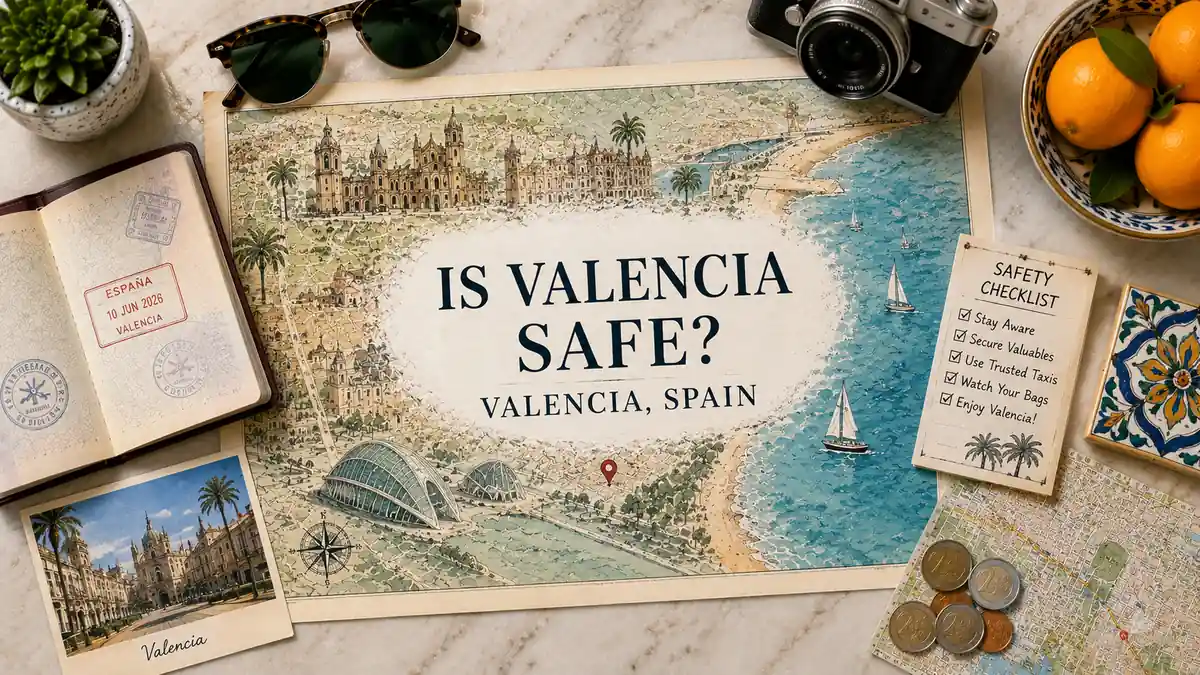
Planning a trip to Valencia and want to clear the safety question before you book? You are not alone, and the answer is reassuring. Valencia is widely regarded as one of Spain’s safest large cities, so the real planning task is not deciding whether to go, but knowing how to travel smart once you arrive. This guide gives you the confident verdict first, then the concrete, Valencia-specific guidance that actually matters: where petty theft clusters, how to outsmart pickpockets and common scams, whether the city is safe at night and for solo women, which areas feel relaxed to explore, and what changes during the crowds of Las Fallas. The goal is simple: replace vague worry with clear, practical judgment, so you can focus on enjoying the city rather than watching your back.
Quick Answer
Valencia is one of Spain’s safest large cities, with low violent crime. The real risk is petty theft and pickpocketing in crowds and tourist hotspots, not personal danger. Stay alert in markets, the Old Town, and on the beach, keep valuables secured, and most visitors have zero trouble.
Trust Layer
Tripstou planning guide for travelers resolving one travel decision. Covers the main variable, traveler context, and practical tradeoffs.
Produced with AI assistance and reviewed by Alex Perrut, working in tourism since 2015, for the Tripstou editorial team. See our editorial process for details.
Last factual review: June 10, 2026.
Official sources consulted: Travel Europe and European Union.
Key Takeaways
- Valencia ranks among Spain’s safest large cities, with low violent crime, so the realistic concern is petty theft rather than personal danger.
- Pickpockets cluster where crowds gather: the Central Market, the Old Town around El Carmen, and the beach and port promenades.
- Keeping valuables in a front pocket or zipped bag defeats most pickpockets, the single habit that removes nearly all realistic risk.
- Valencia stays comfortable at night and welcoming for solo female travelers when you favor busy, well-lit streets and trusted transport.
- Las Fallas and other dense crowds sharply raise pickpocket odds, so carry only essentials and keep valuables zipped and secured.
- From a safety view you can move freely across central Valencia; pick your actual base by price, vibe, and convenience.
Table of Contents
Is Valencia safe for tourists?
Yes, Valencia is one of Spain’s safest large cities for tourists. Violent crime is low, and the realistic risk for visitors is petty theft rather than personal danger. Most travelers move around the city comfortably, day and night, without trouble, as long as they stay aware in crowded tourist spots.
The honest framing is reassurance, not complacency. Valencia rarely produces the kind of trouble that ruins a trip, and you do not need to plan around fear. What you do need is the same street sense any large European city rewards: keep your phone and wallet secured in busy spots, and you remove almost all of the realistic risk.
This page stays Valencia-specific on purpose. For the broader picture of travelling across the country, including national emergency framing and the most common scams nationwide, see our guide to safety in Spain. For everything beyond safety, from highlights to logistics, the Valencia travel guide is the hub that ties the city together.
Where are pickpockets most common in Valencia?
Pickpockets in Valencia concentrate in crowded tourist spots: the Central Market, the Old Town, and the beach. The Old Town around El Carmen and the port area carry the same risk. Crowds and tourist density drive the problem, not any single dangerous neighborhood, so theft becomes likely wherever attention drifts.
The pattern is consistent across the city: opportunistic theft follows the crowds. These are the spots where it pays to keep a hand on your bag and your phone out of a loose back pocket.
- The Central Market: tight aisles, distraction, and tourists looking up at the architecture make it the classic hotspot.
- The Old Town and El Carmen: narrow lanes, packed terraces, and dense foot traffic give thieves cover and easy escape routes.
- The beach and port area: unattended bags on the sand and crowded promenades are easy targets, especially in peak season.
- Crowded events and busy transport: processions, festivals, and packed metro carriages compress people together and lower everyone’s guard.
None of these areas are dangerous to walk through. The risk is to your belongings, not to you, and it drops sharply the moment you secure your valuables and stay aware in the crush.
How do you avoid pickpockets and scams in Valencia?
The single best habit is keeping valuables in a front pocket or a zipped bag you can see. In crowds, on the metro, and at busy markets, that one move defeats most pickpockets. Stay aware of your bag whenever people press close, and casual theft rarely succeeds.
Beyond that core habit, a short set of behaviors covers almost every situation you will face:
- Carry your phone and wallet in front pockets or an interior zipped compartment, never a loose back pocket or an open tote.
- At the beach, never leave a bag unattended; take valuables in the water with a waterproof pouch or leave them at your accommodation.
- On terraces, keep bags on your lap or strapped to you, not hanging off a chair back or sitting on the ground.
- In packed crowds and on busy transport, keep one hand near your valuables and stay alert to anyone pressing in unusually close.
Scams in Valencia are low-key and easy to sidestep. The two worth knowing are confusion around buying or validating metro tickets and the occasional taxi that takes a longer route or quotes an inflated fare. To avoid both, buy and validate tickets at the official machines and use metered or app-based taxis with a clear fare. For how the system actually works end to end, see getting around Valencia. For broader non-safety etiquette and practical habits, our Valencia travel tips cover the rest.
Is Valencia safe at night?
Yes, Valencia is safe at night in central and lively areas. Busy, well-lit streets in neighborhoods like El Carmen, Ruzafa, and the city center stay comfortable into the evening. The judgment rule is simple: stick to populated streets, and treat quieter beach and port edges with more care late at night.
Valencia’s nightlife districts are lively and well-trafficked, which is exactly what makes them feel safe after dark. The crowd that raises pickpocket odds also keeps streets watched and busy. The places that warrant a little more care are the opposite: quiet, poorly lit stretches near the port or the far end of the beach in the small hours, where there are simply fewer people around.
The practical rule holds anywhere: walk where other people are walking, keep to lit main streets when heading home, and use a taxi or rideshare instead of long solo walks through empty zones late at night. Do that, and a night out in Valencia stays as relaxed as the daytime.
Is Valencia safe for solo female travellers?
Yes, Valencia is comfortable and welcoming for solo female travelers. The same low violent-crime picture applies, and standard precautions are enough for a relaxed trip. Stick to busy areas after dark, use trusted transport at night, and keep normal awareness of your belongings, just as you would in any city.
Solo women consistently describe Valencia as easy and unintimidating: walkable, social, and free of the constant hassle some destinations involve. The city’s compact center means you are rarely far from a busy street or a populated square, which makes everyday movement feel secure.
The precautions are the ordinary ones rather than anything Valencia-specific. Favor well-lit, busy routes when returning late, choose metered taxis or a rideshare over empty late-night walks, and keep your valuables secured in crowds. With those normal habits, solo female travel in Valencia is genuinely relaxed.
Which Valencia areas feel safe to explore?
Valencia’s central and residential districts generally feel safe and walkable to explore. El Carmen, Ruzafa, L’Eixample, and Benimaclet are lively, well-used neighborhoods where the main variable is crowd density, not danger. From a pure safety view, you can move freely across the city; choosing where to base is a separate decision.
Seen through a safety lens alone, no central or residential part of Valencia should worry a visitor. The differences between areas are about atmosphere and how busy they get, not about risk:
- El Carmen: the historic heart, atmospheric and busy; watch belongings in the tightest, most touristy lanes.
- Ruzafa: a lively, social neighborhood that stays well-trafficked into the evening.
- L’Eixample: elegant, calm, and residential, with an easygoing daily rhythm.
- Benimaclet: a relaxed, local-feeling district away from the heaviest tourist crowds.
This is a risk read only, not a base-selection guide. Deciding where to actually book depends on price, vibe, and convenience as much as safety, so for that choice see where to stay in Valencia. To picture where you will spend most of your time on the ground, our 2-day Valencia itinerary and 3-day Valencia itinerary map the routes most visitors follow.
Is Valencia safe during Las Fallas?
Yes, Las Fallas is safe, but the dense crowds sharply raise pickpocket odds. Valencia’s biggest festival fills the streets each spring with packed processions, fireworks, and night crowds, the exact conditions opportunistic thieves prefer. The city stays welcoming; you simply need extra care with your belongings in the crush.
The festival itself is a celebration, not a security concern, and millions enjoy it without incident. The single adjustment to make is belonging-care: in the densest crowds, carry only what you need, keep valuables zipped and in front pockets, and stay aware when the crush tightens around fireworks displays and major events. Treat the crowd as the variable, keep your essentials secured, and Las Fallas stays as joyful as it is meant to be.
Frequently Asked Questions
Is Valencia safer than Barcelona or Madrid?
Valencia is generally considered as safe as, and often calmer than, Barcelona or Madrid, with notably less pickpocketing pressure than Barcelona’s busiest tourist zones. All three are safe for visitors, and the same habit applies everywhere: guard your valuables in crowds. For Spain-wide context, see our guide to safety in Spain.
Is the Valencia metro safe to use at night?
Yes, Valencia’s metro is safe to use at night and is widely used by locals and visitors. The main risk is petty theft in packed carriages, not personal danger, so keep your phone and wallet secured. Late at night, stay aware on quieter platforms and prefer busier carriages.
Are belongings safe on Valencia’s beaches?
Belongings are safe on Valencia’s beaches only if you never leave them unattended. Opportunistic theft of phones, bags, and wallets from the sand is the main beach risk, especially in peak season. Take valuables into the water in a waterproof pouch, or leave them at your accommodation.
Is Valencia safe for families with children?
Yes, Valencia is a very family-friendly and safe city for children. Low violent crime, walkable central neighborhoods, beaches, and parks make it relaxed for families. The only real caution is keeping an eye on belongings in crowded markets and festivals. Standard awareness is enough for a comfortable family trip.
Should I worry about taxi overcharging in Valencia?
Taxi overcharging is uncommon in Valencia but worth a simple guard. The occasional issue is a longer route or an inflated quote rather than widespread fraud. Use metered or app-based taxis with a clear fare, and confirm the route. Official ranks and apps make overcharging easy to avoid.
What’s the safest area to stay in Valencia?
From a safety standpoint, central and residential areas like El Carmen, Ruzafa, L’Eixample, and Benimaclet are all comfortable bases. None stands out as unsafe, so the choice really comes down to vibe, price, and convenience rather than risk. For a full base comparison, see our guide on where to stay in Valencia.
Related Guides
- Valencia travel guide — the hub that ties the whole city together.
- Where to stay in Valencia — choose the right base area for your trip.
- Getting around Valencia — how the metro, taxis, and tickets actually work.
- Valencia travel tips — general local etiquette and practical advice.
- Valencia trip cost — what to budget for your visit.
- Safety in Spain — Spain-wide safety, entry, and scam framing.
Did this guide save you time or money? Tripstou is independent and reader-funded — if you'd like to give something back, you can support the site with a crypto contribution of any size.