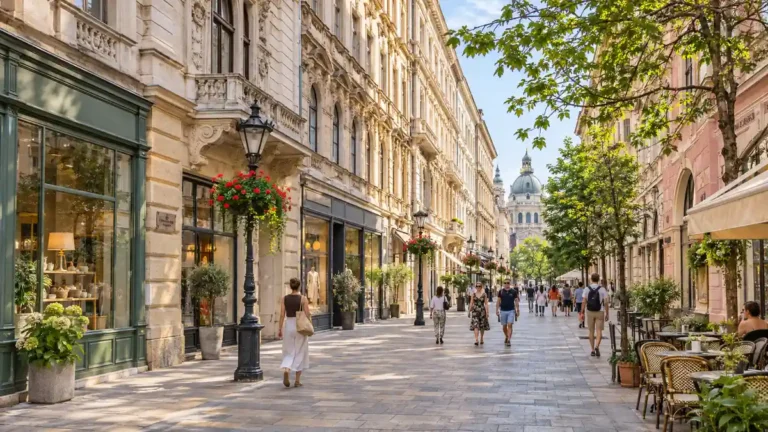
Three days is the right length for a first visit to Budapest, and the plan works best when each day stays on one side of the Danube. Day 1 covers Pest, from Parliament down to the Central Market Hall. Day 2 is Buda: Castle Hill, the Chain Bridge and Gellért Hill. Day 3 runs up Andrássy Avenue to City Park and the Széchenyi Baths, then ends in the Jewish Quarter. You walk nearly all of it. The one change worth considering is a Szentendre half day in place of the day 3 morning. Nothing else in the plan moves.
Three days is enough for Budapest if you keep each day on one side of the river
Three days covers Budapest’s essentials at walking pace without rushing, because the city splits cleanly into flat Pest, hilly Buda and the boulevard out to City Park. Two days is the minimum, and the cost of the shorter trip is the Andrássy and bath day as a day of its own. The three-day order suits a first visit from one base, with no car and no day spent on transport.
| Day | Side of the river | Main stops in order | Evening |
|---|---|---|---|
| Day 1 | Pest | Parliament, Shoes on the Danube Bank, Liberty Square, St Stephen’s Basilica, Vörösmarty tér, Váci utca, Central Market Hall | Basilica square or the embankment; tram 2 past the lit Parliament |
| Day 2 | Buda | Fisherman’s Bastion, Matthias Church, Buda Castle, Chain Bridge, Cave Church, Gellért Hill and the Citadella, Liberty Bridge | The Danube by night: a river cruise, the Pest embankment or tram 2 |
| Day 3 | Pest, out to City Park and back | Andrássy Avenue, Opera House, House of Terror, Heroes’ Square, City Park, Széchenyi Baths, Dohány Street Synagogue | Dinner, then Szimpla Kert in the Jewish Quarter |
One base for all three nights is enough. Pick it on the Pest side near the centre, so days 1 and 3 start on foot and Castle Hill is one bridge away.
Moving around stays simple. You walk most of each day, ride tram 2 along the Pest embankment and take the metro out to City Park. A day trip only enters the plan as a swap for a morning, never as a fourth block squeezed into three days.
Everything around the route belongs to the planning stage: how many days beyond three, which district to stay in, getting in from the airport, BKK tickets, the Budapest Card, money and season. Our Budapest guide covers those decisions before you fix the dates.
Should you start with Buda or Pest?
Start in Pest on day 1. A booked Parliament tour anchors the morning, and the Pest stops after it are flat and close together. That leaves Castle Hill for an early start on day 2, before the tour groups reach Fisherman’s Bastion.
The reverse order makes sense in two cases: you land late on the first day and only have an evening, or you have already booked a bath or a Parliament tour that falls later in the trip. In either case swap days 1 and 2 whole. Do not mix the two sides within one day.
Hotels and places to stay
Compare hotels, apartments and stays for your dates in one search.
Search hotels and stays on hotels.com →
Tripstou may earn a commission if you book through this link, at no extra cost to you.
Day 1: Pest from Parliament to the Central Market Hall
Day 1 walks Pest from Kossuth Square to the Central Market Hall, following the river and then the centre, all on foot. One booking shapes it: the Parliament tour. Book it online in advance and plan the rest of the morning around it.
- Parliament (Kossuth Square). Take the guided tour inside, then walk round the building for the river façade. This is the morning’s fixed point.
- Shoes on the Danube Bank. A few minutes south along the embankment, the iron shoes remember the Jews shot into the river during the war. A short, quiet stop.
- Liberty Square. Walk inland through the square and its monuments on the way to the Basilica. Allow a quarter of an hour.
- St Stephen’s Basilica. See the interior, then climb the dome for the first view across the river to Castle Hill. Allow about an hour.
- Vörösmarty tér and Gerbeaud. Stop for coffee and cake at Gerbeaud, the café on the square. You pass the Art Nouveau Gresham Palace near the Chain Bridge on the way.
- Váci utca. Walk the pedestrian street south. It is a route between stops, not a place to linger.
- Central Market Hall. Food stalls downstairs, lángos (fried dough with sour cream and cheese) at the counters upstairs. Lunch here, or an early dinner if the morning ran long.
If one of these stops does not appeal, our list of things to do in Budapest has the swaps that fit the same stretch of Pest.
Evening stays in Pest. Sit on the square in front of the Basilica, or walk back to the embankment and ride tram 2 along the river, past Parliament lit up at night.
Tours and activities
Book skip-the-line tickets, day trips and local tours with free cancellation on most activities.
You can also browse everything on getyourguide.com.
Tripstou may earn a commission if you book through this link, at no extra cost to you.
Day 2: Castle Hill, the Chain Bridge and the Danube by night
Day 2 spends the whole day in Buda, hills first. Go up Castle Hill early by the funicular, the bus or on foot. Come down to the Chain Bridge, follow the Buda embankment to Gellért Hill in the afternoon, and end on the river at night.
Castle Hill before the crowds
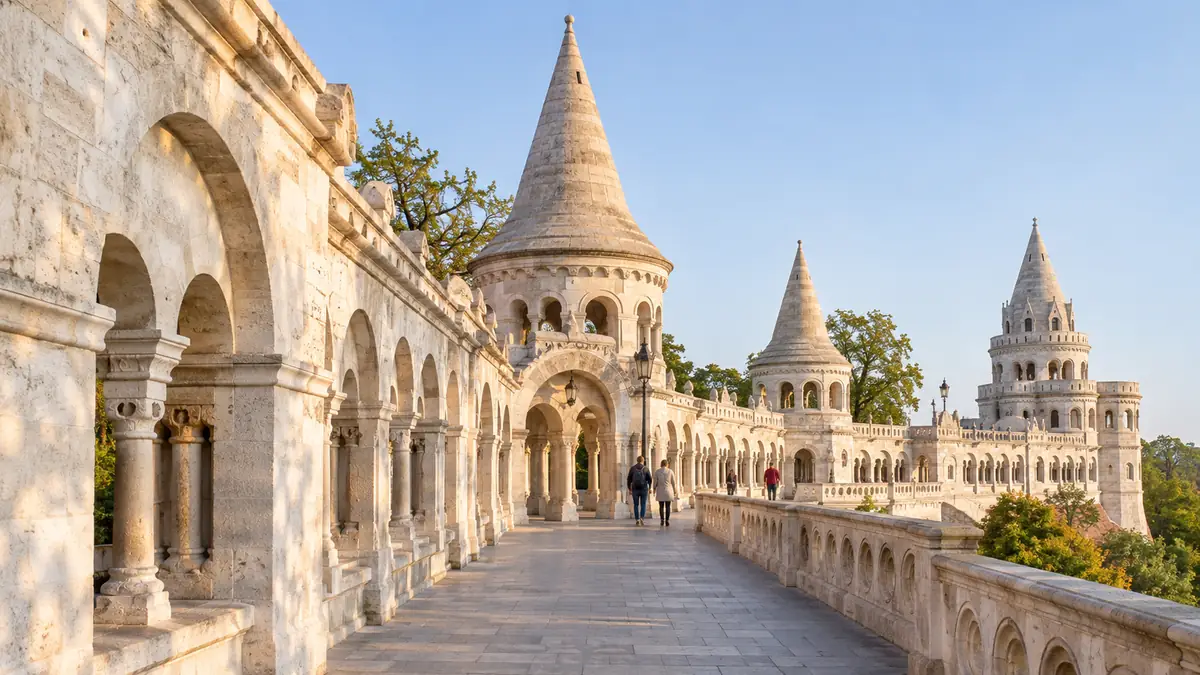
Fisherman’s Bastion is the first stop, and the reason to arrive early: its terraces give the best view of Parliament across the river, and they fill with groups by late morning. Matthias Church stands right behind it. Go in for the painted interior while the queue is still short.
Walk south along the hill to Buda Castle, the Royal Palace. It houses the Hungarian National Gallery and the Budapest History Museum. Choose one. Both together take the whole afternoon and push Gellért Hill into the dark.
The castle terraces facing the river close the morning with a second view, this time down onto the Chain Bridge. Allow the full morning for Castle Hill, and leave it by lunchtime.
Gellért Hill, the Citadella and the river after dark
Walk down from the castle to the Chain Bridge at Clark Ádám tér and step out onto it for the classic river view. Then follow the Buda embankment south to the foot of Gellért Hill. The Cave Church, cut into the rock above Liberty Bridge, is the first stop.
From there the path climbs to the top of Gellért Hill. The Citadella fortress park and the terraces under the Liberty Statue are open to visitors, with the widest view of both banks and the bridges. The exhibition inside the Citadella is ticketed. Come back down to Liberty Bridge. The Gellért Baths beside the bridge are closed for renovation, so this is not a bath stop.
Cross Liberty Bridge to Pest for the evening and see the Danube by night in one of three ways:
- A river cruise passes Parliament, the castle and the bridges all lit up, without walking a step after a day of hills.
- A walk along the Pest embankment costs nothing and gives the full view of Castle Hill lit across the water.
- Tram 2 end to end runs along the same riverbank in a fraction of the time, a good choice when your legs are done.
Day 3: Andrássy Avenue, the Széchenyi Baths and the Jewish Quarter
Day 3 runs out along Andrássy Avenue to City Park and back into District VII. The Széchenyi Baths are the anchor where the route turns round, and Szimpla Kert, the ruin bar, is the last stop of the trip.
Start at the Hungarian State Opera House and walk up Andrássy Avenue. The House of Terror, the museum in the former secret-police headquarters, is the main stop on the way. Give it a couple of hours or walk past. The avenue ends at Heroes’ Square, with its column and the statues of Hungary’s founding chieftains.
Behind the square lies City Park. Vajdahunyad Castle, the Museum of Fine Arts and the House of Music all sit within a short walk of each other. On a three-day plan they are things to see from outside, and the bath is the reason you came this far.
The Széchenyi Baths are on the north side of the park. Buy the ticket online to skip the queue at the entrance. From the bath, ride the metro back towards the centre for the Jewish Quarter.
The Dohány Street Synagogue, with the Hungarian Jewish Museum, is the quarter’s main visit. Dinner stays in the same streets, where the quarter’s restaurants and Hungarian kitchens are a short walk from the synagogue. End the trip at Szimpla Kert, the ruin bar inside a disused building.
The Dohány Street Synagogue is closed every Saturday and on Jewish holidays, so the calendar decides where it goes. If day 3 falls on a Saturday, move the synagogue to the end of Day 1, a short walk from the Central Market Hall, and keep the ruin bar as the last stop of day 3.
Where the thermal bath fits in three days
The Széchenyi Baths go on day 3 with the City Park block, either first thing in the morning or late in the afternoon. That slot costs the plan nothing, since you are already at the park. A second bath is a swap for another stop, not an extra on top.
The morning slot means reversing the day. Take the metro out to the bath at opening, then walk City Park, Heroes’ Square and Andrássy Avenue back towards the centre, which brings you to the Opera House and the Jewish Quarter by late afternoon. The late slot keeps the walk in its outward order and puts the bath at the end of the sightseeing, with nothing after it but the metro back and dinner. Either way you never walk far in wet hair.
Rudas is the Buda-side alternative, at the foot of Gellért Hill near Elisabeth Bridge, so it slots into day 2 after the Citadella. Lukács is the quieter option, north of the centre near Margaret Island. Which bath suits you (pools, atmosphere, crowds) is a choice of its own, and our guide to things to do in Budapest compares them.
Is the Gellért Bath open?
No. The Gellért Baths are closed for renovation, so plan on Széchenyi or Rudas. The building beside Liberty Bridge is still a sight from the outside on day 2.
Does a Szentendre half day fit on day 3?
Yes, but only as a swap for the Andrássy morning, and only with three full days in the city. The bath and the Jewish Quarter stay on day 3 either way.
Szentendre is reached by the H5 suburban train (HÉV) from Batthyány tér on the Buda bank, in under an hour. Check the HÉV status before setting off. The half day itself is the riverside old town, its churches and galleries, and you are back in Budapest by early afternoon for a late bath at Széchenyi.
What you give up is Andrássy Avenue, the House of Terror and Heroes’ Square. That makes the swap a better fit for a repeat visit, or for anyone who has already walked plenty of grand boulevards. Visegrád and Esztergom, further up the Danube Bend, need a full day and do not fit a three-day trip.
Two days or a weekend in Budapest: what to cut first
With two days, cut the day trip, fold the Andrássy and Széchenyi block into the Pest day, and keep Buda whole. Castle Hill and Gellért Hill need a full day on their own. City Park only needs an afternoon if you skip the museums.
- Day 1, Pest: Parliament, the Shoes on the Danube Bank and St Stephen’s Basilica in the morning, then the metro along Andrássy Avenue to Heroes’ Square and City Park, and a late soak at Széchenyi.
- Day 2, Buda and District VII: Castle Hill early, the Chain Bridge, Gellért Hill and the Citadella, then back across the river to the Jewish Quarter for the Dohány Street Synagogue, dinner and a ruin bar at night.
A weekend adds one rule. With a Saturday in the plan, the synagogue goes on the day that is not Saturday, even if that means a short detour on the Pest day.
Four days or more works the other way: you add, and the extra days buy a slower bath, a Danube Bend day or the museums this plan walks past. The Budapest planning guide sets out what each extra day is worth.
How We Checked This Route
This page sets one walking order for three days in Budapest and shows how to cut it to two. It is not the Budapest planning guide (days, base, arrival, money), and it is not a things-to-do or bath-ticket page.
Written with AI assistance, this itinerary was then gone over by Alex Perrut, working in tourism since 2015, for the Tripstou editorial team. Our editorial process explains the steps.
Official sources consulted: Széchenyi Thermal Bath, Gellért Thermal Bath, Citadella, MÁV-csoport.
Did this guide save you time or money? Tripstou is independent and reader-funded — if you'd like to give something back, you can support the site with a crypto contribution of any size.