Three days is enough for Luxembourg when you keep one base in Luxembourg City and give each day one region: Day 1 the capital on foot, Day 2 Vianden and the north, Day 3 the Mullerthal and Echternach. The whole plan runs on trains and regional buses. Without a car you see one region per day, so the Moselle wine villages and the Esch-sur-Sûre and Wiltz corner are what you give up first, or what a fourth and fifth day buy back.
Two things shape this route. It works without a car from the first morning to the last bus home. And every leg is described by its shape (which town you change in, where the bus leaves from), with the national journey planner doing the timetable work on the day.
Sight-by-sight descriptions, restaurants and hotel lists sit on other pages. Here you get the order of the days, where you sleep and how you move between legs.
Is 3 Days Enough for Luxembourg?
Three days is enough for a first visit to Luxembourg: the capital plus two countryside regions fit without rushing. The country is small, and Luxembourg City is the hub of both the rail network and the regional buses, so each excursion is a straight run out and back. What three days leaves out is the Moselle, the Esch-sur-Sûre and Wiltz corner, and Clervaux as a full stop of its own.
Three regions, one per day, is the realistic ceiling without a car. Stacking two rural stops in a day means two bus connections and a lot of waiting at small stops. Starting with the capital works for three reasons: it absorbs the arrival day, it teaches you the city you will return to every evening, and it is where both excursions begin.
The three-day version suits first-timers, travelers stretching a weekend by one day, and anyone moving around without a car. Four or five days earn their place when wine, a second castle or a longer hike matters more than seeing the headline sights.
The 3-Day Route at a Glance
The route runs Luxembourg City on Day 1, Vianden and the north on Day 2, and the Mullerthal with Echternach on Day 3, with all three nights in the capital.
| Day | Where you sleep | Region and anchor stops | How you get there | The day’s tradeoff |
|---|---|---|---|---|
| Day 1 | Luxembourg City | Old town, Chemin de la Corniche, Bock Casemates, the Grund | On foot | Steep valleys; the casemates need booking |
| Day 2 | Luxembourg City | Vianden Castle, the chairlift, Victor Hugo House | Train to Ettelbruck, then regional bus | Longest transit of the trip |
| Day 3 | Luxembourg City | A Mullerthal Trail section, Echternach town | Direct regional bus from Kirchberg | Trail walk needs shoes and daylight |
Reversing the order looks harmless and costs you on both ends. Day 1 in the capital gives you orientation while you are still arriving. Vianden is the longer transit, so it sits mid-trip, when you have no train or flight to catch. Day 3 ends with a single direct bus back to Kirchberg, which makes it the day that fits a departure evening.
One Base in Luxembourg City Beats a Split Stay
Sleep all three nights in Luxembourg City: both excursions are return trips from the hub, and you never repack. The exception is hikers and slow travelers who want two days in the Mullerthal or an evening in Vianden after the day visitors leave; they do better with a second base for the last night.
The two-base variant keeps nights one and two in the capital and moves night three to Vianden or Echternach. It works without a car because a regional bus links Ettelbruck, Diekirch and Echternach via Beaufort, so a north day can end in the Mullerthal without going back to the capital. You then start Day 3 on the trail instead of on a bus.
- One base in the capital: the default for a first visit; one check-in, evenings in the city, and every excursion starts at the hub.
- Two bases (capital, then Vianden or Echternach): for walkers who want an early start on the trail or a quiet evening under the castle, at the cost of one repack.
- Car-based, sleeping in the countryside: for drivers stacking castles and villages in one day, who give up evenings in the capital in exchange.
Hotels and places to stay
Compare hotels, apartments and stays for your dates in one search.
Search hotels and stays on hotels.com →
Tripstou may earn a commission if you book through this link, at no extra cost to you.
You Don’t Need a Car for This Luxembourg Itinerary
The whole route runs on trains and regional buses from the capital. A car only pays off if you want to stack several rural stops into one day, such as Bourscheid, Esch-sur-Sûre and Wiltz together, or castle-hopping through the Mullerthal.
Public transport inside Luxembourg is free in second class; the Luxembourg travel guide covers what still needs a ticket.
Check each leg in the mobiliteit.lu journey planner or app on the day you travel. Regional bus routes and timetables are revised several times a year, which is why this page gives the shape of each journey and leaves line numbers and minutes to the planner.
The car case is narrow. It suits travelers who want Bourscheid Castle, Esch-sur-Sûre and Wiltz in a single loop, or Beaufort and Larochette on the same day as the trail. The price is parking in the capital and losing the simplest feature of this route: you never have to drive back after a long walk.
Day 1: Luxembourg City from the Corniche to the Grund
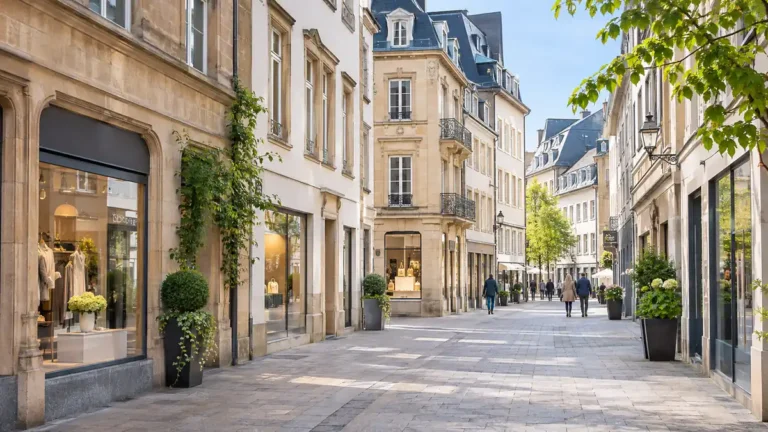
Day 1 is a walking loop of the old town and the valleys below it, and the one thing to arrange before you arrive is a Bock Casemates ticket, which the city’s tourist office advises booking ahead. The order runs from the upper town along the Corniche, down into the Grund, back up by the Pfaffenthal lift, and out to the Pétrusse Valley.
- Place Guillaume II: start in the upper town’s main square.
- Grand Ducal Palace and Notre-Dame Cathedral: the palace from the outside, the cathedral a few streets away.
- Chemin de la Corniche: walk the ramparts while you are still high, for the view over the Grund before you descend into it.
- Bock Casemates and the Rocher du Bock: the tunnels under the old fortress, on your pre-booked slot.
- The Grund and Neumünster Abbey: drop to the river and the abbey on the valley floor.
- Pfaffenthal panoramic lift: follow the valley to Pfaffenthal and ride up; the lift saves the steepest climb of the day.
- Pétrusse Valley and the Adolphe Bridge: close on the southern edge of the upper town.
The order is built around the slopes. Seeing the Corniche first shows you the valley you are about to walk, and finishing with the lift means the climb back to the upper town costs you nothing. The Pétrusse Casemates are the city’s other set of tunnels.
Travelers with small children or tired legs should keep this day as it is and end at the Adolphe Bridge. Fast walkers can add Kirchberg in the late afternoon for Mudam and the Dräi Eechelen fortress museum. For neighbourhoods, food and the part of town to sleep in for three nights, the Luxembourg City guide goes into depth.
Tours and activities
Book skip-the-line tickets, day trips and local tours with free cancellation on most activities.
You can also browse everything on getyourguide.com.
Tripstou may earn a commission if you book through this link, at no extra cost to you.
Day 2: Vianden Castle and the North by Train and Bus
Day 2 goes north to Vianden for the castle, the chairlift and the Victor Hugo House, reached by train to Ettelbruck and then a regional bus. It is the day with the longest transit, which is why it sits in the middle of the trip.
Vianden earns its day because the castle is the country’s headline sight outside the capital. Treat the castle as a daytime visit and arrive by mid-afternoon at the latest. The chairlift is Luxembourg’s only chairlift: it crosses the Our to a hilltop viewpoint above the town, and it runs from spring to autumn only. The Victor Hugo House completes the day’s three anchor stops.
Return the same way, by bus to Ettelbruck and train to the capital, or take the variant below. Vianden sits off the railway and Clervaux sits on it, which is why the add-on goes north by train from Ettelbruck and never the other way round.
Can you add Clervaux or Bourscheid to the Vianden day?
Clervaux is the realistic add-on by public transport: it is on the northern rail line from Ettelbruck, with direct trains back to the capital. You get the castle and The Family of Man exhibition, at the cost of a shorter visit in Vianden.
Bourscheid Castle is a car add-on, not one to chase by bus on the same day as Vianden. Esch-sur-Sûre and Wiltz are an alternative northern pairing, suited to a car or a slow extra day, and do not stack on top of Day 2.
Day 3: The Mullerthal Trail and Echternach
Day 3 pairs a half-day walk on a section of the Mullerthal Trail with Echternach itself, reached by a direct regional bus from Kirchberg via Junglinster. It is the easiest return of the three days, so it suits a departure evening.
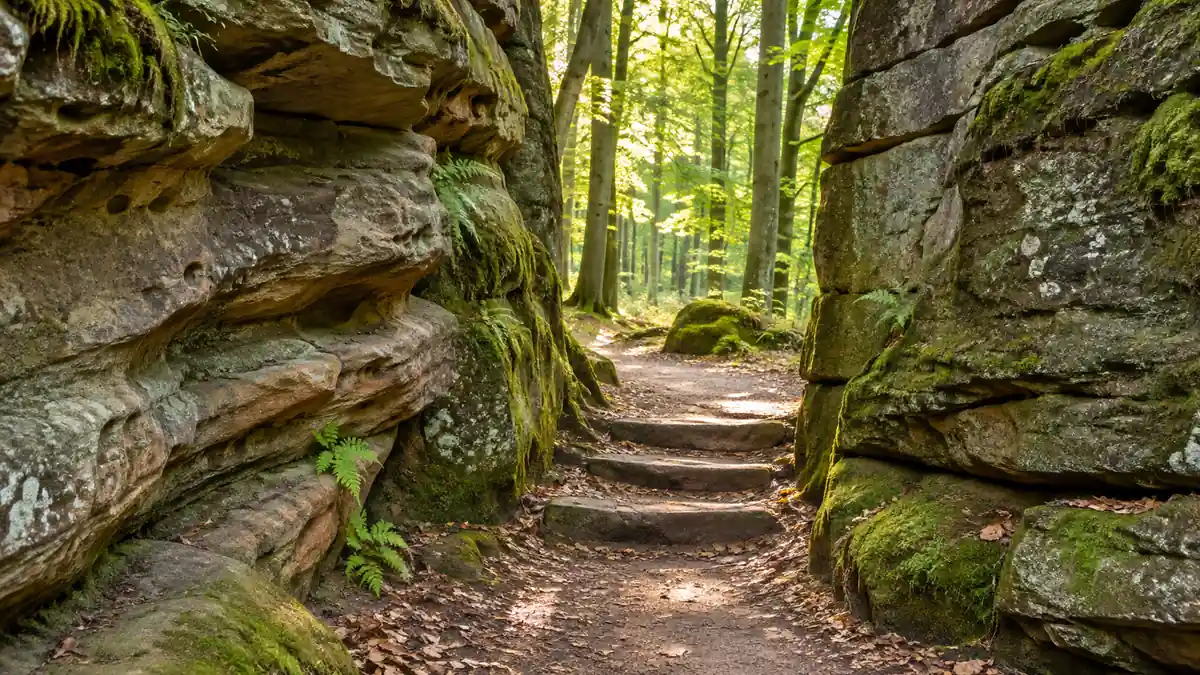
Echternach anchors the day because it is both the bus end-point and a gateway to the trail. The Mullerthal Trail runs 112 km across three main routes plus ExtraTours, so you walk a slice of it: pick a section on the trail’s official site. The Schiessentümpel waterfall and the sandstone rock area around Berdorf and Consdorf are the landmarks most first-timers aim for. Back in town, the Basilica of St Willibrord, the abbey and the market square fill the time before the bus.
Beaufort and Larochette castles are car add-ons for this region. If the three legs leave you wanting more, the full list of things to do in Luxembourg covers the sights beyond this route.
- Wear proper walking shoes; the trail runs over rock steps and narrow passages between the sandstone.
- Start the walk early enough to finish in daylight, with margin for the bus back.
- Check the last return bus from Echternach in the journey planner before you leave Kirchberg.
Swap a Day for the Moselle If Wine Matters More Than Hiking
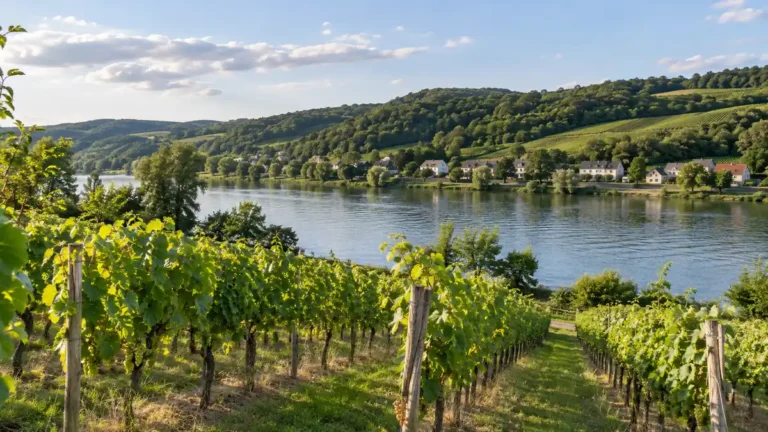
The Moselle wine villages replace Day 3 for travelers who care more about wine than walking, especially in autumn. It is a swap inside the same three days, not a fourth itinerary, and Day 2 stays in place because Vianden is the stop you cannot see anywhere else.
The day follows the river through vineyard villages, with cellar visits and riverside walks between them. Schengen is one of the wine villages on the way. You lose the Mullerthal walk and Echternach. Hikers and families with the waterfall on their list should keep Day 3 as planned and save the Moselle for a fourth day.
Fewer or More Days: What to Cut First and What to Add First
With one day you keep Day 1; a weekend is Day 1 plus either Vianden or Echternach; a fourth day adds the Moselle; a fifth adds Clervaux and Bourscheid or the Esch-sur-Sûre and Wiltz corner. Cut the countryside day with the longest transit first, and add back the region you skipped first.
| Trip length | Keep | Cut or add | Base |
|---|---|---|---|
| 1 day | Day 1 walking loop | Cut both excursions | Luxembourg City |
| 2 days | Day 1 plus one excursion | Choose Vianden or Echternach by season | Luxembourg City |
| 3 days | Capital, Vianden, Mullerthal | The full route | Luxembourg City |
| 4 days | The full route | Add the Moselle | Luxembourg City |
| 5 days | The full route plus the Moselle | Add Clervaux and Bourscheid, or Esch-sur-Sûre and Wiltz | Capital, or a second base in the north |
The weekend version is a Saturday in the capital and a Sunday on one excursion. Choose Vianden when the chairlift is running, because the hilltop view is half the reason to go; choose Echternach and a short trail section in the shoulder months, when the castle day loses its lift.
Every longer version is this route plus a day, never a different trip. A day across the border is a separate plan on a four- or five-day stay, and it comes after the Moselle.
What to Book Ahead and What the Season Changes
Book the Bock Casemates before Day 1; nothing else on the route needs a reservation. The season changes the plan more than any booking does: the Vianden chairlift runs from spring to autumn only, and shorter daylight cuts the Mullerthal walk down.
The off-season route still holds together. Day 1 works in any weather, and Vianden Castle remains the reason to go north. The Grand Ducal Palace stays an exterior stop on the walk in every season.
- Without the chairlift, give Vianden less time and add Clervaux by train on the way back.
- In winter, keep the trail section short or skip it and spend the day in Echternach town.
- Start Day 3 early in the darker months so the walk ends well before dusk.
- In autumn, the Moselle swap is at its strongest; weigh it against the Mullerthal before Day 3.
About This Itinerary
This page plans one three-day route through Luxembourg: the order of the days, where you sleep and how you move between legs. The capital in depth, a ranking of sights, hotel picks and the full transport rules live on the country and city guides.
Alex Perrut, working in tourism since 2015, went over this itinerary for the Tripstou editorial team after it was written with AI assistance; our editorial process sets out the steps.
Official sources consulted: Visit Luxembourg, Mobiliteit journey planner, Luxembourg City Tourist Office, Mullerthal Trail.
Questions Before You Book the Route
Is Vianden Castle worth the trip from Luxembourg City?
Yes, for a first visit: it is the country’s headline sight outside the capital, and you reach it without a car, by train to Ettelbruck and then a regional bus. It is the longest leg of the three days, so it pays off most from spring to autumn, when the chairlift adds the hilltop view over the town. Out of season the castle alone still earns the day; add Clervaux on the way back to fill it.
What do you do on a rainy day in this itinerary?
Cut the Mullerthal walk first, because the trail’s rock steps are the part of the route rain spoils most. Spend Day 3 in Echternach town instead, or bring the Moselle swap forward for its cellar visits. In the capital, the Bock Casemates, Mudam in Kirchberg and the Pfaffenthal lift keep Day 1 going. Day 2 can stay as planned, since the castle itself is the visit.
Can you add Trier to a 3-day Luxembourg trip?
Not without giving up one of the three regions: Trier, across the German border, takes a full day of its own. Keep it for a four- or five-day stay, after the Moselle, and plan that leg separately from this route.
Keep Planning Luxembourg
- Luxembourg travel guide: the whole-country planner, with the regions, when to go and the transport rules.
- Luxembourg City guide: the capital in depth for Day 1, including where to sleep for three nights.
- Things to do in Luxembourg: the full sight list when the three legs are not enough.
Did this guide save you time or money? Tripstou is independent and reader-funded — if you'd like to give something back, you can support the site with a crypto contribution of any size.