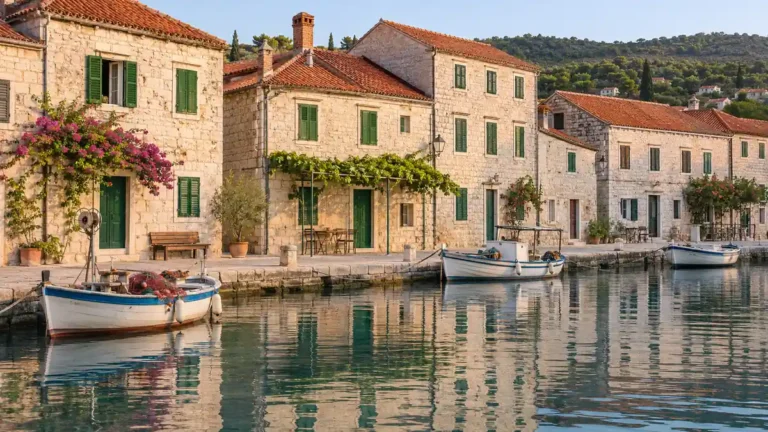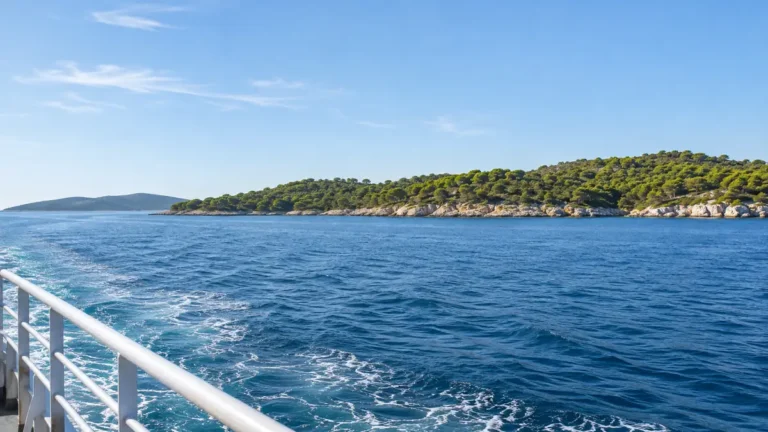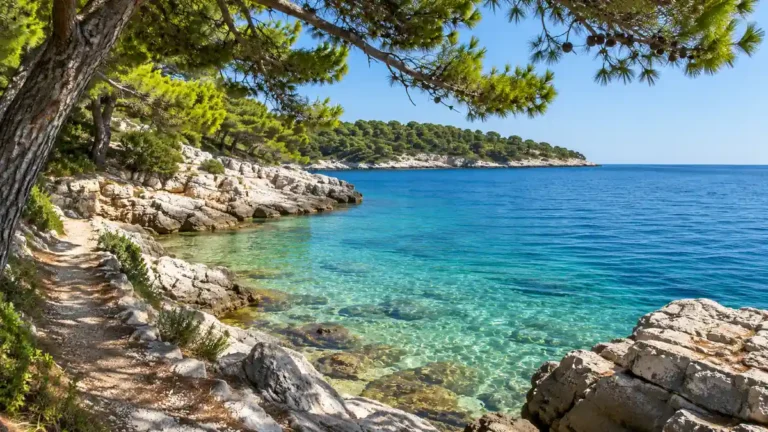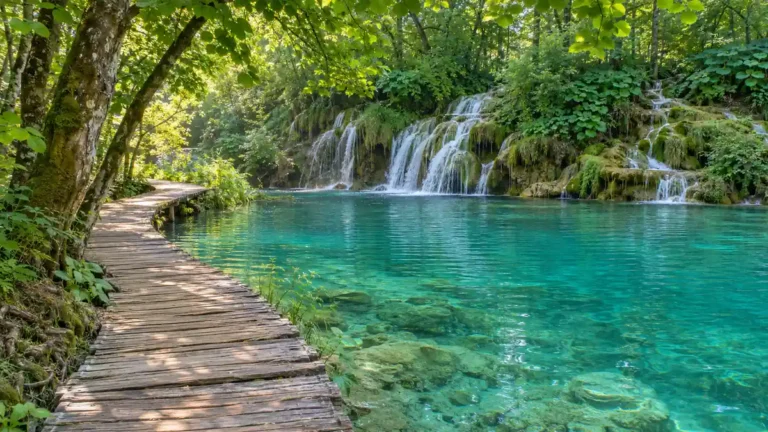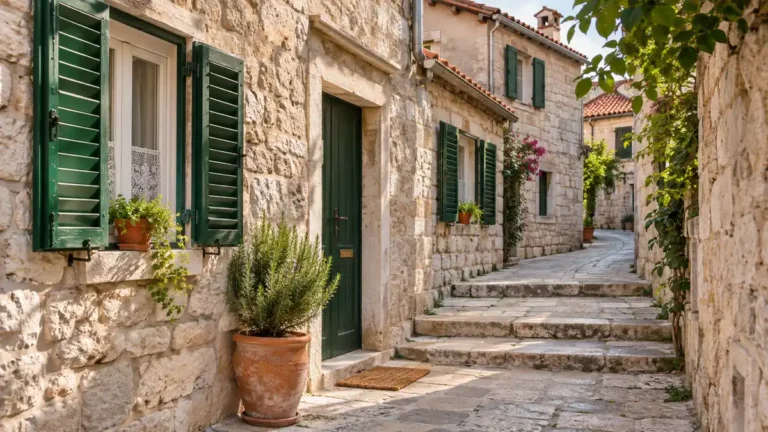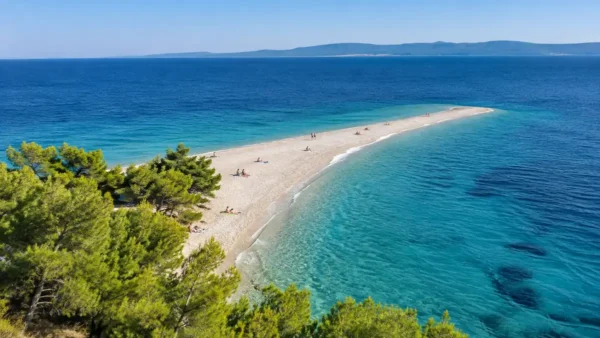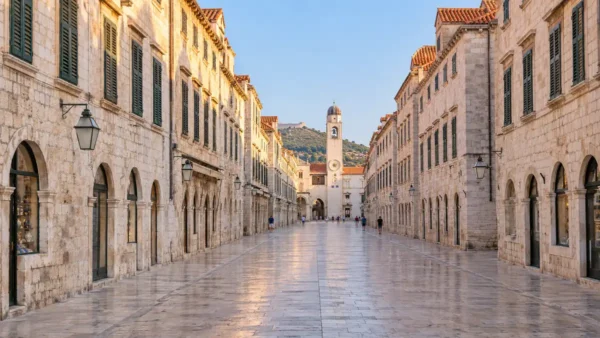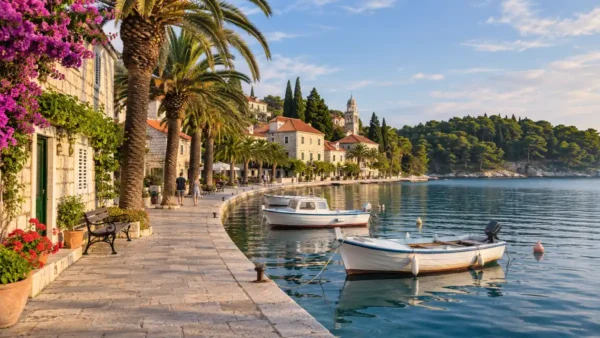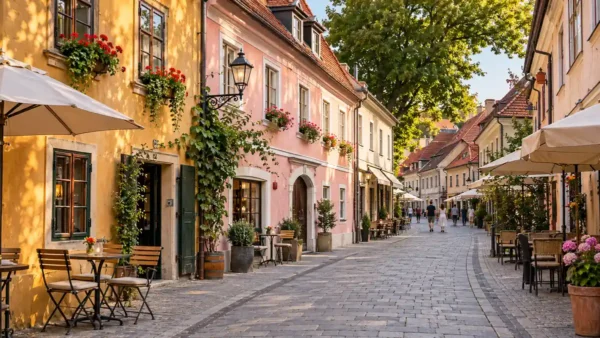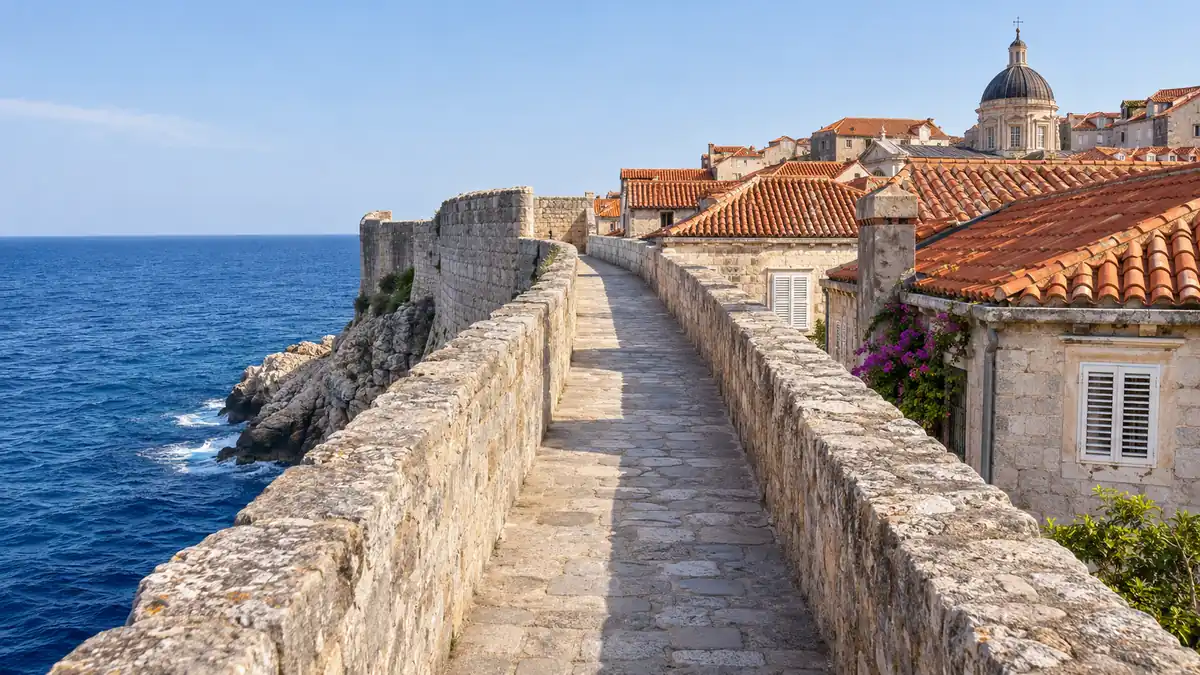
A first visit to Dubrovnik should not miss the City Walls circuit, a slow wander through the Old Town, Mount Srđ at sunset and a half-day on Lokrum island; everything else is chosen around them. Time of day decides whether each one works: the walls early or late, Srđ as the light goes, the Old Town before and after cruise passengers fill it.
The picks below suit a first visit of one to three days or a cruise call, with no car assumed. They are grouped by what each one is for — heights and views, the stone streets, the sea, the evenings, the outings — and each comes with the hour that suits it. A traveler on a second visit, or arriving in the hottest weeks, gets more from the sea and the Elaphiti Islands than from another lap of the Stradun. The cross-border days to Kotor or Mostar earn a place only when a full day is free.
The Short Version
- The City Walls, a slow Old Town wander, Mount Srđ at sunset and a half-day on Lokrum are the core of a first Dubrovnik visit, and every other pick fits around them.
- This shortlist assumes one to three days or a cruise call without a car; a second visit or a heatwave tilts it towards the sea and the Elaphiti Islands.
- Give the exposed heights the edges of the day — the walls in the first or last hour, Srđ at sunset — and keep the hot middle hours for Lokrum or a shaded monastery cloister.
- The Old Town is at its most crowded from mid-morning to mid-afternoon, when cruise passengers are ashore, so the walls and the Stradun are best before and after that window.
- The Elaphiti Islands are the easiest day out of the city, Mljet the fullest day by sea and Kotor the best day across a border, as long as no flight or ship is due that evening.
- Skip a meal on the Stradun terraces: the side lanes and Gruž serve better food for the same money.
The Walls, Srđ and Lokrum Are the Core of a First Visit
The City Walls, Mount Srđ and Lokrum, with the Old Town as the ground they all start from, are the core of a first visit to Dubrovnik. The walls show how the city fits together, Srđ shows it from above with the islands behind, Lokrum gives shade and the sea, and the Old Town is where the rest of the day happens on foot.
Together they suit a first-timer with one to three days or a few hours off a ship, travelling without a car. Each pick starts on foot from Pile Gate or the Old Port, or from a short boat or cable-car ride.
The catch is that the best views and the best sea are not in the same place or at the same hour. The walls and Srđ are exposed stone, at their best early or at dusk; Lokrum is forest and water, and it carries the hot middle of the day. Plan the heights for the edges of the day and the island for the hours in between.
The Old Town is small. A day packed with entries and timed slots inside it leaves no room for what it does best: slow streets, a coffee in Gundulić Square, a swim off the rocks.
Readers who care more about swimming can go straight to the sea section. Those with a full day to spare should look at the day trips, and anyone arriving by ship will find the shortest version in the cruise-stop section.
Is Walking the City Walls Worth It?
Walking the City Walls is worth it on almost every first visit, because the circuit around the Old Town is the one vantage that shows the terracotta roofs, the sea and the layout of the city at once. The answer changes at midday in summer: the walls have very little shade, and the heat off the stone turns the loop into an endurance test.
Timing is the whole decision:
- First hour of opening: the coolest stone, the softest light on the roofs and the fewest people on the narrow sections.
- Late afternoon: warm light on the sea side, and the crowds thin as day visitors leave.
- Avoid mid-morning to mid-afternoon: the Old Town is busiest when cruise passengers are ashore, and the walls feel it first.
The circuit changes character as it goes. Minčeta Tower is the high point on the landward side, with the whole roofscape below it. Fort Bokar watches over Pile Bay and the approach to Lovrijenac. The Old Port side opens onto Lokrum and the harbour, the stretch most people photograph.
An Old Town walking tour and the walls are two different things. A guided walk stays at street level and explains the palaces and churches; the walls are a separate ticketed circuit above them, so booking one does not cover the other. The walls ticket and the Dubrovnik Pass, with what each includes, are covered in our Dubrovnik guide.
Tours and activities
Book skip-the-line tickets, day trips and local tours with free cancellation on most activities.
You can also browse everything on getyourguide.com.
Tripstou may earn a commission if you book through this link, at no extra cost to you.
What to See Inside the Old Town Beyond the Stradun
The Old Town rewards a slow wander more than a checklist, and only a handful of places merit stepping inside: the Rector’s Palace, the Franciscan Monastery for its Old Pharmacy museum, the Dominican Monastery, and Fort Lovrijenac just outside the walls. The rest is best taken in from the street.
Stradun, the Palaces and the Morning Market
The Stradun runs from Pile Gate to Ploče Gate and is the spine every walk follows. Along and just off it stand the Rector’s Palace, the Sponza Palace, the Church of St Blaise and Dubrovnik Cathedral, all within a few minutes of each other. If you enter only one interior, make it the Rector’s Palace.
The Gundulić Square market is a morning affair, best before the heat. From there the Old Port is a short walk towards Ploče, and it is the departure point for Lokrum.
Franciscan and Dominican Monasteries
The Franciscan Monastery near Pile Gate is worth entering for its Old Pharmacy museum, a reason no other building in town offers. Both it and the Dominican Monastery by Ploče Gate have cloisters that double as shade and quiet at midday, when the streets outside are at their most crowded. Save these for the hot hours you are not spending on the walls.
Fort Lovrijenac Above Pile Bay
Fort Lovrijenac stands on its own rock outside the walls above Pile Bay, and its terraces give the best view back at the walls themselves. That reversed angle is the reason to climb it. In summer it becomes a stage for the Dubrovnik Summer Festival, and fans will know it as a key Game of Thrones location, covered below.
Is the Mount Srđ Cable Car Worth It, and When?
The Mount Srđ cable car is worth it at sunset, when the Old Town, Lokrum and the Elaphiti Islands turn gold below you; sunset is also its busiest hour, so expect a queue. The alternative is the hike up the mountain, which gives the same view without the fare and suits anyone happy to climb in the cooler hours.
At the top there is more than a viewing platform. The Panorama restaurant sits at the upper station, the Homeland War museum fills the Imperial Fortress, and an amphitheatre hosts events in summer. The museum is the reason to arrive an hour before sunset: it tells the story of the city’s wartime defence, which the calm view makes hard to imagine.
The operator’s adult fare is €30 for a round trip and €17 one way, which makes riding up and hiking down a reasonable split. The last departure leaves 30 minutes before closing, and closing time moves with the season: long summer evenings, short or no winter service.
The cable car does not run in December or from January to March, and it stops in strong wind or when lightning threatens, sometimes on days that look clear from below. On those days the hike is the only way up, and the summit view is the same. Check the day’s service before planning sunset around it.
Lokrum, Kayaking and the Beaches: Dubrovnik from the Water
Lokrum is the sea pick that beats every city beach for a half-day, with forest shade, rock swimming and a salt-water lake a short boat ride from the Old Port. The city beaches are for the hours around it — a swim before dinner, a quick cool-down — not the main event.
Lokrum Island
Lokrum is a forest reserve, about 90% covered in trees, sitting just off the Old Town. Inside it is a small salt-water lake nicknamed the Dead Sea, calm enough for children and anyone who prefers still water to open sea. The rest of the shore is rocks and ledges, so bring water shoes.
The official boat leaves from the Old Port, and tickets are sold at the Luža office there. The €30 per person fee covers both reserve entry and the return trip on that boat; the fee is the same if you arrive by your own boat or a water taxi. Boats run seasonally.
Lokrum suits anyone who wants the sea without leaving town for the day, and it is the best answer to a hot afternoon. Families and swimmers get the most from it.
Sea Kayaking Under the Walls
A kayak trip is the one way to see the walls from below, from the waterline where the rock meets the fortifications. The usual route runs along the walls and out to Betina cave, with a swim stop on the way; in summer it pays to book a kayak tour ahead. Morning trips usually start on flatter water, which matters for first-time paddlers.
Banje, Sveti Jakov, Danče and Lapad
Dubrovnik’s beaches are pebble and rock, and each one does a different job:
- Banje: the closest beach to the Old Town, just past Ploče Gate, with the walls as a backdrop and the crowds to match.
- Sveti Jakov: further east and down a long flight of steps, with the best view back at the Old Town from the water.
- Danče: the locals’ rock-swimming spot near Pile, rough underfoot and quiet.
- Lapad Bay: the full beach day, with a promenade, cafés and gentler entry into the water.
- Buža rocks: ledges outside the walls where you swim and then order a drink on the same rock.
Lapad is the natural base for a beach-led stay, the Old Town for anyone who wants the walls at opening; the comparison of areas is in where to stay in Dubrovnik.
Where Game of Thrones Was Filmed in Dubrovnik
Game of Thrones fans can see the main King’s Landing locations on foot inside and just outside the Old Town. Fort Lovrijenac stood in for the Red Keep, the Jesuit Staircase is where Cersei’s walk of shame begins, and the exterior of Minčeta Tower was the House of the Undying in Qarth.
Lokrum was used in the series too, which makes it easy to fold into a fan’s day: a morning on the filming sites in the Old Town, then the boat from the Old Port for an afternoon on the island. Guided walks that pair the Old Town locations with Lokrum follow the same logic and fill in the scenes shot at each spot.
On your own, a sensible order is Lovrijenac first, while the morning light is on Pile Bay, then the walls for Minčeta, then down through the Old Town to the Jesuit Staircase above Gundulić Square. It is a walk, not an expedition.
Only fans need to plan around it. Everyone else will pass the same stones while seeing the Old Town anyway.
Beyond the Walls: Gruž, Lapad and the Museums Most Visitors Miss
The best reasons to leave the Old Town for a few hours are two museums and a change of pace, not another monument. The Red History Museum in Gruž and War Photo Limited, which sits inside the Old Town but is skipped by most visitors, show a recent history the stone streets do not.
The Red History Museum covers everyday life in socialist Yugoslavia, and it is the lighter of the two. War Photo Limited is the opposite: conflict photography in quiet rooms, a hard hour that stays with you. Add the Maritime Museum, which tells the story of Dubrovnik as a seafaring republic, and you have the city’s best plan for a rainy hour or a heatwave.
Lazareti, the old quarantine complex just outside Ploče Gate, is worth a look for its long stone halls, now used as an events venue. Check what is on in the evening.
Gruž harbour is where Dubrovnik works instead of posing, and it makes a good local afternoon. The boats, the market and a glass at the Dubrovnik Beer Company give a different city from the one on the Stradun. From there, the Lapad promenade leads towards the bay for an evening walk among residents. This side of town suits a second day or anyone who has had enough of crowds.
Dubrovnik After Dark: Buža, Wine Bars and the Summer Festival
The evening pick in Dubrovnik is a drink on the rocks at Buža as the heat drops and the sun goes down over the sea. After that, walk the Stradun once the day crowds have gone; the polished limestone under lamplight is the Old Town at its best.
The two cliff-and-cave bars are the draw. Buža sits on ledges outside the walls, reached through a small opening in the stone. Cave Bar More puts its bar inside a natural cave by the sea. Both are about the setting more than the drinks.
Inside the walls, D’Vino is the wine bar for Croatian wines by the glass, and Troubadour brings live jazz to the Old Town. For a sunset with dinner, Panorama on Srđ stays open after the light goes. For one restaurant worth leaving town for, Gverović-Orsan in Zaton serves seafood by the water.
The Dubrovnik Summer Festival runs through the summer with theatre and music staged around the city, including at Fort Lovrijenac. A performance there turns a fort you saw by day into the best seat in town by night.
The Stradun terraces are the weakest value for a meal. The same money buys better food a few streets up the side lanes or out in Gruž.
Which Day Trips from Dubrovnik Are Worth It?
The Elaphiti Islands are the best easy day trip from Dubrovnik, Mljet the best full day by sea, and Kotor the best cross-border day; everything else is a half-day add-on. The choice comes down to how much of the day you are willing to give up and whether you want to cross a border.
| Outing | What it is for | How you get there | Length of day | Crosses a border |
|---|---|---|---|---|
| Elaphiti Islands | Swimming and a long lunch on quiet islands | Seasonal boat or tour | Full day, easy pace | No |
| Trsteno | Historic arboretum and gardens | Bus or boat | Half-day | No |
| Cavtat and Konavle | Calm harbour town and wine valley | Seasonal boat or bus | Half-day | No |
| Ston and Pelješac | Town walls, oysters and wine | Bus or tour | Half-day to full day | No |
| Mljet | National park, lakes and forest | Boat | Full day | No |
| Kotor and Perast | Bay views and a walled old town | Tour or bus | Long day | Yes (Montenegro) |
| Mostar and Kravica | Old Bridge and waterfalls | Tour or bus | Long day | Yes (Bosnia and Herzegovina) |
Elaphiti Islands
Koločep, Lopud and Šipan make up the Elaphiti day: a boat hop between small islands, a swim at each stop and a slow lunch by the water. Boats are seasonal. This is the day for a traveler without a car who wants the sea without the effort of planning it, and it asks nothing more than a swimsuit.
Trsteno, Cavtat and Konavle, Ston and Pelješac
Trsteno Arboretum is a half-day of shaded historic gardens up the coast, and it pairs well with an afternoon on the water. Cavtat, reached by seasonal boat, is a smaller and calmer harbour town, with the Konavle valley and its wineries behind it. Ston is the food day: its defensive walls, oysters from the bay and wine from the Pelješac peninsula.
Mljet is the full day by sea, a national park of salt-water lakes and forest. It suits anyone who wants nature on a scale Lokrum cannot match. Korčula, Hvar and Split are onward island stops for a longer trip, not day trips from Dubrovnik; the ferries and routes are in our Croatia island-hopping guide.
Kotor and Mostar: Long Days Across a Border
Kotor and Perast in Montenegro are the best cross-border day: a walled old town at the head of a bay, with Perast and its island churches on the way. Most people go on an organised day, and in summer it is worth deciding early enough to book this day trip before you arrive.
Mostar in Bosnia and Herzegovina is known for its Old Bridge, and the Kravica waterfalls make a swim stop on the way back. Without a car, the simplest way is to reserve a seat on an organised day.
Both mean a long day and border waits in each direction, so carry your passport. Check the entry rules that apply to your passport before booking. Neither suits a day with an evening flight or a ship to catch.
Train and bus tickets
Compare routes, schedules and prices across rail and bus operators in one search, with mobile tickets on your phone.
New to Omio? Code NEW10 takes 10% off your first booking — or APPNEW10 if you book inside the Omio app. Both apply to bookings up to €80.
Search routes and compare prices on Omio →
Tripstou may earn a commission if you book through this link, at no extra cost to you.
What Can You See in Dubrovnik on a Cruise Stop?
With a few hours ashore, choose one height and one walk. Do the walls if the ship docks early enough to beat the heat; otherwise take the Srđ cable car and walk the Stradun. Add Lokrum only if the boat times fit your call.
Cruise hours are the Old Town’s crowded window, and every passenger on the ship has the same idea. Use the start or the end of the call for the walls, when the stone is cooler and the narrow sections are clearer, and spend the busiest middle hours in the monastery cloisters or up on Srđ.
Most ships berth at Gruž, outside the Old Town, so the first and last part of the visit is getting between the port and Pile Gate. Plan for that transfer before adding a last sight.
Drop the cross-border days and kayaking on a cruise call; they need more time than a stop allows. Fort Lovrijenac, a swim off the Buža rocks or a coffee in Gundulić Square fit easily and keep the day unhurried.
What to Skip in Dubrovnik, and What to Do Instead
Skip the midday walls in summer, the Stradun terrace meal and the over-planned day. The Old Town is small and rewards time more than coverage.
- Midday on the walls → the first or last hour: the same circuit with cooler stone, better light and fewer people.
- A meal on the Stradun → a side street or Gruž: better food for the money, and a table out of the main stream of people.
- A walking tour mistaken for the walls → plan both: a guided Old Town walk stays at street level, and the walls circuit is its own visit.
- A tight connection after a cross-border day → leave a margin: border waits make a Kotor or Mostar return hard to time, so never pair one with an evening flight or ferry.
- Trying to see everything in one day → spread the picks: the walls, Srđ and Lokrum each want their own hour, and the three-day Dubrovnik itinerary shows how they spread over one to three days.
How This Shortlist Was Put Together
This page picks the Dubrovnik sights, swims and outings worth limited time, judged by what each gives back for the heat, crowds and hours it costs; tickets, arrival, budget and when to go sit in the city guide, day-by-day order in the itinerary, and areas to stay in their own guide.
Alex Perrut, working in tourism since 2015, went over this shortlist and checked the cable car and Lokrum fares against the operators below for the Tripstou editorial team; the page was written with AI assistance, as our editorial process sets out.
Official sources consulted: Dubrovnik Cable Car, Lokrum Reserve.
Keep Planning Dubrovnik
- Dubrovnik travel guide: the walls ticket, the Dubrovnik Pass, arrival, cost and when to go.
- Three-day Dubrovnik itinerary: how these picks spread over one to three days.
- Where to stay in Dubrovnik: which area to base in for the walls, the beaches or a quieter stay.
- Croatia island-hopping guide: going on to Korčula, Hvar or Mljet by ferry.
Did this guide save you time or money? Tripstou is independent and reader-funded — if you'd like to give something back, you can support the site with a crypto contribution of any size.