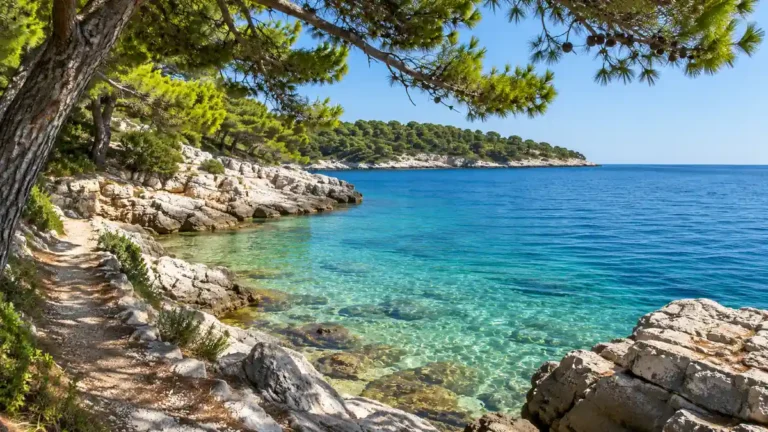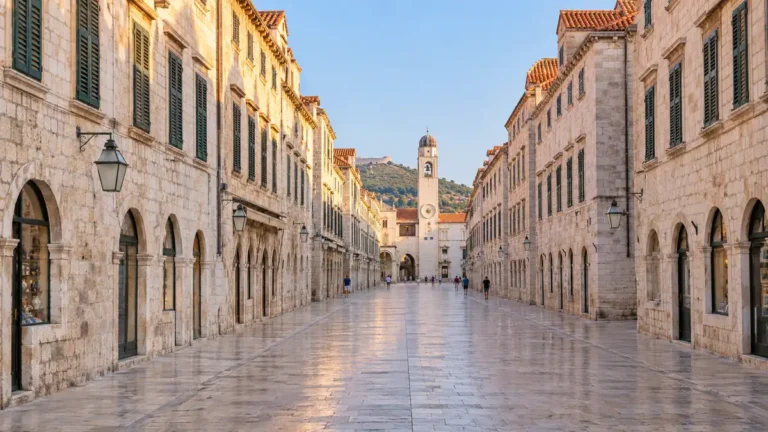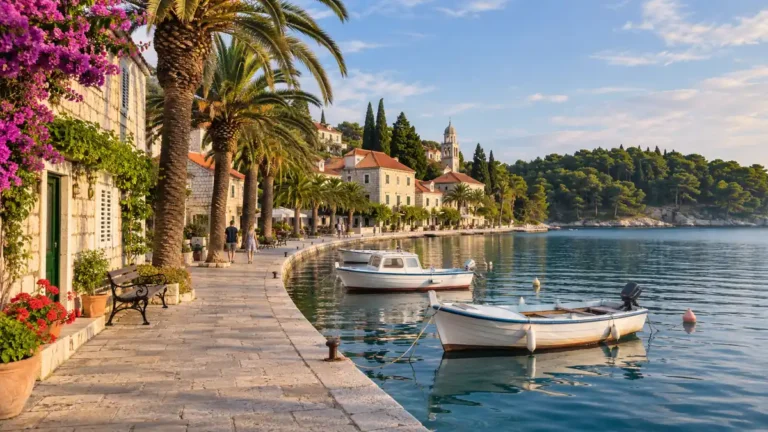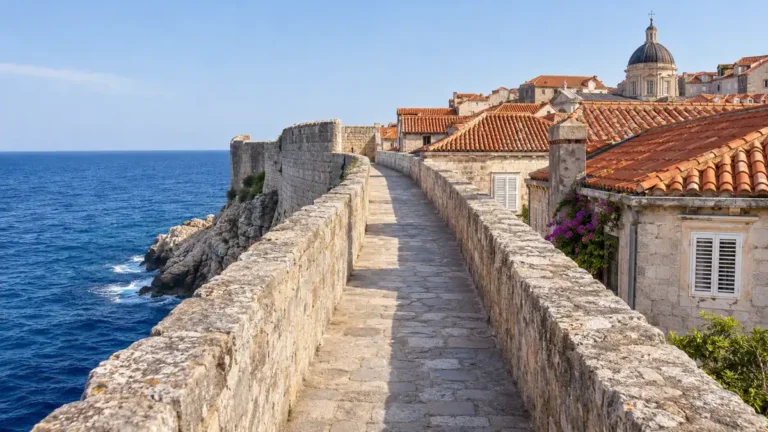
The Croatia island-hopping route that works is the north-to-south chain Split → Brač → Hvar → Korčula → Mljet → Dubrovnik, done in seven to ten days with two or three nights on each main island and linked by the passenger catamarans that run from island to island. With only five days, take two islands from Split (Hvar plus Brač or Vis) and leave the chain for a longer trip. No car is needed on the catamaran chain; bring one and the route has to follow the mainland car ferries instead.
This plan assumes a first visit, a flight into Split or Dubrovnik and no car. It covers which islands to pick, the order, the nights and the sea link between each pair; timetables, fares and the mainland half of a Croatia trip sit on their own pages.
The Short Version
- The classic chain runs Split → Brač → Hvar → Korčula → Mljet → Dubrovnik, with one or two nights on Brač and Mljet, two or three on Hvar and two on Korčula.
- Passenger catamarans link island to island, while car ferries mostly run from the mainland to one island and back, so a car-ferry route turns into a string of mainland detours.
- Start in Split for Brač, Hvar and Vis, start in Dubrovnik for Mljet, the Elaphites and Korčula, and fly into one and out of the other so you never retrace the coast.
- A first trip without a car works best on the public catamarans; a sailing week makes sense when the boat itself is the holiday, and a small-ship cruise when you want no repacking at all.
- Five days covers two islands from Split, seven to ten covers the whole chain, and any extra days should become extra nights, not extra islands.
On This Page
Which Croatian islands are best for island hopping?
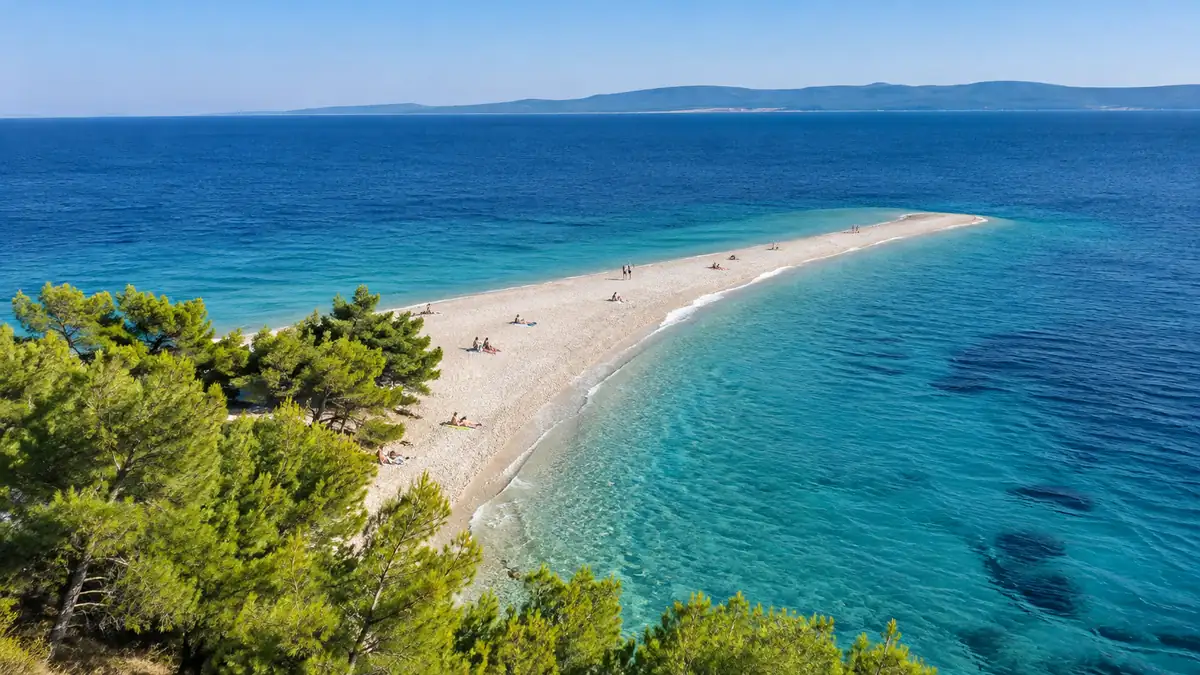
Five Dalmatian islands carry an island-hopping route: Hvar for its polish and nightlife, Brač for the easiest first hop and the Zlatni Rat beach, Korčula for its walled old town, Vis for remoteness and Mljet for green national-park scenery. A first trip takes three of them, not all five. Hvar and Korčula sit on almost every good route; the third slot goes to Brač, Vis or Mljet depending on the trip you want.
| Island | Character | Best for | Hub and arrival port |
|---|---|---|---|
| Hvar | Lively and polished, quieter on the north coast | Nightlife, harbour buzz, lavender country | Split → Hvar by catamaran, or Stari Grad by car ferry |
| Brač | Stone villages, one famous beach | An easy first island, beach days at Bol | Split → Supetar or Milna |
| Korčula | Walled old town, vineyards | Old-town evenings, wine, a midpoint stop | Split or Dubrovnik by catamaran (Vela Luka also from Split); Orebić by car ferry |
| Vis | Remote, a former military island | Quiet harbours, the Blue Cave trip | Split → Vis by ferry or catamaran |
| Mljet | Green and quiet, a national park in the west | Nature, lakes, cycling and swimming | Dubrovnik → Sobra or Polače |
Hvar is the island to pick if evenings matter as much as beaches: Hvar Town is the liveliest harbour on the route, while Stari Grad and Jelsa run at a slower pace. Brač suits a gentle start, because Supetar is a short crossing from Split and Bol’s Zlatni Rat is the beach most people picture. Korčula earns its place as the old town on the route, a walled peninsula town with wine villages such as Lumbarda close by. Vis is for travelers who want the opposite of Hvar: two harbour towns, Vis Town and Komiža, and few crowds. Mljet is the nature stop, with the national park’s saltwater lakes at its western end.
Three quieter islands fit in as extras. Šolta is a short hop from Split for a calm day or a night away from the crowds. The Elaphites, Šipan and Lopud among them, are small, slow islands close to Dubrovnik. Lastovo is the remote far end of the chain, a choice for a long trip with time to spare.
How many days do you need for island hopping in Croatia?
Seven to ten days does the classic Split-to-Dubrovnik chain without rushing. Five days buys two islands done well. Beyond ten days, add nights, not islands: a third night on Hvar or Korčula is worth more than a sixth island.
- Five days: Split plus Hvar and one of Brač or Vis, with no repacking more than twice.
- Seven to ten days: the full chain, Brač, Hvar, Korčula and Mljet, ending in Dubrovnik.
- Eleven days or more: the same chain with longer stays, or a Vis out-and-back before Brač.
Each sea link eats half a day, and the catamaran timetable, not your plan, sets the departure. Four moves in a week already means four half-days on quays and boats. That is why the cuts run in a fixed order: drop Mljet first (it is the detour), then Brač (Hvar covers its role). With extra days, add Vis first, then a third night wherever the trip feels too fast.
Most visitors also want the mainland. Zagreb, Plitvice and Zadar belong to a different leg of the trip, and the full Croatia itinerary shows how the island chain slots into a whole-country route.
The classic route runs Split to Dubrovnik, island by island
The classic route is Split → Brač (one to two nights) → Hvar (two to three) → Korčula (two) → Mljet (one to two) → Dubrovnik. It runs one way only, so no leg is retraced, and it works just as well in reverse from Dubrovnik.
| Stop | Nights | Link to next stop | Link type |
|---|---|---|---|
| Split | Arrival night only | Split → Supetar or Milna (Brač) | Car ferry or catamaran |
| Brač | 1–2 | Milna → Hvar | Catamaran |
| Hvar | 2–3 | Hvar → Korčula | Catamaran |
| Korčula | 2 | Korčula → Sobra (Mljet) | Catamaran |
| Mljet | 1–2 | Sobra or Polače → Dubrovnik | Catamaran |
| Dubrovnik | End of the chain | Fly home | — |
Split: the hub, not a stop
Split is where the chain starts, and it needs a night only if your flight lands too late for a boat. Every island on the northern half of the route is reached from its harbour. For the city itself, the guide to things to do in Split covers what to see before or after the islands.
Brač: the easy first hop
Brač is the gentlest first island and, after Mljet, the next one to cut. Supetar, on the north coast, is a short car-ferry hop from Split and an easy place to land. Bol on the south coast has Zlatni Rat, the long pebble spit that is the island’s main draw. Milna, at the west end, is the stop on the island-chain catamaran, which makes it the port to leave from for Hvar. On a tight trip Brač goes, because Hvar offers beaches, villages and harbour life without the extra move.
Hvar: the island most people build the trip around
Hvar takes two to three nights, the longest stay on the route. The choice of town shapes the stay:
- Hvar Town: harbour bars, late nights and boats out to the Pakleni Islands.
- Stari Grad: the older, calmer town on the north coast, where car ferries from Split land.
- Jelsa: a small harbour town in the middle of the island, within reach of the lavender fields inland.
You leave Hvar southbound on the catamaran to Korčula.
Korčula: the walled town halfway to Dubrovnik
Korčula gets two nights and is the route’s old-town stop. Korčula Town sits on a small walled peninsula, and Lumbarda, a short way east, adds vineyards and beaches. Vela Luka at the island’s west end is a second catamaran port and the jumping-off point for the beaches of Proizd islet. Drivers reach Korčula another way: down the Pelješac peninsula to Orebić, then the car ferry across the channel. From Korčula the catamaran heads on to Mljet or straight to Dubrovnik.
Mljet: the green detour before Dubrovnik
Mljet takes one or two nights and exists on the route for one reason: Mljet National Park. The park covers the island’s west, with its saltwater lakes and the Isle of St Mary, a small island in the larger lake. Pomena and Polače sit at the park end; Sobra and Polače are the stops on the Dubrovnik-side catamaran chains, which also link Mljet to Korčula. Kayaking, cycling round the lakes and other park activities are covered in the guide to things to do in Croatia.
Mljet is the easiest island to skip and the hardest to replace. No other stop on the chain offers forest and lakes in place of harbour towns, so a nature-minded traveler should cut Brač first and keep Mljet.
Vis: the out-and-back side trip from Split
Vis is a dead end: boats run between Split and Vis, and the island links nowhere else on the chain. That makes it an out-and-back from Split, best slotted at the start before Brač, or skipped on a seven-day trip. Vis Town and Komiža are the two bases. Komiža is also where small boats leave for the Blue Cave on Biševo, a trip that runs only when the sea is calm.
Dubrovnik: where the chain ends
Dubrovnik is the last stop and the airport home. The catamarans from Korčula and Mljet arrive there, which is why the chain finishes in the south and does not loop back to Split.
Catamarans chain the islands; car ferries only go mainland to island
Passenger catamarans run the island-to-island chain, while car ferries mostly shuttle from the mainland to one island and back. Krilo (also sold as Kapetan Luka), TP Line and the state operator Jadrolinija run the catamarans; Jadrolinija runs the car ferries. A route built on car ferries is a string of mainland detours, and a route on catamarans moves straight down the islands.
The catamaran lines that link islands, by stop order:
- TP Line: Split – Milna – Hvar – Korčula – Dubrovnik, and the same chain northbound. This is the seasonal spine of the classic route.
- TP Line: Ubli (Lastovo) – Korčula – Sobra (Mljet) – Dubrovnik.
- TP Line: Dubrovnik – Šipan – Sobra – Polače – Korčula – Lastovo, with the last stops served only on some sailings.
- TP Line: Ubli – Vela Luka – Hvar – Split.
- Krilo: Split–Hvar, Split–Korčula, Split–Dubrovnik, Split–Vis and Split–Supetar, all radiating from Split.
The car-ferry pairs most island hoppers meet:
- Split – Supetar (Brač)
- Split – Stari Grad (Hvar)
- Drvenik – Sućuraj (Hvar’s east tip)
- Orebić – Korčula (from the Pelješac peninsula)
- Split – Vis (also served by catamaran)
“Via the mainland” means this in practice: a driver leaving Hvar for Korčula crosses from Sućuraj to Drvenik, drives down the coast and onto Pelješac, then takes the Orebić ferry back out to Korčula. A catamaran passenger makes the same move in one sailing from Hvar.
Times, fares and how to book each line change through the year and live in the Croatia ferry and transport guide.
Should you start in Split or Dubrovnik?
Start in Split for the classic chain and for Brač, Hvar, Vis and Šolta; start in Dubrovnik for Mljet, the Elaphites and Korčula. The best plan uses both: fly into one, out of the other, and run the chain one way.
Split is the hub for the northern islands. Brač, Hvar, Vis, Šolta and Korčula all have boats from its harbour, which is why the classic route starts there and why a five-day trip should be Split-based.
Dubrovnik reaches the southern islands. Šipan in the Elaphites, Mljet’s Sobra and Polače, and Korčula are all on catamarans from the city. A Dubrovnik-based trip looks different: an Elaphites day or night, a Mljet stay, and Korčula as the far point before turning back.
An open-jaw flight is what makes the one-way chain possible. A return ticket to Split forces you to retrace the whole coast at the end; a Split-in, Dubrovnik-out ticket removes that leg.
Zadar and Rijeka start a different trip altogether, among the northern islands (more on that in the questions below).
Ferry, sailing week or small-ship cruise: which way to island hop?
Public catamarans and ferries suit a first trip with no car and the freedom to stay longer wherever you like. A sailing week suits a trip where the boat is the holiday. A small-ship cruise suits anyone who wants a hotel that moves and someone else to plan the day.
- Public catamarans and ferries: you choose the islands, the towns and the nights, and you can stretch a stay on a whim. The timetable decides when you move, and you carry your own bags between quay and room.
- Sailing week: a skippered or bareboat yacht, or a cabin on a group sail, usually as a loop from Split or one way from Split to Dubrovnik. You reach coves and anchorages no catamaran serves; the skipper and the wind decide where you sleep.
- Small-ship cruise: one cabin for the week, mostly on the Split–Dubrovnik run, with stops planned for you. No repacking at all, but the captain sets the island time, and weather can move the plan.
Public boats are the cheapest way to island hop by a wide margin. Cabin-based group sails and small-ship cruises sit in the middle, and a bareboat charter or a private skipper sits at the top. A tour only costs less when it replaces things you would otherwise pay for separately, such as rooms and meals, so compare the whole week.
The deciding question is whether you want time on the islands or time on the water. Catamaran hoppers get evenings in town; sailors get days at anchor and less of each town.
Tours and activities
Book skip-the-line tickets, day trips and local tours with free cancellation on most activities.
You can also browse everything on getyourguide.com.
Tripstou may earn a commission if you book through this link, at no extra cost to you.
Do you need a car for Croatia island hopping?
No, not on the catamaran chain. A car only pays off for reaching interior villages on Brač, Hvar or Korčula, and it forces the whole route onto car ferries, with mainland detours and pressure on car spaces in peak season.
Ashore, the island towns are walkable, and local buses link the main towns on the larger islands. Taxis, scooters and bikes cover the rest, which is enough for a beach day or a village lunch.
A car changes the route itself. Korčula is then reached down the Pelješac peninsula to Orebić, and Hvar is entered or left through Sućuraj and Drvenik at its eastern tip. Car spaces on peak-summer ferries fill up, so a driver books those crossings ahead.
One base or island to island: how to split the nights
Move island to island on a trip of seven days or more, with two to three nights on each. A single base, in Hvar or Split, with day hops works for a short trip or a group that hates repacking.
The port of your next catamaran should decide the town you sleep in. Base yourself where the next boat leaves, and the morning move stays short.
- On Hvar, Hvar Town is the nightlife base; Stari Grad and Jelsa are quieter, with Stari Grad suiting car-ferry arrivals.
- On Brač, Supetar is the practical base for the Split ferry; Bol is the beach base.
- On Vis, Vis Town is the larger of the two harbour towns; Komiža is smaller and the departure point for Biševo.
- On Korčula, Korčula Town is the one base most first trips need.
- On Mljet, Pomena and Polače put you beside the national park.
A Split base gives the most day trips, since boats from its harbour reach Brač, Hvar, Šolta and Vis. A Hvar base trades that reach for evenings on an island; the catch is that Korčula and Mljet become long days out.
Late spring to early autumn is the island hopping season
The catamaran chain runs from late spring to early autumn and thins to almost nothing in winter, so island hopping is a warm-season trip. The shoulder months at either end of that window give the same links with lighter boats and calmer towns.
Peak summer changes the logistics. Catamarans sell out, car spaces on the ferries fill, and Hvar Town is at its loudest. Book every sea leg ahead and expect busy quays.
The shoulders trade a cooler sea and the odd day boat that has not started, or has already stopped, for space on board and easier rooms.
Out of season the chain breaks apart. With few island-to-island catamarans, each island turns into a mainland-and-back trip from Split or Dubrovnik, and a one-way route stops working.
How We Built This Route
This route picks the Dalmatian islands worth a first trip and joins them into one north-to-south chain, with nights per stop and the sea link for each pair. For ferry timetables and fares, a whole-Croatia itinerary, island activities or hotel picks, use the sibling pages linked below.
Alex Perrut, working in tourism since 2015, went over the island order and the sea links for the Tripstou editorial team; the page was written with AI assistance. How that review works is set out in our editorial process.
Official sources consulted: TP Line, Krilo, Komiža Tourist Board, Mljet National Park.
Island Hopping Questions, Answered
Do you need to book Croatia ferries in advance?
Only for peak summer and for cars. In high season the island-chain catamarans sell out and car spaces on the busiest ferries fill, so book those legs once your nights are fixed. In the shoulder months a foot passenger has far more room to buy close to the day, which keeps the route flexible.
How do you visit the Blue Cave from Vis?
Take a small boat from Komiža to the island of Biševo, where boats slip into the cave through a low, narrow opening. Go around the middle of the day, when the blue light inside is at its strongest. Trips run only when the sea is calm and can be cancelled at short notice, so keep a spare day on Vis in case the first attempt is called off.
Are the Kvarner islands in the north worth island hopping?
They are worth it as a separate trip, not as an add-on. Krk, Cres, Lošinj and Rab are reached from Rijeka, and the Zadar islands from Zadar, a long way up the coast from the Dalmatian chain. They do not join the Split-to-Dubrovnik route in a single week, so pick one stretch of coast per trip.
Keep Planning Croatia
- Croatia travel guide: the country overview, with the islands as one part of the trip.
- Croatia ferry timetables and fares: current sailings, prices and the Split–Dubrovnik options.
- The whole-country route: how the island leg fits around Zagreb, Plitvice and the coast.
Did this guide save you time or money? Tripstou is independent and reader-funded — if you'd like to give something back, you can support the site with a crypto contribution of any size.