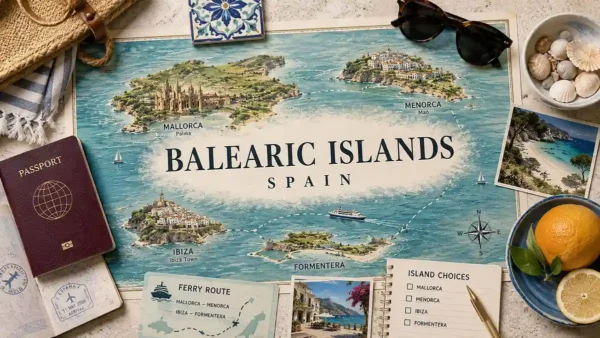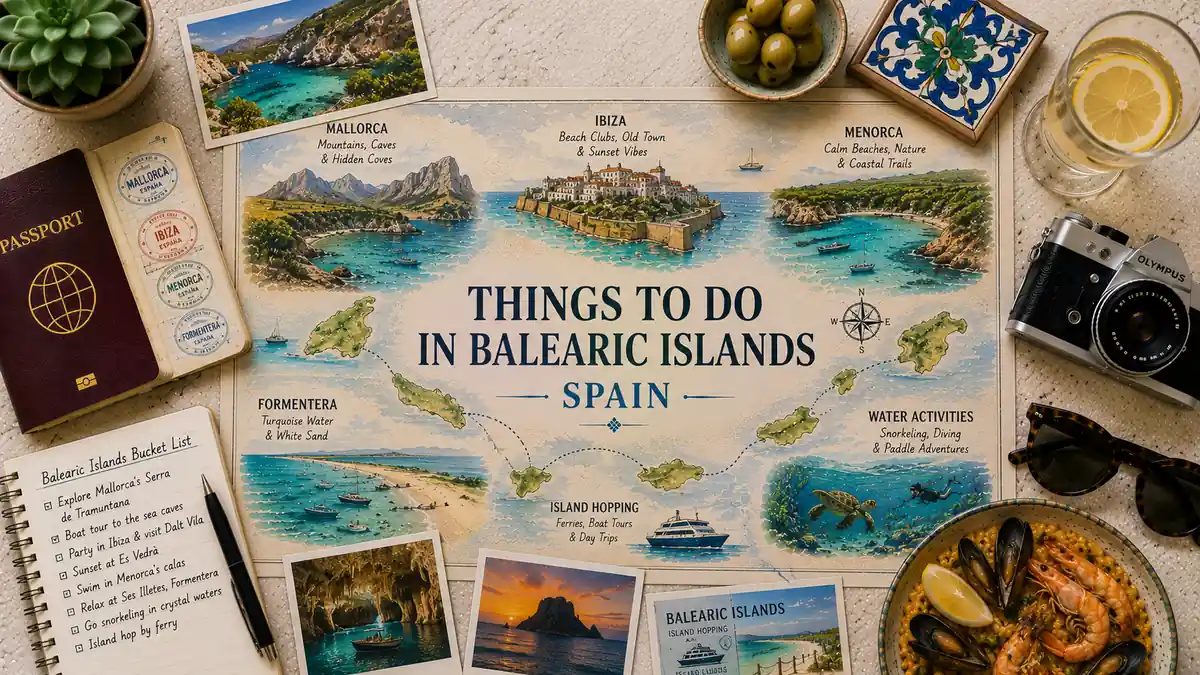
Four islands, dozens of possible experiences, and each one does a different thing best — that is the real puzzle of a Balearic trip. The question is rarely whether to go; it is what to actually do, and which island to build the trip around. Mallorca hands you mountains, a walkable capital and endless coves. Ibiza runs some of the world’s biggest clubs above a walled medieval old town. Menorca keeps things calm with unspoiled calas and coastal trails. Formentera is one dazzling stretch of turquoise water. Get the match right and the whole trip clicks; get it wrong and you spend the week wishing you were on the next island over. This guide runs through the best things to do on each island, plus the cross-island experiences — boat tours, island hopping and water sports — and tells you which island does each one best.
Quick Answer
The Balearics deliver island hopping, sea caves, mountain hiking, world-class water and Ibiza nightlife — each island does one style best. Mallorca suits variety, Ibiza pairs partying with heritage, Menorca stays calm, and Formentera is built for turquoise water. Most trips combine two islands by ferry, so pick your lead island by the experience you care about most.
Trust Layer
Tripstou selection guide for travelers choosing between multiple places. Covers selection criteria, traveler fit, and trip value.
Produced with AI assistance and reviewed by Alex Perrut, working in tourism since 2015, for the Tripstou editorial team. See our editorial process for details.
Last factual review: July 18, 2026.
Official sources consulted: spain.info, Turespaña.
Key Takeaways
- Mallorca is the only Balearic island big enough to fill a full week without repeating itself, blending mountains, city and coves.
- Choose Ibiza for nightlife paired with the walled Dalt Vila, Menorca for calm coves, and Formentera for turquoise water.
- Match your trip to experiences, not island names, then pick the lead island that delivers the one you want most.
- Combining two islands by ferry is the smartest move, and the short Ibiza–Formentera hop pays off even on single-island trips.
- Ibiza’s summer crowds, high prices and seasonal club calendar are the region’s biggest trade-off, so time visits carefully.
- Caves, boat tours and dive trips are often seasonal and booking-dependent, so reserve marquee experiences before you arrive.
Table of Contents
Which Balearic island fits your trip?
Mallorca fits the widest range of travelers because it blends nature, city and coast in one island. The real split is party versus quiet: Ibiza for nightlife and heritage, Menorca for calm coves and families, Formentera for turquoise water. Pick your lead island by the one experience you most want.
Think in experiences, not island names, and the choice gets easy. Menorca and Formentera both promise calm, clear water, but Menorca layers in hiking and prehistoric history while Formentera stays a pure beach day. Mallorca is the only island large enough to fill a week without repeating itself; the others reward a focused three-to-four-day stay or a pairing.
| Island | Pick it for | Signature experience | Main trade-off |
|---|---|---|---|
| Mallorca | Variety and a full week | Tramuntana peaks, coves and Palma | Bigger island, best with a car |
| Ibiza | Nightlife plus real heritage | Superclubs and walled Dalt Vila | Summer prices and heavy crowds |
| Menorca | Calm, families and slow days | Wild calas and the Camí de Cavalls | Low-key nightlife scene |
| Formentera | Turquoise water and beach days | The Ses Illetes sandbar | Tiny, reachable only by ferry |
If you want the character of each island side by side — climate, when to go and how they differ in feel — our Balearic Islands guide handles that comparison so this page can stay on the experiences. Still weighing where in the country to spend your time? The best places to visit in Spain sets the Balearics against the mainland, and things to do in Spain covers experiences nationwide.
Best Things to Do in Mallorca
Mallorca is the most varied Balearic island, packing a walkable capital, dramatic mountains and hundreds of coves into one landmass. Palma’s old town, the Cap de Formentor drive and the Serra de Tramuntana give it range no other island matches. It works as a whole trip on its own.
Three experiences carry a first Mallorca trip beyond the beach:
- Palma’s old town. The Gothic cathedral (La Seu) rises over the marina above a maze of tapas lanes and courtyards. This is the only island with a genuine city. Pick this if: you want culture, dining and nightlife without leaving the coast.
- The Cap de Formentor drive. A cliff-hugging road twists north to a lonely lighthouse past hairpins and lookout points. It is the most dramatic drive in the Balearics. Pick this if: you are renting a car and love a scenic route.
- East and south coves. Turquoise pockets like Caló des Moro and Cala Varques sit below pine cliffs, some a short walk in. The cove variety here beats every other island. Pick this if: you want postcard swims without booking a boat.
Caves of Drach and Cuevas de Artà
The Caves of Drach and Cuevas de Artà are Mallorca’s marquee indoor experience. Both are vast limestone cave systems on the east coast: Drach is famous for one of Europe’s largest underground lakes, crossed by boat during a live classical concert, while Artà counters with cathedral-scale chambers and towering stalagmites.
Both run guided visits only, and they make an easy rainy-day or midday plan when the sun is too strong for the beach. Entry is inexpensive by attraction standards, and timetables shift by season, so reserve Drach’s concert slot ahead and confirm current fees and hours before you go.
Hiking the Serra de Tramuntana
The Serra de Tramuntana is Mallorca’s UNESCO-listed mountain range along the northwest coast. A wall of limestone peaks, terraced valleys and stone villages, it delivers the island’s best walking and its finest scenic drive — from the Sa Calobra hairpins to Valldemossa and Deià. Trails here suit every level.
Short valley walks and village-to-village paths reward casual hikers, while long ridge routes and the climb toward Puig de Massanella test serious ones. The vintage train from Palma to Sóller is the gentlest way in. Spring and autumn are kindest for walking; midsummer heat pushes most people to early starts.
Best Things to Do in Ibiza
Ibiza is far more than its clubs, even if the nightlife is the best on the planet. Behind the party sits Dalt Vila, a walled UNESCO old town, plus quiet coves and pine-backed beaches across the calmer north. The island rewards travelers who mix a big night with slow, low-key days.
Ibiza splits cleanly into three trips, and most people take pieces of each:
- The nightlife. Superclubs such as Pacha, Amnesia and Hï host big-name residencies through the warm months. Suits a first blowout trip. The trade-off is steep entry and drink prices, and a strictly seasonal scene.
- Dalt Vila. The walled old town climbs from the harbour to a cathedral, ramparts and sea views. Suits culture between beach days. The trade-off is that it winds down early compared with the clubs.
- The quiet north. Portinatx, Benirràs and Santa Agnès feel like a slower, greener island. Suits couples wanting calm. The trade-off is you need a car to reach it.
North Ibiza barely feels like the same island as the San Antonio strip. Base yourself there and you get drum-circle sunsets, hippie markets and near-empty coves, with the clubs still a short drive away for the nights you want them.
Best Things to Do in Menorca
Menorca is the calm, family-leaning Balearic, trading crowds and clubs for quiet coves and space to breathe. Its defining draw is a coastline of unspoiled calas linked by the Camí de Cavalls, backed by pretty Ciutadella and Bronze-Age stone sites. It suits slow days, couples and families over party-seekers.
Four experiences define a Menorca trip:
- The south-coast calas. Macarella, Turqueta and Cala Mitjana are undeveloped coves, some reached on foot through pinewoods. Nowhere in the Balearics keeps beaches this wild. Pick this if: you prefer natural swims to resort strips.
- The Camí de Cavalls. A coastal path rings the whole island in walkable stages. It links calas no road reaches. Pick this if: you like a hike that ends with a swim.
- Ciutadella. A honey-stone old town wraps a narrow harbour lined with restaurants and quiet squares. It is the prettiest town on the island. Pick this if: you want an evening stroll and dinner by the water.
- Prehistoric sites. The Naveta des Tudons tomb and scattered talayots are open-air Bronze-Age monuments. This kind of archaeology exists nowhere else in the Balearics. Pick this if: you like history folded into a beach trip.
Best Things to Do in Formentera
Formentera is the Balearics’ water island, and its standout is Ses Illetes — a sandbar of Caribbean-clear turquoise. Small, flat and car-light, it is built for beach days, snorkeling and cycling between calas. Most people reach it as a ferry day trip from Ibiza, though a night lets you catch the quiet.
The island is about the water and the slow pace, not a checklist:
- Ses Illetes. The turquoise sandbar sits in a protected natural park at the northern tip, with shallow water on both sides. Pick this if: you want the best beach day of the whole trip.
- Cycling the green routes. Flat marked lanes connect beaches, salt flats and lighthouses; rent a bike or scooter at the port. Pick this if: you want to explore the island car-free.
- Snorkeling the shallows. Clear water and protected seagrass meadows sit off most beaches, easy for beginners. Pick this if: you want gear-light snorkeling straight off the sand.
Formentera pairs naturally with Ibiza rather than standing alone. The fast ferry crosses in under an hour, so a day trip is simple — but the beaches transform once the day boats leave, which is the case for staying a night.
Boat Tours and Island Hopping Across the Balearics
Island hopping is a top Balearic experience in its own right. The easiest win is the short Ibiza–Formentera ferry; Mallorca and Menorca also connect by sea, while boat tours reach coves no road touches. Match the hop to your time: quick day trips for water, longer crossings for a true second base.
How you get on the water depends on how much planning you want to do:
- Guided boat tour. A skippered day trip to coves and sea caves with snorkel stops and lunch. Suits travelers who want a water day with zero logistics. The trade-off is a fixed route and timing.
- Self-guided ferry hop. Scheduled ferries link the islands; this is the cheapest way per trip and fully independent. Suits travelers building their own days. The trade-off is planning around timetables.
- Private day charter. Your own boat and skipper for a small group, going where you like. Suits families or groups wanting flexibility. The trade-off is that it is comfortably the priciest option.
The Ibiza–Formentera hop is worth doing even on a single-island trip; the crossing is short and runs frequently. Mallorca–Menorca sailings are longer and less frequent, so they only pay off if you sleep over rather than day-trip. Fares and schedules shift by season and operator, so check current times before you commit — and for stitching islands into a day-by-day plan, see our Spain itinerary guide.
Tours and activities
Book skip-the-line tickets, day trips and local tours with free cancellation on most activities.
You can also browse everything on getyourguide.com.
Tripstou may earn a commission if you book through this link, at no extra cost to you.
Water Sports, Snorkeling and Diving in the Balearics
For clear-water snorkeling and diving, Formentera and Menorca lead the Balearics, thanks to some of the Mediterranean’s most transparent shallows. Ibiza adds serious dive sites, from dramatic drop-offs near the Es Vedrà islet to protected marine reserves. Windsurfing, kayaking and paddleboarding run off calm calas on every island through the warm months.
Where you go depends on the activity:
- Snorkeling. Head to Formentera’s and Menorca’s clear calas, where seagrass meadows and shallow reefs sit steps from the sand — gear-light and family-friendly.
- Diving. Ibiza’s drop-offs and reserves and Menorca’s caves and reefs draw certified divers; local centres run guided dives and beginner courses.
- Wind and paddle sports. Windsurf, kayak and SUP off sheltered bays, mostly through the warm season when the water is calm and warm.
Almost everything runs through local operators, and costs vary widely by activity, group size and season, so compare a couple of centres before booking. Bring or hire a snorkel mask early — the best water days often start on a beach with no rental stand in sight.
Frequently Asked Questions
Are the Balearic Islands worth visiting?
Yes, the Balearic Islands are well worth visiting for their variety. Four distinct islands pack turquoise coves, mountain hiking, sea caves, prehistoric sites and world-class nightlife into a short flight from mainland Europe. Whether you want calm family beaches or a big night out, one island delivers it — and pairing two adds even more range.
What is there to do in the Balearics with kids?
Families do best on Menorca and Formentera, where shallow, sheltered calas make safe swimming and easy snorkeling. Kids enjoy gentle cycling on Formentera’s flat lanes, boat trips to hidden coves, and Menorca’s Bronze-Age sites. Mallorca adds the Caves of Drach boat ride and calm resort beaches, making it the most all-round family island.
What can you do in the Balearics when it rains?
Rainy days point you indoors to Mallorca’s cave systems, the Caves of Drach and Cuevas de Artà, where a classical concert crosses an underground lake. Explore the walled old towns of Palma, Ibiza’s Dalt Vila and Menorca’s Ciutadella, duck into museums and food markets, or book a covered boat tour between showers.
How do you get between the Balearic islands by ferry?
Scheduled ferries link the four islands, run by operators like Baleària and Trasmediterránea from the main ports. The short Ibiza–Formentera crossing is quick and frequent, while Mallorca–Menorca and Mallorca–Ibiza routes are longer and sail less often. Fares and timetables shift by season and operator, so book popular summer crossings ahead and confirm current schedules.
Is there more to Ibiza than nightlife?
Plenty — Ibiza rewards daytime and off-season visitors as much as clubbers. Beyond the summer parties, you can wander the walled Dalt Vila, browse hippie markets, watch the sunset drummers at Benirràs, and swim quiet coves in the greener north. Wellness retreats, yoga and family beaches run well outside the peak club season too.
What are the must-do experiences for a first Balearics trip?
For a first trip, prioritize one signature experience per island. See Mallorca’s Serra de Tramuntana and Caves of Drach, catch a night out plus Dalt Vila in Ibiza, swim Menorca’s wild south-coast calas, and spend a beach day on Formentera’s Ses Illetes sandbar. Add a boat tour to reach coves no road touches.
Related Guides
- Balearic Islands guide — compare the four islands, when to go, and the logistics of choosing a base.
- Things to do in Spain — the national experiences hub, from cities to coast to mountains.
- Best places to visit in Spain — where to go across the country, mainland and islands.
- Spain itinerary guide — how to sequence your days and plan island hops into a route.
Did this guide save you time or money? Tripstou is independent and reader-funded — if you'd like to give something back, you can support the site with a crypto contribution of any size.