
Porto is worth the trip for its Douro riverfront, the port lodges across the water in Vila Nova de Gaia, an azulejo-tiled centre and some of the most generous food in Portugal. Two to three days is the right default length. Spring and early autumn are the best seasons to go.
Getting in is simple. The airport metro, Line E, reaches Trindade in the city centre in about 27 minutes on a Z4 Andante ticket. Everything else (where to base, what a day costs, which day trips work) is settled below.
Quick Answer
Yes, Porto is worth a first trip for its Douro riverfront, port wine cellars, tiled churches and a walkable, hilly historic centre. Plan two days if it is one stop alongside Lisbon, three as a stand-alone base with a day trip. It suits first-timers, couples and food and wine travelers who don’t mind climbing.
In This Guide
Is Porto worth visiting, and who is it for?
Porto is worth visiting on a first Portugal trip, especially for travelers drawn to river-and-wine atmosphere, tiled architecture and a compact old centre. It suits people who like to walk and eat well. It suits less well anyone after a flat city, a beach-led break or a nightlife-first weekend.
First-timers get a city that is easy to read: the river at the bottom, the main squares at the top, and almost everything worth seeing within walking distance of both. Couples tend to love it for the evenings, when the Gaia side lights up and the cellars pour tastings a short walk from the bridge. Food and wine travelers get port at its source and a heavy, unpretentious local kitchen.
Solo travelers find it relaxed and easy to navigate. For the details, see how safe Porto is and the guide to solo female travel in Portugal.
The honest cost is gradient. The streets between the Ribeira and the upper town are steep and cobbled, and the riverfront is crowded through the summer. Porto pays back most for travelers who plan their days downhill and accept a climb at the end of them.
What Porto is known for: the Douro riverfront, port cellars and azulejos
Porto is known for its Ribeira riverfront, the double-decker Dom Luís I Bridge, the port wine lodges of Vila Nova de Gaia on the opposite bank, the blue-and-white azulejo panels inside São Bento station, the Clérigos tower above the old town, the Livraria Lello bookshop and Foz, where the Douro meets the Atlantic. Together they make the city’s identity: a working river port that turned its wine trade, its tiles and its granite hills into the reason people come.
Most of these sit on a single line from the river up to the centre. A visitor who crosses the bridge to Gaia, walks back up through the Ribeira and ends at Clérigos has seen the city’s spine in one long afternoon. The full list of sights and how to fit them together lives in the guide to things to do in Porto.
Livraria Lello is the one sight that needs planning ahead. Entry requires a Ticket-Voucher, which you can buy online before the visit or on the spot by mobile phone; cash is not accepted in the queue. The voucher’s value is deducted from the price of a book if you buy one inside, so the visit costs less for a reader who was going to buy a book anyway.
Food is the other half of the reputation: the francesinha sandwich and port wine are the local signatures, and the Portuguese food guide covers the rest of the table. For sand, the city beaches run from Foz north to Matosinhos; the wider picture is in the guide to the best beaches in Portugal.
How many days do you need in Porto?
Two days covers Porto’s centre and the Gaia cellars when the city is one stop on a wider Portugal trip. Three days is right when Porto is your base and you want one day trip. Four days only makes sense at a slow pace with a full day in the Douro Valley.
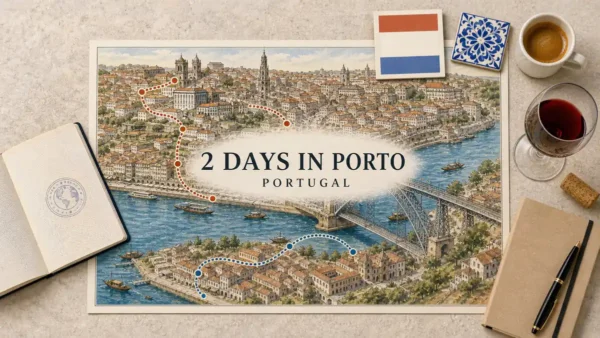
- Two days: the Ribeira, the bridge, a cellar tasting in Gaia, São Bento and Clérigos. It works, but day trips are out and the pace is brisk. The 2-day Porto itinerary lays it out.
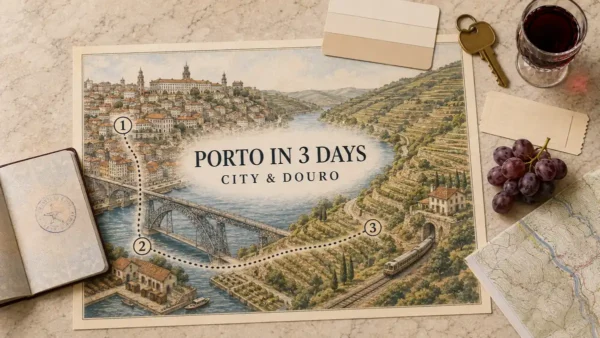
- Three days: the same city at a gentler pace, plus Braga, Aveiro or Guimarães by train. This is the length most first-time visitors are happiest with; see the 3-day Porto itinerary.
- Four days: room for Foz, a long lunch on the coast and a full day in the Douro Valley. Worth it for wine-focused travelers; more than most others need.
The extra day buys distance, not more of Porto. The city’s core is small enough that a third day spent in town tends to repeat the first two, while the same day spent on a train to Braga or Aveiro adds a second place to the trip.
Porto or Lisbon? Do both if you can
Porto and Lisbon work best as a pair, and most first trips to Portugal include both. Lisbon is the bigger, busier capital, with more neighbourhoods, more nightlife and the beaches of the coast within reach. Porto is smaller and more compact, stronger on wine, river views and an evening that does not need planning.
On a week, the usual split gives Lisbon the larger share and Porto two or three days; the 7-day Portugal itinerary shows how. With 10 days in Portugal there is room to add the Algarve or a third city, and two weeks in Portugal brings the islands or the Douro into play. To compare routes of any length, start with the Portugal itinerary planner.
Spring and early autumn are the best times to visit Porto
April to June and September to October give Porto the best balance of mild weather and manageable crowds. Summer is the busiest season, with the riverfront at its most packed. Winter is wet but quiet, and it is the cheapest time to stay.
Spring and early autumn reward travelers who want river terraces and long walks without the summer crush. Summer suits those who prioritise long evenings and the coast at Foz, and who book their beds early. Winter suits rain-tolerant travelers on a budget: port tastings, cafés and the tiled interiors are indoor pleasures that do not depend on the forecast.
Porto’s rain is the factor that most often catches visitors out, more than heat or crowds; outside summer, an umbrella and shoes with grip on wet cobbles matter more than any sightseeing plan. For the national picture by season see the best time to visit Portugal, and for what to bring, the Portugal packing list.
Getting to Porto and around it
Most visitors fly into Porto airport (OPO) and take the metro into the centre. Overland arrivals come by train into Campanhã or São Bento. Once in the city, you walk the centre and use the metro for longer hops.
From the airport
Metro Line E (the violet line) runs from Aeroporto to Trindade in the city centre in about 27 minutes. It needs a Z4 Andante ticket, and the Z4 occasional fare is €2.30.
Trindade connects to the rest of the metro network and sits a short walk from Aliados. Buses, taxis, ride-hailing and late-night options are compared in the guide to getting from Porto airport to the city centre.
Arriving by train
Porto has two main rail stations. Campanhã is the main long-distance station, on the eastern side of the city. São Bento is the central one, at the foot of the old town, and the urban CP lines start there and call at Campanhã.
Travelers arriving from Lisbon or elsewhere in Portugal usually come into Campanhã and change for the centre. Routes, ticket types and how the rail network links the main cities are covered in the guide to travelling Portugal by train. Check the entry rules that apply to your passport before booking.
On foot and by metro
Porto’s centre is compact but steep, and walking plus the metro covers most visits. The climb from the Ribeira up to Aliados and Clérigos is short on the map and long on the legs; the metro is most useful for the airport, Campanhã and the Gaia side.
Tickets, lines and the trams and buses that reach Foz are explained in the guide to getting around Porto. Tourist areas draw the usual traps, from pickpockets on crowded streets to inflated restaurant bills, which the guide to common scams in Portugal covers; the practical Porto tips fill in the day-to-day details.
Do you need a car in Porto?
You do not need a car in Porto itself. The hills, narrow streets and scarce parking make driving harder than walking, and the metro and trains reach everything a city visit needs. A car only earns its cost on a wider trip through northern Portugal or the Douro wine country, which the Portugal road trip guide plans out.
Where to stay in Porto: Baixa, Ribeira, Gaia or Foz
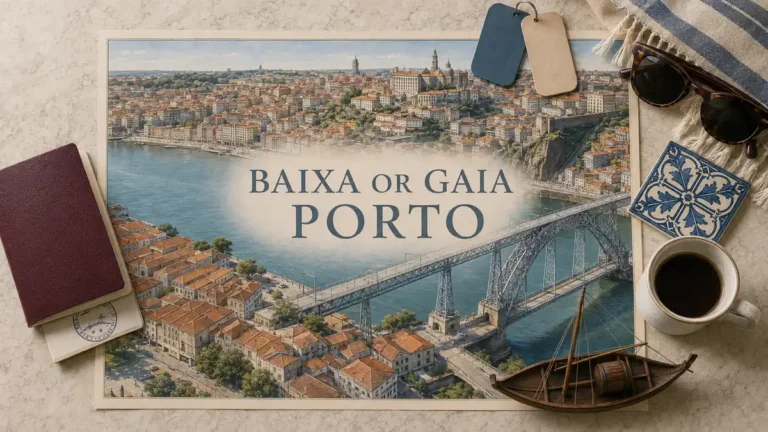
First-time visitors should base in Baixa, around Aliados, for transport links and the easiest walking. The Ribeira puts you on the riverfront at a cost in noise and hills. Gaia gives you views of the old town and the port lodges on the doorstep, across the bridge. Foz trades the centre for the sea and a slower pace.
- Baixa and Aliados: the flattest part of the centre, close to Trindade, São Bento and most sights. The default choice for a first time in Porto, and a good base for nightlife in Porto, since the bar streets sit just behind it.
- Ribeira: the postcard riverfront, lively until late and crowded in summer, with steep walks home. It rewards couples choosing where to stay in Porto who want the river view from the window.
- Vila Nova de Gaia: calmer evenings, cellars a short walk away and the best view of Porto itself. It makes sense for wine-led trips, and for travelers weighing luxury stays in Porto around a view of the old town.
- Foz: the Atlantic edge of the city, with a seafront promenade and a residential feel, but a tram or bus ride from the old town. Families who want space and a beach often prefer it; see Porto for families.
Travelers watching the bill find the best value a few streets back from the river; the guide to budget stays in Porto shows where. For the full comparison by area, read where to stay in Porto, and for named addresses, the shortlist of boutique hotels in Porto.
Porto or Vila Nova de Gaia?
Stay in Porto proper on most first trips. The sights, the stations and the evening life are on the Porto bank, and every return from Gaia means crossing the bridge. Gaia suits travelers who want the view of the old town and the port cellars on their doorstep, and who don’t mind that crossing at the end of each day.
Hotels and places to stay
Compare hotels, apartments and stays for your dates in one search.
Search hotels and stays on hotels.com →
Tripstou may earn a commission if you book through this link, at no extra cost to you.
What does a trip to Porto cost per day?
A trip to Porto costs about €45–55 per person per day on a budget, €90–120 mid-range and €230–320 high-end, flights excluded. Accommodation is what moves a traveler from one band to the next.
| Spend style | Daily band | What it buys in Porto |
|---|---|---|
| Budget | €45–55 | Hostel bed or simple guesthouse, cafés and lunch-time set menus, walking and the odd metro ride |
| Mid-range | €90–120 | Central hotel or apartment, sit-down dinners, a cellar tasting and a train day trip |
| High-end | €230–320 | River-view or boutique hotel, tasting menus, guided Douro excursions and taxis on demand |
Porto is kind to budget travelers on food: everyday cafés and local tascas keep eating costs low even in the centre. It punishes late bookers in summer, when riverfront rooms fill and rates climb. Mid-range travelers get more of the city for their money by sleeping in Baixa and spending the difference on Gaia’s cellars. Line-item costs are in the Porto trip cost breakdown, and the national comparison in the cost of a Portugal trip.
Braga and Aveiro are the easiest day trips from Porto
By CP urban train from São Bento, Braga (about an hour) and Aveiro (roughly 65–75 minutes) are the quickest real day trips from Porto, with Guimarães (roughly 65–80 minutes) close behind. The Douro Valley is a longer, wine-country day.
| Destination | Train from | Journey time |
|---|---|---|
| Braga | São Bento | Roughly 55–75 min |
| Aveiro | São Bento or Campanhã | Roughly 65–75 min |
| Guimarães | São Bento | Roughly 65–80 min |
All three are genuine day trips: leave São Bento in the morning, be back in Porto for dinner. Times vary by service, so check the CP timetable before you travel. Braga and Guimarães sit close enough to each other that a fit traveler with an early start can see both; Aveiro, south along the coast, is the pick for canals and a lighter day. What to see in each town is in the guide to day trips from Porto.
Can you see the Douro Valley without a car?
Yes, you can see the Douro Valley without a car, by train or on an organised tour. Either way it takes a full day. The train follows the river through the vineyards on its own schedule, while a tour adds quinta visits and tastings that are hard to reach on foot from a station. The Douro Valley guide compares both.
Tours and activities
Book skip-the-line tickets, day trips and local tours with free cancellation on most activities.
You can also browse everything on getyourguide.com.
Tripstou may earn a commission if you book through this link, at no extra cost to you.
Before You Book Porto
- Give Porto two days as one stop on a wider Portugal trip and three when it is your base with a train day trip.
- From the airport, metro Line E reaches Trindade in the city centre in about 27 minutes on a Z4 Andante ticket.
- Base in Baixa, around Aliados, on a first trip: it is the flattest part of the centre, close to Trindade and São Bento, while the Ribeira and Gaia trade that convenience for the river.
- Expect about €45–55 per person per day on a budget, €90–120 mid-range and €230–320 high-end, flights excluded, with where you sleep deciding the band.
- Livraria Lello needs a Ticket-Voucher, bought online or by mobile phone on the spot, and its value comes off any book you buy inside.
- Braga and Aveiro are the quickest train day trips from São Bento, while the Douro Valley takes a full day by train or on a tour.
How We Checked This
This guide covers the broad planning of a first trip to Porto (how long to stay, when to go, where to base, how to arrive, what a day costs and which day trips work); it is not a list of things to do, a neighbourhood-by-neighbourhood guide, a day-by-day itinerary or a transport deep dive.
Produced with AI assistance and reviewed by Alex Perrut, working in tourism since 2015, for the Tripstou editorial team. See our editorial process.
Official sources consulted: Visit Portugal, Metro do Porto, CP (Comboios de Portugal).
Where to Go Next in Portugal
- Best places to visit in Portugal: where Porto fits among the country’s other cities and regions.
- Portugal travel guide: the country-level planner for routes, seasons and costs.
- Portugal’s islands: Madeira and the Azores, for a trip that goes beyond the mainland.
Did this guide save you time or money? Tripstou is independent and reader-funded — if you'd like to give something back, you can support the site with a crypto contribution of any size.