Eating well in Spain depends as much on how and when you eat as on what you order. The most common traveler mistake is not picking the wrong dish — it is showing up for dinner at 7 pm to find the kitchen still closed, or treating a tapas bar like a restaurant with a fixed menu. Spanish meals run late, lunch is the main event, and much of the eating happens in small, shared plates across several stops. Get that rhythm wrong and even great food feels frustrating. This guide covers both halves of the equation: the must-try dishes that define Spanish cooking, and the meal-culture framework that lets you eat confidently anywhere in the country. By the end you will know what to order, when to sit down, and how the food shifts from one region to the next.
Quick Answer
Spain’s must-try foods include paella, tapas, jamón, and tortilla española, but the cuisine is deeply regional. What changes your experience most is timing and style: Spaniards eat late and often graze across small plates. Eat on the Spanish clock, share tapas-style, and follow the local specialty wherever you are.
Trust Layer
Tripstou planning guide for travelers resolving one travel decision. Covers the main variable, traveler context, and practical tradeoffs.
Produced with AI assistance and reviewed by Alex Perrut, working in tourism since 2015, for the Tripstou editorial team. See our editorial process for details.
Last factual review: June 16, 2026.
Official sources consulted: European Union, Travel Europe.
Key Takeaways
- Anchor your eating around paella, tapas, jamón, tortilla española, gazpacho, and churros, then chase the regional specialties each area does best.
- Shift your schedule later than at home: lunch is the main meal around mid-afternoon and dinner rarely starts before 9 pm.
- Treat tapas, raciones, and sit-down meals as three eating styles, not portion sizes, and graze across several bars when you can.
- Order in rounds, share dishes for the table, and use the weekday menú del día for the best-value full lunch.
- Order regionally, because signature dishes taste best at their source — paella in Valencia, pintxos in the Basque Country, fried fish in Andalusia.
- Plan around midday kitchen closures, lean on tapas bars during the afternoon lull, and check menus ahead for dietary needs.
Table of Contents
What are the must-try foods in Spain?
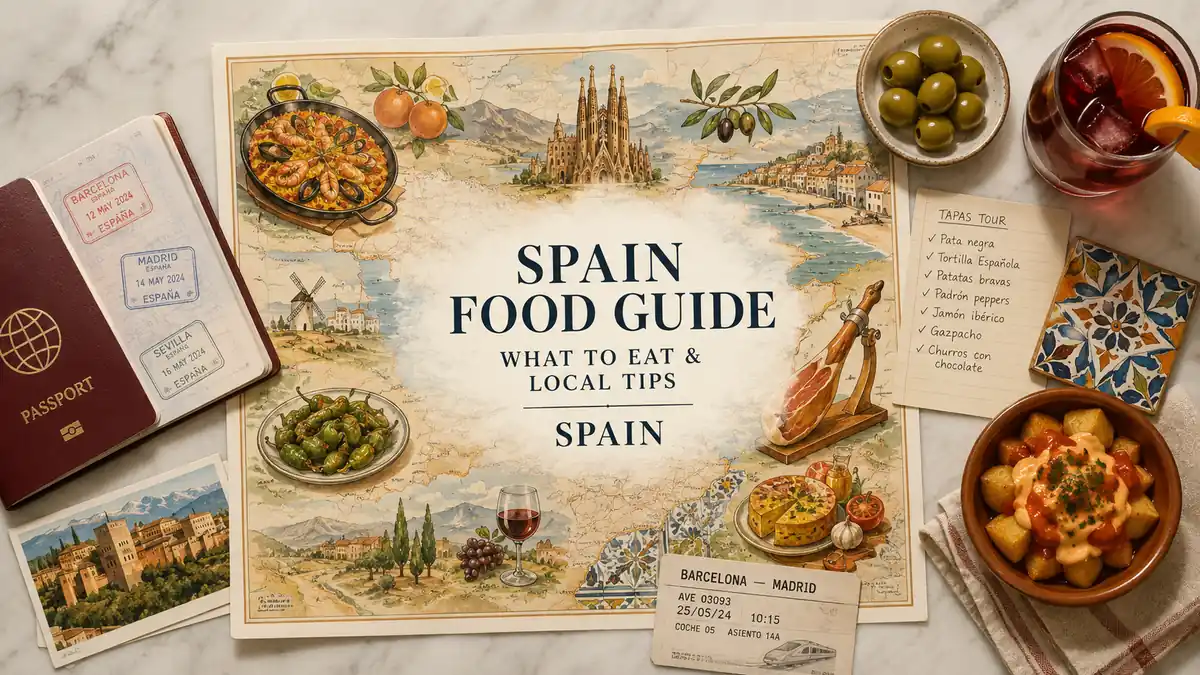
Spain’s must-try foods are paella, tapas, jamón, tortilla española, gazpacho, and churros. These dishes form the national core every visitor should taste before chasing regional specialties. Each anchors a different part of Spanish eating, from cured pork to small plates to a chilled tomato soup, and most appear nationwide.
Here are the dishes that define Spanish food at a national level:
- Paella — a saffron rice dish from Valencia, traditionally made with rabbit, chicken, and beans, not the seafood versions found elsewhere.
- Tapas and pintxos — small plates served with drinks; pintxos are the Basque, often skewered, version of the same idea.
- Jamón — cured ham, ranging from everyday serrano to the prized acorn-fed ibérico.
- Tortilla española — a thick omelette of egg, potato, and often onion, served warm or cold.
- Gazpacho — a chilled raw-tomato soup from Andalusia, eaten mostly in the hot months.
- Churros — fried dough sticks, usually dipped in thick hot chocolate for breakfast or a snack.
Treat these as anchors, not a checklist. Spanish cooking rewards eating what a region does best instead of ticking off a national list, so the most memorable meals often come from local specialties you have never heard of.
When do Spanish people eat? Understanding meal times
Spaniards eat lunch around 2 to 3 pm and dinner from about 9 pm. Lunch is the main meal of the day, dinner is later and often lighter, and a small afternoon snack called merienda bridges the long gap between them. Plan your appetite around this rhythm.
The Spanish day is built around a late, substantial lunch. Breakfast is light — coffee with a pastry or toast — because the big meal comes later. Lunch, eaten in the early-to-mid afternoon, is the day’s main event and the reason many restaurants pause between services. Merienda, a late-afternoon snack, holds people over until dinner, which rarely starts early and can run late, especially in summer. For visitors, the practical takeaway is simple: shift your eating schedule a few hours later than you might at home. Arriving at a restaurant the moment it opens for dinner usually means eating alongside other tourists, while locals come later.
| Meal | Typical time | What it is |
|---|---|---|
| Breakfast (desayuno) | Early morning, before work | Light: coffee with toast or a pastry |
| Lunch (comida) | Early-to-mid afternoon | The main meal, often several courses |
| Merienda | Late afternoon | A small snack to bridge the gap |
| Dinner (cena) | Mid-evening onward | Lighter than lunch, often shared plates |
How tapas culture works (and how it differs from raciones)
Tapas are small plates served alongside a drink, designed for grazing, not a single large meal. The custom turns eating into a social, mobile activity: you order a few dishes, share them, and often move between bars. Tapas, raciones, and a full sit-down meal are three different eating styles, not menu sizes.
A tapa is a small portion, a ración is a larger plate meant for sharing, and a media ración sits between the two. In some regions a small tapa arrives free with a drink; in others you order and pay for each one. The grazing model is the point: instead of committing to one restaurant and a three-course meal, you can order two or three plates, have a drink, and move on to the next bar. This is how a tapas crawl works, and it is one of the best ways to eat across a city in an evening. Sit-down dining still exists for bigger meals and special occasions, where you order starters and mains per person instead of sharing small plates.
Tours and activities
Book skip-the-line tickets, day trips and local tours with free cancellation on most activities.
You can also browse everything on getyourguide.com.
Tripstou may earn a commission if you book through this link, at no extra cost to you.
How to order food and drinks in Spain
Ordering in Spain is informal: take a table or stand at the bar, then order in rounds. You order as you go rather than all at once. Most sit-down lunches offer a menú del día, a fixed multi-course meal that is the easiest way to eat well midday. Dishes are usually shared.
At a bar, it is normal to get the bartender’s attention directly and order as you go; table service in restaurants is more structured but still relaxed. Sharing is the default — order several dishes for the table, not one each. The menú del día, offered mainly at lunch on weekdays, bundles a starter, a main, dessert or coffee, and often a drink at a set price, and it is consistently the best-value way to eat a full meal. Tipping is modest and not obligatory; rounding up or leaving small change is normal rather than expected. For how food fits into your overall budget, see our guide to how much a Spain trip costs, and for broader dining and cultural etiquette, our Spain travel tips guide covers the wider context.
How does Spanish food vary by region?
Spanish food is strongly regional, splitting broadly between the cooler, sauce-rich north and the lighter, olive-oil-driven south. Coastal regions lean on seafood while the interior favors roasts and stews. Most signature dishes are tied to a specific place, so where you are shapes what you should order.
The clearest divide runs north to south, but the real picture is a mosaic of regions, each with its own staples. Here is how the main food regions break down, and where to go deeper:
- The Basque Country is Spain’s pintxos heartland, with bar counters lined with skewered bites and a serious culinary reputation.
- Catalonia pairs Mediterranean cooking with its own classics like crema catalana; start with our Catalonia guide or the Barcelona guide for the city’s food scene.
- Valencia is the birthplace of paella — our Valencia region guide and Valencia city guide cover where the rice dishes are done right.
- Andalusia in the south owns gazpacho and a deep tapas culture; explore the Seville guide, the Granada guide (where free tapas still arrive with drinks), and the Málaga guide.
- The Madrid region anchors central Spain’s hearty stews and market dining — the Madrid city guide goes further.
- Northern Spain beyond the Basque coast, including Galicia and Asturias, is seafood and cider territory.
- Coastal and island escapes shape their own food identity: the Costa Brava, the Costa del Sol, the Balearic Islands, and the Canary Islands each have distinct regional plates.
The practical lesson is to order regionally. A dish at its source — paella in Valencia, pintxos in San Sebastián, fried fish on the Andalusian coast — is almost always better than the same dish chased across the country.
What should travelers know before eating out in Spain?
The main adjustment travelers must make is timing: align your hunger with the Spanish clock or risk finding kitchens closed. Restaurants often pause between lunch and dinner, so plan around long gaps, embrace tapas crawls for flexibility, and check menus ahead if you have dietary needs.
The biggest practical hurdle is the meal-time gap — turning up hungry at 6 pm often means waiting, so use the afternoon lull for a snack or a tapas bar, not a full meal. Tapas crawling is the most flexible approach for visitors, letting you eat lightly, try more, and adapt to opening hours as you go. If you have specific dietary needs, scan menus or ask before sitting down; vegetarian and allergy options are increasingly common in cities but thinner in rural areas. For broad trip planning beyond food, our Spain travel guide is the hub, while practical setup like staying connected with a Spanish SIM card and the basics in our Spain safety guide round out the essentials. Detailed food budgeting belongs on the dedicated cost page, not here.
Frequently Asked Questions
Is Spanish food spicy?
No, Spanish food is generally not spicy; it relies on olive oil, garlic, paprika, and fresh ingredients, not heat. The main exception is patatas bravas, served with a mildly spicy sauce, and the Padrón peppers lottery, where the occasional pepper surprises you. Overall, expect savory, not fiery, flavors.
What is the difference between tapas and pintxos?
Tapas are small shared plates common across Spain, while pintxos are the Basque Country’s version, usually bite-sized portions skewered or served on bread. Pintxos are typically laid out on the bar for you to pick yourself, often paid for by the number of toothpicks, whereas tapas are ordered from staff.
Do you need to tip in Spanish restaurants?
Tipping in Spain is optional and modest, not the obligation it is in some countries. Service is included in the prices, so locals typically round up the bill or leave small change for good service instead of calculating a percentage. In casual bars, tipping is uncommon and never expected.
Can vegetarians and vegans eat well in Spain?
Yes, though it takes some planning, since traditional Spanish cooking leans heavily on meat, ham, and seafood. Cities offer growing options; vegetarian standbys include tortilla española and pan con tomate, while vegans can rely on padrón peppers, gazpacho, and grilled vegetables. In rural areas choices thin out, so check menus first.
What is a typical Spanish breakfast?
A typical Spanish breakfast is light and simple: coffee paired with toast, a pastry, or pan con tomate. It is not a large meal, because lunch in the early afternoon is the day’s main event. On weekends or as a treat, churros dipped in thick hot chocolate are popular.
What drinks should you order with Spanish food?
Common pairings include wine, cold beer (caña), and vermut (vermouth) before a meal, plus sherry in Andalusia and cider in the north. Sangria is mostly a tourist drink; locals more often order tinto de verano, red wine with lemon soda. Order whatever matches the region you are eating in.
Related Guides
Once you know how to eat in Spain, these guides help you plan the rest of the trip and decide where to go next.
- Best places to visit in Spain — the standout destinations to build a trip around.
- Best time to visit Spain — how the seasons shape weather, crowds, and prices.
- Best beaches in Spain — the top stretches of coast across the mainland and islands.
- Spain’s islands — comparing the Balearics and Canaries for an island escape.
- Spain road trip ideas — driving routes that link the regions and their food.
- Spain by train — a rail-based itinerary connecting the major cities.
Did this guide save you time or money? Tripstou is independent and reader-funded — if you'd like to give something back, you can support the site with a crypto contribution of any size.