Latvia is a compact, Riga-centred country, and that shape decides how a first trip works. The capital, a Gulf-coast resort strip, a forested river valley with castle towns and a wilder western coastline all sit within day-trip range or one move from Riga. Few European countries put that much variety so close to a single base.
Planning a trip to Latvia therefore comes down to two choices: which regions to pair with Riga, and how many days to give them. This Latvia travel guide covers both, then works through where to base yourself, when to go, how to travel to Latvia and get around without a car, whether a rental car is worth it and what each spend style buys.
It is a planner, not a sight list. For depth on a single place, the page routes you to the Riga, Gauja National Park, Jūrmala, Liepāja and Latvian food guides.
Quick Answer
Plan a trip to Latvia around Riga plus one or two regions: the Gulf coast, the Gauja valley, or Kurzeme. Three days keeps you in Riga with one day trip; five to seven days adds the coast and forests, or a move west. Go from late spring to September and base yourself in Riga.
Trust Layer
Tripstou country guide for travelers planning a trip across a whole country. Covers route direction, trip length, season, budget, bases, and transport tradeoffs.
Produced with AI assistance and reviewed by Alex Perrut, working in tourism since 2015, for the Tripstou editorial team. See our editorial process for details.
Official sources consulted: Latvia Travel, Latvian Ministry of Economics.
Key Takeaways
- Pair Riga with one or two regions — the Jūrmala coast, the Gauja valley or Kurzeme — instead of trying to sweep the whole country.
- Five to seven days covers Riga plus the coast and the Gauja valley; three days means Riga with a single day trip.
- Kurzeme’s Liepāja sits around three hours from Riga, so adding the west means adding nights, not another day trip.
- Trains and buses from Riga reach Jūrmala, Sigulda and Cēsis easily, so a car only pays off for Kurzeme’s countryside and Latgale.
- Go between May and September for long light and open-air life; September keeps most of summer with fewer visitors and softer coast prices.
- Latvia is mid-priced for Europe and cheaper than the Nordics, with Riga the priciest stop and summer coast weekends the costliest moment.
Table of Contents
Is Latvia Worth Visiting?
Latvia is worth visiting for first-timers who want a capital-plus-nature trip without long transfers. Riga’s Art Nouveau streets and medieval old town sit close to a Gulf-coast beach resort and a forested river valley with castles; the wilder western coast is a longer ride west. Most of it works from a Riga base.
Latvia is small, calm and uncrowded outside Riga’s old town. It is a member of the European Union and the Schengen area, and it uses the euro. Estonia lies to the north, Lithuania to the south, and Russia and Belarus to the east. The Baltic Sea and the Gulf of Riga shape the whole western and northern edge.
The pace suits travelers who like to walk, eat well and spend time outdoors. Latvian is the official language. English is widely spoken in Riga’s hotels and restaurants and by many younger Latvians; in rural areas it is less common, and a few words of Latvian help.
Many visitors combine Latvia with Estonia and Lithuania on one Baltic trip, and the country sits in the middle of that route.
The tradeoffs are real. Beach life depends on a short summer, and the countryside is quiet by design. Travelers who want headline monuments at every stop will find Latvia’s appeal is in atmosphere, architecture and landscape more than in famous sights.
Latvia’s Main Regions and What Each Offers
A first trip to Latvia pairs Riga with the Jūrmala coast, the Gauja valley or Kurzeme in the west. Each of the three sits on the train or bus network from the capital, so pairing takes no car. Latgale, the lake country in the far east, is better kept for a second visit.
Latvia’s four historical regions give the map its structure: Kurzeme in the west, Vidzeme in the north-east (home to the Gauja valley), Zemgale in the south and Latgale in the east. Zemgale’s draw is Rundāle Palace, a Baroque palace designed by Bartolomeo Rastrelli on the Zemgale plains, with state rooms such as the Gilt Hall and the White Hall, a French formal garden and a rose garden. Riga and the Jūrmala coast sit between them on the Gulf of Riga. The profiles below cover the choices a first trip actually makes.
Riga
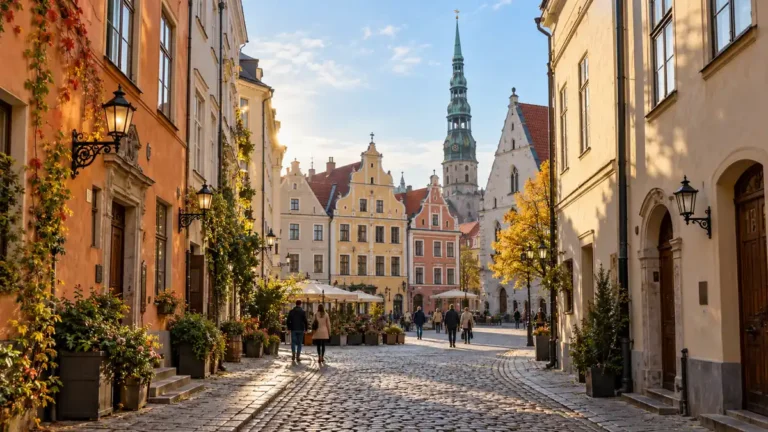
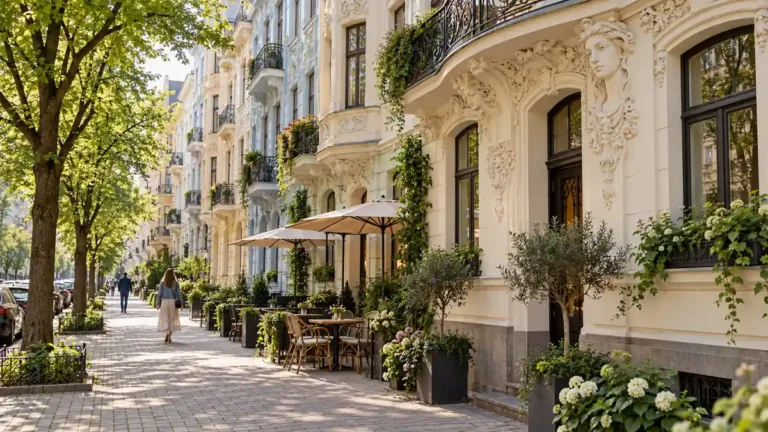
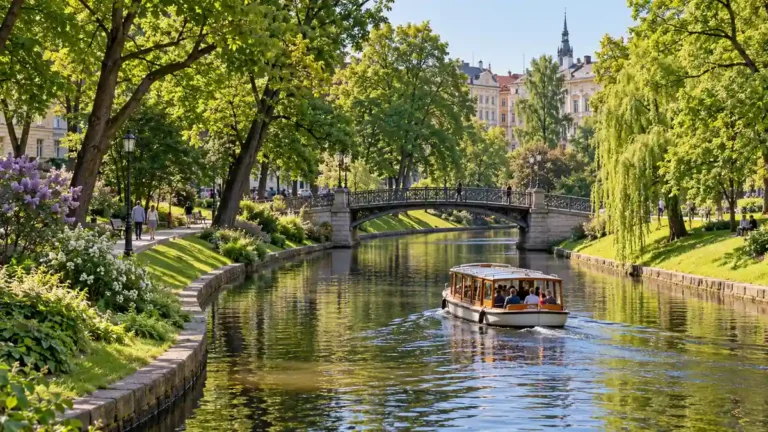
Riga is the capital and the only true city on a first trip, with a walkable medieval old town (book a guided walk), broad Art Nouveau streets and the country’s best restaurants and nightlife. The easiest overview of the centre is from the water: hour-long boat trips leave the Bastejkalns pier near the Freedom Monument, follow the city canal through the parks that separate the old town from the Art Nouveau streets, and pass out onto the Daugava for the view of the Old Riga towers and Riga Castle. It is also the transport hub every other region connects to. Our Riga guide covers what to see, where to stay and how to spend your days there.
Best for: architecture, food and nightlife in one walkable centre.
Jūrmala and the Gulf Coast
Jūrmala is a long beach resort on the Gulf of Riga, lined with wooden villas and pine forest. It is the closest sea to the capital and the easiest coast to add without changing base, though its beach season is short. See the things to do in Jūrmala for how to plan the day.
Best for: an easy summer beach day without leaving your Riga base.
Gauja Valley: Sigulda and Cēsis
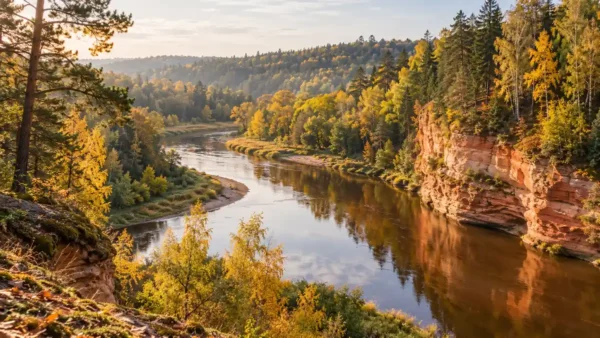
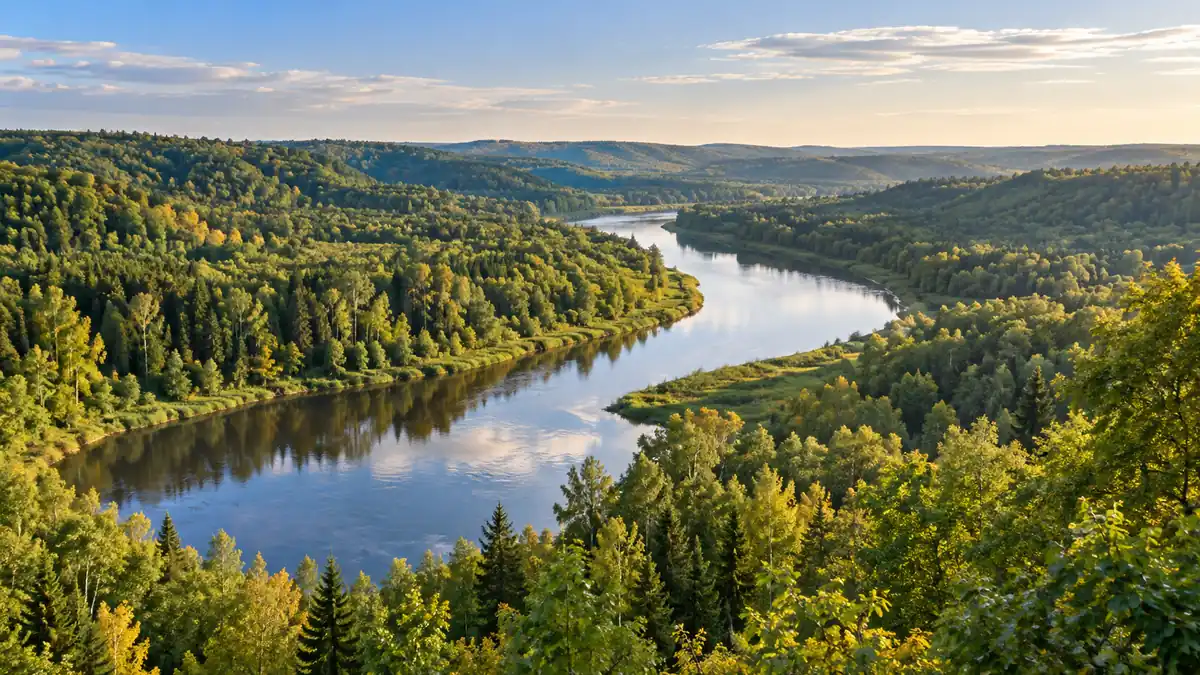
The Gauja valley is Latvia’s best-known national park, a forested river valley in Vidzeme with walking trails and medieval castle ruins. Sigulda and Cēsis are the two small towns travelers use to explore it. The Gauja National Park guide covers trails, castles and how to split the two towns.
Best for: forest walks and castle towns within day-trip range of Riga.
Kurzeme: Kuldīga and Liepāja
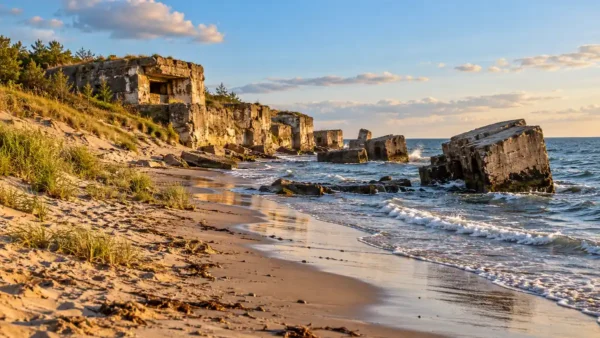
Kurzeme is the wilder west, facing the open Baltic Sea, with long empty beaches, the small historic town of Kuldīga and the port city of Liepāja. It sits around three hours from Riga by train or bus, which makes it an overnight region. Our guide to things to do in Liepāja covers the city in depth.
Best for: travelers with a week who want the open Baltic and quiet small towns.
Latgale
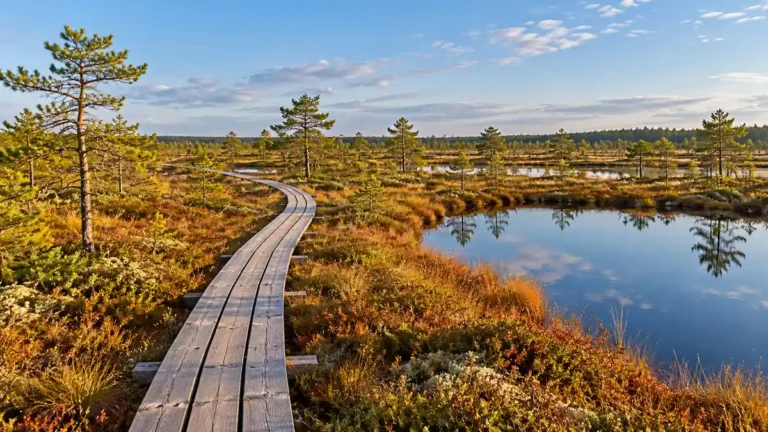
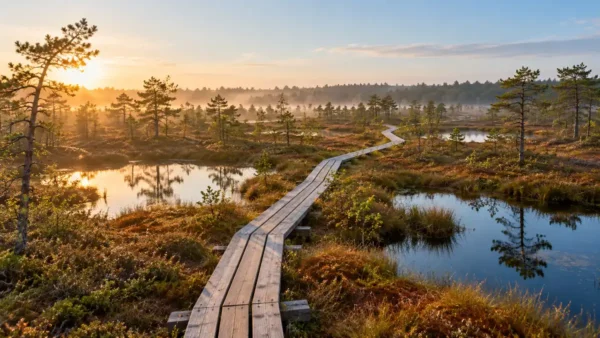
Latgale is Latvia’s eastern region, a landscape of lakes and forest bordering Russia and Belarus. It is the farthest region from Riga, so reaching it takes a long transfer each way. That distance makes it a poor match for a short first trip and a better fit for a return visit with a car.
Best for: repeat visitors and drivers after lakes and a quieter, different Latvia.
| Region | Character | Anchor draw | Best for | Reaching it from Riga |
|---|---|---|---|---|
| Riga | Capital city, walkable and lively | Medieval old town and Art Nouveau streets | Architecture, food and nightlife | Your base; every route starts here |
| Jūrmala and Gulf coast | Beach resort with pine forest | Long sandy beach and wooden villas | An easy summer beach day | Easy day trip by train |
| Gauja valley | Forested river valley in Vidzeme | Forest trails and small castle towns | Forest walks and castles | Easy day trip by train or bus |
| Kurzeme | Wilder western coast and small towns | Liepāja, Kuldīga and open Baltic beaches | A week-long trip heading west | Around three hours by train or bus |
| Latgale | Eastern lake country, least visited | Lakes, forest and quiet countryside | Repeat visitors with a car | Long transfer; a car helps most here |
Jūrmala and the Gauja valley are the two easy pairings. Kurzeme needs nights away.
Tours and activities
Book skip-the-line tickets, day trips and local tours with free cancellation on most activities.
You can also browse everything on getyourguide.com.
Tripstou may earn a commission if you book through this link, at no extra cost to you.
How Many Days You Need in Latvia
Five to seven days is the right length for a first trip to Latvia. That covers Riga plus the coast and the Gauja valley, or Riga plus a move west. Three days works as Riga with one day trip. Each extra couple of days adds a region, not just more Riga.
- Three days: Riga plus one day trip to Jūrmala or the Gauja valley. It fits a long weekend, or a Baltic trip giving Latvia a short slot between Estonia and Lithuania.
- Five days: Riga plus a coast day and a Gauja day, with a spare day for weather or a slower pace. It fits most first-timers.
- Seven days or more: adds Kurzeme with a night or two in Liepāja or Kuldīga, or simply a slower rhythm across the same regions. It fits travelers making Latvia the whole trip.
Liepāja is the dividing line between a five-day and a seven-day plan. At around three hours each way, it is too far for a comfortable return day trip, so adding the west means adding nights. Everything east of it fits a Riga-based week.
Shorter trips lose the countryside first. With two days, Latvia is effectively a Riga city break.
How to Shape a First Trip to Latvia
Most first trips to Latvia use Riga as a single base with day trips out. Moving west to Kurzeme is the upgrade for seven days or more. The day-trip shape saves packing and suits five days; the western move buys Liepāja and Kuldīga at the cost of a long transfer day.
- Riga base with day trips: suits three to five days and anyone travelling without a car. The tradeoff is that your coast is Jūrmala only; the open Baltic of the west stays out of reach.
- Riga plus one move west: suits seven days or more and travelers who want the wilder coast. The tradeoff is a transfer day spent mostly in transit, plus one more round of packing.
Latvia’s trains fan out from Riga like spokes, and the regions connect to the capital far better than to each other. Plan the coast and the Gauja valley as separate out-and-back days from Riga. Linking them directly costs time. One out-and-back day can even cross the border: the Hill of Crosses in northern Lithuania, a small hill densely covered with crosses about 12 km north of Šiauliai, sits near the railway line between Šiauliai and Riga (book a day tour from Riga).
Latvia also slots neatly into a wider Baltic trip: arrive from Tallinn in the north and leave toward Vilnius in the south, or run it the other way. Keep Riga as the stop in the middle. For the northern leg, our guide to travel to Tallinn, Estonia covers arrival, areas and how many days to stay. Our Riga guide helps you plan the city days on either shape.
Where to Base Yourself in Latvia
Base yourself in Riga for nearly every first trip to Latvia. It is the hub of the train and bus network, and the coast and the Gauja valley both sit within day-trip range. A second base in Kurzeme (Liepāja or Kuldīga) only pays off on a trip of seven days or more.
Riga wins on logistics and on evenings. It has the widest choice of places to stay and eat, and every regional line starts there. Short trips gain nothing from moving.
Travelers with a car can base themselves further out, in Sigulda, Cēsis or a countryside guesthouse, and drive in for a Riga day. The tradeoff with any second base is a travel day lost to the move. For choosing an area inside the capital, the Riga guide compares the options.
When to Go to Latvia
May to September is the best window for a trip to Latvia, with June to August the peak. Long light evenings, open-air cafés and the beach season all fall in summer. September brings quieter towns and forest colour, while winter is dark and cold but has Christmas markets and often snow.
- Spring: late spring brings lengthening days and green forests before the summer crowds. Early spring can still feel cold and grey.
- Summer: the long light days suit the coast, the Gauja trails and outdoor dining. It is also the busiest and priciest season, especially on coast weekends.
- Autumn: September keeps much of summer’s open-air life with fewer visitors. By late autumn the days shorten fast and rain is common.
- Winter: short, dark days and real cold, balanced by Christmas markets, snow in the forests and quiet museums. It suits a Riga city break more than a regional trip.
Midsummer is the high point of the Latvian summer, celebrated with bonfires and singing. If your dates fall around it, plan a night outside Riga to see the countryside side of the festival.
How to Get to Latvia and Get Around Without a Car
Fly into Riga Airport, then use trains and buses from Riga to reach every first-trip region. The network is centred on the capital: rail lines run from Riga Central to Jūrmala, Sigulda, Cēsis, Jelgava and Liepāja, and buses fill the gaps. That layout makes a car-free first trip straightforward.
From the airport, city bus 22 links the terminal and the centre in about 30 minutes; our Riga guide covers the arrival options in detail.
Jūrmala is the simplest train ride on the network. Sigulda and Cēsis are an easy day trip by train or bus, and the Gauja National Park guide explains how to use them for the valley. Liepāja is around three hours by train or bus. Buses cover the towns trains miss, Kuldīga among them.
In Riga itself, walking and public transport handle most journeys. Bolt operates in the city; Uber does not.
Should You Rent a Car in Latvia?
You do not need a car for a Riga-based trip to Latvia covering the coast and the Gauja valley. Trains and buses reach all three. A car earns its cost only when Kurzeme’s countryside, Kuldīga and rural manor houses are the point of the trip. In Riga itself, a car is a burden.
- Train and bus only: suits Riga with the coast and the Gauja valley over three to five days. The tradeoff is that small villages and manor houses off the main lines are hard to reach.
- A car for part of the trip: suits a seven-day plan with a western leg. The tradeoff is the logistics of returning it to Riga or arranging a different drop-off.
- A car for the whole trip: suits drivers after rural manors, the west coast and the Latgale lakes. The tradeoff is paying for a car and parking in Riga on days you never use it.
Pick up the car on the morning you leave Riga for the west. The capital days are when a car costs most and earns nothing. Return it on the way back in, and finish the trip on foot.
What a Trip to Latvia Costs by Spend Style
Latvia is mid-priced by European standards, cheaper than the Nordic countries, and Riga is the priciest stop. Public transport and market food keep daily costs down across the country. Summer coast weekends and car hire for the west are where the budget climbs. The three spend styles below show what each level buys here.
- Budget: hostels and simple guesthouses, market food and canteen-style lunches, and trains and buses between regions. Latvia is kind to this style through cheap public transport and the off-season; summer weekends on the coast are where it pinches.
- Mid-range: a central Riga hotel or apartment, sit-down dinners most nights and the odd Bolt ride. Restaurant meals here feel good value next to the Nordic capitals, which is where mid-range travelers gain the most.
- High-end: boutique hotels in Riga, a coast hotel in Jūrmala, tasting menus and a car or driver for the western manors. Top-end choice thins out quickly outside Riga and Jūrmala, and car hire for the west adds up.
Food is one of the easiest places to save or splurge. Our Latvia food guide covers what to eat and where the good-value meals are.
September is where Latvia is kindest to every budget. It keeps most of summer’s open-air life while coast accommodation eases back from its weekend peak.
Frequently Asked Questions
What currency does Latvia use, and can you pay by card?
Latvia uses the euro, so travelers arriving from other eurozone countries need no currency exchange. Cards are widely accepted in hotels, restaurants and shops, in Riga and across most of the country. Carry a little cash for market stalls, where some sellers take cash only, and for small purchases in rural areas.
Should you tip in Latvia?
Tipping in Latvia is a custom, not an obligation. Around 10% is common in sit-down restaurants when the service was good, while leaving small change is enough in cafés. Treat it as a reward for good service, and scale it down when the service falls short of what you expected from the meal.
What should you pack for a trip to Latvia?
Pack for the season and for walking. Summer calls for light layers, a warm top for cool evenings on the coast and a rain jacket. From late autumn to early spring, bring a proper winter coat, hat, gloves and waterproof boots. In every season, comfortable shoes matter for Riga’s cobbled old town.
Is Latvia safe for tourists?
Latvia is generally safe for tourists, and most trips pass without trouble. Normal city precautions apply in Riga: keep valuables secure in crowded places, stay aware in nightlife areas late at night, and book rides through an app such as Bolt. Smaller towns, the coast and the national park feel calm and relaxed.
Do you need a visa for Latvia?
Latvia is in the Schengen area, so whether you need a visa depends on your nationality. Check the entry rules that apply to your passport before booking. Short stays are capped at 90 days in any rolling 180-day period across the Schengen area as a whole, not per country. Days in Latvia count toward that shared limit.
Related Guides
- Riga guide: the capital and your base, with what to see, where to stay and how to arrive.
- Tallinn guide: the Estonian capital, the natural next stop north of Riga on a Baltic route.
- Gauja National Park guide: trails, castles and how to use Sigulda and Cēsis as a day trip.
- Things to do in Jūrmala: the easiest beach day from Riga.
- Things to do in Liepāja: the western port city for a seven-day trip heading to Kurzeme.
- Latvia food guide: what to eat across the country and where the good-value meals are.
Did this guide save you time or money? Tripstou is independent and reader-funded — if you'd like to give something back, you can support the site with a crypto contribution of any size.