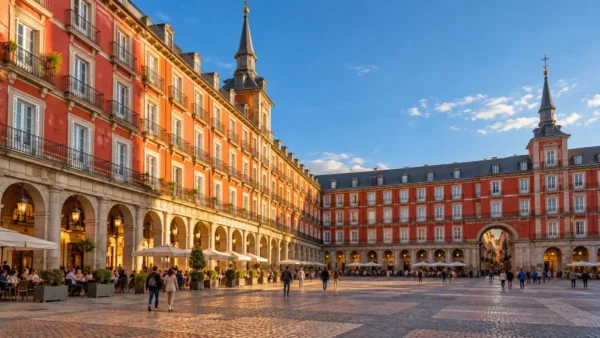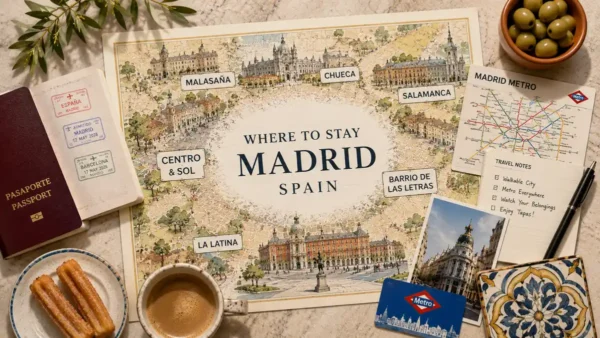

Malasaña is one of Madrid’s most central and energetic neighborhoods to call home, sitting just north of Gran Vía and within walking distance of the city’s core. It is youthful, alternative, and alive day and night, which is exactly its appeal and exactly its catch. The barrio rewards travelers who want to be in the thick of it, but it comes with real noise after dark and surprisingly few traditional hotels inside its streets. This guide resolves the base decision: who Malasaña suits, who should look elsewhere, the central-energy-versus-noise tradeoff, how convenient it really is to walk to the centre, and the strongest alternative if the fit is wrong. It stays focused on the stay decision, not a broad Madrid overview or a list of things to do.
Quick Answer
Malasaña suits young, social, short-stay travelers who want to be central and walkable. It is lively, alternative, and easy to explore on foot, but noisy at night and short on true hotels inside the barrio. Light sleepers, families, and luxury-first travelers should consider a quieter or Gran Vía-edge alternative.
Trust Layer
Tripstou stay guide for travelers choosing where to base. Covers area atmosphere, budget, convenience, noise, and traveler fit.
Produced with AI assistance and reviewed by Alex Perrut, working in tourism since 2015, for the Tripstou editorial team. See our editorial process for details.
Last factual review: June 5, 2026.
Official sources consulted: travel-europe.europa.eu, european-union.europa.eu.
Key Takeaways
- Malasaña fits young, social, short-stay travelers who treat their room as a launchpad, not a quiet retreat.
- The single biggest tradeoff is central energy versus noise: you sleep inside the action, not beside it.
- The barrio holds few true hotels, so apartments and Gran Vía-edge stays dominate the practical options.
- It is highly walkable to the centre, trading some sleep quality for a genuinely central position.
- The strongest alternative is the Gran Vía edge, keeping you central while easing noise and hotel scarcity.
- The common mistake is booking Malasaña expecting a calm boutique-hotel base, then losing nights to weekend noise.
Table of Contents
What is Malasaña like to stay in?
Malasaña feels youthful, alternative, and socially charged, with a creative energy that runs from morning coffee to late-night bars. As a base, it puts you inside one of Madrid’s most characterful neighborhoods, just north of Gran Vía. That constant buzz is what defines the stay: you live in the city’s pulse rather than beside it.
The neighborhood carries the legacy of the Movida Madrileña, the 1980s countercultural movement that gave it its rebellious, artistic identity. That heritage still shapes the streets today, from independent record shops to graffiti-marked corners and a steady stream of young locals and creatives.
Vintage and design culture concentrate along streets like Calle Velarde and Calle Fuencarral, while Plaza del Dos de Mayo and the Conde Duque area act as the barrio’s social hubs, filling with people on terraces and benches. Calle de la Palma threads the quieter, residential edge. You do not need a full activity list to feel the character. Walk five minutes in any direction and the neighborhood’s identity is obvious, which is precisely why it works as a base for travelers who want atmosphere on their doorstep.
Who should stay in Malasaña?
Malasaña best suits young, social, and creatively minded travelers on short stays who want to be central and walkable. Its energy, bar culture, and proximity to the centre reward people who plan to be out exploring instead of retreating to a quiet room. If you value being where things happen, this barrio delivers.
It is a strong base for several traveler profiles in particular:
- First-time visitors who want energy: central, walkable, and easy to orient around, though Malasaña leans livelier than the most classic first-timer bases. Weigh it against the broader options for staying in Madrid as a first-timer.
- Couples after atmosphere: the cafés, terraces, and nightlife make it a fun, romantic-with-an-edge choice for travelers comfortable with a livelier scene; compare it with the picks for couples staying in Madrid.
- Creatives and culture seekers: design shops, vintage, and independent venues sit at your door.
- Nightlife-leaning, short-stay travelers: being able to walk home from bars is a genuine advantage on a two- or three-night trip.
The common thread is travelers who treat their accommodation as a launchpad, not a sanctuary. If that describes you, Malasaña’s centrality and energy work in your favor.
Who should not base in Malasaña?
Malasaña is a poor fit for families wanting calm, luxury-first travelers, and light sleepers. The same nightlife energy that makes it exciting also makes it loud after dark, and the barrio has few traditional hotels inside its streets. If quiet, space, or polished hotel service matters most, another base will serve you better.
Match the mismatch to a better-suited area:
- Families wanting quiet and space: late-night noise and limited family-style accommodation make this a difficult base with children. See the dedicated guidance for families staying in Madrid for calmer, more practical areas.
- Luxury-first travelers: Malasaña skews independent and apartment-heavy rather than five-star, so a base built around high-end hotels is hard to find here. Travelers prioritizing that experience should review options for luxury stays in Madrid.
- Light sleepers: even with good windows, weekend nights carry sound, and a quieter neighborhood reduces the gamble.
None of this makes Malasaña a bad neighborhood. It simply means the fit depends on your priorities, and these profiles are better matched elsewhere.
The central energy vs noise tradeoff
The core Malasaña tradeoff is simple: you gain a walkable, central, genuinely alive base, and you give up quiet nights and easy access to true hotels. Everything that makes the barrio appealing by day is also what makes it loud after dark. The stay decision comes down to how much that matters to you.
On the upside, you sleep in the middle of the action, steps from bars, cafés, and the centre, with no need for transport to reach the energy. On the downside, that energy does not switch off, and weekend nights in particular can carry real noise into the early hours. The neighborhood also runs short on conventional hotels, so your options tilt toward apartments and Gran Vía-edge stays.
The honest read: light sleepers and anyone planning early mornings should treat noise as the deciding factor, not an afterthought. If nightlife is the actual reason you want to be central, lean into it deliberately and review the dedicated logic for staying in Madrid for nightlife. If value and a quieter price-conscious base matter more, weigh the options for budget stays in Madrid before committing. The tradeoff is real, but it is also predictable, which makes it easy to decide against your own priorities.
How convenient is Malasaña as a base?
Malasaña is highly convenient as a base, sitting just north of Gran Vía and within easy walking distance of central Madrid. It is bordered by Chueca to the east and Chamberí to the north, and well connected on foot and by metro. The catch is sleep quality, not access: the centre is close, but quiet is not.
Because it is so central, most of Madrid’s core sights and the Gran Vía hub are reachable on foot, which removes the daily friction of transport for short trips. The metro adds easy reach to the wider city when you want it, so getting around rarely becomes a planning burden. For broader orientation on the centre and how the city fits together, the Madrid guide covers staying in Madrid in context.
The base logic is a straight exchange: you trade some sleep quality for the convenience of a walkable, central position. For travelers who are out most of the day and evening, that exchange favors Malasaña strongly. For those who need rest more than proximity, the same convenience matters less than the noise that comes with it.
Where to book and the strongest alternative
Booking in Malasaña means accepting a key reality: the barrio holds few true hotels inside its streets, so apartments and Gran Vía-edge stays dominate the practical options. That edge, just south toward Gran Vía, is the strongest alternative when Malasaña’s centre is not the right fit, keeping you central while easing the noise and hotel scarcity.
If you want a more conventional hotel base with that central position, look along the Gran Vía edge of the neighborhood, not its core, where availability and hotel-style stays are stronger. For a curated route into higher-end properties near the centre, see the shortlist of luxury hotels in Madrid instead of hunting inside the barrio itself.
If you are weighing Malasaña against the most central option directly, the head-to-head on Centro vs Malasaña resolves that specific comparison. And if you are still deciding across all of Madrid’s areas, step back to the full Madrid where to stay selection to confirm Malasaña is your best base before booking. The takeaway: book the Gran Vía edge or an apartment if you love the barrio, and route to a quieter alternative if its tradeoffs do not suit you.
Hotels and places to stay
Compare hotels, apartments and stays for your dates in one search.
Search hotels and stays on hotels.com →
Tripstou may earn a commission if you book through this link, at no extra cost to you.
Frequently Asked Questions
Is Malasaña a good area to stay in Madrid?
Yes, Malasaña is a good base for the right traveler. It is central, walkable, and full of character, ideal for young, social, short-stay visitors who want energy on their doorstep. It suits people out exploring most of the day and evening, far less so anyone prioritizing quiet, space, or a polished hotel.
Is Malasaña noisy at night?
Yes, Malasaña can be noisy at night, especially on weekends. The same bar and nightlife culture that gives the barrio its energy carries real sound into the early hours. Light sleepers and early risers should treat noise as a deciding factor and consider a quieter base or the calmer Gran Vía edge.
Is Malasaña good for families?
Malasaña is generally a difficult base for families wanting calm. Late-night noise and limited family-style accommodation make it less practical with children, despite its central position. Families usually do better in a quieter, more spacious neighborhood, and the dedicated guidance for families staying in Madrid points to calmer, better-suited areas.
Are there many hotels in Malasaña?
No, Malasaña holds few traditional hotels inside its streets. Accommodation here tilts toward apartments and independent stays, not conventional or high-end hotels. Travelers wanting a hotel base with that central position should look along the Gran Vía edge of the neighborhood, where hotel-style availability is noticeably stronger.
Is Malasaña walkable to the centre of Madrid?
Yes, Malasaña is highly walkable to central Madrid. It sits just north of Gran Vía, between Chueca and Chamberí, so most core sights and the Gran Vía hub are reachable on foot. The metro adds easy reach to the wider city, making transport rarely a planning burden on a short trip.
What is the best alternative to staying in Malasaña?
The strongest alternative is the Gran Vía edge, just south of the barrio. It keeps you central and walkable while easing the noise and the shortage of true hotels inside Malasaña. It is the natural fallback for travelers who love the location but want more conventional, hotel-style accommodation and quieter nights.
Related Guides
Use these guides to confirm your base and plan the next step of your Madrid stay:
- Madrid where to stay — the full neighborhood selection to compare Malasaña against every other area.
- Centro vs Malasaña — the direct head-to-head if you are deciding between the two most central bases.
- Staying in Madrid for first-timers — best bases if this is your first visit.
- Madrid for couples — atmospheric areas suited to a trip for two.
- Madrid for families — quieter, more practical neighborhoods with children.
- Madrid for nightlife — where to base if going out is the priority.
- Budget stays in Madrid — value-led areas and price-conscious positioning.
- Luxury stays in Madrid — high-end areas for a polished base.
- Luxury hotels in Madrid — a curated shortlist of upscale properties.
- Madrid guide — broad city orientation and context for your stay.
Did this guide save you time or money? Tripstou is independent and reader-funded — if you'd like to give something back, you can support the site with a crypto contribution of any size.