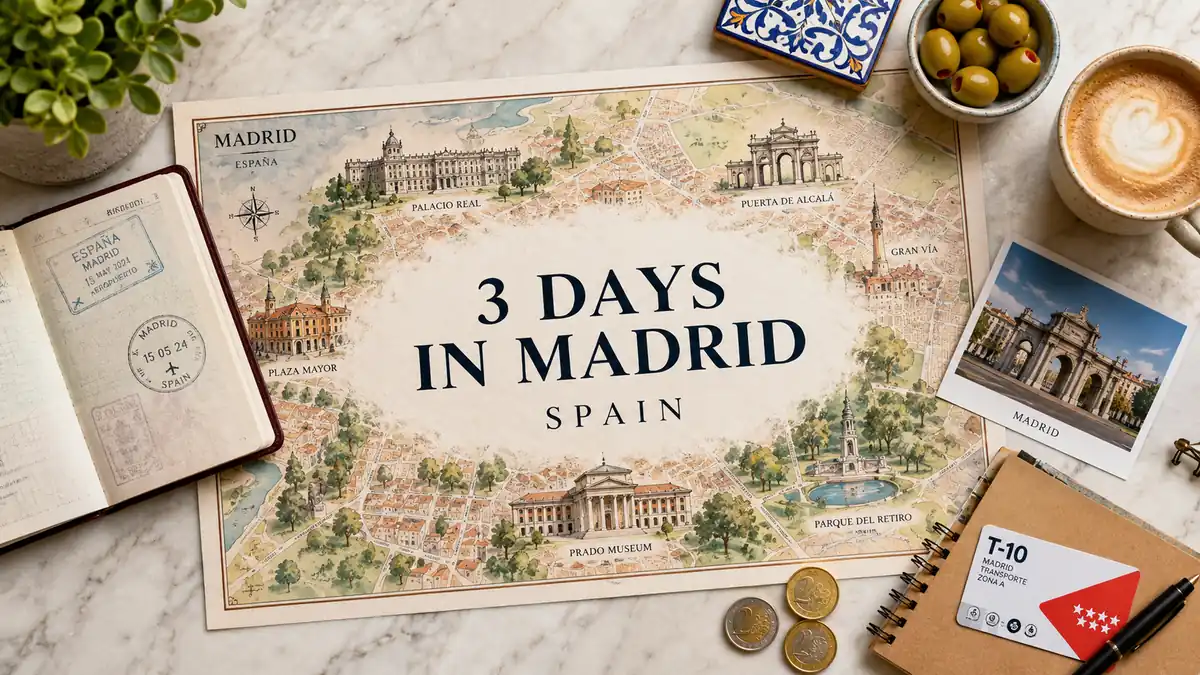
Three days covers central Madrid comfortably with the core sights, plus one flexible day for a choice. The third day is the pivot — a fast-train day trip to Toledo or Segovia, or a slower Madrid day of markets and rooftops. It suits first-timers who want the essential sights unrushed and one day to shape themselves.
Three days is the sweet spot for Madrid. Two days force the historic centre and the Golden-Triangle museums into a tight loop, and four start to repeat once the core is done. A third day lets you see central Madrid without rushing and still add a day trip or a slower city day. The trick is grouping stops geographically so you walk short hops instead of crossing town twice. This plan does exactly that: a compact Day 1 in the old centre ending at the Prado, a Day 2 that runs from the Royal Palace through Retiro into a neighbourhood evening, and a Day 3 that pivots on one decision — a fast-train escape to Toledo or Segovia, or a slower Madrid day. Follow it in order, and the route builds on itself.
Is 3 Days Enough for Madrid?
Yes, three days is enough for central Madrid plus one day trip. It covers the historic core, the Golden-Triangle museums at a sane pace, the Royal Palace, Retiro, and a couple of neighbourhoods. What you trade is depth — a second day trip, or a full day inside a single museum.
Here is what each length realistically buys:
- 2 days — the historic centre, one museum, and the Royal Palace, done efficiently but tightly packed.
- 3 days — the same core at a calmer pace, plus one flexible day for a day trip or slower Madrid.
- 4 days — room for a second day trip or a deeper museum day, with little wasted time.
The honest limit of three days is museums, not landmarks. You can walk past every major sight in the centre, but you cannot do the Prado, Reina Sofía, and Thyssen justice on the same trip — pick one, maybe two, and let the rest wait for a return visit.
2 Days vs 3 Days in Madrid: Why the Extra Day Wins
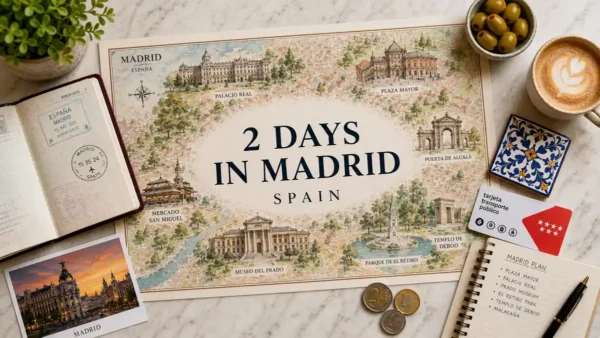
The extra day adds a day trip or breathing room the 2-day plan cannot. A 2-day Madrid trip compresses the historic centre and the Golden Triangle into a tight loop with no slack. The third day removes that pressure: it buys Toledo or Segovia, or simply a calmer pace across the same core sights.
The extra day earns its keep more as a day trip than as extra Madrid time. The core city is genuinely a two-day city, so a third day spent entirely inside it hits diminishing returns — pointing it at Toledo or Segovia is what makes three days feel like a bigger trip, not a padded one.
| Element | 2 days | 3 days |
|---|---|---|
| Historic centre + Prado | Compressed into one busy day | One relaxed day with time to sit |
| Royal Palace + Retiro | Squeezed alongside a neighbourhood | A full day at walking pace |
| Golden-Triangle museums | One museum, chosen fast | One or two, without the rush |
| Day trip (Toledo/Segovia) | Not realistic in two days | Fits comfortably on Day 3 |
| Overall pace | Efficient but tightly packed | Core sights plus one flexible day |
If your trip is genuinely only two days, don’t stretch this plan thin — follow the purpose-built 2-day Madrid itinerary instead, which paces the core for exactly that length.
The Best 3-Day Madrid Itinerary at a Glance
The best 3-day Madrid itinerary groups the city geographically so you never double back. Day 1 stays in the historic centre and ends at the Prado. Day 2 pairs the Royal Palace with Retiro and a neighbourhood evening. Day 3 is yours — a fast-train day trip or a slower Madrid day.
- Day 1: Historic centre + Prado — the compact core, walked on foot.
- Day 2: Royal Palace, Retiro, and a neighbourhood — palace to park to plates.
- Day 3: Day trip or slower Madrid — the flexible day you shape.
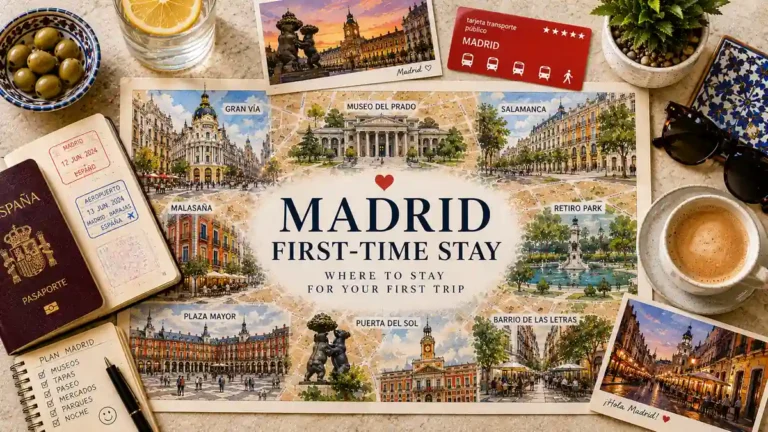
The whole route assumes a central base. Stay near Sol, the historic centre, or the museum axis and every day starts on foot instead of on the metro. Where you sleep decides how much backtracking you do, so it is worth choosing deliberately — our Madrid where-to-stay guide breaks down which areas suit a short trip. For the wider city beyond this route, the Madrid travel guide is the hub. Keep the order as written; each day picks up where the last left off.
Hotels and places to stay
Compare hotels, apartments and stays for your dates in one search.
Search hotels and stays on hotels.com →
Tripstou may earn a commission if you book through this link, at no extra cost to you.
Day 1: The Historic Centre and the Prado
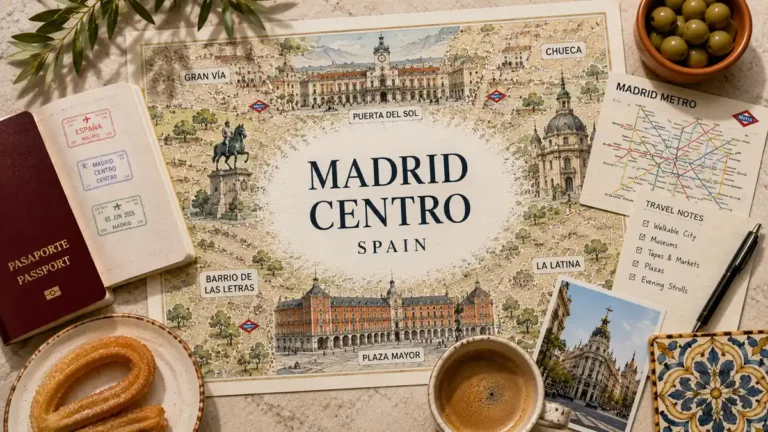
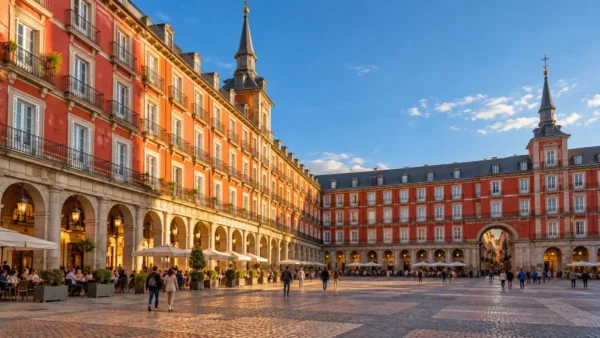
Day 1 covers Madrid’s historic centre and finishes at the Prado. You start where the city is most compact — Puerta del Sol, Plaza Mayor, and Mercado de San Miguel sit within a short walk of each other. The Prado closes the day, keeping the afternoon for one Golden-Triangle museum instead of a rushed morning.
Begin at Puerta del Sol, the central point of the old city, then drift into Plaza Mayor and stop at Mercado de San Miguel for an early bite. From there it is a short walk east toward the Prado along the museum axis. Do one museum well instead of three badly — the Prado is the anchor, and an afternoon slot means you arrive with something left in your legs.
- Puerta del Sol — the central starting point.
- Plaza Mayor and Mercado de San Miguel — the arcaded square and a market lunch.
- The Prado — one Golden-Triangle museum, saved for the afternoon.
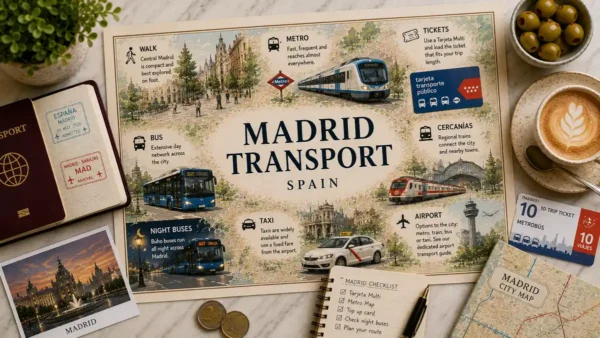
Museum opening hours and free-entry windows change through the year, and the museum’s official site lists the current ones, so set the afternoon slot from there. If you land the same morning, your first move is getting in from the airport; our Madrid airport transport guide covers the options. Between stops the metro is quick, though most of Day 1 walks — fares and passes are explained in the Madrid transport guide.
Do you need to book Prado or museum tickets in advance?
Booking Golden-Triangle museum tickets ahead is wise, especially in peak season, since timed-entry slots for the Prado can sell out and queues form at the door. Advance booking also protects the afternoon Prado slot this itinerary relies on. Each museum’s official site sets out its entry rules, free windows, and how far ahead slots release.
Tours and activities
Book skip-the-line tickets, day trips and local tours with free cancellation on most activities.
You can also browse everything on getyourguide.com.
Tripstou may earn a commission if you book through this link, at no extra cost to you.
Day 2: Royal Palace, Retiro, and the Neighbourhoods
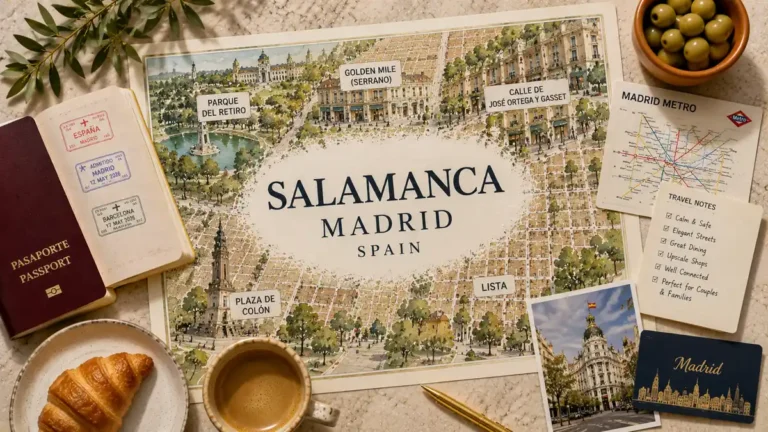
Day 2 pairs the Royal Palace with Retiro and ends in a neighbourhood. Morning at the Palacio Real works best before crowds build, then Retiro gives you green space and a slower midday. The evening belongs to one neighbourhood — La Latina for tapas, Malasaña for bars, or Salamanca for smarter streets.
Start early at the Palacio Real; it is the busiest ticketed sight on the route and the queue only grows. Walk east across the centre afterward to Retiro, where a bench, the boating lake, and the Crystal Palace make a natural midday reset. As the light drops, pick one neighbourhood and stay in it — hopping between them wastes the evening. La Latina is the tapas classic, Malasaña the younger option, Salamanca the polished one.
- Palacio Real — early, before the queues form.
- Retiro park — a green midday between palace and evening.
- One neighbourhood — La Latina, Malasaña, or Salamanca for dinner and drinks.
These central and going-out districts are well-trodden and lively after dark, but a busy tapas crawl is exactly where bags get light — our Madrid safety guide has the practical evening advice. Keep the night on foot where you can; the neighbourhoods are made for wandering.
Day 3: Day Trip to Toledo or Segovia, or a Slower Madrid Day
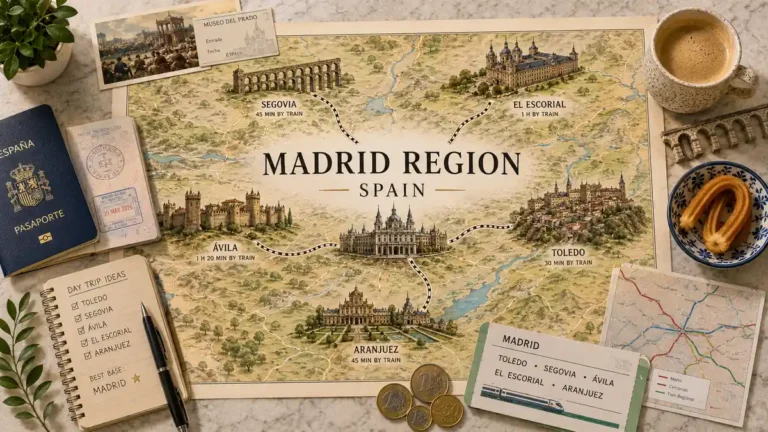
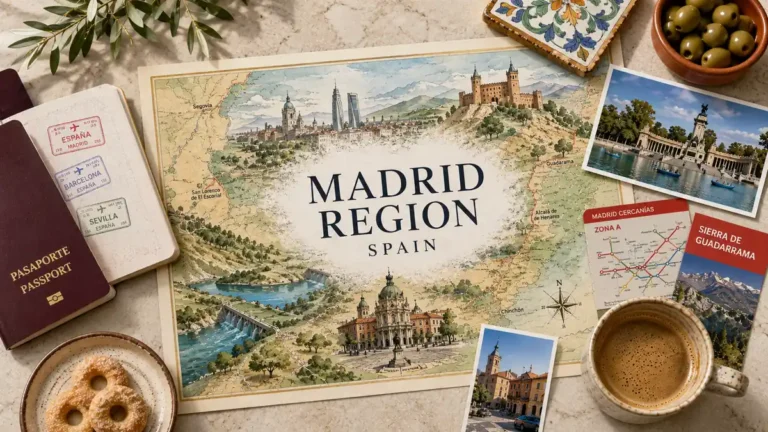
Use Day 3 for a day trip to Toledo or Segovia, or a slower Madrid day. Both cities sit roughly 30–35 minutes from Atocha by high-speed AVE, close enough to leave after breakfast and return for dinner. The alternative keeps you in the city at half-pace — markets, a long paseo, a rooftop, or a stadium visit.
This is the day the whole itinerary pivots on, so decide before you wake up, not over coffee.
- Day trip to Toledo or Segovia — suits travelers who want a second, different city and don’t mind an early train. Tradeoff: it is a committed full day away from Madrid.
- A slower Madrid day — suits anyone who felt rushed on Days 1–2 or is travelling with kids. Tradeoff: you see less new ground, but the city finally breathes.
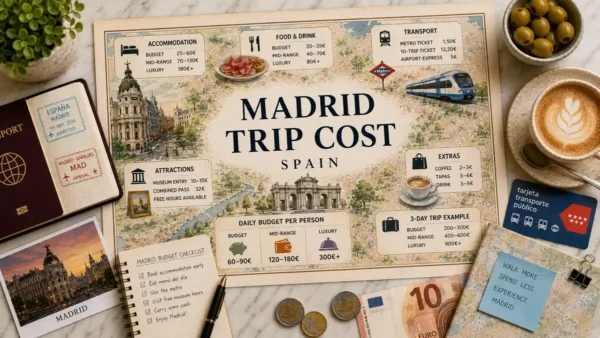
A day trip only pays off if you commit to it early: the fast trains fill up, and a mid-morning departure wastes the very hours that make Toledo or Segovia doable in a single day. Our guide to the best day trips from Madrid weighs Toledo, Segovia, and the other options so you can lock the choice before you go. Train fares move with time and demand, so book ahead and take the price from the operator’s site, not from memory. A day away also nudges the total spend — our Madrid trip cost guide shows where the extra day lands.
How to Adapt This Itinerary with More or Fewer Days
Shorten this itinerary by cutting the day trip; extend it by adding one. The route has a fixed spine — Days 1 and 2 stay intact because they hold the core sights. Day 3 is the flexible joint: drop it for a two-day trip, or add a second day trip or a deeper museum day when you have four.
Protect Days 1 and 2, and flex everything from Day 3 outward:
- Fewer days: cut Day 3 first — the day trip is always the first thing to go, which leaves the 2-day core intact.
- More days: add a second day trip or a full museum day after Day 3, not more centre walking.
- Same days, less energy: keep the order but shorten each morning and lean on the slower Day 3 option.
Reshuffling the days costs efficiency, so if you must, keep each day geographically tight and save the day trip for whichever day you can start earliest.
For the small logistics that make any version run smoother — timing, tickets, and getting around — our Madrid tips guide is the companion to this route.
Before You Go: Season, Walking and Kids
What’s the best time of year to visit Madrid?
Spring and autumn are generally the most comfortable times to visit Madrid, avoiding the peak summer heat and the winter chill. These shoulder seasons suit a walking-heavy 3-day itinerary, where you spend most of each day outdoors between stops. Conditions differ from one year to the next, and a forecast for your own dates settles what to pack.
How much walking is a 3-day Madrid itinerary?
Expect a lot of walking — Madrid’s core is compact and this plan is built to be covered on foot. Each day links stops within short walking distance, though you’ll still be out and moving most of the day. Comfortable shoes matter, and the slower Day 3 option is the natural choice if the pace wears you down.
Is a 3-day Madrid itinerary suitable for families with kids?
Yes, this route adapts well to families. Retiro’s boating lake and open space break up the museum time, and the slower Day 3 option — markets, a paseo, or a stadium visit — works better with children than an early day-trip train. Keep museum visits short and let kids set the tempo on the compact centre days.
About This Route
This is a day-by-day route for three days in Madrid: stop order, daily pace, a central base and the Day 3 choice between a day trip and a slower city day. It does not try to be a full Madrid guide, a list of everything to see, a hotel roundup or a general planning overview.
Produced with AI assistance for the Tripstou editorial team, this route was reviewed by Alex Perrut, working in tourism since 2015. Our editorial process explains how pages are checked.
Last factual review: July 21, 2026.
Official sources consulted: spain.info, Turespaña.
Did this guide save you time or money? Tripstou is independent and reader-funded — if you'd like to give something back, you can support the site with a crypto contribution of any size.