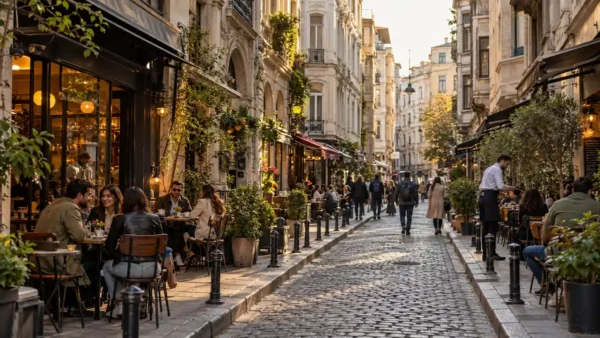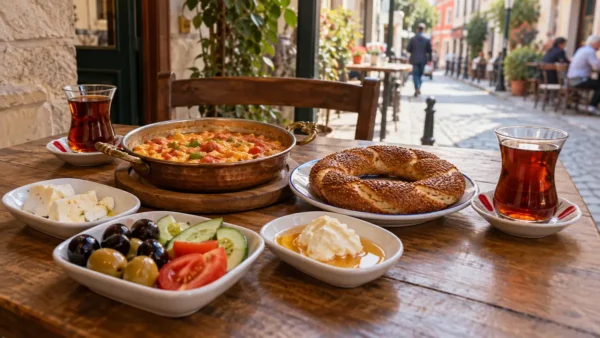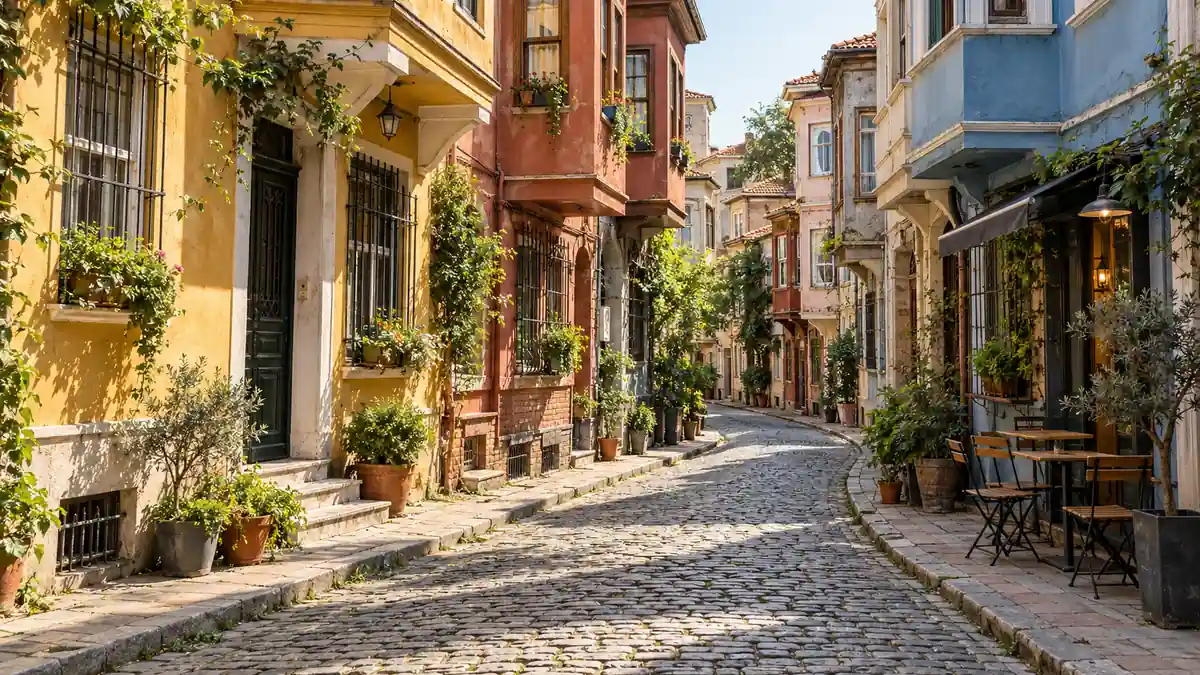
A first trip to Istanbul is built from the Sultanahmet core (Hagia Sophia, the Blue Mosque, Topkapı Palace and the Basilica Cistern), the Grand Bazaar and the Spice Bazaar, and a crossing of the Bosphorus by public ferry. Everything else — Galata and Beyoğlu, Dolmabahçe, Balat, the Asian side and the Princes’ Islands — is how you spend the remaining time. That second layer is what makes the trip feel like the city and not a checklist.
The sights below are sorted by area, so each quarter can be done in one go. The Old City and its bazaars sit on the European side, with Galata and Beyoğlu across the Golden Horn; Kadıköy and Üsküdar face them across the Bosphorus on the Asian side.
What to see in Istanbul on a first trip, and what can wait
See Hagia Sophia, the Blue Mosque, Topkapı Palace, the Basilica Cistern, the two bazaars and the Bosphorus first. They earn that place because Byzantine and Ottoman Istanbul stand within walking distance of each other in Sultanahmet, the bazaars are still working markets, and the water is how the city is laid out. Everything else falls into a second layer or a local side that can wait for spare time or a return visit.
- The first-timer core: the four Sultanahmet sights, the Grand Bazaar and Spice Bazaar, and one ferry ride. A short first visit that covers only these has still seen the city’s headline.
- The second layer: Süleymaniye Mosque, Dolmabahçe Palace, the Archaeological Museums, Galata Tower and Beyoğlu, Balat and Fener, and the Kariye (Chora) mosaics. This is where a second or third day goes once the core is done, and where history-minded visitors find the depth.
- The local side: Kadıköy and Moda, Üsküdar, and the Princes’ Islands. These suit anyone who has seen the monuments and wants the city’s everyday rhythm, or a repeat visitor skipping the queues entirely.
| Sight | Area | Kind of visit | Where it fits |
|---|---|---|---|
| Hagia Sophia | Sultanahmet | Working mosque, gallery route | First trip |
| Blue Mosque and Hippodrome | Sultanahmet | Mosque and open square | First trip |
| Topkapı Palace | Sultanahmet | Palace | First trip |
| Basilica Cistern | Sultanahmet | Underground reservoir | First trip |
| Grand Bazaar and Spice Bazaar | Bazaar quarter and Eminönü | Market | First trip |
| Bosphorus by ferry | Eminönü and Karaköy piers | Boat | First trip |
| Süleymaniye, Balat and Kariye | Fatih and the Golden Horn | Mosque, walk and mosaics | Second layer |
| Galata Tower and İstiklal | Galata–Beyoğlu | Viewpoint and walk | Second layer |
| Dolmabahçe Palace | Bosphorus shore, Beşiktaş | Palace | Second layer |
| Kadıköy, Üsküdar and the islands | Asian side and Sea of Marmara | Walk, market and boat | Local side |
The core is compact enough that most first-timers try to cram it into a single day. They shouldn’t. Topkapı alone takes a half-day, and Sultanahmet rewards a slower pace. How many days to give the city and in what order to take these areas is the job of the three-day Istanbul itinerary.
Sultanahmet holds the sights most people come for
Sultanahmet, on the Old City peninsula, puts Hagia Sophia, the Blue Mosque, Topkapı Palace and the Basilica Cistern within a few minutes’ walk of each other, which is why a first day starts here. With time for only one, pick Hagia Sophia for the building itself; with a free half-day, Topkapı gives the most back.
Hagia Sophia (Ayasofya)
Hagia Sophia tops the list because no other building tells Istanbul’s story so completely: a Byzantine cathedral, then an imperial mosque, then a museum, and now a working mosque again. Its dome still sets the scale for everything else on the skyline. It is the one sight every first visit should include, and how the visit works today is covered in the next section.
Blue Mosque and the Hippodrome
The Blue Mosque, officially the Sultanahmet Mosque, is a working mosque facing Hagia Sophia across a garden square, named for the blue tiles inside. Visitors enter outside prayer times and follow the same dress rules as at any mosque in the city.
The Hippodrome beside it was the chariot-racing ground of Byzantine Constantinople. Today it is an open square lined by its surviving obelisks, free to walk at any time. It is the piece of Sultanahmet that costs nothing and needs no plan, so it suits a first evening stroll or the gap between two ticketed sights.
Topkapı Palace: is it worth the half-day?
Topkapı Palace is worth the half-day for the Harem and the Treasury, home of the Spoonmaker’s Diamond. This was the sultans’ palace for centuries, and its courtyards, pavilions and Bosphorus terraces explain Ottoman court life better than any museum label.
The cost is time and crowds: the palace is large, and the Treasury rooms fill up. A visitor who cares more about architecture than court history, or who has only one day, can skip it and still leave with the core. The Museum Pass covers Topkapı, the Harem included.
Basilica Cistern
The Basilica Cistern is a 6th-century Byzantine reservoir under the streets of Sultanahmet, a forest of columns standing in shallow water, with two Medusa heads reused as column bases at the far end. The visit is short and works well between two longer sights. It is not on the Museum Pass, and queues build at the entrance, so you can book your entry ahead and keep the morning moving.
The museum layer of Sultanahmet fills a second morning. The Istanbul Archaeological Museums, on the edge of Topkapı’s grounds, hold the city’s ancient collections, while the Turkish and Islamic Arts Museum on the Hippodrome covers carpets, manuscripts and craft. Gülhane Park, below the palace walls, is the breather between them, at its best in spring when the tulip beds are in flower.
Tours and activities
Book skip-the-line tickets, day trips and local tours with free cancellation on most activities.
You can also browse everything on getyourguide.com.
Tripstou may earn a commission if you book through this link, at no extra cost to you.
Visiting Hagia Sophia and the mosques: what to know before you go in
Hagia Sophia is a working mosque, so tourists use a separate tourist entrance and a paid visitor route on the upper gallery, while the ground-floor prayer hall is kept for worship. That single fact answers both “is it free” and “how does the entrance work”: worshippers enter freely, and visitors pay for the gallery route.
The Museum Pass does not cover the gallery route. A pass bought for Topkapı and the museums will not get you into the building most people come to Istanbul for, so budget for it separately. The route also closes to visitors around the Friday midday prayer; check before you plan a Friday visit.
What to wear inside Istanbul’s mosques
Cover your shoulders and knees, and women should bring a headscarf. Shoes come off in prayer halls; carry a bag for them. Time visits away from the five daily prayers. These rules apply in the same way at Hagia Sophia, the Blue Mosque and Süleymaniye, so one scarf and long trousers or a long skirt in the day bag cover every mosque on the route.
Grand Bazaar or Spice Bazaar: what each one is for
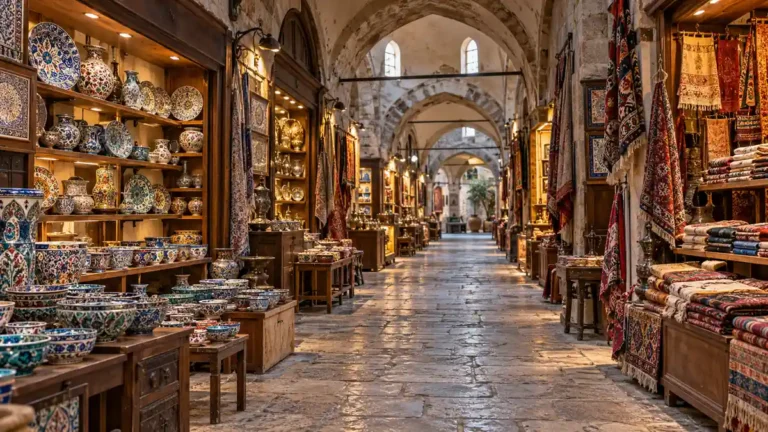
Do both, for different reasons. The Grand Bazaar (Kapalıçarşı) is a covered city of lanes to get lost in, while the Spice Bazaar (Mısır Çarşısı) by Eminönü is the smaller, food-led market you combine with the ferry piers.
The Grand Bazaar is the larger of the two by far: vaulted streets, inner courtyards and workshops selling carpets, lamps, ceramics, leather and gold. Haggling is the norm, and the first price is an opening move. Allow time to wander without buying, because the building itself is the sight.
The Spice Bazaar is compact and easier to read: spices, dried fruit, Turkish delight, tea and nuts under a single L-shaped hall. From the Grand Bazaar, the market streets run downhill towards it, so the two link into one walk that ends at the Eminönü waterfront.
That walk is worth planning in that direction. Start in the Grand Bazaar, drift down through the trading lanes, and you finish at the Spice Bazaar with the ferry piers and the Galata Bridge in front of you, ready for the water. The balık ekmek fish-sandwich boats moored at Eminönü are the classic stop there; the Istanbul food guide covers what else to eat around the bazaars and the bridge.
Süleymaniye, Balat and Chora: Fatih beyond the tourist core
The second layer of the Old City is the one most lists skip. Süleymaniye Mosque, above the bazaar quarter, is the Ottoman building many visitors end up preferring to the Blue Mosque, and the Golden Horn districts of Balat and Fener, together with the Kariye (Chora) mosaics, give a second day its shape.
Süleymaniye was built by the architect Mimar Sinan for Süleyman the Magnificent, and it is calmer, larger in feel and less crowded than the mosques of Sultanahmet. Its terraces look over the Golden Horn to Galata. It suits the visitor who found the Blue Mosque too busy to take in, and it sits a short climb from the Grand Bazaar.
Balat and Fener along the Golden Horn
Balat and Fener are a walk, not a sight list. Steep streets of painted houses climb from the Golden Horn shore, past churches, synagogues and the seat of the Ecumenical Patriarchate in Fener, the traces of the Greek Orthodox and Jewish communities that shaped these quarters. Come for the streets and the cafés between them, and for a slower half-day once the monuments are done.
Kariye (Chora) and the city walls
The Kariye mosque, the former Chora church, holds Byzantine mosaics and frescoes that are the finest counterpart to Hagia Sophia in the city, more intimate in scale and closer to the eye. The Byzantine land walls run nearby, so the two pair naturally. This is a detour for anyone drawn by Byzantine art; a visitor with only a passing interest can leave it for a return trip.
Bosphorus cruise or public ferry: which one to take
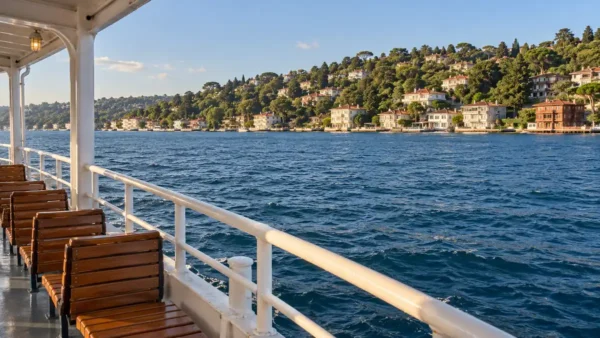
Take the public ferry first. Şehir Hatları, the municipal ferry operator, gives you the same water and skyline for an ordinary transit fare, and a paid cruise earns its place only for a sunset or dinner format, not for the view. The ferry is also how you reach the Asian side, so it doubles as transport.
- A commuter crossing: a short crossing from Eminönü or Karaköy to Kadıköy or Üsküdar, alongside locals heading home. It costs least, takes least time, and drops you on the Asian side to explore.
- The Şehir Hatları Bosphorus tour: the operator’s own sightseeing run up the strait, in a short or a long version, past palaces, waterfront mansions and the bridges. It suits a first-timer who wants the full shoreline without a commentary or a ticket desk.
- A paid cruise: a private boat with an audio guide, a sunset sailing or a dinner with a show. You pay more for comfort, timing and the occasion, while the view is the same one the public ferry gives you.
A commuter crossing to Kadıköy at the end of the afternoon gives most visitors the moment they came for. When the occasion matters (a couple marking a trip, or a group wanting a night out on the water), you can book a sunset cruise and let someone else handle the boat.
Across the Golden Horn: Galata Tower, İstiklal and Beyoğlu
Cross the Galata Bridge and the city changes century. Galata Tower is the viewpoint, İstiklal Avenue is the walk, and Beyoğlu is where the evenings happen; this is the half-day that balances the Old City.
Galata Tower is a medieval Genoese tower whose top gallery gives a 360° view over the Golden Horn, the Old City and the Bosphorus. It is not on the Museum Pass. Below it, Karaköy sits at the foot of the bridge, its old warehouses and banks now full of cafés and galleries.
The walk up from the water follows a clear line:
- the Tünel, the historic underground railway from Karaköy up to the head of İstiklal;
- İstiklal Avenue itself, a long pedestrian street of shops, churches and arcades;
- Çiçek Pasajı, the restored Flower Passage off İstiklal;
- Taksim Square as the end point.
Two museums round out the area for the museum-minded. The Museum of Innocence in Çukurcuma is Orhan Pamuk’s novel turned into rooms of objects, and Istanbul Modern on the Karaköy waterfront covers Turkish contemporary art. Whether to base yourself here or in Sultanahmet is a separate decision, which the guide to where to stay in Istanbul works through.
Dolmabahçe Palace is the Ottoman counterpoint to Topkapı
Dolmabahçe, on the Bosphorus shore in Beşiktaş, shows the 19th-century, European-styled Ottoman court. That is why it is worth seeing after Topkapı, not instead of it. A visitor who can fit only one palace should pick Topkapı for the older, more Ottoman story; Dolmabahçe is the second palace for anyone curious how the empire looked in its last century.
The visit is a walk through state rooms, chandeliers and grand staircases, with the Harem as a separate section. Dolmabahçe is not on the Museum Pass, and you can reserve palace entry ahead of the visit. Pair it with Ortaköy further up the shore, where a small waterside mosque sits right under the first Bosphorus bridge, the most photographed corner of the strait.
What the Asian side offers: Kadıköy, Üsküdar and the Princes’ Islands
The Asian side is where Istanbul lives rather than performs. Kadıköy is the pick for a first crossing, Üsküdar for the Maiden’s Tower view, and the Princes’ Islands for a car-free day away, all reached by ferry.
Kadıköy and Moda
Kadıköy is the easiest first taste of the Asian side: the ferry lands right by its market streets, where fishmongers, delis and produce stalls fill the lanes behind the pier. Moda, a short walk south, adds a seafront promenade and a park where locals gather at sunset. Come hungry, because the market is one of the city’s best places to graze.
Üsküdar and the Maiden’s Tower
Üsküdar is the quieter, more traditional shore, with Ottoman mosques near the pier and a slower pace. Walk south to Salacak for the view of the Maiden’s Tower on its islet, with the Old City skyline behind it. It suits an unhurried late afternoon more than a sightseeing push.
The Princes’ Islands: the easy escape from the city
The Princes’ Islands are the in-city escape, reached by Şehir Hatları ferry and free of private cars. Büyükada is the largest and busiest, with wooden mansions and hills to walk or cycle; Heybeliada is smaller and calmer. The trip takes a full day, and summer weekends bring crowds, so a weekday outside high summer is the better choice for anyone who wants the quiet the islands promise.
Hamam, whirling dervishes and the experiences worth booking
Three experiences deserve a slot whatever area you are in: a historic hamam, a whirling dervish ceremony, and time in the bazaars, covered above. The first two need a decision about which kind and where.
A historic hamam such as Kılıç Ali Paşa in Tophane gives the full ritual of heat, scrub and wash under an Ottoman dome. It is the right choice for someone who wants the building as much as the bath. A hotel spa hamam is simpler, more private and easier to fit around a day, and suits anyone uneasy about the communal format.
For the dervishes, the Galata Mevlevi Lodge is the historic lodge of the Mevlevi order, near the top of İstiklal, where the sema is performed as a ceremony in its own setting. A staged show such as the one at Hodjapasha, near Sirkeci, is easier to fit into an evening and explains itself to newcomers, while the lodge offers the ritual in its home. Check each venue’s own programme before you plan the evening around it.
Two local extras round out the city for repeat visitors: the Feriköy Flea Market for antiques and bric-a-brac, and Belgrad Forest on the northern edge of the city for a walk under trees.
The Short List
- A first trip is built from the four Sultanahmet sights, the Grand Bazaar and Spice Bazaar, and one ride on the Bosphorus by public ferry.
- Hagia Sophia is a working mosque, so visitors pay for an upper-gallery route that the Museum Pass does not cover, while the prayer hall stays open to worshippers.
- The Şehir Hatları ferry shows the same Bosphorus as a paid cruise, which is worth booking only when a sunset or dinner is the point.
- If there is time for only one palace, Topkapı comes before Dolmabahçe for the older Ottoman story.
- Kadıköy is the easiest first crossing to the Asian side, because the ferry lands right by its market streets.
- Süleymaniye, Balat and Fener, and the Chora mosaics are what a second day or a return visit is for.
How We Checked This
This page selects Istanbul’s sights by area and first-trip priority; it is not a day-by-day itinerary, a guide to where to stay or a food guide, and it prints no admission fees or opening hours.
Alex Perrut, working in tourism since 2015, went over these picks for the Tripstou editorial team; the page was written with AI assistance and follows our editorial process.
Official sources consulted: Go Türkiye.
Istanbul Questions That Come Up Before Booking
Is the Istanbul Museum Pass worth it?
Only if you plan to visit several of the state sites it covers, such as Topkapı Palace with the Harem and the Istanbul Archaeological Museums, within its validity window. It does not cover the Hagia Sophia gallery route, the Basilica Cistern, Dolmabahçe or Galata Tower, so a visitor sticking to the Sultanahmet headline sights rarely gets value from it. Price the individual tickets on your own list against the pass before buying.
What are the best day trips from Istanbul?
Bursa with Mount Uludağ, Sapanca with Maşukiye, and the Gallipoli peninsula are the day trips most visitors take from Istanbul. All three make for long days, so they fit a longer stay better than a short first visit. For a day away without leaving the city, the Princes’ Islands by ferry are the easier choice, and the Turkey travel guide covers the rest of the country.
Keep Planning Istanbul
- Turkey travel guide: the country planner for everything beyond Istanbul.
- Three-day Istanbul itinerary: the order and pacing of the sights on this page.
- Where to stay in Istanbul: which side of the city and which quarter to base in.
- Istanbul food guide: what to eat at the bazaars, the bridge and the markets named here.
Did this guide save you time or money? Tripstou is independent and reader-funded — if you'd like to give something back, you can support the site with a crypto contribution of any size.