Book Sultanahmet for a short first visit built around the monuments: Hagia Sophia and the Blue Mosque are a walk from the hotel door, and the price is quiet, tourist-pitched evenings. Book Karaköy or Galata for three days or more: the tram and the ferries meet at the bottom of the hill, the evenings have real life, and the climb is what you pay. For a longer or repeat stay, Kadıköy on the Asian side gives you a neighbourhood that is not built around visitors, at the cost of a ferry ride to every European-side sight.
Istanbul, Türkiye’s largest city, is split by water twice, and both splits matter when you book. The Golden Horn divides the old peninsula, home to Sultanahmet, from Beyoğlu, where Galata, Karaköy and Taksim sit. The Bosphorus divides the European side from the Asian side, where Kadıköy is the main base.
Sultanahmet for a Short First Visit, Karaköy for a Longer One
Stay in Sultanahmet if the trip is under three days and the monuments come first; stay in Karaköy or Galata if it runs to three days or more, or if this is your second visit. Every other area is a specialist choice: the Bosphorus shore for views, Taksim and Cihangir for nightlife, Kadıköy for local life.
| Area | Suits | Main trade-off | Link to the old city |
|---|---|---|---|
| Sultanahmet | A short, monument-first first visit | Crowded days, quiet evenings | On foot; T1 at Sultanahmet and Gülhane |
| Karaköy–Galata | Three days or more, all-round | Hills and stairs | T1 at Karaköy; F2 Tünel up the hill |
| Taksim–Cihangir | Nightlife and repeat visits | Far from the monuments; noisy streets | F1 to Kabataş, then T1 |
| Beşiktaş–Bosphorus | Water views and palace hotels | The old city is a ride, not a walk | T1 from Kabataş; ferries from Beşiktaş pier |
| Kadıköy | Local life, longer or repeat stays | A ferry for every European-side sight | Ferry to Karaköy or Eminönü |
| Sirkeci–Eminönü | Pure connectivity | Transit-hub feel at night | T1, Marmaray and ferry piers on the doorstep |
| Balat–Fener | Photogenic streets | Few hotels, far from the tram | No T1 stop close by |
Sultanahmet’s advantage shrinks with every extra night. On the first morning, the walk to Hagia Sophia saves the most time; by the fourth evening you are riding the tram out of the old city to eat and go out, which is exactly the trip Karaköy was built for.
The trade-off column deserves a second read. Galata’s hills and Kadıköy’s ferry are the two costs first-timers underrate, and each area block below spells out what they mean in practice.
Hotels and places to stay
Compare hotels, apartments and stays for your dates in one search.
Search hotels and stays on hotels.com →
Tripstou may earn a commission if you book through this link, at no extra cost to you.
Is Sultanahmet a Good Place to Stay?
Yes, Sultanahmet is a good place to stay for a short first visit built around the monuments, with one caveat: the crowds peak by day, the streets empty out in the evening, and much of what stays open is pitched at tourists. For two or three days of sightseeing, no other area puts you as close to the city’s headline sights.
Hagia Sophia, the Blue Mosque, Topkapı Palace and the Basilica Cistern are all within walking distance, and the Grand Bazaar is a couple of tram stops further or a walk away. Staying here means the three sights most first visits are planned around (Hagia Sophia, the Blue Mosque and the Basilica Cistern) can be done on foot, with a break back at the hotel between them. For what each visit involves, see our guide to things to do in Istanbul.
Day to day, the area runs on the visitor clock. Mornings and early evenings are the best hours to walk it; late at night it is quiet, which suits early risers and families more than anyone looking for a bar. The T1 tram stops at Sultanahmet and Gülhane, and Sirkeci, a short ride down the line, adds the Marmaray rail link.
Prices follow the first-visit demand. The old city carries a premium at the top end, while hostels and small guesthouses keep the budget end busy. Three sourced names cover the range:
- Budget: Stanpoli Hostel
- Luxury: AJWA Sultanahmet
- Luxury: Four Seasons Hotel Istanbul at Sultanahmet, set in a former prison
Sultanahmet fits a two- or three-day first trip where every morning starts at a monument. It fits a nightlife-led trip least.
Tours and activities
Book skip-the-line tickets, day trips and local tours with free cancellation on most activities.
You can also browse everything on getyourguide.com.
Tripstou may earn a commission if you book through this link, at no extra cost to you.
Karaköy and Galata: The Balanced Base for Three Days or More
Karaköy and Galata form the best all-round base for a stay of three days or more, because the T1 tram, the ferries and the F2 Tünel line all meet at Karaköy and the evenings have a life of their own. The cost is the hill. Galata climbs steeply from the water, and much of the climb is stairs.
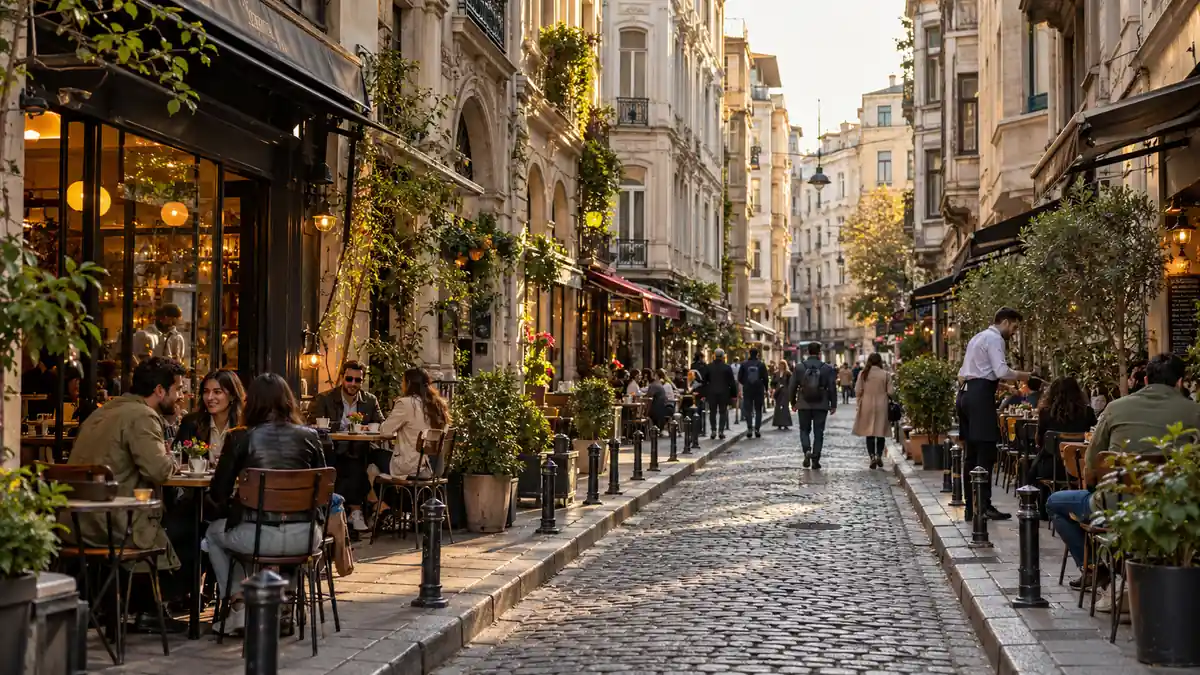
Treat them as one base at two altitudes. Karaköy sits at the waterfront, next to the tram stop and the ferry pier, with cafés filling its streets; street quality varies from block to block, so the exact address matters. Galata sits up the hill around Galata Tower, closer to İstiklal Avenue and the evenings of Beyoğlu, and further from the tram in effort, if not in distance.
Galata’s altitude is the decision inside the decision. A hotel at the bottom of the hill keeps the tram on the doorstep; one near the top puts the evening there instead. Before booking, check three things:
- Luggage: Galata’s lanes and stairs are hard work with a large suitcase, so ask how close a taxi can get.
- Lift: a walk-up on a hill street is a daily climb, so confirm a lift before taking an upper floor.
- Stroller: Karaköy’s flatter waterfront streets work far better than Galata’s slopes.
The connections are the strongest of any area. T1 stops at Karaköy for the old city, F2 Tünel runs from Karaköy up to Beyoğlu, the M2 metro stops at Şişhane on Galata’s upper edge, and ferries leave Karaköy for Kadıköy and Üsküdar.
This is Istanbul’s mid-range boutique heartland, with luxury at the Pera end. Georges Hotel Galata is a boutique choice up the hill, The Bank Hotel sits in Karaköy, and Pera Palace Hotel in Tepebaşı is the luxury name at the Pera end. Book here for a three- or four-day first trip that wants the old city by day and Beyoğlu by night.
Is Taksim a Good Place to Stay in Istanbul?
Taksim is a good place to stay for nightlife, busy dining streets and repeat visits, but a poor pick for a first visit centred on the old city, which sits on the far side of the Golden Horn. Cihangir, just downhill, is the quieter and more residential version of the same base.
For late evenings, Taksim and İstiklal Avenue are the city’s answer; Cihangir trades that for cafés and a lived-in feel. Noise changes street by street, so the hotel’s exact street matters more than the district name on the booking page. Cihangir’s catch is the walk: it is downhill to the tram or the F1 line at Kabataş, and uphill on the way back.
Choosing Taksim for its name on a first trip is the most common Istanbul booking mistake. Every monument day then starts with the F1, a short underground line from Taksim down to Kabataş, and a T1 ride across the Golden Horn. The M2 metro also stops at Taksim, which helps for Şişhane and Galata but not for Sultanahmet.
Two edges are worth knowing. The blocks west of Taksim towards Tarlabaşı are rougher after dark, and the crowds around the square draw pickpockets. Prices spread wide, with chain hotels and budget rooms side by side, so look for a side street off İstiklal, a lift and double glazing over any particular brand. Book Taksim or Cihangir on a second trip, once the monuments are done and the evenings matter more.
Beşiktaş and the Bosphorus Shore: Views First, Convenience Second
Beşiktaş and the Bosphorus shore are the base for a water view and the city’s palace hotels, and the honest cost is that the old city is a tram ride away, not a walk. Pick it for the setting, not for sightseeing efficiency.
Beşiktaş itself is a working neighbourhood built around its ferry pier; Ortaköy and the shoreline further along carry the views. Dolmabahçe Palace and the Bosphorus are the area’s own sights. Bosphorus cruises leave from the piers at Kabataş and Eminönü, and a stay on the shore makes it natural to book a sightseeing cruise for the end of a day on the water.
Ferries run from Beşiktaş to Kadıköy and Üsküdar, and Kabataş, at the district’s edge, is where the T1 tram and the F1 line start. The shore is the luxury end of the city, while ordinary mid-range rooms sit inland in Beşiktaş. Çırağan Palace Kempinski is the luxury name on this stretch of water.
The shore suits couples, honeymoons and repeat visitors who have already done the old city and now want the Bosphorus outside the window.
Kadıköy: The Asian-Side Base for Local Life and Longer Stays
Kadıköy is the right base for a longer or repeat stay, and for anyone who wants a neighbourhood that does not revolve around visitors. The trade-off is a ferry commute to every European-side sight.
Day to day, Kadıköy runs on market streets, Moda’s seafront and a residential rhythm. Ferries leave Kadıköy for Karaköy, Eminönü and Beşiktaş. The ride is short, but the timetable becomes something to plan around at night, when a late dinner on the European side ends with a pier to reach.
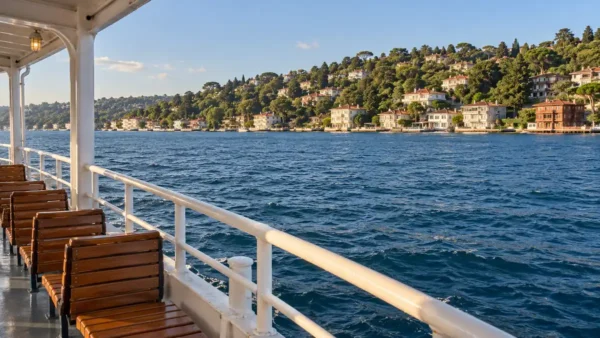
The ferry is both Kadıköy’s cost and its bonus. The crossing that adds time to every sightseeing day is also one of the best views of the city you will get all trip.
Prices are noticeably gentler than in the European centre for the same tier. Istanbul Life Hotel is a mid-range option here. Kadıköy fits a week-long stay, a second visit or remote work; it does not fit a three-day first trip with a long monument list.
European or Asian Side: Which Should You Book?
Book the European side for a first visit or any stay under five days, because the sights, the tram and most hotels are there. Book the Asian side when the stay is longer, the visit is a repeat, or you would sooner live like a resident and accept the ferry.
The practical argument is sightseeing density against the daily commute. From the European side, a forgotten sight is a few tram stops away; from the Asian side, it is a crossing, and the last ferry home sets the end of the evening. Between the two Asian-side bases, Üsküdar is quieter and more conservative, with fewer hotels, while Kadıköy has more life and more beds.
Other Areas Worth Knowing: Sirkeci, Eminönü, Balat and Üsküdar
None of these beats the five main bases for most trips, but each wins for one reader: Sirkeci and Eminönü for pure connectivity, Balat and Fener for photogenic streets, Üsküdar for a quiet Asian-side base.
Sirkeci and Eminönü put the T1 tram, the Marmaray line, the ferry piers and the Spice Bazaar at the door. They miss the main list because the area feels like a transit hub after dark.
Balat and Fener have the colourful streets along the Golden Horn that fill photo feeds. Hotels are few, and the tram is far, which makes them a half-day visit for most travelers and a base for very few.
Üsküdar has ferries to Eminönü and Beşiktaş and a residential, conservative character. It has few hotels, so Kadıköy usually wins the Asian-side booking.
Match the Area to Your Trip: Length, Style and One Base or Two
For one to three days, stay in Sultanahmet, Sirkeci or Karaköy; for three to four days, Karaköy or Galata; for five days or more, or a repeat visit, Kadıköy, Cihangir or the Bosphorus shore. Travel style then narrows the choice inside each band.
By length of stay
| Trip length | Area | Why |
|---|---|---|
| 1–3 days | Sultanahmet, Sirkeci or Karaköy | The monuments on foot or a few tram stops away |
| 3–4 days | Karaköy or Galata | Tram, ferries and real evenings from one base |
| 5+ days or a repeat visit | Kadıköy, Cihangir or the Bosphorus shore | More neighbourhood life for the same tier |
Once the base is booked, our 3-day Istanbul itinerary gives the day-by-day order, starting on foot from the old city or Galata. On a five-day-plus stay where Istanbul is one stop of several, the Turkey travel guide shows how it fits the wider trip.
By travel style
- First-timer: Sultanahmet, for the monuments on foot.
- Nightlife: Taksim and İstiklal for late nights, Cihangir for a quieter street close to them.
- Couples: Galata, for boutique hotels and evenings in Beyoğlu.
- Families: Sultanahmet, for flat, walkable streets and early nights.
- Budget: Kadıköy for the most room per tier, or a Sultanahmet hostel on a short trip.
- Luxury and a Bosphorus view: Beşiktaş and the Ortaköy shore.
- Local life and long stays: Kadıköy and Moda, for market streets and a residential rhythm.
One base or two?
One base is right for any stay under five days. A split pays only on a longer trip, pairing the old city with the Asian side or the old city with the Bosphorus shore. It costs a moving day, with packing, a transfer and a new check-in. If that day feels like a loss, stay in Karaköy, which reaches both halves of the split by tram and ferry.
What to Check Before You Book
Four checks decide whether a good area becomes a good stay: the distance to a T1 stop or a ferry pier, a lift where the streets climb, the street’s noise profile, and whether a terrace view is worth paying more for. Central is worth it on a short visit, where every tram ride saved is sightseeing time; on a long stay, Kadıköy or Cihangir buys more for the same tier.
- Tram stop or pier: a hotel sold as “Sultanahmet” or “Taksim” can sit well away from the tram, so check the walk to the nearest T1 stop or ferry pier on a map.
- Lift and stairs: essential in Galata and Cihangir, and with heavy luggage or a stroller anywhere on a slope.
- Noise: a side street off İstiklal sleeps; a room above it may not.
- Terrace view: worth paying for on a Bosphorus or Golden Horn stay, less so on a monument-first trip that keeps you out all day.
The relative-price logic holds across tiers. The old city and the Bosphorus shore carry the premium, Karaköy and Galata sit in the middle, and Kadıköy is the gentlest of the main bases. Paying the central premium makes sense when the trip is short and the monument list long; it makes little sense on a week-long stay.
How the areas connect: T1, F1, F2, the metro and ferries
The T1 tram is the spine: from Kabataş it runs through Fındıklı, Tophane and Karaköy, crosses the Golden Horn to Eminönü and Sirkeci, then climbs through Gülhane and Sultanahmet to Çemberlitaş and Beyazıt–Kapalıçarşı. The F1, a short underground line, links Kabataş with Taksim, F2 Tünel links Karaköy with Beyoğlu, the M2 metro stops at Şişhane and Taksim, and Marmaray stops at Sirkeci. Ferries link Karaköy, Eminönü and Beşiktaş with Kadıköy and Üsküdar.
The Short Version
- Book Sultanahmet for a first visit of under three days built around the monuments, and Karaköy or Galata for three days or more.
- Galata’s hills and stairs and Kadıköy’s ferry commute are the two costs first-timers most often underrate.
- Booking Taksim for a monument-first trip means starting every sightseeing day with the F1 down to Kabataş and a T1 ride across the Golden Horn.
- A hotel sold under a district name can sit well away from the tram, so check the walk to the nearest T1 stop or ferry pier before you pay.
- One base covers any stay under five days, and on a longer trip Karaköy reaches both halves of a split by tram and ferry.
- The central premium pays off on a short trip, while on a week-long stay Kadıköy or Cihangir buys more for the same tier.
Istanbul Stay Questions, Answered
Where should you stay in Istanbul on a budget?
Kadıköy is the strongest budget base for a longer stay, because rooms there cost noticeably less than in the European centre for the same tier. On a short trip, a hostel or small guesthouse in Sultanahmet, such as Stanpoli Hostel, keeps the monuments on foot. Around Taksim, chain hotels and budget rooms sit side by side, so a side street off İstiklal works when the evenings matter more than the old city.
Where should families stay in Istanbul?
Sultanahmet is the easiest family base on a short trip: the main monuments are close enough to return to the hotel between visits, and the evenings are quiet. Karaköy also works if the hotel sits on a flat waterfront street and has a lift. Skip Galata’s stairs with a stroller and the late noise around Taksim; on a longer family stay, Kadıköy offers a residential rhythm in exchange for the ferry.
Which areas should you avoid staying in Istanbul?
Avoid basing yourself in the blocks west of Taksim towards Tarlabaşı and Dolapdere, which are rougher after dark. Be wary too of hotels sold as “Taksim” or “Sultanahmet” that sit far from the tram, since the district name on the booking page does not shorten the walk. In the crowds around Taksim Square and Sultanahmet, keep bags and phones close, as pickpockets work both.
Scope and Sources
This page helps you pick the Istanbul area to book by comparing its neighbourhoods as bases; it is not a sights list, an itinerary, a priced hotel roundup or a nightlife guide.
Alex Perrut, working in tourism since 2015, checked these area verdicts for the Tripstou editorial team after the page was written with AI assistance. How that works is set out in our editorial process.
Official sources consulted: GoTürkiye.
Keep Planning Istanbul and Turkey
- Turkey travel guide: Istanbul as one stop on a wider Turkey trip.
- 3-day Istanbul itinerary: the day order once the base is chosen.
- Things to do in Istanbul: what each area’s sights involve.
Did this guide save you time or money? Tripstou is independent and reader-funded — if you'd like to give something back, you can support the site with a crypto contribution of any size.