Eat in Istanbul by setting, because each kind of meal has a part of the city where it is done best. Simit and balık ekmek are street food on the Eminönü waterfront. Breakfast is a kahvaltı spread in Cihangir or Beşiktaş. Lunch is kebab or steam-table stews at a lokanta in Kadıköy. Dinner is meze with rakı at a meyhane in Beyoğlu, and Karaköy is where to finish with baklava and tea.
Türkiye, as the country is officially named, eats in distinct registers, and Istanbul runs all of them within a ferry ride of each other. Pick the setting first and the dishes follow: a meyhane will not sell you a kebab lunch, and a lokanta closes its steam table long before the meyhanes fill up.
In This Guide
The Dishes That Define Eating in Istanbul, and Where Each Is Best
A first visit to Istanbul is built around a handful of dishes, and each belongs to one setting and one part of the city. Street snacks belong to the Eminönü waterfront, breakfast to Cihangir and Beşiktaş, kebab and stews to the lokantas of Kadıköy, meze to the meyhane streets of Beyoğlu, and baklava to Karaköy.
| Setting | Signature dishes | Best area |
|---|---|---|
| Street | Simit, balık ekmek, midye dolma, kumpir, kokoreç, ıslak hamburger | Eminönü and the Galata Bridge, Kadıköy market streets, Taksim and İstiklal |
| Breakfast | Menemen, börek, serpme kahvaltı | Cihangir, Beşiktaş |
| Lokanta | Stews, köfte, İskender, Adana, mantı, mercimek çorbası | Kadıköy, the back streets behind Sirkeci |
| Meyhane | Cold and hot meze, rakı | Nevizade and Asmalımescit in Beyoğlu, Kadıköy and Moda |
| Sweets and drinks | Baklava, künefe, lokum, çay, Turkish coffee | Karaköy, the Spice Bazaar |
Each row is a different meal of the day, so one well-planned day can touch three of them. The sections below take the settings in that order, from the first simit to the last glass of tea.
Street Food: Eminönü, Kadıköy and Late-Night Taksim
Street food is the cheapest and most Istanbul way to eat, and three places do it best: the Eminönü waterfront by day, the Kadıköy market streets on the Asian side, and İstiklal Caddesi after dark. Everything below is eaten standing or walking, and none of it needs a word of Turkish beyond pointing.
- Simit: the sesame-crusted bread ring sold from carts across the city, the default breakfast on the move.
- Midye dolma: mussels stuffed with spiced rice, sold by the piece around the Spice Bazaar and squeezed with lemon.
- Kumpir: a baked potato split open and loaded with toppings of your choosing.
- Islak hamburger: the “wet burger”, a soft bun soaked in a garlicky tomato sauce, sold from steamed display cases in Taksim.
- Kokoreç: grilled, chopped lamb intestines in bread, a late-night order on İstiklal and in Kadıköy.
The Spice Bazaar and the Galata Bridge are on this page as places to eat beside. Both are sights in their own right, and the history, the stalls and the walk across the water belong to our guide to things to do in Istanbul.
Order the street food in the place it is famous for. Midye from a tray in Eminönü and a wet burger at the top of İstiklal are fresh because the turnover is fast; the same snack sold far from its home ground is often the one that has sat longest.
Balık Ekmek at the Galata Bridge
Balık ekmek, a grilled mackerel sandwich, is the one street meal in Istanbul not to skip, and the place to eat it is the boats moored at the Eminönü end of the Galata Bridge. The fish is grilled on board, folded into bread with onion and salad, and handed up to the quay. Eat it standing at the waterfront, with a cup of pickle juice or an ayran beside it. It is the meal that ties the street-food setting to the water the city is built around.
How a Turkish Breakfast Works, and Where to Have It
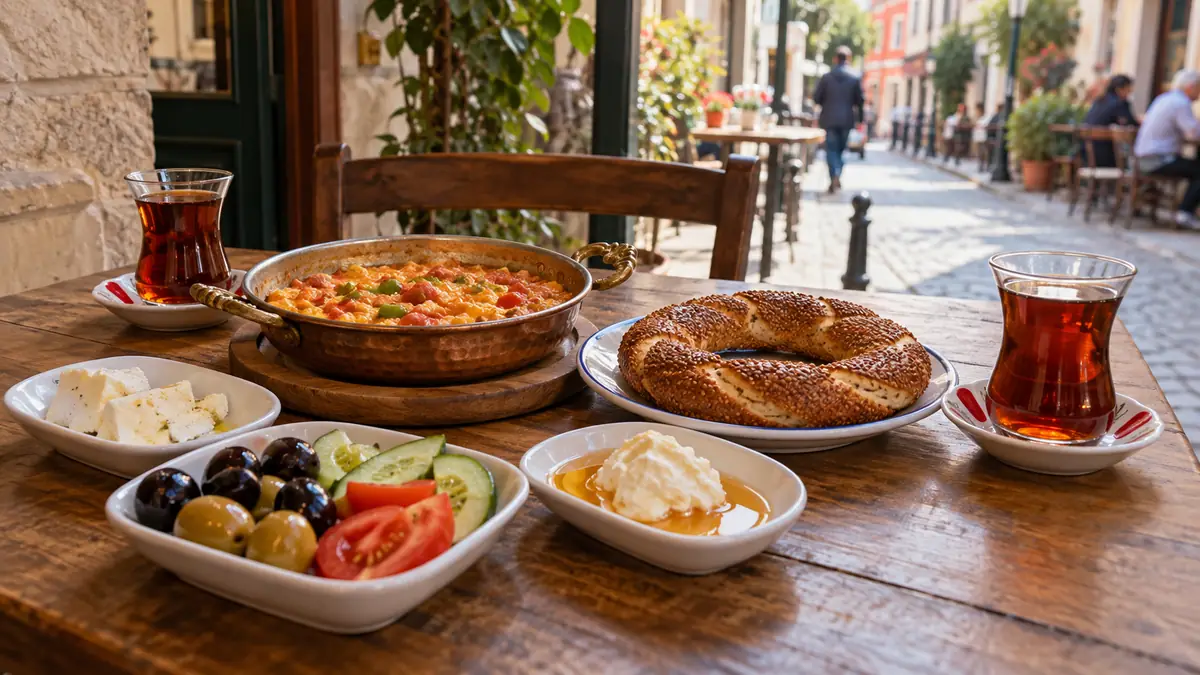
Kahvaltı, the Turkish breakfast, is a shared spread for the whole table, not a plate for one, and the way to do it is to order a serpme kahvaltı and take an hour over it in Cihangir or Beşiktaş. Serpme means “spread out”: many small plates arrive at once and everyone eats from all of them.
A full spread usually brings:
- several white and aged cheeses, with green and black olives
- tomatoes, cucumbers and peppers
- eggs, often as menemen, scrambled into tomatoes and peppers in a small pan
- börek, flaky pastry filled with cheese or spinach
- honey with kaymak, a thick clotted cream, plus jams
- bread and a steady refill of tea
An à la carte breakfast (a menemen and a simit) suits one person in a hurry. The serpme suits two or more, and it is the version worth crossing the city for. Van Kahvaltı Evi in Cihangir serves the spread in the style of Van, the eastern city known for its breakfast culture. In Beşiktaş, Kahvaltıcılar Sokağı, literally “Breakfast Makers’ Street”, is lined with cafés doing the same job side by side.
Make breakfast the slow meal of the day. After a serpme kahvaltı, lunch can be a simit or a balık ekmek eaten on the move.
Lunch at a Lokanta: Point, Choose, Sit Down
The easiest sit-down meal in Istanbul needs no menu at all: at an esnaf lokantası, a tradesmen’s restaurant, you look at the steam table by the door, point at two or three dishes, and they are plated and brought to your table. It is home-style cooking made in the morning for people who work nearby.
The display usually holds meat and vegetable stews, zeytinyağlılar (vegetables cooked in olive oil and served cool), rice pilaf, köfte and a pot of mercimek çorbası, the red lentil soup that opens most Turkish lunches. Lokantas are lunch places, at their best around midday when the trays are full; by late afternoon the choice thins out.
Pointing beats translating at a lokanta. A visitor who has watched one food walk or one lunch service in the first days of a trip orders with confidence for the rest of it.
Istanbul also eats the whole country, so a lokanta or kebab house here often cooks a region’s dish. Gaziantep supplies the city’s baklava tradition, Adana and the southeast its kebabs, the Black Sea coast its pide and anchovy, Van its breakfast, and İnegöl its köfte. For the country beyond the city, from the coast to the southeast, start with our Turkey travel guide.
Adana, İskender or Döner: Which Kebab to Order
Three kebabs cover most of what a visitor meets in Istanbul, and each suits a different meal:
- İskender: slices of döner laid over pieces of pide, covered in tomato-butter sauce, with yogurt on the side. A sit-down lunch, rich and best eaten at a table. Kebapçı İskender is the name most associated with it.
- Adana: hand-minced, spiced meat pressed onto a wide skewer and grilled over charcoal. The order at a grill house, when you want the meat itself to be the point.
- Döner: meat cut from the vertical rotisserie, served in bread to eat on the move or on a plate with rice. The quick, cheap default.
Kadıköy Market Is the Best Half-Day of Eating in the City
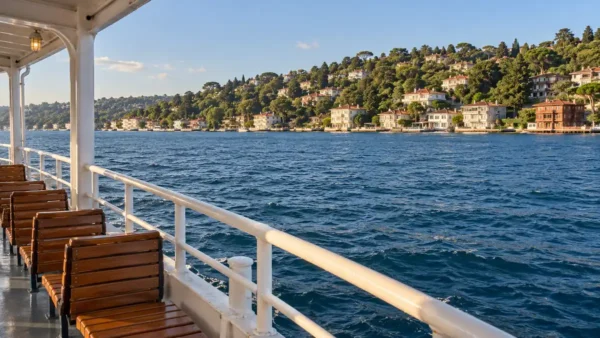
Cross to the Asian side and spend half a day in the Kadıköy market streets around Güneşlibahçe Sokak, because nowhere else puts a lokanta, a lahmacun oven, kokoreç, fish stalls and pickle shops within a few streets of each other, with far fewer tourist menus than the old city. The ferry across the water is part of the outing.
Two names anchor the market. Çiya Sofrası cooks the regional food of Gaziantep and the southeast, dishes rarely seen on the European side. Borsam Taşfırın bakes lahmacun, the thin spiced-mince flatbread, in a wood-fired oven. Between them, fishmongers set out the day’s catch and pickle shops sell turşu by the jar and by the glass of brine. As the market streets quieten in the evening, the back streets and Moda take over with meyhanes, the subject of the next section.
Kadıköy rewards a visit timed around lunch and left open into the evening: arrive hungry, eat in small portions across several stops, and stay on for the meyhane hour instead of taking the ferry straight back.
Tours and activities
Book skip-the-line tickets, day trips and local tours with free cancellation on most activities.
You can also browse everything on getyourguide.com.
Tripstou may earn a commission if you book through this link, at no extra cost to you.
A Meyhane Night: Meze, Rakı and How the Evening Runs
A meyhane is an evening-long meal built on shared meze and rakı, not a restaurant with starters and a main course. The best streets for one are Nevizade and Asmalımescit in Beyoğlu, or the back streets of Kadıköy, and a table is worth booking at weekends when these rooms fill early.
The evening follows a sequence:
- Cold meze first, chosen from a tray the waiter brings to the table or from a display: you point at what you want.
- Hot meze next, ordered once the cold plates are under way.
- A fish or grill main only if the table is still hungry; plenty of tables never get there.
The room is part of the meal: long tables, conversation over the noise, sometimes live music working its way between tables. Order a little at a time across the night; the meyhane rhythm punishes the table that orders everything at once and leaves the meze to go warm.
A Bosphorus dinner cruise is a different evening altogether, more staged and built around the view, and no substitute for a meyhane night.
How Do You Drink Rakı?
Rakı, the anise spirit of the meyhane, is diluted with cold water, which turns it cloudy white, and sipped alongside the meze across the whole evening, never thrown back as a shot. A glass of plain water stands beside it. Anyone not drinking alcohol orders ayran or şalgam, a salty fermented turnip and carrot juice, and is still fully part of the table.
Sweets and Drinks: Baklava in Karaköy, Tea Everywhere
Baklava is best bought in Karaköy, künefe is eaten hot at the end of a kebab meal, and tea arrives everywhere, even free of charge in a bazaar shop. Those three habits cover most of the sweet side of eating in Istanbul.
Karaköy Güllüoğlu is the Karaköy name for baklava, layered pastry soaked in syrup and packed with pistachio or walnut. Künefe, shredded pastry baked around melting cheese and soaked in syrup, comes straight from the oven and loses its point once it cools. Lokum, Turkish delight, is the thing to taste at the Spice Bazaar, where stalls cut samples from the slab.
What to drink:
- Çay: black tea in small tulip-shaped glasses, offered at every meal and in most shops.
- Turkish coffee: thick and unfiltered, with the sweetness chosen when you order, since the sugar is boiled in with the coffee.
- Ayran: salted yogurt drink, the standard pairing with kebab.
- Şalgam: fermented turnip juice, sour and salty, the classic partner to Adana kebab.
- Boza: a thick, lightly fermented grain drink, served in winter.
- Rakı: the meyhane drink, covered in the section above.
Tea offered by a shopkeeper in the Grand Bazaar or the Spice Bazaar is hospitality. Accepting it does not oblige a purchase, and declining to buy afterwards is normal.
How Do You Avoid Tourist-Trap Restaurants in Sultanahmet?
Walk a few streets away from the Divan Yolu strip, where touts work the doors and English picture menus line the pavement, or take the ferry to Kadıköy for the evening. Rooftop and view restaurants in Sultanahmet charge a premium for the view, not for the food.
The signs of a trap are easy to read:
- a tout at the door steering passers-by inside
- a laminated photo menu in several languages
- “special” or catch-of-the-day seafood with no price shown
The better defaults are close by. A lokanta in the back streets behind Sirkeci serves a proper lunch near the main sights, the Eminönü waterfront handles street food, and the evening is better spent across the water. Divan Yolu lives on sightseers passing through once, which is exactly why its main strip can afford to cook for people it will never see again.
This matters most on a short trip, where every meal counts. Our three-day Istanbul itinerary shows where these meals fit around the sights.
Can Vegetarians Eat Well in Istanbul?
Yes, easily, because a large part of everyday Turkish cooking is zeytinyağlılar, vegetables cooked in olive oil, and the word to know is “etsiz”, meaning without meat. Ask for etsiz and most kitchens will point you to what qualifies.
Dishes to look for:
- imam bayıldı, aubergine stuffed with onion and tomato and cooked in olive oil
- yaprak sarma, vine leaves rolled around rice
- mercimek çorbası, red lentil soup
- menemen, eggs scrambled with tomato and peppers
- börek with cheese or spinach, and gözleme, the griddled stuffed flatbread
- simit from any cart
Three settings make it simplest: the lokanta display, where the olive-oil dishes sit apart from the meat stews; the breakfast spread, which is almost entirely meat-free; and the meyhane’s cold meze tray. Soups and rice are the place to ask, since a stock that looks vegetable-based can be made with meat.
Eat Like This
- Eat street food where it is famous: balık ekmek from the boats at the Eminönü end of the Galata Bridge, midye around the Spice Bazaar, and a wet burger at the top of İstiklal.
- Order a serpme kahvaltı for the table in Cihangir or Beşiktaş and make breakfast the slow meal of the day.
- At a lokanta, go around midday while the trays are full and point at two or three dishes on the steam table instead of asking for a menu.
- Give the Kadıköy market streets on the Asian side half a day, eating in small portions, and stay on into the evening for a meyhane in the back streets or Moda.
- At a meyhane in Beyoğlu or Kadıköy, order cold meze first and a little at a time, and sip rakı diluted with water across the evening.
- Buy baklava in Karaköy, and accept a shopkeeper’s tea in the bazaars without feeling bound to buy.
- In Sultanahmet, walk a few streets away from the Divan Yolu strip, or cross to Kadıköy, before sitting down anywhere a tout works the door.
How We Checked This
This page settles what to eat in Istanbul and where and how to eat each dish well; it is not a priced restaurant directory, a sightseeing guide to the bazaars or a day-by-day itinerary.
Alex Perrut, working in tourism since 2015, went over these dishes, areas and ordering habits for the Tripstou editorial team, and the page was written with AI assistance. How we work is set out in our editorial process.
Official sources consulted: Go Türkiye.
Istanbul Food Questions
Do You Tip in Istanbul Restaurants, and What Is a Service Charge?
Yes at sit-down restaurants, where leaving around 10% is customary, but check the bill first: some places add a service charge, shown as “servis”, and then nothing more is expected. At lokantas and casual places, rounding up the bill is enough, and nobody expects a tip for street food.
Is a Food Tour Worth It in Istanbul?
A food tour is worth it early in a trip for travelers who want the ordering habits and the eating neighbourhoods decoded in one outing, so that every meal after it feels easier. A confident eater who knows the settings on this page and is happy to point at a steam table or a meze tray can skip it and eat just as well.
Keep Planning Istanbul and Turkey
- Turkey travel guide: the country beyond Istanbul, and where its regional food comes from.
- Things to do in Istanbul: the bazaars, the Galata Bridge and Kadıköy as places to explore.
- Three days in Istanbul: where these meals fit in a short plan.
Did this guide save you time or money? Tripstou is independent and reader-funded — if you'd like to give something back, you can support the site with a crypto contribution of any size.