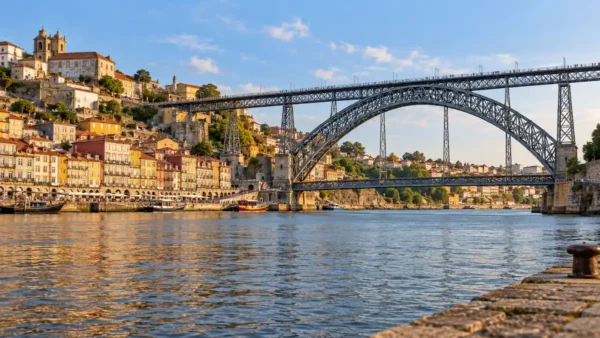
You have already narrowed Porto down to Ribeira, and the question now is narrower still: is the riverfront actually a good place to sleep, and which part of it should you book? Most pages stop at a pros and cons list and then hand you a hotel roundup. This one answers the second question, because inside Ribeira the difference between a room on the quay and a room one street behind it is larger than the difference between two hotel categories.
The honest frame first. Ribeira gives you the most scenic address in Porto, and you pay for it in crowds, evening terrace noise, and a climb every time you leave the water. Some travelers make that trade happily for two or three nights. Others regret it by the second morning. The rest of this guide sorts which one you are, then tells you exactly where inside the district to book.
Quick Answer
Ribeira is the right base for an atmosphere-first trip to Porto, and the city’s most scenic place to sleep. The trade is real: evening terrace noise, dense daytime crowds, and steep access to everywhere else. Book a set-back room if sleep matters; light sleepers and car travelers should base elsewhere.
Trust Layer
Tripstou stay guide for travelers choosing where to base. Covers area atmosphere, budget, convenience, noise, and traveler fit.
Produced with AI assistance and reviewed by Alex Perrut, working in tourism since 2015, for the Tripstou editorial team. See our editorial process for details.
Last factual review: August 30, 2026.
Official sources consulted: Visit Portugal, Turismo de Portugal.
Key Takeaways
- Ribeira is Porto’s most scenic base, and the setting is paid for in crowds, evening terrace noise and daily climbing.
- The address inside Ribeira matters more than the hotel category: quayside for the view, one street back for sleep.
- The quay is flat, but every route out of Ribeira climbs steeply, so the tiring leg is always the return.
- Night noise is seasonal terrace dining, not clubs, and it lands hardest on river- and square-facing rooms.
- Prices skew high-end on the waterfront and mid-range one street back, making micro-location your strongest cost lever here.
- Booking a river-facing room as a light sleeper is the district’s most common and most avoidable mistake.
Table of Contents
Is Ribeira a Good Place to Stay in Porto?
Ribeira is a good place to stay in Porto if you want to sleep inside the postcard. The Douro quay, the bridge and the UNESCO-listed old centre sit at your door. You pay for that in crowds by day, terrace noise in the evening, and a steep climb out of the district.
The verdict holds because of proximity, not because of the rooms. Almost everything a first-time visitor comes to Porto for is either in Ribeira or immediately above it, so the district removes transport from the day entirely. You step out of the door and you are already there. That is a genuinely different experience from basing in a quieter, better-value part of the city and commuting into the view, and it is the reason people accept the district’s costs. For wider city context — what Porto is like beyond the waterfront — see our complete guide to Porto.
The counterweight is equally plain. Ribeira is the most crowded, most photographed and most expensive stretch of central Porto for what you get, and the terrain and evening noise are real constraints, not quirks. If the question you are actually asking is which Porto neighbourhood suits you overall, that comparison belongs in our Porto area-by-area guide to where to stay. And if you are weighing this district against the commercial centre directly, we settle that head-to-head in Ribeira vs Baixa.
Hotels and places to stay
Compare hotels, apartments and stays for your dates in one search.
Search hotels and stays on hotels.com →
Tripstou may earn a commission if you book through this link, at no extra cost to you.
What Staying in Ribeira Actually Feels Like
Ribeira runs on a sharp daily curve: packed and performative by day, long and social after dark. The quay fills with day-trippers and cruise arrivals, empties into the restaurant terraces at dusk, and winds down earlier than the crowd size suggests. Mornings are the district’s quietest hours.
Yes, it is very touristy — that is the honest answer, and pretending otherwise helps nobody. Street level in Ribeira is a tourist stage: souvenir stalls, buskers, boat touts, terrace after terrace along Cais da Ribeira and around Praça da Ribeira. Density peaks through the warm months and thins noticeably outside them. But touristy at street level is not the same as touristy in your room, and that gap is entirely a question of which address you book — the reason this guide spends its weight on micro-location further down.
The texture is genuinely good despite the crowds. Praça da Ribeira opens onto the water, the Ponte Luís I frames the upriver end, and the Gaia bank glows across the Douro once the light goes. After dark the quay stays populated and lit for as long as the restaurants are serving, and it feels like an occupied public space, not an emptied-out one. The atmosphere is the product here. If you want a base where evenings happen outside your window instead of being something you travel to, Ribeira delivers exactly that.
Is Ribeira Steep or Flat? The Terrain, Honestly
The quay itself is flat; every route between it and the rest of Porto climbs steeply. Both sides of the argument are right about different halves of the district. You can walk the riverfront all day without a gradient, then face a hard ascent the moment you leave it.
That geometry shapes the daily rhythm of a stay more than anything else about Ribeira. Sightseeing along the water is effortless. Getting to São Bento, the shops, the metro or a restaurant in the upper town means going up, and coming home means the same climb in reverse at the end of the day, often carrying something. Rua Mouzinho da Silveira and Rua das Flores are the main access routes between the riverside and São Bento, and they are the ones most visitors end up using repeatedly.
Ribeira’s terrain cost is paid on the way home, not on the way out — the district sits below everything else in Porto, so the tired leg of the day is always the uphill one.
There is an official connector. The Funicular dos Guindais links the riverside level to Batalha, and Portugal’s national tourism board designates it as the adapted route for visitors with reduced mobility, owing to the steep slope of the streets. The same source notes that the riverbank walk has no guardrails and no tactile paving. Those are the facts of the district’s terrain; what they mean for any individual traveler depends on that traveler, and this page does not make that call in either direction.
Can You Park in Ribeira?
Realistically, no — treat Ribeira as a district you arrive in without a car. The lanes are narrow, the waterfront is largely given over to pedestrians, and the geometry does not lend itself to pulling up at a door with luggage. Travelers touring northern Portugal by car generally do better basing outside the historic core, or collecting the vehicle on the day they leave.
How Noisy Is Ribeira at Night?
Ribeira’s night noise is evening dining and terrace sound, concentrated on river- and square-facing rooms. It is not club noise — Ribeira is not Porto’s party district. The volume is strongly seasonal, peaking when the terraces are full through the warm months and dropping sharply outside them.
The reason reviews contradict each other is that reviewers are describing different rooms in different seasons. A resident, or a visitor in a set-back room out of season, hears the district wind down as the restaurants close and reports a quiet neighbourhood. A summer visitor with a window over the quay hears every table below it and reports the opposite. Both are accurate. Neither describes Ribeira as a whole.
What this means for booking is simple: the noise is directional. Rooms facing Cais da Ribeira or Praça da Ribeira take the terrace sound head-on. Rooms one street back, or facing an internal courtyard, take a fraction of it while sitting the same short walk from the water. Old buildings with single glazing amplify the difference; that detail is worth more attention than the star rating.
Which Part of Ribeira to Book: Quayside, One Street Back, or the Barredo
Book the quayside for the view, one street back for sleep, the Barredo above for character. Ribeira is small enough that all three sit within the same short walk of the river, and different enough that the choice sets the tone of the whole stay.
This is the layer almost every ranking page skips, and it matters more than the shortlist you were about to build. The address you pick inside Ribeira changes your stay more than the hotel category does: a mid-range room one street back beats a high-end river-facing one for anyone who sleeps lightly. Read the three blocks below as a decision, not an inventory.
One more orientation point. The Rua Mouzinho da Silveira and Rua das Flores edge, at the inland end of the district, is not a fourth zone so much as the seam where Ribeira gives way to the climb toward São Bento. Booking on that edge trades some riverside atmosphere for shorter, easier access to the upper town.
| Zone | Character | Main trade-off | Best for |
|---|---|---|---|
| Quayside front row | Postcard façades facing the Douro and the bridge | Heaviest crowds, direct terrace noise, high-end pricing | View-first stays where setting is the point |
| One street back | Old lanes just behind the waterfront line | No river view from the window | Travelers who want the location and still sleep |
| The Barredo warren | Stepped alleys and old houses above the quay | Stairs and steep lanes every single day | Atmosphere-hunters happy to climb daily |
The Quayside Front Row: Cais da Ribeira and Praça da Ribeira
The quayside is the postcard address, and the right choice when the setting is the reason you are here. This is the row of tall painted façades facing the Douro, with the bridge upriver and Gaia across the water. Atmosphere runs at full volume from mid-morning until the terraces close, and you are inside it rather than near it. Convenience is excellent and flat at the door: restaurants, boat quays, Palácio da Bolsa and São Francisco all sit within the level riverside strip. The trade-offs are the district’s in concentrated form — the heaviest crowds, the most direct evening noise, and the steepest price position, skewing high-end for what the rooms themselves offer.
Best for: view-first stays where the setting is the point.
One Street Back: Rua da Fonte Taurina and Rua da Reboleira
One street back is this page’s sweet spot, and the pick for most travelers who want Ribeira without the costs of the front row. Rua da Fonte Taurina and Rua da Reboleira run parallel to and just behind the quay, in the same tangle of old lanes but out of the terrace front line. Atmosphere stays old-Porto and lived-in, with far less foot traffic passing your door. Convenience barely changes: you are steps from the water and the same landmarks, still on the flat side of the climb. Price positioning is the district’s value zone, typically mid-range where the quay is high-end, and the noise exposure drops sharply for that same money.
Best for: travelers who want the location and still want to sleep.
The Barredo Warren Above the Quay
The Barredo is the character option, and the one that asks the most of your legs. This is the warren of stepped alleys and tall old houses stacked on the slope directly above the quay, and it is the most atmospheric, least staged corner of the district. Days feel residential where the quay feels performative, and the noise from the waterfront arrives filtered and distant. Convenience is a genuine cost here: you are above the flat strip, so every trip to the river and back involves stairs and steep lanes, every single day. Price positioning is the district’s kindest, running budget to mid-range for equivalent rooms.
Best for: atmosphere-hunters happy to climb stairs daily.
Is a River-View Room in Ribeira Worth It?
A river-view room in Ribeira is worth it for a short, scenery-led stay. It is a poor trade for light sleepers in high season, when the same window that frames the bridge also carries the terrace noise. The view costs a real premium over a set-back room.
What you are buying is specific: the Ponte Luís I, the Gaia bank opposite, the boats, and the whole theatre of the quay visible from bed. On a two- or three-night stay that view is in use for a meaningful share of your waking hours in the room, and it becomes part of the trip you remember. A river view earns its premium when the stay is short enough that you are still in the room during the hours the view is working — at breakfast and at dusk. Stretch the same room over a week and the premium buys you a window you stop noticing.
What it costs is the two things this page keeps returning to: a higher price position for the same room quality, and full exposure to the evening noise described above. Couples booking for the setting will find the calculus laid out for that trip in our guide to where couples should stay in Porto, and travelers set on a high-end river-facing room should start from our Porto luxury stay guide.
Is Ribeira Expensive to Stay In?
Ribeira sits at the pricier end of central Porto for what the rooms actually deliver. The waterfront premium drives it: you are paying for the address and the view before you pay for space, quiet or facilities. The price gradient inside the district is steep, and it is your main lever.
That gradient runs in one direction. The quayside front row is where the district’s high-end pricing concentrates, one street back is the mid-range value zone for near-identical access, and the Barredo runs budget to mid-range in exchange for the climb. Moving your booking a short distance inland does more for your nightly spend than trimming almost anything else about the trip, and it costs you very little in convenience. Travelers building the stay around cost should work from our budget guide to staying in Porto, which covers the districts where the arithmetic is friendlier from the start.
Who Ribeira Suits — and Who Should Book Elsewhere
Ribeira is made for first-trip, atmosphere-first travelers who want the river outside the door. It is the wrong base for light sleepers, for anyone arriving by car, and for stays that cannot absorb stairs and steep lanes every day. The district rewards a clear priority.
Book Ribeira if you are:
- On a first trip to Porto and want the landmark setting as your daily backdrop — the full case sits in our first-timer’s guide to where to stay in Porto.
- Here for two or three nights, where the scenery premium pays for itself.
- Happy to trade quiet and value for walking out of the door into the view.
- Willing to book one street back instead of on the quay to protect your sleep.
Book elsewhere if you are:
- A light sleeper unwilling to take a set-back, courtyard-facing room.
- Arriving by car or touring northern Portugal on wheels.
- Travelling with young children, strollers or heavy luggage, given the stairs and slopes — our family stay guide for Porto covers gentler bases.
- Building the trip around late nights and bars, which is a different district entirely; start with our nightlife-focused Porto stay guide.
- Staying a week or more, where the daily climb and the premium both compound.
Frequently Asked Questions
What time does Ribeira quiet down at night?
Ribeira winds down as the restaurant terraces stop serving, not in the small hours. The district has no club scene to carry noise late, so the quay empties once dinner ends. Outside the warm months the wind-down comes earlier and drops off harder. A set-back room barely registers the tail end of it.
How many nights should you stay in Ribeira?
Two or three nights suit Ribeira best. That is long enough to see the quay empty out after the day-trippers leave, which is when the district is at its most rewarding, and short enough that the scenery premium and the daily climb have not yet worn thin. Longer stays usually favour a calmer base.
Is Ribeira worth staying in outside the summer months?
Yes, and it is arguably the better time to book it. Crowds thin noticeably, terrace noise drops with them, and the quay still stays lit and occupied while restaurants serve. The climb is unchanged, and a river view looks out over a quieter quay, which is less theatre for the same premium.
Is it hard to reach a Ribeira hotel with luggage?
Expect some effort. Ribeira’s lanes are narrow and largely pedestrian, so a vehicle usually cannot pull up at the door, and cobbles and steps do the rest. Quayside and one-street-back addresses are the gentlest; a Barredo booking means carrying bags up stepped alleys on arrival and departure.
What should you look for when booking a room in Ribeira?
Start with the room’s orientation. Quay- and square-facing rooms take the terrace sound directly, while courtyard and set-back rooms take a fraction of it. Then check the glazing, which varies sharply between old buildings, and whether there is a lift, since Barredo addresses in particular sit above stepped lanes.
Related Guides
- Where to stay in Porto: every central district compared
- Ribeira vs Baixa: which Porto base fits your trip
- The complete Porto travel guide
- Where first-time visitors should stay in Porto
- The best Porto neighbourhoods for couples
- Staying in Porto on a budget: the cheapest central areas
Did this guide save you time or money? Tripstou is independent and reader-funded — if you'd like to give something back, you can support the site with a crypto contribution of any size.