
Travel to Spain by pairing two contrasting regions rather than sweeping the entire country. Trip length is the pivot: about one week covers a single region-pair, while 10 to 14 days lets you add more. First-timers do best anchoring on one hub city plus a contrasting region, then following the detailed guides linked below for each decision.
Spain is not one trip but many, which is exactly why planning it can feel harder than it should. The country packs together Moorish cities, Mediterranean coastline, world-class food, green northern mountains, and two very different island chains. The real task is not seeing all of it — it is choosing what kind of trip you want, then narrowing regions, length, season, and how you will move. This guide starts with the regions and the days they need, then works through trip style, season, transport, cost and entry, and routes you to the detailed guides that resolve each decision in depth. Use it as the map for your whole trip, not the fine print for any single leg.
Spain’s Regions: What Each Offers and Where to Base
Spain’s regions differ most in landscape, pace, and culture, not just distance apart. Andalusia leans Moorish and coastal, Catalonia urban and Mediterranean, the central plateau historic, and the green north cooler and wilder. Treat each as a distinct trip choice rather than a stop on one loop.
Thinking in broad regions, not a long list of cities, is what keeps a Spain plan sane. Each major region offers a recognisably different trip, and choosing two contrasting ones gives a week far more texture than a single base. This is orientation, not a ranking — when you are ready to compare specific destinations, our guide to the best places to visit in Spain handles selection in depth.
| Region | Best for | Trip feel | Base city |
|---|---|---|---|
| Andalusia | Moorish heritage and a warm coast | Historic, sun-soaked, relaxed | Seville or Granada |
| Catalonia | Urban culture and Mediterranean coast | Cosmopolitan, design-led, busy | Barcelona |
| Central Spain | Capital culture and historic cities | Grand, art-rich, high-energy | Madrid |
| Green North | Food, hiking, and cooler weather | Lush, rugged, slower-paced | Bilbao or San Sebastián |
| The Islands | Beaches and self-contained escapes | Resort-led, scenic, seasonal | Palma or Las Palmas |
Pairing logic beats coverage every time. Andalusia and the Madrid–central area are the strongest first-time picks, blending iconic history with easy access. Andalusia plus Madrid gives history and grandeur; Barcelona plus the coast blends city and sea; the green north pairs food with cooler scenery for travelers who want to skip the heat. Travel time is the price of any pairing, so favour two regions that connect cleanly by rail or a short flight.
Why Spain, and What Kind of Trip It Suits
Spain suits four traveler types best: culture seekers, beach-goers, food travelers, and road-trippers. Each finds a natural home here, from Madrid’s galleries to Andalusia’s coast. The country rewards travelers who know which of these styles drives their trip, because that choice shapes every later planning decision.
The smartest first move is to name your trip style before anything else, because Spain delivers each one in a different place. Culture seekers gravitate to the historic cities of the centre and south. Beach travelers split between the mainland Mediterranean and the islands. Food travelers find depth everywhere, but the north and Andalusia stand out — our Spain food guide maps where each regional cuisine shines. Sun-and-sand travelers should start with our roundup of the best beaches in Spain before locking a region.
Most trips blend two of these styles, and that is the point. A city-and-coast pairing covers culture and beach in one week; a food-and-touring pairing rewards a slower drive. The more styles you chase, the more you scatter your time, so pick a lead style and let one secondary interest ride alongside it.
How Many Days in Spain: One Week or Two?
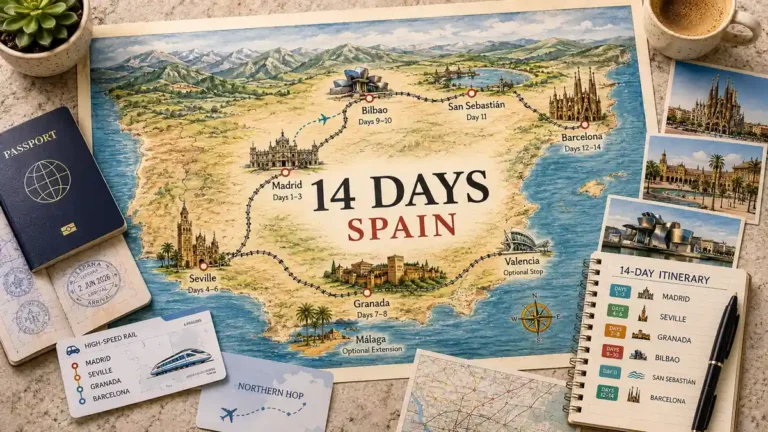
You need about one week minimum for Spain, and 10 to 14 days for a fuller trip. One week suits a single region-pair; 10 days adds a third area or a slower pace; two weeks lets you combine mainland regions with an island or northern detour.
Day count follows region count, not the other way around. A week is enough to do one region-pair justice without rushing, which is why it is the sweet spot for first-timers. Stretch to 10 days and you can fold in a third area or simply slow down. At 14-plus days, an island or a northern leg becomes realistic. For sample routes built around these scenarios, our Spain itinerary guide turns the day ranges into day-by-day plans.
The tradeoff is pace versus breadth. Adding regions without adding days means more transit and less time in each place, which dulls the trip. When time is fixed, cut a region before you cut rest days — a tighter trip that breathes always beats a sprawling one that exhausts.
How to Plan a Spain Trip: Style Before Route
Plan a Spain trip in five ordered steps, from trip style to how you move. The sequence runs style, region-pair, trip length, season, then movement. This order matters because each decision narrows the next, turning an overwhelming country into a clear, manageable plan.
Working through the steps in order keeps choices from fighting each other. Each one closes off options and makes the following decision easier:
- Pick your trip style. Culture, beach, food, or touring — this sets the tone for everything after.
- Choose a region-pair. Match two contrasting regions to your style instead of trying to see the whole country.
- Set the trip length. Let the number of regions and your pace decide how many days you book.
- Fix the season. Align your dates to the regions you chose, since climate varies sharply across Spain.
- Decide how you move. Rail, car, or a flight to the islands — chosen last, once the shape is set.
The common mistake is planning movement first, then forcing regions to fit a route. Reverse it. Decide what kind of trip you want and which two regions deliver it, and the practical logistics fall into place with far less friction.
When to Go to Spain: Match the Season to the Region
The best time to visit Spain is spring and autumn, when weather is warm but crowds thin. Shoulder months balance comfortable temperatures with lower prices and lighter sightseeing lines. Summer suits the coast but bakes the interior, while winter favours cities and the south over the north.
Season should match the regions you picked, because Spain’s climate swings hard between coast, interior, and north. Beach trips reward summer; city and inland trips are far more pleasant in the shoulder seasons; the green north stays mild and walkable when the south is sweltering. For a fuller breakdown by region and trip type, see our guide to the best time to visit Spain. Peak summer brings the best beach weather alongside the highest prices and densest crowds.
Getting Around Spain: Rail First, Car Where Trains Stop
Get around Spain by high-speed rail first, renting a car only where trains do not reach. The AVE network links major cities fast, making rail the default for city-to-city hops. A car wins for rural regions and coastal touring; islands need a flight or ferry to reach.
Match the transport mode to the shape of your trip. Rail is the backbone for anyone hopping between major cities, while a car unlocks villages, wine country, and coastline that trains skip. Islands sit outside the rail map entirely, so they change the plan whenever you add them.
| Mode | Best for | Watch out for |
|---|---|---|
| High-speed rail | Fast travel between major cities | Limited rural and coastal reach |
| Rental car | Rural regions and coastal touring | City parking and motorway tolls |
| Domestic flights | Reaching the islands quickly | Added airport and check-in time |
| Ferries | Island hops and scenic crossings | Slower and weather-dependent |
For a touring-led trip, our Spain road trip guide shows where a car genuinely pays off, while the Spain train itinerary covers the rail-first route between headline cities. If beaches or a self-contained escape are the draw, our guide to Spain’s islands explains how the Balearics and Canaries reshape both your transport and your timing. The tradeoff is flexibility versus simplicity — a car frees you from timetables but ties you to parking and tolls.
Is Spain Expensive to Travel?
Spain costs less than most of Western Europe, sitting among the better-value major destinations. Your daily spend swings most on city choice, accommodation style, and how much you move. Madrid and Barcelona run higher, while smaller cities and the south stretch a budget noticeably further.
The headline takeaway is that Spain offers strong value for its quality, so the real question is how you spend, not how much. Most travelers spend less here than in France, Italy, or the UK. The biggest levers are where you base, how you sleep, and how often you move between regions. For a full breakdown of daily budgets and where the money actually goes, our Spain trip cost guide handles the numbers. The major cities deliver the headline sights at the highest prices, so balancing them with smaller bases keeps a trip affordable.
Entry Rules and Staying Safe in Spain
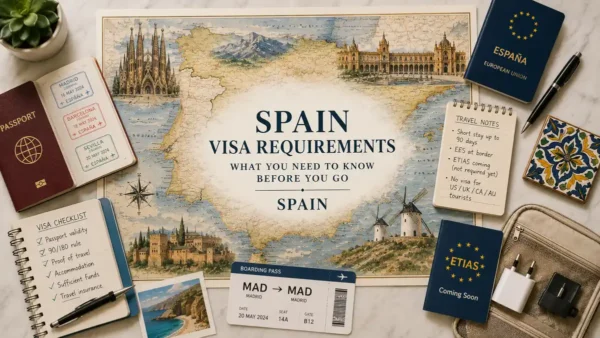
Spain is part of the Schengen Area and is broadly safe with normal precautions. Most visitors enter without a visa for short stays. Visa-exempt visitors should confirm whether the ETIAS travel authorisation applies to their trip before booking. Petty theft in tourist hotspots is the main concern, not violent crime.
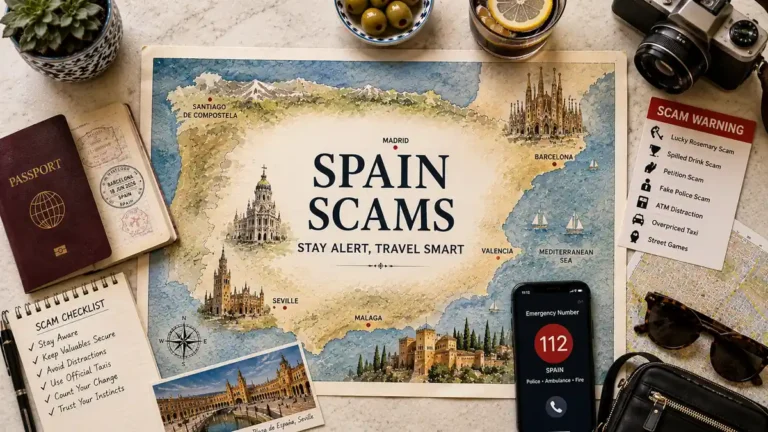
Entry rules depend on your nationality and are changing, so confirm the current requirements before you book. Our Spain visa requirements guide covers visa-free stays and the ETIAS step in detail. Short stays are capped at 90 days in any rolling 180-day period across the Schengen area as a whole, not per country. On the ground, Spain is a low-risk destination where the realistic worry is pickpocketing in crowded transit hubs and tourist zones — our Spain safety guide lays out sensible precautions by region and situation. Keep valuables secure in busy areas like Barcelona’s Las Ramblas; ordinary big-city caution is enough for almost every traveler.
Getting Trip-Ready: Connectivity, Packing, and Insurance
Finish trip planning by sorting connectivity, packing, and travel cover before you fly. A local SIM or eSIM keeps you online, packing should match Spain’s wide regional and seasonal range, and insurance protects against the unexpected. These small steps prevent most avoidable problems on the ground.
Staying connected is the easiest win — compare a physical Spain SIM card against the convenience of the best eSIM for Spain and pick whichever suits how you travel. Packing should track the regions and season you chose, since the green north and southern coast demand very different bags; our Spain packing list breaks it down. Round it off with Spain travel insurance for medical and trip-disruption cover, and skim our broader Spain travel tips for the small habits that smooth out a first visit. Sorting these now costs minutes and saves far more headaches later.
Spain Planning at a Glance
- Build the trip on two contrasting regions, such as Andalusia with Madrid or Barcelona with the coast, instead of sweeping the whole country.
- About one week does a single region-pair justice; 10 to 14 days adds a third area, a slower pace, or an island or northern detour.
- Spring and autumn bring warm weather with thinner crowds, while summer suits the coast and bakes the interior.
- High-speed rail is the default between major cities, a car pays off for rural and coastal touring, and the islands need a flight or ferry.
- Spain costs less than most of Western Europe, and where you base, how you sleep and how often you move shape the budget more than anything else.
Behind This Guide
This is a planning guide to Spain as a whole country: it frames the regions, trip length, season, transport, cost and entry decisions and routes each one to its own guide. It is not a city guide to Madrid or Barcelona, and not a day-by-day Spain itinerary.
Alex Perrut, working in tourism since 2015, checked this country planner for the Tripstou editorial team. Produced with AI assistance; our editorial process explains how.
Last factual review: June 20, 2026.
Official sources consulted: European Union, Travel Europe, ETIAS.
More Ways Into Spain
Guides the sections above do not route to, each for a different kind of Spain trip:
- Things to Do in Spain — the experiences to build a region-pair around.
- Hidden Gems in Spain — underrated places beyond the usual list.
- Living in Spain as a Digital Nomad — whether Spain fits your remote-work life.
- VAT Refund in Spain: How Tax-Free Shopping Works — how visitors reclaim tax on purchases made in Spain.
Did this guide save you time or money? Tripstou is independent and reader-funded — if you'd like to give something back, you can support the site with a crypto contribution of any size.