Paros is booked, and now the questions change. Three things on this island behave differently from the mainland and from the Greece-wide advice you may already have read: the wind, the water and the way people pay. The wind matters most. In high summer the meltemi decides which beach works on a given day, and heading to the wrong coast is the commonest first-timer mistake on Paros. This page covers how to read the wind, whether to drink the tap water, when to carry cash, what to book early and what to pack for sun and wind at once. National conventions (tipping, meal times, church dress) live on the Greece-wide tips page. What follows is only what is specific to Paros.
Quick Answer
The meltemi decides your Paros beach: a north wind means the sheltered south and south-east coast. Tap water is officially safe, though hard; cards work in towns, while villages and kiosks still want cash. In July and August, book the ferry and rental car first, pack an evening layer and pay the bus by card.
Trust Layer
Tripstou planning guide for travelers resolving one travel decision. Covers the main variable, traveler context, and practical tradeoffs.
Produced with AI assistance and reviewed by Alex Perrut, working in tourism since 2015, for the Tripstou editorial team. See our editorial process for details.
Last factual review: September 27, 2026.
Official sources consulted: Visit Greece, Greek Ministry of Tourism, DEYA Parou water utility, KTEL Paros bus operator.
Key Takeaways
- On a meltemi day, head for the sheltered south and south-east coast, such as Aliki, Faragas or Drios, and save north-facing Kolymbithres for calm days.
- The meltemi usually blows from late June through August, sometimes into September, in spells of a few days, and afternoons tend to be windier.
- The Paros water utility says tap water is safe to drink; many visitors still prefer filtered water because the supply is hard and partly desalinated.
- Cards work widely in Parikia and Naoussa, village tavernas and kiosks lean on cash, and the KTEL Paros bus accepts bank cards only.
- In July and August, book the ferry and rental car first, and leave slack before a flight in case wind disrupts sailings.
- Pack a light windproof layer and water shoes alongside sun protection, because meltemi evenings feel cooler and several coves have rocky edges.
Table of Contents
How windy is Paros, and when does the meltemi blow?
Paros is genuinely windy in high summer because of the meltemi, a dry north wind across the Aegean. It usually sets in from late June, peaks through August and can run into September. It tends to blow for a few days at a stretch, then calms, so windy and still days alternate through the season.
Paros is one of the windier islands in the Cyclades, and the meltemi shapes an ordinary summer day here more than most visitors expect. It changes which beach feels pleasant, how a boat trip goes and how warm a harbour dinner feels. It is a planning variable. Treat it like the weather forecast you check before choosing a day’s plan.
The wind touches three decisions on the island:
- Beach choice: a north wind blows straight onto the north-facing beaches and leaves the south of the island in its lee.
- Boat days: excursions and fast crossings feel rougher on windy days, so calm spells are the better slot for them.
- Evenings: a warm afternoon can turn into a breezy, cooler evening once the sun drops.
The meltemi has an upside too. For windsurfers, the summer wind is the reason to come.
A windy week on Paros is not a lost week: it reorders which coast you use, and the south of the island stays usable through most blows.
Which Paros beaches are sheltered from the meltemi?
The south and south-east coast is sheltered on a meltemi day, and the north coast is exposed. A north wind leaves Aliki, Faragas, Drios, Piso Livadi and Logaras in the lee of the island. North-facing Kolymbithres and Santa Maria take the wind head-on, so they suit calm days best.
The logic is geographic. The meltemi comes from the north, so any beach facing north receives it directly, and any beach facing south or south-east has the bulk of the island between it and the wind. Direction of the shoreline decides the day, whatever the beach looks like in photos.
Kolymbithres is the beach most often misplaced. It is frequently described as a sheltered spot because its granite boulders form small coves inside the Naoussa bay. The bay faces north. On a meltemi day the wind reaches it, and the boulders split the sand into pockets without blocking the air moving over them.
| Coast | Faces | On a meltemi day | On a calm day |
|---|---|---|---|
| North coast (Kolymbithres, Santa Maria) | North, straight into the meltemi | Exposed: blowing sand and choppy water, save it | At its best, with still, clear water |
| South coast (Aliki, Faragas) | South, with the island behind it | Sheltered: the first coast to try | Still a good choice, nothing to avoid |
| South-east coast (Drios, Piso Livadi, Logaras) | South-east, in the island’s lee | Sheltered: a reliable plan B for afternoons | Good for an unhurried day on that side |
The calm-day list and the windy-day list are near mirror images, so the north beaches belong in whichever still days your stay offers. Keep them as the flexible slot. Book nothing around them.
How to Read the Wind Before Picking a Beach
Read direction first: a north wind means a south or south-east beach that day. Check the forecast in the morning for direction as well as strength, because the afternoon usually blows harder than the morning. Put exposed plans early, keep a sheltered plan B beach in mind, and move boat days to calm windows.
Four habits cover most summer days on Paros:
- Direction before speed: look at where the wind comes from, then at how hard it blows.
- Mornings for exposed plans: the wind tends to build through the day, so a north-coast swim works better early.
- A plan B beach: pick one sheltered south or south-east option before you leave, so a windy arrival costs you a short drive instead of the afternoon.
- Boat days on calm windows: excursions and fast boats are more comfortable when the meltemi pauses, so keep those days movable.
Evenings follow the same pattern. A breezy afternoon usually means a cooler evening by the water.
Day plans work best when the beach slot is placed around the wind. The two-day Paros itinerary and the three-day Paros itinerary both leave the beach choice flexible for that reason.
Direction beats speed on Paros: a strong north wind still leaves the south coast pleasant, while a light southerly flips the whole map.
Can you drink the tap water in Paros?
The island water utility, DEYA Parou, says Paros tap water is safe to drink. It states the water meets EU limits and is tested regularly. The water is hard and partly desalinated, so many visitors prefer filtered or bottled water for the taste. The choice is about flavour alone.
Paros draws part of its supply from desalination plants at Naoussa and Parikia. That, together with the hardness of the water, explains the taste many visitors notice. It does not change the utility’s position.
Public filtered-water stations make the refill habit easy. Carry a bottle and top it up as you pass one. Hotel and apartment taps serve the same purpose.
Water is a limited resource on a Cycladic island in summer. Short showers help. So does refilling one bottle over buying a new one each time.
Plumbing follows the national convention: used toilet paper goes in the bin, as explained in these Greece travel tips.
The filtered-water stations turn the taste question into a refill habit: one bottle carried all day replaces the plastic most visitors buy by the pack.
Do you need cash in Paros, or can you pay by card?
Carry both: cards work in the towns, cash still matters in the villages, and the bus is card-only. Parikia and Naoussa take cards widely. Small village tavernas, kiosks and stalls lean on cash. The KTEL Paros bus takes bank cards only, so the familiar advice to keep coins for the bus is wrong here.
Cash still earns its place in a few situations:
- Small family tavernas in the inland villages.
- Kiosks for water, snacks and small purchases.
- Market stalls and roadside produce sellers.
- Small beach canteens away from the main resorts.
Withdraw in town. Do it before heading inland for the day, and before a peak-season weekend, when every visitor on the island is using the same machines in Parikia and Naoussa.
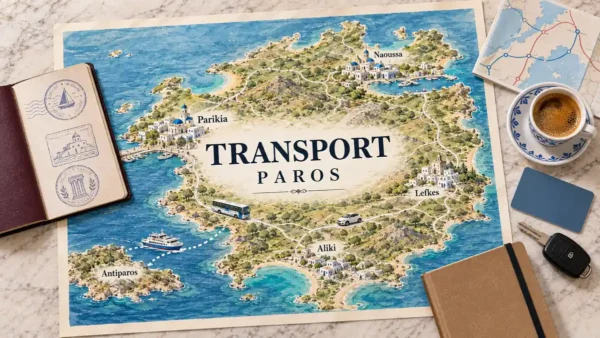
The bus is the exception to the old island rule. Fares on the KTEL Paros network are paid by bank card, so a contactless card or phone is what you need at the door. Routes and connections are covered in the guide to getting around Paros, and every price sits in the breakdown of what a Paros trip costs.
Tipping on Paros follows the same conventions as the rest of the country, explained in the guide to tipping in Greece.
The bus flips the usual Greek island logic: on Paros the card is for the ride, and the cash is for the village lunch at the end of it.
What should you book in advance for Paros?
In July and August, the ferry and the rental car come first, then dinner on the Naoussa harbour. Ferry seats and rental cars are under the most pressure in peak season, so book both ahead. A harbour table is optional. On a windy day, leave a buffer before any flight home.
Book in this order when you travel in high summer:
- Ferry: your sailing fixes your arrival and departure days, so it anchors everything else.
- Rental car: book ahead in July and August, as the island fleet is finite and peak demand arrives all at once.
- Naoussa harbour dinner: reserve if a waterfront table matters to you; the harbour is at its busiest in the evening.
A strong meltemi can disrupt sailings. If your trip ends with a flight from Athens or another island, keep slack between the ferry and the plane on meltemi days. Ferry, rental and airport logistics are set out in the guide to Paros ferry, bus and rental options.
Your base changes how much of this you feel. Staying in Naoussa puts you in the middle of the evening demand, while quieter bases ease it; the guide to where to stay in Paros weighs that tradeoff.
The rental car is the booking people leave too late, because the bus looks sufficient on a map; on a windy day the car is what lets you switch coasts at short notice.
What to Pack for Paros
Paros needs sun protection and a windproof layer in the same bag. Pack high-factor sunscreen and a hat for exposed beaches, a light layer for windy evenings, water shoes for rocky coves, a refillable bottle for the filtered-water stations, and motion-sickness tablets if boat days are on the plan.
Each item earns its place for a reason specific to the island:
- High-factor sunscreen and a hat: shade is scarce on many beaches, and a breeze hides how strong the sun is.
- A light windproof layer: the meltemi makes evenings by the water feel cooler than the afternoon.
- Water shoes: several coves have rocky or pebbly edges, which are easier on the feet with them.
- A refillable bottle: the public filtered-water stations make refilling simple.
- Motion-sickness tablets: fast boats feel rougher on windy days.
Leave the rest to a standard summer list. Connectivity is the other thing to arrange before you land; the guide to the best eSIM for Greece compares the options.
The item first-timers most often leave out is the evening layer, because the forecast temperature looks warm; the meltemi makes a harbour dinner feel cooler than the number suggests.
What Catches First-Timers Out on Paros
First-timers are caught out by Parikia’s worth, Naoussa’s night crowds and the winter shutdown. Parikia is a real town with an old quarter, not just a port to leave. Naoussa’s harbour lanes fill after dark in July and August. From roughly November to April most of the island closes, so a winter visit needs a different plan.
Parikia deserves an evening of its own. Many arrivals walk straight from the ferry to a taxi or a car and miss the lanes behind the waterfront.
Naoussa is busiest late. In peak season its harbour lanes are crowded well into the night, which suits some visitors and not others. Plan accordingly.
The wider picture of the island, its towns and villages sits in the Paros travel guide.
Is Paros open in winter?
Paros is only partly open in winter. Most hotels, beach services and many restaurants close from roughly November to April, and the island becomes far quieter. The short car ferry from Pounda to Antiparos runs all year, but check sailings to the mainland before you book. A winter trip suits travelers after quiet villages and walking, and it needs accommodation and transport confirmed before arrival.
Frequently Asked Questions
Do you need water shoes in Paros?
Water shoes are worth packing for Paros, though not essential. Several coves around the island have rocky or pebbly edges. Sandy stretches are comfortable barefoot, but shoes make rocky entries and pebble shorelines easier, especially if the wind sends you to an unfamiliar cove.
Does it get cold at night in Paros in summer?
Summer nights on Paros are not cold, but they can feel cool when the meltemi blows. Waterfront spots in Naoussa and Parikia catch the breeze after sunset, so a warm afternoon turns into a fresh evening. A light jacket or long-sleeved layer is enough; carry it in a day bag if dinner is by the harbour.
Can you flush toilet paper in Paros?
No. On Paros, as across most of Greece, used toilet paper goes in the small bin beside the toilet rather than down the drain. Hotels, apartments and tavernas follow the same convention, so the habit applies wherever you stay. The reasons and the rest of the national habits are explained in our Greece travel tips.
Do you tip in Paros?
Tipping on Paros follows the same conventions as the rest of Greece: appreciated for good service, never compulsory, and usually modest. Nothing about the island changes the habit, whether you eat at a Naoussa harbour table or a village taverna. For the customary amounts in restaurants, cafés and taxis, see our guide to tipping in Greece.
Where can you refill a water bottle on Paros?
You can refill at the public filtered-water stations around the island, or from the tap in your hotel or apartment. The island utility, DEYA Parou, states that Paros tap water is safe to drink, so the choice between the two comes down to taste. Carrying one bottle all day also eases summer pressure on a partly desalinated supply.
Do shops close in the afternoon on Paros?
Some do, mainly in the villages. Afternoon closures are a national habit, not a Paros rule, so small village shops and services may shut for a few hours after lunch and reopen in the evening. Plan village errands for the morning, and check the national pattern in our Greece travel tips.
Related Guides
- Paros travel guide: the island overview, from towns and villages to how the island fits together.
- Getting around Paros: the bus, rental, ferry and airport logistics behind the habits on this page.
- What a Paros trip costs: every price this page leaves out, from the bus to meals.
- Where to stay in Paros: how your base interacts with the wind, the bus and the evening crowds.
- Two-day Paros itinerary: a short stay planned with the beach slot kept flexible for the wind.
- Three-day Paros itinerary: a longer plan with room for a boat day on a calm window.
- Greece travel tips: the national customs, tipping and everyday conventions that apply on Paros too.
- Best eSIM for Greece: how to stay connected on the island without roaming charges.
Did this guide save you time or money? Tripstou is independent and reader-funded — if you'd like to give something back, you can support the site with a crypto contribution of any size.