Getting around Paros comes down to one decision: whether the KTEL bus covers your days or whether some of them need a rental. The island has two bus hubs — Parikia and Naoussa — and its beaches run along every coast, so the answer depends on where you sleep and which shores you want to reach. A traveler based in either hub can do most things by bus and on foot. A traveler in a hill village or on the east coast faces a different calculation.
This guide also handles the first transport job of every trip: what to do when the ferry lands at Parikia. It covers the bus, rental cars, scooters and ATVs, taxis and the short crossing to Antiparos. Then it shows where the bus-first verdict stops working, and what to do instead when it does.
Quick Answer
Most visitors get around Paros on the KTEL bus from Parikia or Naoussa, paying by bank card. Renting a car or scooter for a day or two pays off for east-coast or village bases and remote beaches. Taxis are few, so book one ahead for late ferries and nights out.
Trust Layer
Tripstou transport guide for travelers deciding how to make a specific journey. Covers realistic options, tradeoffs by traveler type and luggage, passes, and arrival cases.
Produced with AI assistance and reviewed by Alex Perrut, working in tourism since 2015, for the Tripstou editorial team. See our editorial process for details.
Last factual review: September 27, 2026.
Official sources consulted: Visit Greece, Greek Ministry of Tourism, KTEL Paros, Antiparos Ferries.
Key Takeaways
- The KTEL bus covers most Paros stays from Parikia or Naoussa, and fares are paid by bank card only, never cash.
- An east-coast or hill-village base makes a rental worth it, while Parikia and Naoussa bases need one or two rental days at most.
- The €12 full-island day ticket pays off on multi-leg days that cross the island; a single-beach day near your base is cheaper on singles.
- Buy bus tickets at the Parikia or Naoussa station, a shop or a kiosk before boarding, because tickets bought on board cost more.
- Paros taxis are few, so pre-book a taxi or transfer for late ferries and for nights out away from the Naoussa bus line.
- Leave the car behind for an evening in Antiparos town, and take it across from Pounda only for the cave or far beaches.
Table of Contents
How Do You Get Around Paros?
Most visitors get around Paros by KTEL bus from Parikia or Naoussa. The realistic alternatives are a rental car, scooter or ATV for remote coasts and villages, a taxi for late or luggage-heavy trips, and seasonal local boats to a few beaches. The bus is the default because both hubs reach every village.
Each mode suits a different kind of day. Pick by where you are going and what you are carrying:
- KTEL bus: suits travelers based in Parikia or Naoussa who are happy to plan around a timetable. Trade-off: outside the Naoussa line the last buses leave early, and the most remote beaches sit off the routes.
- Rental car: suits families, groups and anyone staying inland or on the east coast. Trade-off: parking in Parikia and Naoussa gets tight in high season.
- Scooter or ATV: suits solo travelers and couples doing beach days. Trade-off: you ride exposed to sun and wind, and you need the right licence category.
- Taxi: suits late ferries, heavy bags and nights out away from the bus line. Trade-off: the fleet is small, so you either wait or book ahead.
- Local boats: suit beach days across the bays from Parikia and Naoussa. Trade-off: they are seasonal and stop when the wind picks up.
| Mode | Best for | Main trade-off | Relative cost |
|---|---|---|---|
| KTEL bus | Parikia or Naoussa bases, village day trips | Early last buses away from the Naoussa line | Cheapest way to cover the island |
| Rental car | Families, luggage, east-coast and village bases | Hard parking in the two main towns | Highest daily outlay of the rentals |
| Scooter or ATV | Couples and solo riders chasing beaches | Sun, wind and licence category to check | A fraction of a car’s price |
| Taxi | Late ferries, heavy bags, nights out | Small fleet, queues at peak moments | Adds up fast with daily use |
| Local boat | Beach hops across the Parikia and Naoussa bays | Seasonal and cancelled in strong wind | Modest, for one beach per trip |
Cost ranks in the same order as the table. The bus is the cheapest way to move, a scooter costs a fraction of a car, and taxis add up quickly if they become your daily transport. The Paros trip cost guide turns those choices into a full daily budget.
Most trips mix two modes. A bus-and-walk base with one rental day is the most common pattern, and it works. For the island’s layout and what each coast offers, start with the Paros travel guide.
Do You Need a Car in Paros?
No car is needed in Paros if you stay in Parikia or Naoussa. Both hubs have bus links to the villages and main beaches, and their centres are walkable. Rent for some days instead if you are based on the east coast or in the hill villages, or if remote beaches are the point of the trip.
Your base decides most of the answer:
- Parikia: no car. The bus station is next to the port, routes fan out across the island, and the old town is best on foot. One rental day covers the south and east if you want them.
- Naoussa: no car for most stays. The line to Parikia runs late in season, and boats cross the bay to the northern beaches. Parking in town is the hard part.
- Aliki and the south: a car for part of the stay. Buses reach Aliki and Pounda in season, but the beaches along this coast are spread out and evenings end early.
- East coast and hill villages: a rental for most of the stay. Buses serve Lefkes and the Golden Beach and Drios area, yet a car is what makes dinner in another village or a late swim practical.
Traveler type moves the answer at the margins. First-timers and couples in a hub do well on the bus and one rental day. Beach-hoppers who want a different cove every day should rent a scooter or car for one or two days and batch the remote beaches together. Families outside the hubs usually find a car worth it for the whole stay, because luggage, heat and small children make bus changes slow.
A car rented for the whole stay in Naoussa spends much of its time looking for a parking space. Short rentals suit hub-based travelers better: you reach the remote beaches without paying to park a car you drive twice. If you have not booked yet, where to stay in Paros compares the bases, and the choice there settles most of the transport question.
The KTEL Bus Covers the Whole Island From Parikia and Naoussa
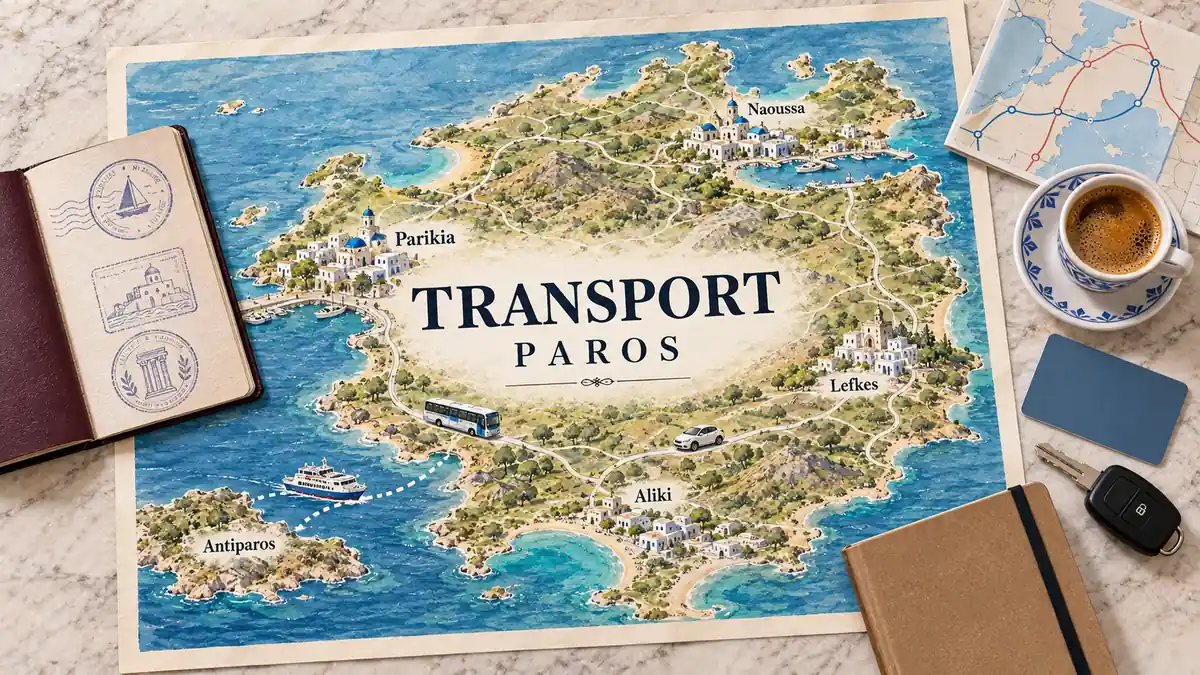
KTEL buses link every Paros village year-round from two hubs: Parikia and Naoussa. The Parikia station sits next to the ferry port, and the ride to Naoussa takes about 20 minutes. In season, the Naoussa line runs late into the night, while other routes finish earlier, so check the last bus before planning a dinner out.
The network is simple to read: every route starts at one of the two hubs, and your base decides which lines you ride most.
Which Routes Run From Parikia and Naoussa
Four corridors carry most visitor journeys. Frequencies rise in summer and thin out in the shoulder months:
- Parikia–Naoussa: the busiest line, regular through the day and running late into the night in season.
- Parikia–Lefkes: several buses a day into the hill villages, with Lefkes as the main inland stop.
- Parikia–Aliki and Pounda: the south-west coast, regular in season. Pounda is the stop for the Antiparos ferry.
- Golden Beach and Drios: the south-east beach coast, regular in season.
Timetables change with the season. Read the one posted at the Parikia or Naoussa station for your dates, and note the last return before you set out.
Is the €12 Paros Bus Day Ticket Worth It?
The €12 full-island day ticket is worth it when you ride more than a few legs in one day. Single fares start from about €2 for short hops and rise with distance, so a day that crosses the island reaches the break-even point quickly.
A typical case is a two-hub day: Naoussa to Parikia, out to a south-coast beach, back to Parikia and home to Naoussa. That is four rides, and the pass covers them all. A day spent on one beach near your base is the opposite case. Buy singles.
Buy the pass on mornings when you plan to leave your base twice, and skip it on beach days that start and end at one stop.
How to Pay and Where to Buy Tickets
Paros buses take bank cards only, and cash is not accepted on board. Tickets are sold at the Parikia and Naoussa stations and at selected shops, mini-markets and kiosks. Buying on board is possible but costs more, so pick up tickets before you reach the stop.
The one mistake that strands visitors is arriving at a stop with cash and no card. Keep a bank card on you for every bus day, including the first ride from the port.
Car, Scooter or ATV: Which Rental Suits Your Days?
Rent a car for families, luggage and midsummer heat, and a scooter for solo or couple beach days. An ATV suits only experienced riders heading down gravel tracks, and it is slower and more exposed than either. Most hub-based travelers only need a rental for one or two days.
Each rental answers a different kind of day:
- Car: suits families, groups, luggage and anyone based outside the hubs. Trade-off: the highest cost of the three, and parking is scarce in Parikia and Naoussa in high season.
- Scooter: suits one or two riders sticking to paved roads between beaches. Trade-off: no shade, little luggage space and hard work in strong wind.
- ATV: suits confident riders who want the dirt tracks down to quieter coves. Trade-off: slow on the main roads, exposed, and tiring over a full day.
The meltemi wind that blows across the Cyclades in summer makes scooters hard work on open coastal roads. That is the strongest case for a car in July and August, even for couples.
Rent for the days that need it. Those are the days built around the east coast, Lefkes and the remote beaches; the 2-day Paros itinerary and the 3-day Paros itinerary show where they fall in a short stay. A whole-stay rental makes sense mainly outside the hubs.
EU licences are accepted. Non-EU drivers should carry an International Driving Permit alongside their national licence. Before you book a scooter or ATV, check with the rental firm which licence category it needs.
Parking tightens in Naoussa and Parikia in high season, especially in the evening. Leave the car at the edge of town and walk in.
Taxis in Paros Are Scarce, So Book Ahead
Paros has a small taxi fleet, so queues form at ferry arrivals and late at night. Book by phone or through your hotel whenever timing matters. In Greece, Uber runs only as Uber Taxi, which books the same licensed taxis; there is no UberX, so the app adds no cars.
A taxi is the right call in a handful of situations:
- A late ferry, when the buses on your line have finished.
- Heavy luggage between the port and a base off the bus routes.
- A group of three or four, where one car beats several bus tickets and a long wait.
- A night out on a line with no late bus.
There are three ways to get one. Use the rank at the port, ask your hotel to book, or arrange a pre-booked transfer before you travel. The rank works for daytime arrivals. For anything after dark, book.
Paros taxis are hardest to find at the two moments most visitors want one: when a large ferry unloads at Parikia and when the bars close. Book both of those rides in advance and the scarcity stops mattering.
How Do You Get From Paros Port to Naoussa and Other Bases?
The bus station and taxi rank sit next to the ferry port in Parikia. Parikia bases are a walk from the quay, and Naoussa is about 20 minutes by bus. If your ferry lands late, pre-book a transfer or taxi, because the rank empties quickly after a large arrival.
The best option depends on where you are staying:
| Base | Best option | Fallback |
|---|---|---|
| Parikia | Walk from the quay into town | Taxi from the port rank for heavy bags |
| Naoussa | Bus from the station beside the port | Pre-booked transfer for late or crowded arrivals |
| Aliki and the south | Bus from Parikia station in season | Taxi or transfer when bags are heavy |
| East coast and villages | Pre-booked transfer or rental handed over at port | Bus towards Lefkes or the south-east coast |
Parikia is the island’s commercial port; Naoussa has no ferry port, so every sea arrival starts in Parikia. For routes and connections to other islands, see the Greek island hopping guide.
Arriving with a rental already booked saves the most time. Ask the firm whether it can hand over the car at the port. If it can, a base on the east coast is no harder to reach than Naoussa.
Flying in works differently. There is no direct bus from the airport to Naoussa, and the Paros airport transport guide covers every option from the terminal.
Train and bus tickets
Compare routes, schedules and prices across rail and bus operators in one search, with mobile tickets on your phone.
New to Omio? Code NEW10 takes 10% off your first booking — or APPNEW10 if you book inside the Omio app. Both apply to bookings up to €80.
Search routes and compare prices on Omio →
Tripstou may earn a commission if you book through this link, at no extra cost to you.
How to Get to Antiparos From Paros
Cross to Antiparos from Pounda on the car and passenger ferry, a ride of about 7 minutes. It runs daily all year. Reach Pounda by bus from Parikia, regular in season, or drive there in a rental, and decide before you leave whether the car comes with you.
Going across on foot suits most day trips. The ferry lands in Antiparos town, which is compact and easy to walk, with its harbour, lanes and cafés close together.
Taking the car across suits a fuller day. The cave and the southern beaches of Antiparos sit well outside town, and a car turns them into an easy loop.
Leave the car in Paros for an evening in Antiparos town, and take it only if the cave or the far beaches are the plan. Pounda is off the late Naoussa line, so check the last bus back to Parikia or book a taxi for the return.
When the Verdict Flips: Late Nights, August, No Licence and Families
The bus-first verdict flips for late nights, August, travelers without a licence, and families. Late nights matter off the Naoussa line, where buses finish earlier, and August stretches taxis, rentals and buses at once. Each case has a fix, and most come down to booking a taxi or a rental earlier than feels necessary.
Match your situation to its fix:
- Late nights away from the Naoussa line: pre-book a taxi for the ride home, or stay in Naoussa or Parikia on the nights you plan to go out.
- August: reserve your rental well ahead, expect full buses at beach times, and book every late taxi.
- No suitable licence: combine the bus with taxis for the hard legs, and base yourself in a hub so most days stay on the network.
- Families with small children: take a car, not a scooter, and base yourself where the car can park.
- Heavy luggage from the port: walk only if you stay in Parikia; otherwise pre-book a transfer or arrange the rental handover at the quay.
August is the case that catches most people. Buses, taxis and rentals all run short in the same weeks, so the fallback you planned on may be gone too. For advice beyond transport, from money to beach etiquette, see the Paros travel tips.
Frequently Asked Questions
Do Paros buses run late at night?
Only on the Parikia–Naoussa line, which runs late into the night in season. Routes to Lefkes, Pounda, Aliki and the south-east coast finish earlier, so a dinner or night out in those areas needs a pre-booked taxi home. Timetables change with the season, so check the last bus posted for your dates.
Can you pay cash on Paros buses?
No. Paros buses take bank cards only, and drivers do not accept cash. Keep a card on you for every bus day, including the first ride from the port. Buying from the Parikia or Naoussa station, a shop or a kiosk before boarding also saves money, because tickets bought on board cost more.
Is there Uber in Paros?
Only as Uber Taxi. In Greece the app books licensed taxi drivers and offers no UberX, so even where it works on Paros it draws on the same small fleet as the port rank. For late ferries and nights out, a taxi booked through your hotel or a pre-booked transfer is the surer option.
Do you need an International Driving Permit to rent a scooter in Paros?
EU licences are accepted on their own. Riders with a licence from outside the EU should carry an International Driving Permit alongside it. Before booking, ask the rental firm which licence category its scooters and ATVs require, and check that your licence includes it. Sort this before arrival: a missing category means a bus-and-taxi trip.
Are there water taxis to Paros beaches?
Yes, in season. Small boats cross from Parikia to beaches such as Marchello and Krios, and from Naoussa to Kolymbithres, Monastiri and Lageri. They run only in the warmer months and stop when the wind picks up, so treat them as a beach-day bonus, not transport you depend on, and keep a bus or taxi fallback.
Do Paros buses run outside the summer season?
Yes. KTEL links every Paros village with Parikia and Naoussa all year, so the network still works in spring, autumn and winter. Frequencies thin out outside the main season, so fewer buses serve each route. Check the timetable posted at the Parikia or Naoussa station for your dates, and plan each day around the last return bus.
Related Guides
- Paros travel guide — the island’s layout, coasts and highlights in one place.
- Where to stay in Paros — the base you choose decides whether you need a rental.
- Paros airport transport — every option from the terminal if you arrive by air.
- Greek island hopping guide — routes and connections from Parikia to other islands.
- Paros trip cost guide — how bus, rental and taxi choices shape the daily budget.
- 2 days in Paros — a short plan showing which day a rental earns its cost.
- 3 days in Paros — a longer route that adds the east coast and villages.
- Paros travel tips — practical advice beyond getting around the island.
Did this guide save you time or money? Tripstou is independent and reader-funded — if you'd like to give something back, you can support the site with a crypto contribution of any size.