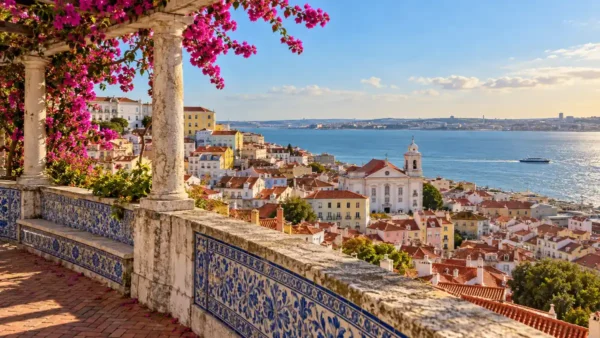
You have the budget. The question is which Lisbon address actually converts it into a better trip. Lisbon complicates that decision in a way most European capitals do not, because the city is built on hills and the quarters that photograph best are the ones a car cannot reach. A high-end room at the top of a stepped lane is still a room at the top of a stepped lane. Luggage, late dinners, early pickups and tired evenings all get decided by geography before anyone looks at the linens. This guide ranks Lisbon’s areas for a high-end stay and names one clear winner. It covers what each area feels like, what it costs you in effort, and who should book it — including the two famous quarters most luxury travelers should skip, and the narrow case where booking one of them is still the right call.
Quick Answer
Avenida da Liberdade is Lisbon’s best luxury base: flat, grand, and reachable by car at every door. The trade-off is effort — the city’s most atmospheric quarters charge you in hills, steps, and lanes no taxi can enter. Chiado is the strongest alternative for travelers who want the historic centre on foot.
Trust Layer
Tripstou stay guide for travelers choosing where to base. Covers area atmosphere, budget, convenience, noise, and traveler fit.
Produced with AI assistance and reviewed by Alex Perrut, working in tourism since 2015, for the Tripstou editorial team. See our editorial process for details.
Last factual review: September 2, 2026.
Official sources consulted: Visit Portugal, Turismo de Portugal.
Key Takeaways
- Book Avenida da Liberdade first: it is the one Lisbon address where the hotel choice never negotiates with the terrain.
- In Lisbon a luxury budget mostly buys access — a flat approach, a reachable door, an easy walk home.
- Chiado is the pick if you want the historic centre underfoot; the avenue is the pick if stairs matter.
- Lapa, Estrela and Santos buy silence with distance, so plan on riding in and out for dinner.
- Belém suits river-view travelers who value flat mornings more than being inside the centre’s evenings.
- Alfama and Bairro Alto punish a luxury stay with stepped lanes, luggage carries and late street noise.
Table of Contents
A luxury budget in Lisbon buys ease, not just marble
The flat ground is the easiest place to stay in Lisbon with luggage and taxis. Avenida da Liberdade and the Baixa grid below it let a car stop at your door. The famous hill quarters — Alfama, Bairro Alto, the upper reaches of Príncipe Real — often cannot.
In most cities, a luxury budget buys finish: better rooms, better service, better breakfast. In Lisbon it also buys physics. The city’s topography decides whether your suitcase rolls or gets carried, whether a driver can pull up outside or drops you at the mouth of a lane, and whether the walk back from dinner is a stroll or a stair climb. That difference shows up on every day of the trip, not just at check-in.
Four moments expose the choice:
- Arrival. Flat, car-accessible streets mean the door is the drop-off point. Stepped lanes mean the last stretch is on foot with bags.
- Pickups. Airport runs and day-trip drivers can wait outside on a boulevard; in the old quarters they wait somewhere else and you walk to them.
- Dinner geography. Where you sleep sets which restaurants feel spontaneous and which feel like an expedition.
- The late return. Coming home tired uphill at midnight is the part travelers underestimate most.
None of this makes the hill quarters bad — it makes them a different purchase. Some travelers genuinely want the view, the tiles and the church bells more than the smooth arrival, and they should book accordingly. The mistake is paying a top-of-market rate expecting both, then discovering the two are traded against each other in this particular city. If you want the wider set of areas including the mid-range and family options, the all-audiences Lisbon area overview covers the full inventory, and the Lisbon city guide handles broader trip planning around the stay decision.
In Lisbon, the walk from the taxi to your door is the one part of a luxury stay you cannot upgrade after booking.
Avenida da Liberdade is Lisbon’s best luxury base
Avenida da Liberdade is Lisbon’s best luxury base. The boulevard is flat, tree-lined and wide enough for cars to reach every entrance, and it carries the city’s grand-hotel and luxury-retail axis. It sits at the top of the Lisbon market, and it suits travelers who want polish without any climbing.
The avenue runs northwest from Restauradores and Rossio up toward Marquês de Pombal, and it reads as Lisbon’s most formal address. Mosaic pavements, mature trees, international boutiques, embassies and quiet side gardens set the tone. It feels less like the postcard old town and more like a European capital’s dress-up street.
Convenience is the real argument. You walk downhill into Baixa and Rossio over easy, level ground, the old centre opens up from there, and the return is a gentle rise or a short ride if you would prefer. Drivers, transfers and taxis all serve the boulevard directly, which is not true of the historic quarters.
That top-of-market position is not only about the rooms. It is about the address and the access that comes with it.
The anchors are the obvious ones. Four Seasons Hotel Ritz Lisbon sits at the top of the avenue axis and defines the city’s grand-hotel end. Sofitel Lisbon Liberdade stands directly on the boulevard itself, mid-avenue and street-level. Torel Palace is the variant just up the hill above the avenue, for travelers who want the view and accept the steps to reach it. This page picks the street; if you want the property shortlist, the guide to Lisbon’s luxury hotels does the choosing.
The avenue is also the only base in Lisbon where you can be picky about the hotel without also negotiating with the terrain. That widens your options instead of narrowing them.
Best for: grand-hotel seekers and serious shoppers who want a flat, chauffeur-friendly base.
Hotels and places to stay
Compare hotels, apartments and stays for your dates in one search.
Search hotels and stays on hotels.com →
Tripstou may earn a commission if you book through this link, at no extra cost to you.
Chiado is the luxury pick inside the historic centre
Chiado is the luxury pick for travelers who want the historic centre at their door. It sits between Baixa’s flat grid and Bairro Alto, so the whole old city opens on foot from it. The condition is accepting tighter, busier streets than the avenue and more daytime crowd noise.
Chiado is Lisbon’s theatre-and-café quarter: bookshops, old cafés, opera-house formality, and an evening crowd that skews dressed-up. It has genuine elegance, and it earns its reputation as the most sophisticated pocket of the historic centre. It is also busy. Foot traffic passes through it all day, and the streets are narrower and steeper than the boulevard.
What you buy here is walking radius. Baixa’s flat grid lies immediately below, the riverfront is a level walk beyond that, and Bairro Alto starts just above. A base in Chiado means most evenings begin and end on foot, with no ride booked in either direction. That is the one argument the avenue cannot match.
Price positioning is high but sits below the avenue’s ceiling, and Chiado holds a middle character between the boulevard’s grandeur and the old town’s texture. Street-level depth — which blocks are quiet, where the tram noise lands, how Baixa differs from Chiado proper — lives in the full Baixa and Chiado area profile.
Choose Chiado when the number of taxis you take is the metric you care about. Choose the avenue when the number of stairs is.
Best for: walkers who want the historic centre underfoot every evening.
Príncipe Real suits design-led stays — if you accept the hill
Príncipe Real is Lisbon’s design-led quarter, and the hill above Bairro Alto is the price of admission. Gardens, independent shops and restored townhouses give it a residential polish the avenue does not have. Book it for character over grandeur, and plan on riding home uphill at night.
The quarter sits on high ground, built around its garden square, with concept stores, small galleries, courtyard restaurants and a lot of restored nineteenth-century housing. It feels lived-in and unhurried in a way the boulevard never does. Locals are on the street. The polish is real but understated.
Access is honest and mixed. Walking down into Bairro Alto, Chiado and the centre is easy and pleasant; walking back up at the end of the night is work, and there is no way around that on foot. Taxis and rides reach the quarter directly, so the practical answer is to ride home rather than argue with the gradient.
If the climb sounds like a daily irritation instead of a minor one, book the avenue. That is the whole Príncipe Real versus Avenida decision in one line: the avenue for ease and grandeur, Príncipe Real for character and independence. The nightlife quarter immediately below is covered in the Bairro Alto area guide, and it is worth knowing what sits under your window before you book.
On price, Príncipe Real positions above Baixa and below the avenue’s top of market. Memmo Príncipe Real is the anchor, set on the high ground with the quarter’s rooftop outlook over the city.
Best for: design-led travelers who trade a climb for a quarter that feels lived-in.
Lapa, Estrela and Santos are Lisbon’s quiet money
Lapa, Estrela and Santos are the quiet-money answer for an upscale Lisbon stay. This is the residential diplomatic quarter west of the centre: embassies, gardens, tiled façades and almost no tourist traffic. The cost of that calm is distance — you ride in and out for dinner most nights.
The character is discreet wealth. Wide residential streets, garden walls, consulates, a basilica, antique dealers and long river views from the higher terraces. Evenings are genuinely quiet; you hear the neighbourhood rather than the city. Santos, closer to the water, runs a little younger and livelier than Lapa proper, while Estrela sits around its park and feels most residential of all.
The honesty belongs in the logistics. This is not a walk-everywhere base. The centre is a short ride west-to-east, tram and bus links exist, and the pattern for most travelers is to ride in for dinner and ride back afterwards. That is a small daily tax, and for the right person it buys something no central address can: an actual night’s silence.
Price positioning sits high but below the avenue, with the calm — not the location — as what you are paying for. This guide names no anchor property here, because the area’s strength is the streets themselves and the properties in it vary widely in style.
Quiet in Lisbon is bought with distance, never with money — no central quarter in this city is silent at any price.
Best for: quiet-seekers who want to leave the tourist city entirely at night.
Belém wins for river views and flat mornings
Belém is worth staying in when the river is the point of the trip. It sits downriver from the centre, flatter than the historic quarters, with open waterfront air and a residential rhythm after dark. The cost is being away from the centre’s evenings and needing a ride back in.
Belém is a residential riverside district, not a compressed old town. The streets are broad, the light is different, and the water is a constant presence. Mornings are the best part of staying here: flat ground, river air, and a walkable waterfront before the city wakes up. Evenings are calm, sometimes too calm — the restaurant density is a fraction of the centre’s.
Getting in and out is a genuine trade. Flat ground means easy walking and easy arrivals, and rides or transit carry you into the centre when you want it, but you will make that trip most days. Travelers who plan to be out late in the old town every night will feel the commute. Travelers who want to wake up looking at water will not care.
On price, the outer riverside sits below the avenue’s top of market while still delivering high-end stays. Altis Belém is the anchor, sitting directly on the waterfront with the river in front of it.
Staying in Belém changes the shape of the day, not the quality of it: mornings get better and evenings get further away.
Best for: river-view seekers who prefer flat mornings to centre-of-everything nights.
Alfama and Bairro Alto are the postcard traps at this budget
Alfama and Bairro Alto are the two quarters to think twice about for a luxury stay. Alfama’s lanes are steep, stepped and too narrow for a car to reach most doors, which makes arrival with luggage genuinely hard. Bairro Alto adds late street noise on a hill.
Both are wonderful. That is the problem. They are the quarters people picture when they picture Lisbon, and they are also the quarters where a high nightly rate buys the least practical comfort. In Alfama, the approach to a beautiful property may be a stepped lane with no vehicle access, which turns every arrival, departure and late return into a carry. In Bairro Alto, the streets fill with drinkers late into the night and the noise is not incidental — it is the district’s defining feature.
Luxury does exist on the hill: The Lumiares sits in Bairro Alto and is exactly the kind of property that makes travelers assume the trade-off is solved. It is not solved; it is simply accepted by the guests who book it, which is precisely why the trade-off deserves stating.
Book one of these quarters anyway if you pack light, sleep through noise, and value waking up inside the atmosphere above every convenience. That traveler exists and should not be talked out of it. Everyone else should stay flat and visit. For the street-by-street reality, read what Alfama is like to stay in. If you are torn between the centre and the old town, the Baixa-Chiado versus Alfama comparison settles it; if you are torn between the centre and the nightlife hill, use Baixa-Chiado versus Bairro Alto.
Best luxury area by traveler type
Each traveler type has one best Lisbon area, and the ranking starts with Avenida da Liberdade. Grand-hotel travelers book the avenue, walkers book Chiado, design-led travelers take Príncipe Real’s hill, quiet-seekers go west to Lapa, and river-view travelers head downriver to Belém.
Effort here means terrain and transport, not spend — this page states area price only as direction.
| Area | Best for | What it costs you in effort | How central |
|---|---|---|---|
| Avenida da Liberdade | Grand-hotel travelers and serious shoppers | Almost none — flat, cars reach every door | Walk down into Baixa and Rossio |
| Chiado and Baixa | Walkers who want the old centre on foot | Crowds by day, narrower streets, some slopes | The historic centre itself |
| Príncipe Real | Design-led travelers wanting a lived-in quarter | A real climb home unless you ride | Above the centre, walkable downhill |
| Lapa, Estrela and Santos | Quiet-seekers who want residential calm | Rides in and out most evenings | West of the centre, a short ride |
| Belém | River-view seekers who like flat mornings | A daily trip into the centre for dinner | Downriver, connected but clearly outside |
| Parque das Nações | Business travelers preferring modern hotels | Far from the historic city, transit-dependent | Modern riverside, northeast of the centre |
Read the table by the effort column first. In most capitals that column is noise; in Lisbon it is the column that decides whether the base you booked matches the trip you imagined.
Frequently Asked Questions
How far is Lapa from Lisbon city centre?
Lapa sits a short ride west of the historic centre — close on a map, but not a walk you would make in evening shoes. Steady hills and long residential blocks sit in between. Plan on a taxi, ride or tram each way, and treat the walk as an occasional daytime option.
Do Lisbon luxury hotels have pools?
Some do, but far fewer than travelers expect. Many of Lisbon’s high-end properties occupy protected historic buildings on tight urban plots, which leaves no room for a pool of any size. Pools are more common along the modern grand-hotel axis and on the riverside. Confirm it property by property before booking.
Is Avenida da Liberdade too far from the old town?
No. The avenue walks straight down into Baixa and Rossio on level ground, and the historic centre opens up from there. The return is a gentle uphill or a short ride if you would rather not climb it. In practice the old town is closer on foot than the hill quarters are.
Is Parque das Nações worth staying in?
Yes for business travelers and anyone who prefers modern hotels; no for a first high-end leisure trip. Parque das Nações is a planned riverside district northeast of the centre, with newer buildings and easy transit, but staying there means commuting into the historic city you came to see.
When is the busiest time to book a luxury hotel in Lisbon?
Summer is the peak, and the top properties fill earliest then. Demand stays high through the shoulder weeks either side of it, and deep winter is the quietest stretch of the year. If a specific hotel and room type matter to you, book the summer months well ahead.
Related Guides
- Where to stay in Lisbon — the all-audiences area overview across every budget.
- Luxury hotels in Lisbon — the property shortlist once you have picked the area.
- Baixa and Chiado — the full profile of the historic-centre base.
- Alfama — what the old quarter is actually like to stay in.
- Bairro Alto — the nightlife hill, noise and all.
- Baixa-Chiado vs Alfama — centre or old town, settled.
- Baixa-Chiado vs Bairro Alto — centre or nightlife hill, settled.
- Lisbon travel guide — planning context for the rest of the trip.
Did this guide save you time or money? Tripstou is independent and reader-funded — if you'd like to give something back, you can support the site with a crypto contribution of any size.