

Choosing where to sleep is the most personal decision of any trip, but in Europe, it is also a strategic one. Your accommodation choice dictates your daily budget, your travel time, and your overall experience of a city.
This guide explains the core logic of European lodging. We do not list specific hotels; we teach you how to choose the right type of stay in the right location, ensuring your base supports your travel style and itinerary.
At-a-glance: the accommodation decision framework
If you only remember three things about where to stay in Europe, let it be these:
- Location is the budget lever: Centrality is the single biggest cost driver.
- Airbnb is changing: Regulatory changes (EU Regulation 2024/1028) are increasing complexity and reducing availability in major cities.
- The best choice is often a hybrid: A local guesthouse or boutique hotel often provides the best balance of local charm and professional reliability.
Table of Contents
1. Why accommodation logic matters in Europe
In Europe, your lodging is not just a place to sleep; it is a critical component of your itinerary. The density of cities, the age of buildings, and the efficiency of public transport mean a poor choice can cost you hours and significant money.
The goal is to find a base that minimizes friction. This means proximity to transit hubs, easy access to daily necessities, and a location that aligns with your travel pace.
Looking for the best hotel or flight deals?
Plan your trip with ease using the Expedia search tool below. From charming boutique hotels to luxury resorts, this widget helps you compare top options in seconds — flights included!
2. Central vs outskirts: the real trade-offs

The choice between staying central or on the outskirts is a direct trade-off between money and time.
- Central (The Premium): You pay for convenience. Less time spent on transit, more time exploring. Ideal for short trips (under 5 days) or travelers prioritizing efficiency.
- Outskirts (The Value): You save money but spend time. Requires a deep understanding of the local transit system. Ideal for long-term stays (1 week+) or travelers on a strict Europe Travel Budget.
Tip: A location near a major transit hub (e.g., a central train station or metro interchange) on the outskirts is often the best value compromise.
Worried about landing with no signal? Get an Airalo eSIM for your trip — trusted by 20M+ travelers with coverage in 200+ destinations, often cheaper than roaming.
3. Hotel vs Airbnb vs guesthouses (what actually changes)

The landscape of short-term rentals is rapidly changing across Europe, making the choice more complex than simple cost comparison.
Hotels (The Reliable Default)
- Pros: Professional service, consistent quality, legal certainty, daily cleaning, and central locations. Ideal for short stays and first-time visitors.
- Cons: Less space, fewer cooking facilities, and generally higher cost.
Airbnb and Short-Term Rentals (The Strategic Choice)
- Pros: More space, kitchen access, laundry facilities, and often better for groups or families.
- Cons: Check-in/key handover friction, lack of daily service, and increasing regulatory risk. Many cities (like Amsterdam and Barcelona) have strict limits on rental days.
Regulatory Note: Across Europe, short-term rental platforms are increasingly required to share data with local authorities. This has led to stricter enforcement, fewer legal listings, and more sudden cancellations in major cities. As a result, hotels and licensed guesthouses have become the safer, more reliable default for most travelers.
Guesthouses and Local Stays (The Hybrid)
- Pros: Often family-run, excellent local advice, unique charm, and a balance of hotel service with local feel.
- Cons: Less standardized, may require cash payment, and booking is often done through local sites.
4. Booking strategy: when to book and price alerts
Accommodation is often the first thing to book after flights, especially for peak season travel.
- Peak Season (Summer): Book 4–6 months in advance, particularly for popular destinations like the Greek Islands or Dubrovnik.
- Shoulder Season: Book 2–3 months out. You can often find last-minute deals, but the best locations will be gone.
- Price Alerts: Use tools like Google Hotels or Booking.com to set price alerts. Prices often fluctuate, and you can re-book if the rate drops.
5. Cost by location: what really affects your budget
Accommodation costs are not uniform across Europe. They are driven by three main factors:
- The City Premium: Major capitals (London, Paris, Zurich) will always command the highest prices.
- The Eurozone Factor: Countries outside the Eurozone (e.g., Poland, Romania, Ukraine) generally offer significantly lower costs for comparable quality.
- The Seasonality Spike: Prices can double or triple between the low season (January) and the peak season (July/August).
Tip: For a detailed breakdown of daily costs, consult our Europe Travel Budget guide.
6. Transit implications of where you stay
Your proximity to public transport is more important than your proximity to a single attraction.
- Metro Access: In large cities, being within a 5-minute walk of a metro station is non-negotiable.
- Train Station Proximity: If you are moving between cities frequently, staying near the main train station (e.g., Gare du Nord in Paris) saves time and money on taxis.
- Airport Links: For early morning flights, check if your accommodation is on a direct airport train line.
Want to save on train tickets? Search routes and compare prices on Omio — and check for available discounts or referral credit when you book (offers can vary by location/account).
7. Safety and comfort considerations
Safety in Europe is generally high, but situational awareness is key. Your accommodation choice can contribute to your sense of security.
- Lighting and Foot Traffic: Choose well-lit areas with regular foot traffic, especially if you plan to return late at night.
- Secure Entry: Look for hotels or Airbnbs with secure, multi-step entry (e.g., a code for the building door, then a key for the apartment).
- Noise: Older buildings often have poor sound insulation. Check reviews for noise complaints, especially if your room faces a busy street or square.
Tip: For more on staying secure, see our guide on Europe Safety Tips.
8. Neighborhood profiles (framework, not lists)

Every city has three core neighborhood types. Understanding this framework helps you choose without needing a specific list.
- The Historic Core: Highest cost, highest convenience, highest crowds. Best for short, sight-seeing focused trips.
- The Transit Hub: Mid-range cost, high convenience, low charm. Best for travelers moving frequently (e.g., a 21-day Europe Itinerary).
- The Residential Outskirts: Lowest cost, low convenience, highest local immersion. Best for long-term stays or travelers who prioritize local life over attractions.
9. How to choose lodging by travel style
- Solo Traveler: Hostels are ideal for social interaction and low cost. Look for private rooms in high-rated hostels for a balance of privacy and community.
- Couples: Boutique hotels or guesthouses offer a better balance of privacy, charm, and location.
- Families/Groups: Airbnbs are often the most cost-effective due to shared kitchen and living space, provided you are comfortable with the check-in friction.
10. Common accommodation mistakes to avoid
- Ignoring the stairs: Always assume there is no elevator in buildings older than 50 years.
- Booking too far from transit: A cheap room 30 minutes from the nearest metro is not cheap—it is a time sink.
- Relying on free Wi-Fi: Always have a backup plan for connectivity. See our guide on Connectivity in Europe (eSIM vs SIM and coverage).
11. Quick accommodation checklist (copy/paste)
- Is it within a 5-minute walk of a metro/tram stop?
- Does it have a secure, multi-step entry system?
- Have I checked recent reviews for noise complaints?
- Does the location align with my daily budget tier?
- If it is an Airbnb, is it a legal, licensed rental?
12. FAQ (short, high-value answers)
Is Airbnb still a good option in Europe?
It is a strategic option, but its reliability is decreasing due to stricter EU regulations. Hotels are the safer default for short stays.
Should I stay near the main train station?
Only if you are moving frequently. Train stations are often less charming and can be higher-friction areas than residential neighborhoods.
How far in advance should I book?
For peak season, 4–6 months. For shoulder season, 2–3 months. The best deals on the best locations go first.
Is it better to pay in local currency or my home currency?
Always pay in the local currency (EUR, GBP, etc.) to avoid Dynamic Currency Conversion (DCC) fees.
Do I need to worry about noise?
Yes. Older European buildings often have poor sound insulation. Check reviews for noise from streets, bars, or neighbors.
13. Next steps: key Europe travel guides
Start with the Europe planning overview
Core Europe Planning Clusters
- Packing for Europe (carry-on logic and seasons)
- Money in Europe (cards vs cash, ATMs & tipping)
- Connectivity in Europe (eSIM vs SIM and coverage)
- Europe Safety Tips (scams, pickpockets and smart habits)
- Getting Around Europe (trains, flights and friction)
- Best Europe Itineraries and Routes
- Best time to visit Europe (weather, crowds & prices)
- Europe Travel Budget (real cost logic)
Go deeper by city
🇪🇺 Western Europe Cities
- Paris Travel Guide
- London Travel Guide
- Amsterdam Travel Guide
- Brussels Travel Guide
- Dublin Travel Guide
- Monte Carlo Travel Guide
- Andorra la Vella Travel Guide
🇪🇺 Southern Europe & Balkans Cities
- Rome Travel Guide
- Barcelona Travel Guide
- Lisbon Travel Guide
- Athens Travel Guide
- Dubrovnik Travel Guide
- Tirana Travel Guide
- Sarajevo Travel Guide
- Belgrade Travel Guide
- Skopje Travel Guide
- Pristina Travel Guide
- Kotor Travel Guide
- Valletta Travel Guide
🇪🇺 Northern Europe & Baltics Cities
- Stockholm Travel Guide
- Oslo Travel Guide
- Helsinki Travel Guide
- Copenhagen Travel Guide
- Reykjavik Travel Guide
- Tallinn Travel Guide
- Riga Travel Guide
- Vilnius Travel Guide
🇪🇺 Central Europe Cities
- Berlin Travel Guide
- Vienna Travel Guide
- Prague Travel Guide
- Budapest Travel Guide
- Krakow Travel Guide
- Bratislava Travel Guide
- Ljubljana Travel Guide
- Zurich Travel Guide
- Vaduz Travel Guide
🇪🇺 Eastern Europe Cities
🇻🇦 Microstates and Special Cities
Or explore by country
🇪🇺 Western Europe Countries
- France Travel Guide
- Spain Travel Guide
- Portugal Travel Guide
- Netherlands Travel Guide
- Belgium Travel Guide
- Luxembourg Travel Guide
- Ireland Travel Guide
- England Travel Guide
🇪🇺 Southern Europe & Balkans Countries
- Italy Travel Guide
- Greece Travel Guide
- Croatia Travel Guide
- Montenegro Travel Guide
- Albania Travel Guide
- Malta Travel Guide
- Bosnia and Herzegovina Travel Guide
- Serbia Travel Guide
- North Macedonia Travel Guide
- Kosovo Travel Guide
🇪🇺 Northern Europe & Nordics Countries
- Sweden Travel Guide
- Norway Travel Guide
- Finland Travel Guide
- Denmark Travel Guide
- Iceland Travel Guide
- Scotland Travel Guide
🇪🇺 Central Europe Countries
- Germany Travel Guide
- Austria Travel Guide
- Switzerland Travel Guide
- Poland Travel Guide
- Czechia Travel Guide
- Hungary Travel Guide
- Slovakia Travel Guide
- Slovenia Travel Guide
🇪🇺 Eastern Europe & Baltics Countries
- Romania Travel Guide
- Bulgaria Travel Guide
- Ukraine Travel Guide
- Moldova Travel Guide
- Lithuania Travel Guide
- Latvia Travel Guide
- Estonia Travel Guide
- Belarus Travel Guide
🇲🇨 Microstates and Special Territories
- Vatican City Travel Guide
- Monaco Travel Guide
- Andorra Travel Guide
- Liechtenstein Travel Guide
- San Marino Travel Guide
Looking for a smarter way to manage your travel money? Wise offers real exchange rates with no hidden fees, making it the perfect companion for international trips.
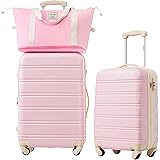
Merax Luggage sets of 2 Piece 20 24 IN Carry on Luggage Hard Case White Pink Luggage Expandable Checked Luggage Suitcase Set with Wheels
$105.99 (as of March 21, 2026 17:18 GMT +02:00 - More infoProduct prices and availability are accurate as of the date/time indicated and are subject to change. Any price and availability information displayed on [relevant Amazon Site(s), as applicable] at the time of purchase will apply to the purchase of this product.)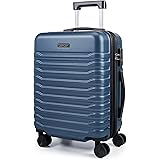
LIGHT FLIGHT Expandable Carry On Luggage 22x14x9 Airline Approved with Double Spinner Wheels, 20 Inch Lightweight Hard Shell Rolling Suitcases with TSA Lock, Blue
$49.99 (as of March 21, 2026 17:18 GMT +02:00 - More infoProduct prices and availability are accurate as of the date/time indicated and are subject to change. Any price and availability information displayed on [relevant Amazon Site(s), as applicable] at the time of purchase will apply to the purchase of this product.)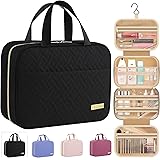
HOTOR Travel Toiletry Bag - Hanging Toiletry Bag for Women & Men, Makeup Bag/Big Comparment, Waterproof for Travel Accessories, Travel Essentials, Medium, Black
$12.99 (as of March 21, 2026 17:18 GMT +02:00 - More infoProduct prices and availability are accurate as of the date/time indicated and are subject to change. Any price and availability information displayed on [relevant Amazon Site(s), as applicable] at the time of purchase will apply to the purchase of this product.)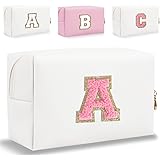
HENGNI Small Personalized Letter Makeup Bag, Cute PU Leather Chenille Letters Cosmetic Bag Travel Makeup Pouch, Preppy Travel Organizer Zipper Pouch for Women&Girls(WhitePink-A)
(as of March 21, 2026 17:18 GMT +02:00 - More infoProduct prices and availability are accurate as of the date/time indicated and are subject to change. Any price and availability information displayed on [relevant Amazon Site(s), as applicable] at the time of purchase will apply to the purchase of this product.)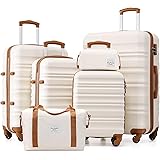
LONG VACATION 6 Piece Luggage Set Carry on Suitcase with ABS+PC hardshell, Spinner Wheels & YKK Zipper TSA Lock (BEIGE-BROWN, 6 piece set)
$189.99 (as of March 21, 2026 17:18 GMT +02:00 - More infoProduct prices and availability are accurate as of the date/time indicated and are subject to change. Any price and availability information displayed on [relevant Amazon Site(s), as applicable] at the time of purchase will apply to the purchase of this product.)As an Amazon Associate, we earn from qualifying purchases.

