
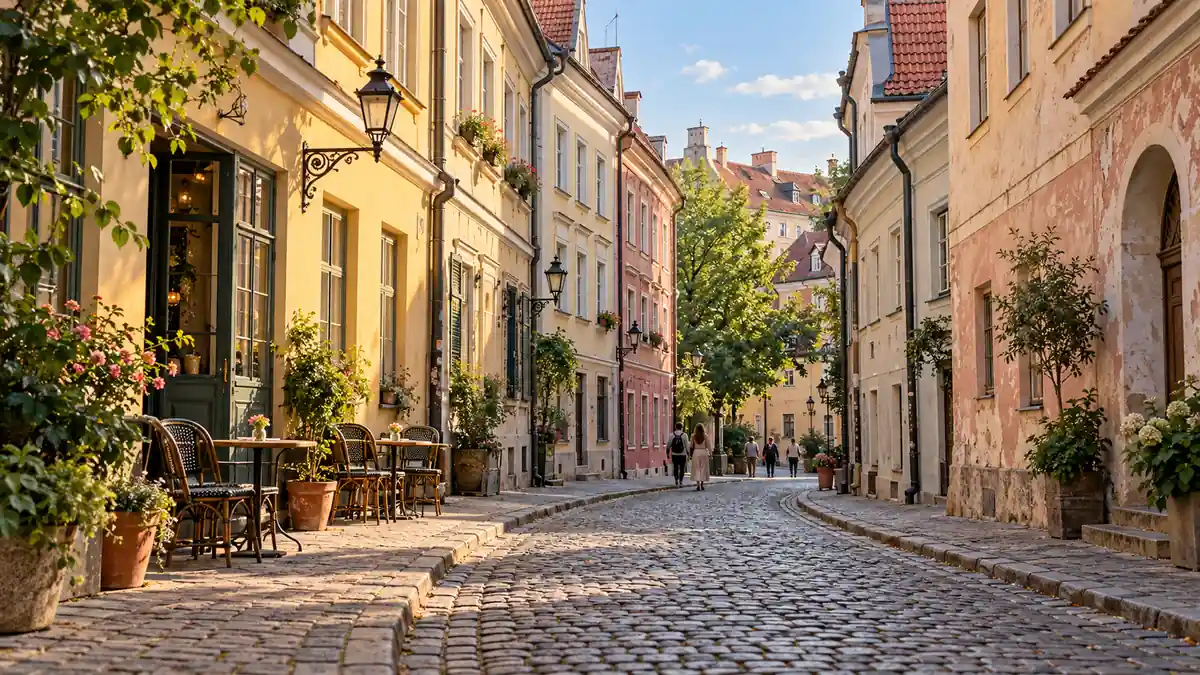
Planning a trip to Vilnius, Lithuania comes down to a handful of decisions, and this guide resolves each one. Vilnius is the southernmost of the three Baltic capitals and the only one set inland, where the small Vilnia river meets the Neris. It is compact, green and cheaper than most of Western Europe, with a UNESCO-listed Old Town, an artists’ quarter that declared itself a republic, and a lakeside castle close enough to reach by public bus. The questions that matter for a first visit are the same ones every traveler asks: whether it deserves a stop, how many days it needs, when to go, which part of the city to sleep in, how to get from the airport, how to move around, roughly what it costs, and the practical travel tips that make the first day easier. Each has a verdict below, with the tradeoff behind it. No prior Baltic knowledge is assumed.
Quick Answer
Vilnius is worth visiting: a walkable, affordable Baltic capital with a vast Baroque Old Town and a castle day trip. Trip length is the main decision: two days covers the city, three adds Trakai, and four is only for museum-heavy or slower trips. Base yourself in or beside the Old Town and skip the rental car.
Trust Layer
Tripstou city guide for travelers planning a city trip. Covers trip length, stay style, season, cost, and mobility tradeoffs.
Produced with AI assistance and reviewed by Alex Perrut, working in tourism since 2015, for the Tripstou editorial team. See our editorial process for details.
Official sources consulted: JUDU (Vilnius public transport), Trakai History Museum.
Key Takeaways
- Two days covers Vilnius itself; the third day exists for Trakai, and a fourth only pays off for museum-heavy trips.
- The Old Town is the right base for first-timers, Užupis for character, Naujamiestis for value a short walk away.
- Late spring and early autumn give the best weather-to-crowd ratio; winter is cheap and dark, summer bright and busy.
- The airport train reaches Vilnius station in about 7 minutes for under €1, so no transfer needs booking in advance.
- Walk everything central and pay for buses by contactless card; a rental car has no role on a city-only trip.
- Trakai Castle closes on Mondays outside summer, which is the one day-trip rule worth checking before you fix your dates.
Table of Contents
Is Vilnius Worth Visiting?
Vilnius is worth visiting for one of Europe’s largest preserved historic centres, explored at a fraction of Western European prices. It rewards travelers who like churches, courtyards and long walks more than headline museums. The tradeoff is climate: cool, changeable and dark in winter, so the season shapes the trip more than it would further south.
What the city is best for is specific:
- A Baroque Old Town without the crowds — the UNESCO-listed historic centre is big enough to lose a full day in, and it never feels like Prague in August.
- Character over monuments — Užupis, the self-declared artists’ republic across the river, is the kind of neighbourhood most capitals no longer have.
- A cheap, easy city break — public transport costs about a euro a ride, many of the best sights are free, and the centre is walkable end to end.
- A first Baltic stop — Vilnius sits at the southern end of the Vilnius–Riga–Tallinn route, so it opens a wider trip naturally.
It disappoints a predictable group. Travelers who want a coast will not find one; Lithuania’s beaches are on the Baltic, hours west, and Vilnius is the inland capital. Anyone chasing big-name galleries or a large nightlife scene will find the city small, and a winter visit means short daylight and icy cobbles. Vilnius is a two-to-three-day city, and it is at its best when treated as one.
The city fits a wider itinerary as easily as it stands alone. Kaunas, the second city, is a short train ride west, Trakai is a half-day out, and the bus north to Riga is the standard next move. For how it sits inside the whole country, start with our Lithuania travel guide.
What Vilnius Is Known For
Vilnius is known for its Baroque Old Town, Gediminas Tower, the Gate of Dawn and the Republic of Užupis. Cathedral Square anchors the northern end, the Gate of Dawn closes the southern end, and almost everything a first visit needs sits between the two, within a 20-minute walk.
The orientation is simple because the Old Town is linear. Cathedral Square, with Vilnius Cathedral and the rebuilt Palace of the Grand Dukes, is the ceremonial heart and the natural starting point. Gediminas Hill rises directly behind it: the hill is free to climb by the footpath from the Vilnia side, the tower at the top charges €8 for its museum and panorama, and a funicular from the Old Arsenal courtyard runs the same hill for €3 return. From there Pilies Street runs south through the university quarter and past St. Anne’s, the red-brick Gothic church beside the Bernardine Garden, before the lanes narrow toward the Gate of Dawn and its chapel, one of the most important pilgrimage sites in the Baltics.
Užupis is the counterweight. It sits across the Vilnelė from the Old Town, declared itself an independent republic one April Fools’ Day, and displays its constitution — “everyone has the right to be unique” among its articles — on plaques along Paupio Street. Halės Market, the covered hall near the station, is where the food side of the city is easiest to sample.
The twentieth century is just as present. The Museum of Occupations and Freedom Fights fills the former KGB headquarters on Aukų Street, and its basement keeps the internal prison where the Soviet security services held suspects (book a guided visit). Vilnius was also the Jerusalem of the North, a great centre of Jewish learning: the lanes around Žydų, Gaono and Stiklių streets were the old Jewish quarter, a monument to the Vilna Gaon marks his former house beside the site of the Great Synagogue, and the Museum of Culture and Identity of Lithuanian Jews on Pylimo Street tells the Litvak story.
Nothing here needs booking ahead. Vilnius has no equivalent of the Alhambra or the Last Supper — no sight where a missed reservation costs a day — which is a genuine planning advantage and one reason the city suits spontaneous, short trips. Guided walks (book one here) and Trakai tours exist for travelers who prefer them, but the Old Town rewards unguided wandering as much as any city in Europe. Our things to do in Vilnius guide ranks the sights and what to skip.
Tours and activities
Book skip-the-line tickets, day trips and local tours with free cancellation on most activities.
You can also browse everything on getyourguide.com.
Tripstou may earn a commission if you book through this link, at no extra cost to you.
How Many Days You Need in Vilnius
Two to three days is the right length for a trip to Vilnius. Two days covers the Old Town, Gediminas Hill, Užupis and the viewpoints at a relaxed pace; the third day is what makes the Trakai Castle day trip possible without cutting the city short. Four days suits only museum-focused or slow travelers.
The recommended duration of stay depends on whether Trakai is in the plan, and for most first visits it should be. Vilnius itself is finished in two days; the castle on the lake is the reason to stay a third.
| Trip length | What it buys | What you sacrifice | Who it suits |
|---|---|---|---|
| 1 day | Cathedral Square to the Gate of Dawn on foot, one viewpoint | Užupis, any museum, every slow café hour | Stopovers and Baltic road-trippers passing through |
| 2 days | The whole Old Town plus Užupis, Halės Market and Gediminas Hill | Trakai, unless you rush both | Most first-time city-break visitors |
| 3 days | The two-day plan at ease, plus a half-day at Trakai Castle | Very little — this is the balanced version | Travelers who want the castle without a compressed city |
| 4+ days | Museums, the KGB-era history sites, Kaunas as a second day trip | Days that could go to Riga or the coast | Slow travelers and history-led trips |
Pacing, not a day-by-day route, is what a city guide can usefully give. Day one belongs to the Old Town spine: Cathedral Square and Gediminas Hill in the morning, the university quarter and St. Anne’s at midday, the lanes down to the Gate of Dawn in the afternoon. Day two crosses the river to Užupis, then circles back through Halės Market and whichever viewpoint you skipped. Day three is Trakai. For an hour-by-hour plan, see our 2 days in Vilnius itinerary.
Trakai is a genuine half-day trip, and the figures support it. The town lies 27 km west of Vilnius, buses leave Vilnius Bus Station at least twice an hour and take about 30–40 minutes, and trains from the neighbouring railway station run the same corridor. The island castle museum opens daily from April to September, closes on Mondays in March, October and November, and closes on Mondays and Tuesdays from December to February; adult tickets run €12–€14 depending on season. A morning departure puts you back in Vilnius for the evening. Our day trips from Vilnius guide compares Trakai with the other options.
The fourth day is the one to be honest about. It rarely goes to Vilnius at all — it goes to Kaunas, to a longer museum list, or to nothing in particular — and the same day spent on the bus to Riga usually buys more.
When to Visit Vilnius
Late spring and early autumn are the best times to visit Vilnius. May, June and September combine mild walking weather with lighter crowds and calmer accommodation prices. Summer is bright and lively but busiest; winter is cheap, atmospheric around the Christmas market and hard on anyone who dislikes short, cold days.
The seasons differ more here than in most European capitals, because Vilnius sits inland at a northern latitude. Daylight swings from long summer evenings to mid-afternoon dusk in December, and the cobbled Old Town changes character with the weather.
| Season | What it’s like | Best for | Main tradeoff |
|---|---|---|---|
| Spring (April–May) | Cool, greening and changeable, with the streets still quiet | Old Town walks before the summer visitors arrive | Cold snaps and rain need layers |
| Summer (June–August) | Warm and bright, with very long evenings | Outdoor cafés, hot-air balloons over the Old Town, Trakai on the lake | Highest prices and the fullest streets |
| Autumn (September–October) | Mild early, then cooler and shorter as October ends | Photography, food and quiet sightseeing | Daylight shrinks noticeably by late October |
| Winter (November–March) | Cold, often snowy, with dusk by mid-afternoon | Christmas market on Cathedral Square, museums, low stay prices | Ice on the cobbles; Trakai Castle closed on Mondays (and Tuesdays, December–February) |
One thing the season changes that visitors underestimate is the Trakai day trip. In summer the castle opens daily and the lake is at its best; from October to March it shuts on Mondays, and in the depth of winter on Tuesdays too, so a three-day winter trip has to place the castle day carefully. Vilnius itself works in any month — the Old Town is walkable in snow with the right shoes — but the third day is a summer luxury and a winter calculation.
Where to Stay in Vilnius, by Traveler Type
The Old Town is the right base for a first trip to Vilnius; every other choice trades against it. Užupis swaps central convenience for character across the river; Naujamiestis, the New Town, swaps atmosphere for better value a short walk west; the station area buys early departures at the cost of charm.

At character level, the four broad options break down like this:
- Old Town — Best for: first-time visitors who want to step out of the door into Pilies Street and be at Cathedral Square in minutes. Priciest, and the busiest lanes carry evening noise.
- Užupis — Best for: couples and repeat visitors who want galleries, riverside cafés and quieter nights, still ten minutes’ walk from the Old Town.
- Naujamiestis (New Town) — Best for: longer stays, remote workers and value-led travelers who accept modern streets for lower nightly rates and apartment stock.
- Station area — Best for: travelers leaving early for Trakai, Kaunas or the Riga bus, who need the bus and railway stations within a few minutes’ walk.
Paying for the Old Town buys atmosphere, not walking time — the centre is small enough that Naujamiestis is a short stroll from the same sights. What the Old Town address really buys is the return to the room in the middle of the day and the evening walk home through lit lanes, both of which matter more in a city you cover entirely on foot. Summer weekends and festival dates are the moments to book early; the rest of the year, availability is rarely the problem. Our where to stay in Vilnius guide compares the areas in detail.
Hotels and places to stay
Compare hotels, apartments and stays for your dates in one search.
Search hotels and stays on hotels.com →
Tripstou may earn a commission if you book through this link, at no extra cost to you.
Getting to Vilnius: Airport to the Old Town
Vilnius Airport is the only airport most visitors need, and the train is the simplest way in. It reaches Vilnius railway station, on the southern edge of the Old Town, in about 7 minutes for under one euro. Buses take about 20 minutes and a taxi to Cathedral Square runs roughly €10.
The three options ladder cleanly by priority:
- Airport train — the fastest and cheapest choice, about 7 minutes to the railway station with around 16 departures a day. Tickets are sold at the station and on board. The tradeoff is the timetable: it does not run around the clock, so late arrivals need a bus or a car.
- Bus 88 or express 3G — about 20 minutes to the city centre; the 3G runs every 10 minutes, the 88 every 20–30 minutes, and a night service, the 88N, covers the airport–centre–Europa Square route from 22:30 to 5:30. Pay with a contactless card at the validator or through the m.Ticket or Trafi apps; a single ticket costs €1–€1.25 depending on its validity.
- Taxi or Bolt — door to door in a quarter of an hour, the sensible pick with luggage, small children or a late-night landing. The airport’s official taxi rank works to a capped tariff, and the ride to Cathedral Square comes to roughly €10; Bolt is the app locals use.
Arriving overland is just as easy. The railway station and Vilnius Bus Station sit next to each other south of the Old Town, so trains from Kaunas and the intercity buses from Riga and Warsaw all land a short walk or a two-stop bus ride from the centre. Entry rules depend on your passport, so check official EU guidance before booking rather than relying on a general rule.
Getting Around Vilnius
You walk Vilnius. The Old Town, Užupis, Gediminas Hill and the station are all within about 20 minutes of each other on foot, so most visitors never buy a transport ticket except for the airport. Buses and trolleybuses cover the wider city cheaply, and Bolt fills the gaps at night or in bad weather.

The city’s geometry does the work. The historic centre is compact and largely flat, with only Gediminas Hill and the Užupis slopes to climb, and the interesting streets are the small ones that no bus serves. Comfortable shoes with grip matter more than any ticket: the cobbles are uneven everywhere and slippery whenever it rains, snows or freezes.
Public transport is there for outer neighbourhoods, the airport and tired legs. JUDU, the city operator, sells single tickets by time — €1.00 for 30 minutes and €1.25 for 60 minutes, with transfers included — plus a 24-hour pass at €7.50 and a 72-hour pass at €13.50. Tap a contactless card at the on-board validator or buy through the m.Ticket or Trafi apps. A day pass only beats singles if you plan seven or more rides in a day, which a city-centre visit almost never involves.
Skip the rental car. Parking in the centre is scarce, the Old Town lanes are not built for driving, and every day trip a first-time visitor takes — Trakai, Kaunas, Riga — is served by bus or train. Keep a car for a rural Lithuania route, never for a city trip.
How Much a Vilnius Trip Costs
Vilnius is one of the cheaper European capitals, and spend style decides the total more than the city does. Transport costs about a euro a ride, the Old Town, Užupis and the hill are free, and a set lunch is the best-value meal in the city. Old Town restaurants and summer weekend hotels are where costs climb.
What each spend style buys here:
- Budget — a hostel or a Naujamiestis apartment, lunches from Halės Market and the daily set menu, walking everywhere and the free sights. Vilnius is unusually kind to this style: the Old Town, Užupis and Gediminas Hill cost nothing, and the paid sights are single-digit or low-double-digit euros.
- Mid-range — a central three- or four-star or an Old Town apartment, one sit-down dinner a day, the Gediminas Tower museum and a Trakai day trip by public bus. This is where most trips land and where the city feels like a bargain against Western capitals.
- High-end — a boutique hotel inside the Old Town, guided tours, a private Trakai transfer and the best restaurants. Vilnius supports this comfortably, though the ceiling is low: the city simply does not sell the luxury tier a Paris or a Rome does, so the money buys comfort more than exclusivity.
The verified figures are small and they stay small. A single bus ticket is €1–€1.25, the airport train is under a euro, the Gediminas Tower museum is €8, and adult entry to Trakai Island Castle is €12–€14 by season. Look for the daily lunch menu, dienos pietūs, on café boards around midday; it is the single most reliable saving in the city. The one thing that does move a Vilnius budget is timing: summer weekends and festival dates push accommodation up sharply, so a shoulder-season trip is cheaper before you have chosen a hotel.
Vilnius Travel Tips: Safety, Money and What to Eat
The Vilnius travel tips that matter most: stay central, pack shoes with grip, pay by card, order the daily lunch. Vilnius is a safe city with low violent crime, the euro is the currency, English is widely spoken, and the emergency number for police, ambulance and fire is 112 across Lithuania.

- Safety: the realistic risks are petty theft in crowded spots — the market, the station, the busiest bars — and slippery cobbles in rain, snow or ice. Standard city habits cover the first; shoes with grip cover the second. Use Bolt or a marked taxi and never an unsolicited ride.
- Money: Lithuania uses the euro and cards work almost everywhere, including on buses via the contactless validator. Keep a little cash for market stalls and small vendors.
- Apps: install Trafi or m.Ticket for transport tickets and Bolt for rides before you land, so the first evening does not depend on airport Wi-Fi.
- Packing: layers in every season, a waterproof in spring and autumn, and proper winter gear from late autumn to early spring. Daylight is short in winter; plan the outdoor hours for the middle of the day.
- Food to try: cepelinai (potato dumplings stuffed with meat), šaltibarščiai (the bright pink cold beet soup, a summer staple), kugelis (baked potato pudding) and kepta duona (fried garlic rye bread with beer). Halės Market and the set lunch menus are the cheapest way to work through the list.
The tip most first-timers miss is about the calendar rather than the city: fix your Trakai day before you fix your hotel nights, because outside summer the castle’s closed days decide which day the trip can happen, and that in turn decides whether you need the third night at all.
Frequently Asked Questions
Can you visit Trakai Castle on a Monday?
Only from April to September, when the island castle museum opens every day. In March, October and November it closes on Mondays, and from December to February it closes on Mondays and Tuesdays. If your Vilnius trip falls outside summer, put the Trakai day trip on a Wednesday to Sunday and the castle is open.
How do you pay for buses in Vilnius without a local transport card?
Tap a contactless bank card on the validator inside the bus or trolleybus, and the fare for a 60-minute ticket is charged directly. The m.Ticket and Trafi apps sell the same tickets and the day passes from your phone. You never need the local JUDU card for a short visit, and the same method works on the airport buses.
Do you need a visa to travel to Vilnius, Lithuania?
Lithuania is in the Schengen Area, so the standard Schengen rules apply. Many nationalities enter visa-free for short stays, while others need a Schengen visa issued before travel, and the EU’s travel authorisation system adds a pre-trip step for visa-exempt visitors once it applies. Confirm your passport’s rules on the official EU travel pages before booking.
Is Vilnius a good city for solo travelers?
Yes, Vilnius is one of the easier European capitals to visit alone. The Old Town, Užupis and the main viewpoints are all reachable on foot from a central base, cafés and daily lunch menus make eating alone unremarkable, and Bolt covers late returns. Solo travelers should book an Old Town or Užupis stay so evenings stay within walking distance.
Do people speak English in Vilnius?
Yes, English is widely spoken in Vilnius, especially by younger people and anywhere that serves visitors, including hotels, restaurants, museums and transport apps. Lithuanian is the official language and signage is mostly Lithuanian, but ticket machines and the transport apps run in English, so a first-time visitor can plan the whole trip without a word of Lithuanian.
Can you combine Vilnius with Riga on one trip?
Yes, and it is the classic Baltic pairing. Direct intercity buses link Vilnius and Riga, and the two capitals sit comfortably inside a single week: two to three days in Vilnius, a Trakai day trip if you have the time, then the bus north. Our Tallinn travel guide extends the same route into a full Baltic capitals trip.
Related Guides
The page that frames this trip at country level:
- Lithuania travel guide — how Vilnius fits with Kaunas, the coast and the wider Baltic route.
- Travel to Tallinn, Estonia — the northern end of the Vilnius–Riga–Tallinn route.
Go deeper on Vilnius itself:
- Things to do in Vilnius — the sights that earn your time and the ones to skip.
- Where to stay in Vilnius — the best areas for every trip type.
- 2 days in Vilnius itinerary — the Old Town first, then Trakai or more of the city.
- Day trips from Vilnius — Trakai, Kaunas and the rest, and which work without a car.
Did this guide save you time or money? Tripstou is independent and reader-funded — if you'd like to give something back, you can support the site with a crypto contribution of any size.