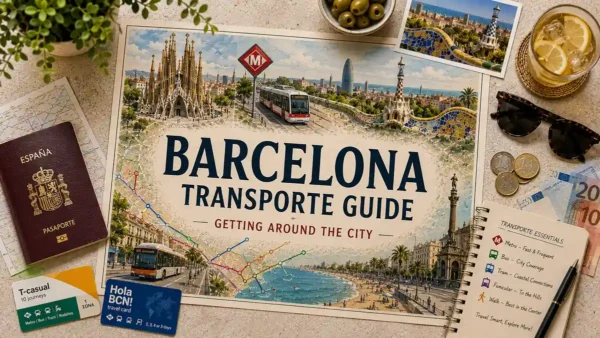
Barcelona works as a complete city trip in a way few places do: Gaudí architecture, Mediterranean beaches, Gothic alleys, and serious food sit inside one walkable map. The trick is to look past the Sagrada Família checklist and plan by how the city actually clusters. This guide orients you across the whole decision surface fast: why to go, what to see, how long to stay, when to come, where to base, how to move, what it costs broadly, and whether it is safe. Each deeper question routes to a dedicated guide, so you start here with confidence and drill down only where you need to.
Barcelona is one of Europe’s most rewarding first-trip cities, strong on architecture, food, and walkable neighborhoods. A few days cover the headline sights, and shoulder seasons are the most comfortable time to visit. Base yourself centrally and lean on the metro; the city suits first-timers, couples, and families alike.
Trust Layer
Tripstou city guide for travelers planning a city trip. Covers trip length, stay style, season, cost, and mobility tradeoffs.
Produced with AI assistance and reviewed by Alex Perrut, working in tourism since 2015, for the Tripstou editorial team. See our editorial process for details.
Last factual review: June 3, 2026.
Official sources consulted: European Union, Travel Europe, ETIAS.
Key Takeaways
- Barcelona suits first-timers because architecture, beaches, food, and a walkable old core sit inside one compact map.
- Plan by neighborhood cluster rather than single landmark, so each day stays in one walkable zone with little transit.
- Three to four days covers the headline sights comfortably; a shorter trip works only at a faster pace.
- Spring and autumn are the most comfortable windows, trading beach heat for thinner crowds and pleasant streets.
- Base yourself centrally and ride the metro between clusters, since the city is highly walkable on top of it.
- Barcelona is broadly safe; the real risk is opportunistic pickpocketing in crowds, not violent crime.
Table of Contents
Barcelona Is Built for a First European City Trip
Barcelona rewards first-timers more reliably than almost any European city. It packs distinctive Gaudí architecture, city beaches, a dense Gothic core, and a strong food scene into compact, walkable neighborhoods. You get variety without long transfers, which makes even a short trip feel complete rather than rushed.
The deeper appeal is how easily the city layers. A morning of modernist landmarks, an afternoon on the sand, and an evening of tapas all sit within the same map, so you rarely spend a trip in transit. That density suits couples wanting a romantic break, families needing low-friction days, and solo travelers after a confident first taste of Spain.
The main tradeoff is popularity: the headline sights draw heavy crowds, and the most famous streets feel touristy in peak months. The fix is to plan beyond the checklist and lean into the neighborhoods. Barcelona sits in Catalonia and works as the natural anchor for a wider trip, whether you stay local or expand outward across Catalonia and the rest of Spain.
Barcelona’s Main Sights and How They Cluster
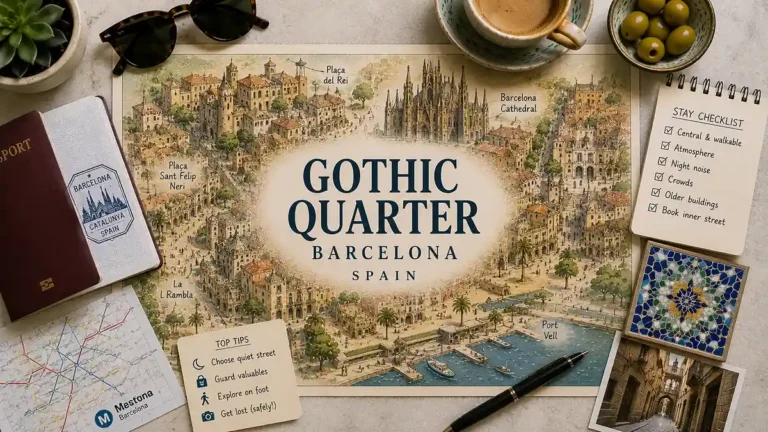
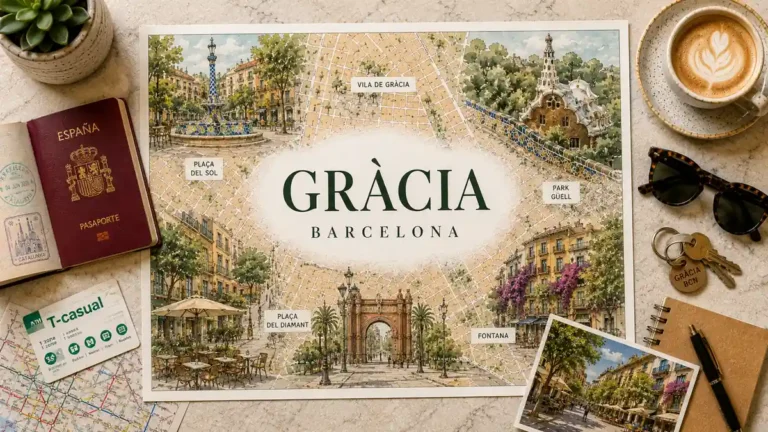
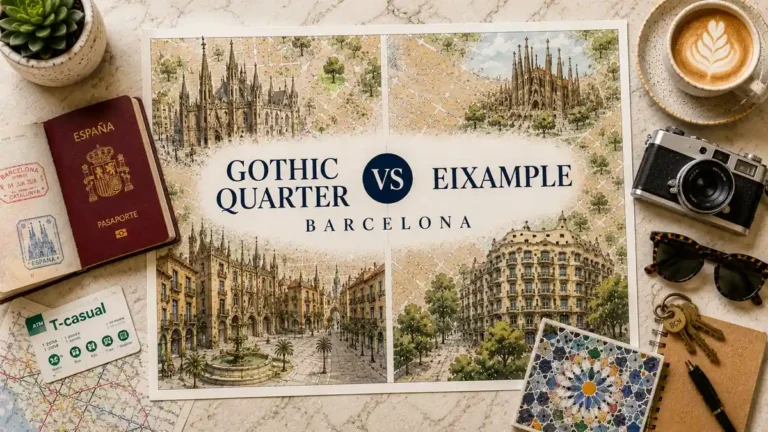
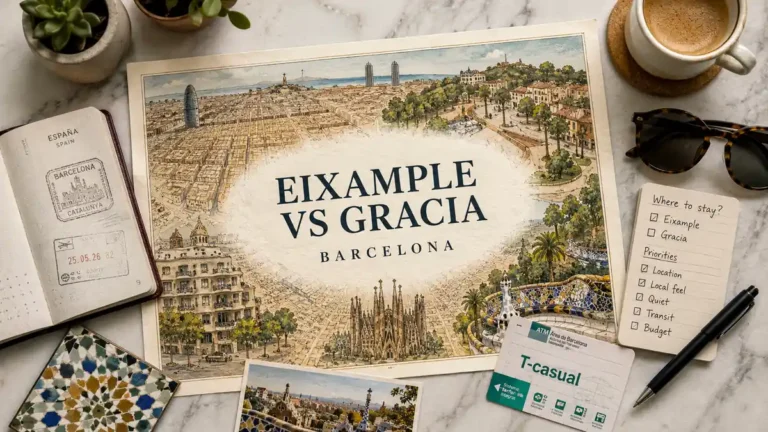
Barcelona’s headline sights group neatly by neighborhood, so the smart move is to plan by area rather than by single landmark. The Sagrada Família and the modernist mansions sit in Eixample, the Gothic Quarter anchors the old city beside La Rambla, and Park Güell crowns the slopes above Gràcia. Cluster your days and you cut wasted travel.
Three loose clusters cover most first trips:
- Old City — the Gothic Quarter’s medieval lanes, the cathedral, and La Rambla running down to the waterfront, best explored on foot.
- Eixample and Gaudí — the Sagrada Família plus the grand modernist façades along the wide grid blocks.
- Gràcia and Park Güell — a village-feel neighborhood of small squares below Gaudí’s mosaic park on the hillside.
Group sights this way and each day stays inside one walkable zone, which keeps pace gentle and travel time low. Save the timed-entry landmarks for their own planning and weave in a real meal between them, since Barcelona’s food is as much a sight as its buildings; our Spain food guide covers what to seek out. For the practical rhythm of moving between clusters, our Barcelona tips guide has the on-the-ground detail.
Tours and activities
Book skip-the-line tickets, day trips and local tours with free cancellation on most activities.
You can also browse everything on getyourguide.com.
Tripstou may earn a commission if you book through this link, at no extra cost to you.
How Many Days You Need in Barcelona
Most first-timers need three to four days to see Barcelona comfortably. A short stay covers the headline sights across the main clusters, while a longer stay adds neighborhood depth, beach time, and a day trip beyond the city. The right length depends on pace and how much you want to slow down.
A tighter two-day trip still works if you accept a faster rhythm and stick to one or two clusters per day. Adding a third or fourth day buys breathing room for the modernist sights, a half-day on the coast, and unhurried meals rather than a sprint between landmarks. Beyond that, extra days reward travelers who want side trips into Catalonia or a more local, lived-in feel.
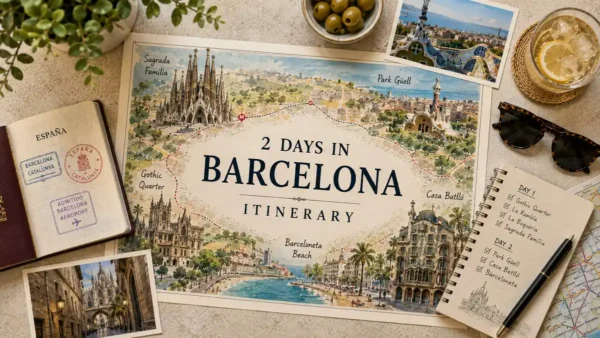
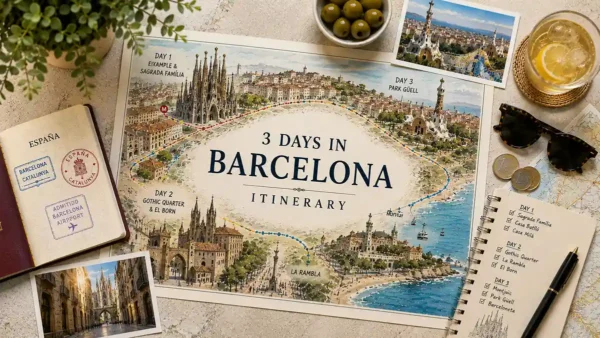
To build an actual day-by-day plan, start with our 2-day Barcelona itinerary for a focused first visit or the 3-day Barcelona itinerary for the more comfortable standard pace.
When to Visit Barcelona
The shoulder seasons of spring and autumn are the most comfortable time to visit Barcelona. Temperatures stay mild, crowds thin out from their summer peak, and the city feels livable rather than packed. Summer is hottest and busiest, while winter stays mild but cooler, with shorter days and a quieter feel.
Each window suits a different traveler. Spring and autumn favor walkers and sightseers who want pleasant streets without peak crowds. Summer fits beach-first trips that accept heat and high demand, while winter rewards budget-minded visitors and anyone who prefers calm over buzz. The main tradeoff is always comfort versus beach weather.
For how Barcelona’s seasons fit the wider country and how to time a broader trip, see our guide to the best time to visit Spain.
Where to Stay in Barcelona, by Travel Style
Where you should stay in Barcelona depends on your travel style more than on any single “best” neighborhood. Central areas suit first-timers who want to walk everywhere, while quieter or livelier districts fit couples, families, and night owls differently. Match the area to your trip and the rest of the planning gets easier.
A quick steer on which area style suits whom:
- First-timers — a central base near the old city and Eixample keeps the main sights within walking distance.
- Couples — atmospheric, lower-key neighborhoods trade nightlife for charm and good restaurants.
- Families — calmer, well-connected districts with space and easy metro access reduce daily friction.
- Nightlife seekers — areas near the waterfront and bar-dense zones put you close to late-night energy.
- Budget travelers — slightly outside the tourist core, near a metro line, stretches money without isolating you.
- Luxury stays — the upper Eixample and prime central addresses concentrate high-end hotels.
The tradeoff is always central convenience against price and noise. To choose a specific area and property, start with our overview of where to stay in Barcelona, then go straight to the style guide that fits: first-timers, couples, families, nightlife, budget, or luxury.
Hotels and places to stay
Compare hotels, apartments and stays for your dates in one search.
Search hotels and stays on hotels.com →
Tripstou may earn a commission if you book through this link, at no extra cost to you.
How to Get Around Barcelona
The metro is the primary way to get around Barcelona, and the city is highly walkable on top of it. The network reaches every major cluster quickly, so you rarely need taxis. The airport, BCN El Prat, connects to the center by several transfer options, making arrival and departure straightforward.
In practice you walk within each neighborhood cluster and ride the metro between them, which keeps daily logistics simple even for first-timers. Buses and trams fill gaps the metro misses, but most trips never need them. For full detail on tickets, passes, and routes, see our Barcelona transport guide, and plan your arrival with the Barcelona airport transport guide.
Train and bus tickets
Compare routes, schedules and prices across rail and bus operators in one search, with mobile tickets on your phone.
New to Omio? Code NEW10 takes 10% off your first booking — or APPNEW10 if you book inside the Omio app. Both apply to bookings up to €80.
Search routes and compare prices on Omio →
Tripstou may earn a commission if you book through this link, at no extra cost to you.
How Much a Barcelona Trip Costs
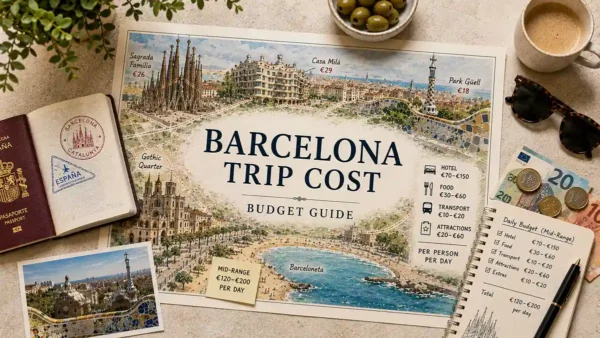
Barcelona sits in the mid-range for major European city trips. It is generally more affordable than Paris or London but pricier than much of inland Spain, and your total scales with stay style and season. How you travel matters more than the city itself in setting the final number.
Accommodation and the time of year drive most of the difference: peak-season central hotels cost far more than a shoulder-season base slightly out of the core. Food, sights, and transport are easy to flex up or down depending on how you travel, which suits both budget and comfort-led trips. For a full breakdown of what to budget, see our Barcelona trip cost guide.
Is Barcelona Safe for Visitors?
Barcelona is broadly safe for visitors who take normal precautions. The main concern is opportunistic pickpocketing in crowded tourist areas, not violent crime, which stays rare. Stay aware of your belongings on busy streets, on the metro, and around the headline sights, and most trips pass without incident.
The risk concentrates exactly where crowds do, so the same area-by-area planning that improves your sightseeing also lowers your exposure. Keep valuables secure and your phone out of back pockets in dense zones, and the city feels relaxed day and night. For deeper guidance, see our Barcelona safety guide, the common Spain scams to know, and our solo female safety in Spain guide.
Frequently Asked Questions
Is Barcelona worth visiting for a first trip to Spain?
Yes, Barcelona is one of the best first trips in Spain. It combines striking architecture, city beaches, a medieval old town, and renowned food in walkable neighborhoods, so a single visit feels varied and complete. Few European cities deliver this much range without long transfers between attractions.
Can you see Barcelona in a weekend?
A weekend in Barcelona works if you focus on one or two sight clusters per day and accept a brisker pace. You can cover the main landmarks, the Gothic Quarter, and a meal or two, but you will skip beach time, neighborhood wandering, and any day trip beyond the city.
Is the Barcelona metro easy for tourists to use?
Yes, the Barcelona metro is straightforward for first-time visitors. Lines are clearly numbered and colour-coded, signage is easy to follow, and stations reach every major sight cluster quickly. Most travelers walk within each neighborhood and ride the metro between them, rarely needing taxis or buses.
Is Barcelona safe to walk around at night?
Barcelona is generally safe to walk at night in central, well-lit areas. Violent crime against visitors is rare, and the main concern remains pickpocketing in crowds and on the metro. Keep valuables secure, stay alert around nightlife zones and busy streets, and most evenings pass without trouble.
Which neighborhood should first-time visitors stay in?
First-time visitors usually do best with a central base near the old city and Eixample, keeping the main sights within walking distance. The right area still depends on your travel style, so couples, families, and night owls may prefer quieter or livelier districts that suit their priorities.
Is Barcelona an expensive city to visit?
Barcelona sits in the mid-range for major European city trips. It is typically more affordable than Paris or London but pricier than inland Spain, and your total depends heavily on stay style and season. Accommodation and timing drive most of the difference between a cheap and costly trip.
What is the best time of year to visit Barcelona?
Spring and autumn are the best times to visit Barcelona. Temperatures stay mild, crowds ease from their summer peak, and the streets feel comfortable for walking and sightseeing. Summer brings the hottest weather and biggest crowds, while winter is cooler and quieter but still relatively mild.
Related Guides
These guides help you plan the rest of your trip and explore beyond Barcelona across Catalonia and the wider country. Use them to map out where to go next, compare itinerary lengths, choose between trains and a road trip, and prepare what to pack and budget for your time in Spain.
- Best places to visit in Spain
- Best beaches in Spain
- Spain’s islands
- Spain itinerary planner
- 7-day Spain itinerary
- 10-day Spain itinerary
- 14-day Spain itinerary
- Spain by train itinerary
- Spain road trip guide
- Spain packing list
- Spain trip cost
- Things to Do in Barcelona — the experiences worth your time.
- Best Luxury Hotels in Barcelona — the standout properties, compared.
- Best Day Trips from Barcelona
Did this guide save you time or money? Tripstou is independent and reader-funded — if you'd like to give something back, you can support the site with a crypto contribution of any size.