Stay in Corfu Town if you want one base that does most things well: culture, restaurants and buses in every direction, with no car needed. Its weak point is the beach, because the town’s own beaches are modest. Beach-first travelers who want easy town access without a car do best on the east-coast strip between Gouvia and Dassia, and couples with a car suit the northeast coves.
On Corfu, the coast you pick shapes your holiday more than the hotel does. The island pulls in three directions at once. Corfu Town gives you culture, food and easy buses with no car needed. The northeast gives you pebble coves and calm water, but rewards a car. The long sandy resorts of the north and west give you beach days, often far from the Old Town.
This guide settles the base question by coast and by how you travel. It compares each side of the island on atmosphere, convenience, noise and price position, then gives every major area a clear verdict and a one-line fit. Smaller bases that suit only one type of trip get a short note each. First-time visitors and families have dedicated guides with the fuller argument, and this page points to them where the choice depends on that context.
Corfu’s coasts compared: which side fits you, with or without a car
The east coast is the only side of Corfu that works fully without a car; every other coast rewards one. East is calm, developed and closest to town and the airport. The northeast has upscale pebble coves, the north long sandy resorts, the west dramatic sand and sunsets, and the south quieter value.
Price position uses budget, mid-range and high-end as relative labels, not nightly rates.
| Area (coast) | Vibe | Car needed? | Price position | Suits |
|---|---|---|---|---|
| Corfu Town (east) | Historic Old Town, cafés and lively evenings | No, walkable with buses in every direction | Mid-range, with high-end pockets in the Old Town | Culture, food and travelers without a car |
| Kontokali to Ipsos (east) | Calm sea, developed resort strip and a marina | No, the closest resorts to town | Mid-range, with Kommeno at the high end | Beach days with easy town access |
| Barbati to Kassiopi (northeast) | Pebble coves, villas and tavernas on the water | Helpful, except in walkable Kassiopi village | High-end, with mid-range options in Kassiopi | Couples and quiet luxury stays |
| Sidari to Acharavi (north) | Long sandy beaches, shallow water, resort-led | Optional if you stay put on the beach | Budget to mid-range resort stays | Stay-put beach holidays on sand |
| Paleokastritsa (northwest) | Cliff-backed bays, boat trips and quiet evenings | Advised, the resort spreads across several bays | Mid-range to high-end across the bays | Scenery lovers happy to drive |
| Glyfada and Agios Gordios (west) | Big sandy beaches, sunsets and beach bars | Advised, steep and winding access roads | Mid-range across both beach resorts | Sand and sunsets with evening life |
Without a car, stay in Corfu Town or on the east-coast strip. Both let you reach beaches, restaurants and the Old Town on foot or by a short bus ride. The green-bus network also reaches the named north and south resorts, including Kassiopi, Sidari, Roda, Acharavi, Paleokastritsa, Glyfada, Agios Gordios and Kavos. Services thin out outside summer, so a car-free trip in the shoulder months works best from town.
In the northeast, a car is helpful, not essential. The roads are narrow and winding, and the coves sit apart from each other, so the car earns its keep on dinner runs and cove-hopping. On the west coast and around Paleokastritsa, it matters more: the good beaches sit at the bottom of steep descents.
Corfu is bigger than it looks on a map because its roads curve around hills and bays. A base that seems central on paper can still leave you on the road for a long time to reach the opposite coast. For the wider picture beyond where to sleep, the Corfu guide covers planning the whole island.
Corfu Town is the best overall base for most travelers
Corfu Town is the best base for most travelers: walkable, well fed and bus-connected in every direction. It suits culture-first visitors, food lovers and anyone travelling without a car. The one real limitation is the beach: the town’s own swimming spots are modest, so beach days mean a trip out to the coast.
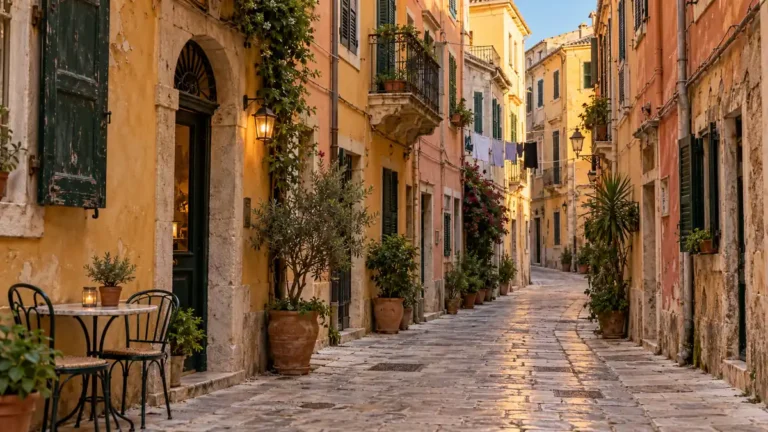
The Old Town is a UNESCO World Heritage Site, and it feels lived in. Narrow lanes, busy cafés and the harbour set the tone. Evenings run late. Dinner is a stroll, not a drive.
Convenience is where town wins outright. Blue city buses run to the airport on Line 15 and out to Kanoni on Line 2A, and the green-bus station on Eptanisou Avenue sends routes to both the north and south coasts. Central lanes can be loud on summer nights, so light sleepers should ask for a room off the main squares.
Prices sit mid-range, with high-end pockets inside the Old Town. The Old Town, Mandouki and Garitsa each feel different; our guide to which part of Corfu Town to stay in maps them. The full case for starting here is in where to stay in Corfu for a first visit.
Should you split your stay between Corfu Town and a beach base?
Yes, a split stay works well when your trip is long enough to justify two check-ins. Spend the first nights in Corfu Town for the Old Town and its restaurants, then move to one coast base for beach days. One move is enough. A second coast change usually costs more beach time than it adds.
For how the days fall around that move, see two days in Corfu and three days in Corfu.
Hotels and places to stay
Compare hotels, apartments and stays for your dates in one search.
Search hotels and stays on hotels.com →
Tripstou may earn a commission if you book through this link, at no extra cost to you.
The east-coast strip (Kontokali to Ipsos) is the beach base with town access
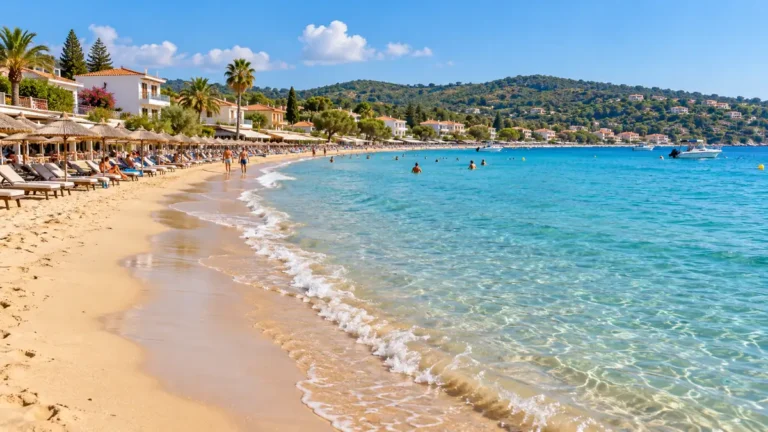
Kontokali, Gouvia, Dassia, Kommeno and Ipsos give you a beach base within easy reach of Corfu Town. The strip suits travelers who want daily swims and town dinners without renting a car. Scenery is what you give up: this coast is calm and developed, pleasant more than dramatic.
Each resort sets its own pace. Kontokali sits closest to town, and Gouvia wraps around a marina. Dassia is a long, busy resort beach. Kommeno is the quieter peninsula of high-end hotels, while Ipsos at the northern end is the liveliest, with bars along the seafront road.
These are the closest resorts to both Corfu Town and the airport, and they sit on the green-bus routes running north along the coast road. Most mid-range stays cluster here; Kommeno is where the strip turns high-end.
Dassia’s two ends feel quite different, and staying in Dassia breaks them down. If your shortlist has narrowed to Corfu Town or Dassia, that head-to-head settles it.
The strip’s real advantage is the evening: you can swim all afternoon and still sit down at an Old Town table after a short ride, something no other beach area on the island offers as easily.
The northeast coves (Barbati to Kassiopi) are the pick for couples and quiet luxury
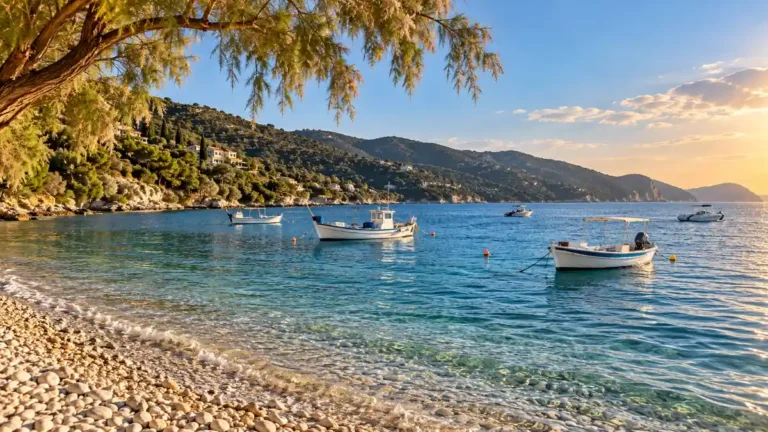
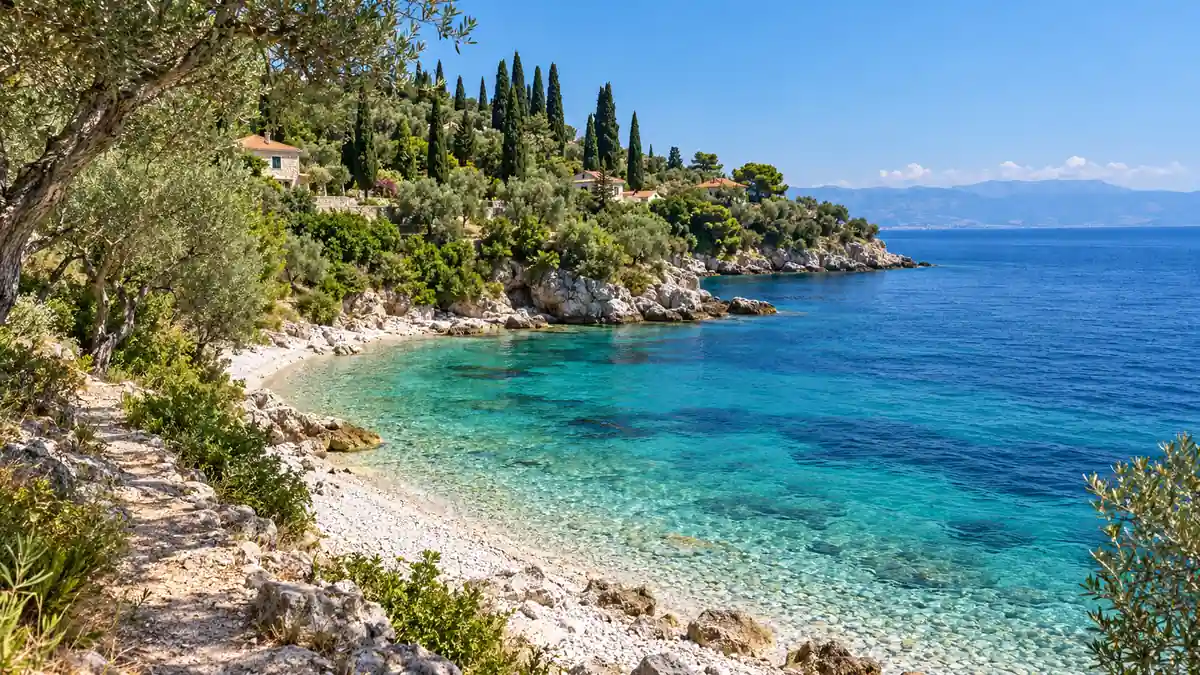
Barbati, Agios Stefanos and Kassiopi are Corfu’s most refined stretch: pebble coves, villas and quiet water. Couples and high-end travelers come here for calm evenings and swimming off rocks and shingle. A car helps for cove-hopping, and Kassiopi is the exception — a harbour village you can manage on foot.
This coast feels private. Tavernas sit right on the water, villas climb the green slopes, and the Albanian coast is close enough across the strait to shape the view. Nights are quiet.
Convenience depends on where you sleep. Between the coves, narrow winding roads make a car helpful for reaching beaches and dinner spots. Kassiopi works without one: harbour, shops and restaurants sit within walking distance, and the green bus reaches both Kassiopi and the Barbati–Nisaki stretch.
This is Corfu’s high-end coast, with villas and boutique stays setting the tone; Kassiopi village keeps mid-range options. For named places to stay, see our pick of the best beach hotels in Corfu.
Kassiopi is the hinge of this coast. Base there and you get the northeast’s water without needing a car every evening, which the villa-lined coves further south cannot offer. Town evenings from Kassiopi do mean a longer ride than from the east coast.
The north coast (Sidari, Roda, Acharavi) is the sandy resort choice, far from town
Sidari, Roda and Acharavi are Corfu’s long sandy strip, suited to a stay-put beach holiday. Pick them if sand, shallow water and resort facilities are all you need for the whole trip. Distance is the price: the north coast sits farthest from Corfu Town and the airport, so frequent town visits become a chore.
The three resorts share a coastline but not a mood. Sidari is the livelier one, with more bars and a busier evening strip. Roda and Acharavi are calmer, with long beaches and a slower evening pace.
The far north is roughly an hour’s drive from the airport. The green bus reaches all three resorts, and a car frees you for day trips to the northeast coves and the west coast. Stays run budget to mid-range, which makes this the most affordable sandy coast on the island.
Families weighing shallow water and resort facilities should read where to stay in Corfu with kids before booking here.
Choose the north coast only if most days will happily end on the same beach. Travelers planning several Old Town evenings lose that time on the road.
Paleokastritsa is the scenery base, best with a car
Paleokastritsa is where you stay for scenery, and a car makes it work. The reward is a daily view of cliff-backed bays, clear coves and the monastery setting. Layout is the catch: the resort spreads across several bays on a hilly road, so walking between them is limited.
Days here revolve around the water. Boat trips leave from the bays, and the monastery on the headland looks down over it all. Evenings are quiet and scenic. Nightlife barely exists.
The green bus connects Paleokastritsa with Corfu Town, which makes a car-free stay possible for travelers who plan to stay local. Beaches beyond the main bays and most hillside dinner spots are far easier by car. Prices run mid-range to high-end, rising with the view.
Each bay has its own character and its own climb. Our guide to staying in Paleokastritsa helps you pick the right one.
Which bay you sleep above matters more here than in any other Corfu resort, because the hill between bays turns a short distance on the map into a steep walk.
Tours and activities
Book skip-the-line tickets, day trips and local tours with free cancellation on most activities.
You can also browse everything on getyourguide.com.
Tripstou may earn a commission if you book through this link, at no extra cost to you.
The west coast (Glyfada, Agios Gordios) is the pick for sand, sunsets and some nightlife
Glyfada and Agios Gordios pair Corfu’s best sand with west-facing sunsets, a short drive from town. They suit beach-first travelers who want big sandy bays and some evening life without a remote base. The roads are the drawback: both sit below steep, winding descents, so a car is advised.
Cliffs frame both beaches, and the sand is wide and golden. Glyfada has the livelier evening scene, with beach bars that fill up at sunset. Agios Gordios is a little more laid-back. Both face the open sea, so the water can be livelier than on the east coast.
The green bus reaches both resorts from Corfu Town. Even so, the descents are winding and the good neighbouring beaches sit apart, so a car makes this coast far easier. Prices sit mid-range across both resorts.
The west beats the north on a point that matters to many couples. You can reach Corfu Town for an evening and be back on the sand next morning, a trip the far north turns into a long round trip.
Smaller Corfu bases that suit one kind of trip
Corfu has several smaller bases that suit one traveler type each but not most visitors. The south offers value and quiet, Kavos is a party strip, the remote northwest trades convenience for scenery, and a few hill or cove villages suit specific trips. None earns a full block here, yet each is the right pick for someone.
- Benitses: a value base on the coast south of town, with blue bus Line 6 running into Corfu Town. It suits budget travelers; the modest village beach keeps it off the main list.
- Moraitika and Messonghi: quieter resorts with budget to mid-range stays and calm water. They sit outside the main list because the Old Town and the northeast are a longer trip away.
- Kavos: a party strip at the southern tip and little else. Avoid it unless nightlife is the point of the trip, and note that many resort businesses close outside the season.
- Afionas, Arillas and Agios Georgios Pagon: remote northwest villages with big views and quiet beaches. A car is essential, which rules them out for most readers.
- Pelekas: a hill village above the west coast, known for sunset views and close to Glyfada. It has no beach of its own.
- Nisaki and Agni: tiny northeast coves with villa-led stays. Beautiful, but too small and car-dependent to serve most trips.
- Lefkimmi: a local town in the far south with budget stays. Few visitor facilities and a long way from everything else.
The south is Corfu’s value coast. Benitses is its best-connected corner, since a city bus runs straight into town and the Old Town stays within easy reach on a budget.
Best areas in Corfu for couples, nightlife, budgets and no-car trips
Pick Corfu Town if you are unsure; every other traveler type has one clear area. Couples lean northeast, sand lovers go north or west, budget travelers look south, and travelers without a car stay in town or on the east-coast strip. First-timers and families have dedicated guides with fuller reasoning.
| Traveler type | Area | Why it fits |
|---|---|---|
| Culture and food lovers | Corfu Town on the east coast | Old Town, restaurants and buses all within walking distance |
| No car, beach days | Kontokali to Ipsos strip | Closest beach resorts to town on the bus network |
| Couples and luxury seekers | Northeast coves or Kommeno | Quiet pebble coves, villas and high-end hotels |
| Sandy beach lovers | North coast or Glyfada | Long sandy beaches, shallow in the north |
| Nightlife seekers | Kavos, or Glyfada and Ipsos | Kavos for all-night parties, the others for lighter evenings |
| Budget travelers | Benitses or Moraitika, south coast | South-coast value with quiet villages and calm sea |
Two traveler types need more context than a table row can carry. If this is your first time on the island, where to stay in Corfu for a first visit explains why town usually comes first. If you are travelling with young children, where to stay in Corfu with kids covers the beaches and resorts that make that trip easier.
Where is the quietest area to stay in Corfu?
The northeast coves between Barbati and Kassiopi are Corfu’s quietest base for travelers with a car. For quiet on a budget, the south-coast villages of Moraitika and Messonghi are the stronger fit. Both sit away from the livelier evening strips at Ipsos, Sidari, Glyfada and Kavos.
Who Mapped These Corfu Bases
This page sorts Corfu’s base areas coast by coast and by traveler type; it is not a guide to the whole island, a hotel shortlist, an itinerary or a nightlife guide.
Alex Perrut, working in tourism since 2015, checked each coast’s verdict on this Corfu stay page for the Tripstou editorial team and compared the blue-bus line numbers with the Astiko KTEL Kerkyras site listed below. Written with AI assistance, the text was handled under the review routine our editorial process sets out.
Official sources consulted: Visit Greece, Greek Ministry of Tourism, Astiko KTEL Kerkyras.
Did this guide save you time or money? Tripstou is independent and reader-funded — if you'd like to give something back, you can support the site with a crypto contribution of any size.