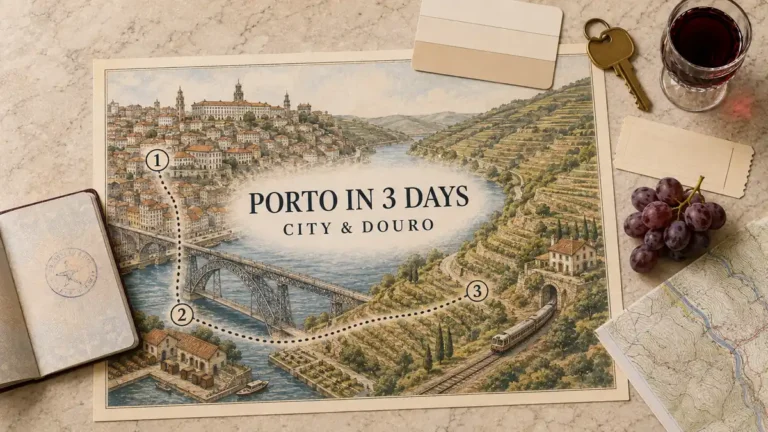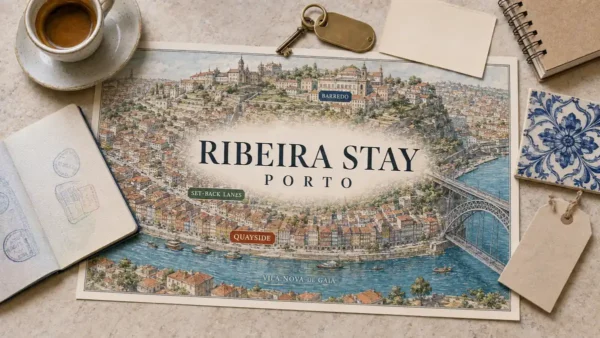
Porto is decided and the budget is premium; the only open question is which part of the city earns it. That choice matters more here than in most European cities, because Porto’s high end is not a resort market. It is a small collection of restored palaces, converted townhouses and a handful of modern hotels, spread across a city built on a steep riverbank. Sleep on the river and you buy the view and the atmosphere, paying for it in crowds and stairs. Sleep in the flat centre and you walk everywhere, trading away the postcard window. Cross to the wine side and you look back at the old town from a hillside. Head west and you swap sightseeing for sea air. This guide ranks the areas that hold Porto’s luxury stock, names the trade-off behind each, and gives one clear first pick.
Quick Answer
Baixa and Aliados is Porto’s best overall luxury base, with palace hotels within walking distance of everything. The closer you sleep to the river, the more view and atmosphere you buy, and the more crowds and hills you accept. Vila Nova de Gaia is the strongest alternative for river-view, wine-led stays.
Trust Layer
Tripstou stay guide for travelers choosing where to base. Covers area atmosphere, budget, convenience, noise, and traveler fit.
Produced with AI assistance and reviewed by Alex Perrut, working in tourism since 2015, for the Tripstou editorial team. See our editorial process for details.
Last factual review: August 31, 2026.
Official sources consulted: Visit Portugal, Turismo de Portugal.
Key Takeaways
- Baixa and Aliados is the best overall luxury base: the flattest central district with the deepest cluster of palace hotels.
- Vila Nova de Gaia is the strongest alternative, buying the postcard skyline of old Porto and the port wine world.
- Every step closer to the river buys view and atmosphere, and costs you crowds, noise and a climb home.
- Porto’s top end is a handful of restored palaces, so settle the area first and the property second.
- Booking Foz do Douro or Boavista expecting to walk into the old town is the most common mistake.
- Altitude decides more than distance here, so travelers with luggage, knees or strollers should filter areas by gradient.
Table of Contents
What Luxury Actually Buys in Porto
Porto’s luxury market is small, historic and hilly, so the area you pick shapes the stay more than the property. A premium budget here buys restored palaces and boutique townhouses with low room counts; large resorts do not exist. The city’s gradients then decide how easy that stay feels day to day.
Porto is a vertical city. The historic core drops from the cathedral terrace to the water in a sequence of stepped lanes, granite cobbles and staircases that no map communicates. A hotel 300 metres from your restaurant can sit a full staircase above it, and that gap is felt most on the first afternoon and the last morning, when you are moving luggage.
Two groups should treat the hills as a filter rather than a detail:
- Travelers with limited mobility, knee problems or a stroller — Baixa and Aliados and Foz do Douro are the flattest luxury bases, and both work without a daily climb.
- Travelers arriving with heavy luggage — riverside lanes in Ribeira are partly pedestrian and partly stepped, so the last hundred metres are rarely drive-up.
Altitude matters more than distance in Porto: two hotels a few streets apart can sit a steep staircase apart in practice, which is why area comes before property in this decision. This page ranks areas, then routes you to the buildings. For an all-budget view of the same map, see the full guide to where to stay in Porto; for what surrounds each base, the Porto city guide covers the wider context.
Baixa and Aliados Are Porto’s Best Overall Luxury Base
Baixa and Aliados is Porto’s best overall luxury base: palace hotels in the flat centre, with everything walkable. The shopping streets, São Bento station and the bridges to Gaia are all reachable on foot, and the core itself stays broadly level. Book it when you are unsure.
The atmosphere is urban and grand — belle époque façades, wide avenues, cafés that stay busy after the day-trippers leave. It feels like a working city centre with luxury hotels inside it, which suits travelers who want dinner reservations, shops and museums within a ten-minute walk of the room.
Convenience is the real argument. From Avenida dos Aliados you walk down to Ribeira in minutes, cross to the Gaia lodges over the upper bridge deck, and reach the station without a taxi. The one climb you will notice is the walk back up from the river at night.
Two properties anchor the area’s top end: Hospes Infante de Sagres, a landmark address a short walk from Aliados, and Maison Albar Le Monumental Palace on Avenida dos Aliados itself. Price positioning is firmly high-end, on par with the riverside, and the area holds the deepest concentration of that tier in the city. The palace hotels cluster here because the grand buildings do, which is why Baixa wins by default. For the neighbourhood beyond its hotels, read the full Baixa area profile.
Best for: walk-everywhere palace luxury.
Hotels and places to stay
Compare hotels, apartments and stays for your dates in one search.
Search hotels and stays on hotels.com →
Tripstou may earn a commission if you book through this link, at no extra cost to you.
Vila Nova de Gaia Is the Pick for River Views and Wine
Choose Vila Nova de Gaia for the best river views and a wine-led luxury stay facing old Porto. The hillside above the port lodges looks straight across at the Ribeira waterfront, which is the view most travelers picture. The cost is a bridge between you and the centre.
Gaia sits on the opposite bank of the Douro, and its identity is the port wine trade: cellars stacked up the slope, tasting rooms, terraces angled at the old town. Evenings here are quieter than Ribeira’s, with the noise on the other side of the water and the skyline in front of you.
Convenience is good but not immediate. The Dom Luís I bridge connects the quays and the upper decks on foot, and the walk back uphill to a Gaia hotel is part of the deal. Price positioning sits at the top of the city’s range, because this is where Porto’s flagship hotel operates: The Yeatman, on the Gaia hillside with the panoramic view of Porto that defines the local top end.
Gaia buys you the view of Porto; Porto buys you the view of Gaia’s lodges — and only one of those is the postcard. If you want the picture from your window and the wine world at your feet, stay in Gaia; if you want to step straight into the old town, stay on the Porto bank. The full Vila Nova de Gaia profile covers the area in depth, and Baixa vs Vila Nova de Gaia compared settles the duel properly.
Best for: river views and port wine.
Is Ribeira Good for a Luxury Stay?
Yes, for atmosphere and river views at your doorstep, with crowds, noise and stairs as the price. Ribeira puts you on the UNESCO-listed quay itself, inside tall, narrow historic buildings that were never designed for large rooms or easy luggage access. It suits short, view-first stays best.
The atmosphere is the strongest in the city and it is unrelenting. The quay fills with day-trippers from mid-morning, restaurant terraces run the length of the water, and the boats and bridge traffic keep the soundtrack going late. That energy is exactly what some travelers pay for and exactly what others cannot sleep through.
Convenience cuts both ways. Everything postcard-worthy is a two-minute walk, but leaving Ribeira means going up — every trip to the shops, the station or a restaurant in Baixa ends with a climb or a taxi. Rooms here are high-end, and the premium here buys the window more than the floor space.
Book Ribeira for two or three nights when the view is the point of the trip; choose Baixa for longer stays, quieter sleep and more hotel for the same spend. The full Ribeira area profile goes deeper on the neighbourhood, and Ribeira vs Baixa compared is the head-to-head.
Best for: postcard riverside atmosphere.
Foz do Douro Trades the Centre for Sea Air and Calm
Foz do Douro suits travelers who want sea air and quiet over sightseeing convenience. It sits where the Douro meets the Atlantic, in an elegant residential district of villas, promenades and beaches. You gain calm, space and ocean-facing rooms; you lose the ability to walk home from dinner in the old town.
The atmosphere is residential and moneyed — seafront promenades, tree-lined streets, local restaurants that are not built around tourism. Mornings are the giveaway: you wake to surf, and the beach is the first thing you do instead of an excursion you schedule.
Convenience is the trade-off, and it is a real one. The historic centre is commonly a 20–30 minute ride away, which turns spontaneous sightseeing into planned trips. Vila Foz anchors the area’s top end on the seafront, and price positioning is high-end with noticeably more space and garden than the historic core offers.
Foz earns its place on longer stays. On four nights or more, the calm base repays the daily ride; on a two-night city break, it quietly costs you an afternoon.
Best for: sea air and quiet.
Boavista Is the Business and Big-Hotel Alternative
Boavista suits business trips and travelers who want modern big-hotel comfort over historic charm. West of the centre, it is Porto’s corporate and shopping district: wide flat avenues, larger contemporary hotels and more space per euro. Leisure-first luxury travelers usually do better closer to the river.
The atmosphere is modern and orderly. Office towers, the concert hall, a major shopping centre and broad boulevards give the area a different rhythm from the old town — practical, uncrowded, and easy to move through with a suitcase or a stroller.
Convenience depends on your purpose. Meetings, shopping and flat walking are all handled well here, while the historic core is a ride away and the riverside atmosphere does not reach this far west. Price positioning runs mid-range to high-end, and rooms tend to be larger and newer than anything in a converted palace.
The area’s quiet advantage is levelness: Boavista is the one base where you can walk for an hour without a gradient, which matters more than it sounds after two days in Porto’s old town.
Best for: business trips and modern big-hotel comfort.
The Palace Outliers: Bonfim and the Eastern Riverside
Bonfim and the eastern riverside hold standout palace hotels, but the surrounding areas suit hotel-first, not area-first, stays. Both sit outside the walkable luxury core, so you book the building and accept the commute. They work when the property itself is the reason for the trip.
Pestana Palácio do Freixo occupies a baroque palace on the eastern riverside, well downstream of the tourist quays, with the river in front of it and very little else within walking distance. It suits travelers who want a destination hotel and a quiet setting, and who are comfortable riding into town for everything else.
GA Palace sits in Bonfim, an inland residential district east of the centre that is more local than luxurious. The building is the draw; the neighbourhood is ordinary Porto, which is a plus for repeat visitors and a mismatch for a first high-end stay.
Best Porto Areas by Traveler Type
Walkers book Baixa and Aliados, view-seekers and wine lovers book Gaia or Ribeira, and beach-and-quiet travelers book Foz do Douro. Business and shopping trips belong in Boavista. Each traveler type here gets exactly one area, so the shortlist resolves without a second round of research.
- View-seekers: Vila Nova de Gaia, for the full skyline of old Porto from the hillside.
- Walkers and hill-avoiders: Baixa and Aliados, the flattest central base with the most palace hotels.
- Wine-focused travelers: Vila Nova de Gaia again on the lodge slope, where the cellars are the neighbourhood.
- Beach and quiet: Foz do Douro, ocean-facing and residential, with the centre a short ride away.
- Business and shopping: Boavista, for modern hotels, meeting rooms and flat streets.
- Atmosphere-first short breaks: Ribeira, where the quay is your doorstep for two or three nights.
| Area | Best suited to | Indicative nightly spend | Position relative to the centre |
|---|---|---|---|
| Baixa and Aliados | Walk-everywhere palace luxury, first high-end visit | High-end, broadly level with riverside rates | You are already in the centre, on flat ground |
| Vila Nova de Gaia | River views and port wine cellars | Top of the market, from roughly €350 a night | Across the bridge, uphill on the far bank |
| Ribeira | Postcard riverside atmosphere, short stays | Roughly €150–€300+ a night for river-view rooms | On the historic quay, with a climb back up |
| Foz do Douro | Sea air, quiet streets and beach mornings | High-end, with more space for the money | Commonly a 20–30 minute ride to the old town |
| Boavista | Business trips and modern big-hotel comfort | Mid-range to high-end, generally gentler | West of the centre, flat and a ride away |
Resolve the area first, then the building. Once your base is settled, the shortlist of boutique and luxury hotels in Porto is the natural next click, because Porto’s best properties are area-defining and there are few of them in each one.
How Much Does a Five-Star Night in Porto Cost?
Expect roughly €150–€300+ a night for riverside five-star stays, with the market’s top property starting from around €350. Season moves those bands more than the area does. Porto’s luxury stock is small and reprices quickly, so the live rate on your dates is the one that decides the booking.
The bands split into two tiers. Ribeira and the Baixa palace hotels share the broad high-end range, with river-view rooms sitting at the upper end of it. Gaia’s flagship sits above that tier on its own, which is why the city’s headline rate and its typical rate are so far apart.
Season is the lever you actually control. Summer and major event periods push the top end hardest, while the cooler months soften the same rooms across every area. What the premium buys is consistent: a historic building, a small room count, and service scaled to a hotel with dozens of rooms instead of hundreds.
Porto’s top end is priced by room scarcity, not by resort scale — a palace hotel with a few dozen rooms fills before it discounts, so the flexible date beats the late deal here.
Frequently Asked Questions
How far is Foz do Douro from Porto’s city centre?
Roughly a 20–30 minute ride along the river, west to where the Douro meets the Atlantic. The number that matters is not the minutes but the repetition: most luxury stays in Foz make that trip twice a day, so budget the time and the fares into the plan.
Do you need a car to stay in Vila Nova de Gaia?
No. Gaia’s hotel belt sits within walking distance of the port lodges and the bridge across to old Porto, and rides into the centre are short. What you do need is tolerance for the hill: the walk back up from the quayside is part of every evening.
Does Porto have five-star hotels with pools?
Yes, a small number do, concentrated in the larger properties on the Gaia hillside, in the seafront district and among the newer palace conversions. Porto’s historic townhouse hotels rarely have space for one, so if a pool matters, treat it as a filter before you shortlist buildings.
Is Porto expensive for luxury travel compared to Lisbon?
Generally no. Porto’s top end is smaller and priced more gently than the capital’s, with fewer international flagships competing at the very top. The exception is the city’s one headline property, which sits above everything else locally, and peak weeks, when scarce rooms push the whole market up.
When is the most expensive time to book a luxury hotel in Porto?
Summer weeks and major event periods, when Porto’s small high-end stock sells out first. The squeeze lands hardest on river-view rooms in Ribeira and on the Gaia hillside, where the view is the product. Central palace hotels feel it less, because their premium is not tied to a window.
Related Guides
- Where to stay in Porto — every area, every budget, in one map.
- Boutique and luxury hotels in Porto — the property-level shortlist once your area is settled.
- Baixa area profile — the central district behind the top overall pick.
- Vila Nova de Gaia profile — the wine bank and its riverside hillside.
- Ribeira area profile — the UNESCO-listed quay in full.
- Ribeira vs Baixa compared — the head-to-head for central stays.
- Baixa vs Vila Nova de Gaia compared — which bank of the Douro to sleep on.
- Porto city guide — the wider context around your base.
Did this guide save you time or money? Tripstou is independent and reader-funded — if you'd like to give something back, you can support the site with a crypto contribution of any size.