You have already chosen Porto. The question left is narrower and more practical: whether it is fine to walk back to your accommodation after dinner, whether the metro is a pickpocket’s playground, whether arriving alone changes the calculation. Those are the right questions, and they deserve precise answers instead of reassurance.
This guide gives the verdict first and the precision underneath it. Porto is a safe city, and saying so plainly is not the same as saying nothing goes wrong. Things do go wrong, in a narrow and predictable band: hands in bags at crowded chokepoints, distraction plays run by teams, and — more often than anyone expects — a slip on a wet cobbled slope. Everything below maps where that risk sits, where it does not, and which habits actually change outcomes.
Quick Answer
Porto is a safe city for visitors, and the realistic risk is petty theft, not violence. Risk concentrates in crowded tourist moments — viewpoints, the São Bento to Sé corridor, packed metro carriages — not in particular neighbourhoods. Keep your phone and wallet zipped away in crowds and while boarding.
Trust Layer
Tripstou safety guide for travelers deciding how safe a destination is and what precautions actually matter. Covers real risk levels, common scams, situational awareness, and protection choices.
Produced with AI assistance and reviewed by Alex Perrut, working in tourism since 2015, for the Tripstou editorial team. See our editorial process for details.
Last factual review: August 30, 2026.
Official sources consulted: Visit Portugal, Turismo de Portugal.
Key Takeaways
- Porto is a safe city for visitors: violent crime against tourists is rare and petty theft is the realistic risk.
- Theft follows crowds, not neighbourhoods — São Bento, the Sé climb, Ribeira and packed viewpoints carry nearly all of it.
- Every Porto scam is an engineered moment of divided attention, so your first reflex in an interruption should be your bag.
- A zipped bag worn in front beats vigilance, because attention drops across a long sightseeing day and equipment does not.
- Steep, polished cobbles turn slippery in rain, which makes grippy footwear one of Porto’s real safety decisions.
- Insurance earns its cost through medical cover and electronics theft; it matters less on short trips with existing card cover.
Table of Contents
Porto Is Safe for Tourists — the Real Risk Is Petty Theft
Porto is a safe city for tourists, and the realistic risk is opportunistic petty theft. Violent crime against visitors is rare. What actually materialises, again and again, is distraction theft worked by small teams in the busiest tourist crowds — a wallet or a phone, taken without confrontation.
Portugal sits at the lowest tier of the US State Department’s advisory system, Level 1, Exercise Normal Precautions — the same category given to the calmest countries in Europe. That national framing, and the legal and consular detail behind it, belongs to the national safety picture for Portugal, which this page deliberately does not duplicate.
British consular guidance names the mechanism precisely: theft carried out by teams working through distraction. One person creates the interruption — a question, a spill, a dropped object, a crowd forming — while a second takes the bag. That is a fundamentally different threat model from street violence, and it responds to different countermeasures.
Vigilance is the wrong lever in Porto. Nobody stays alert across a full day of viewpoints, tiled churches and port lodges, and the distraction play is designed for exactly the moment your attention drops. A zipped bag worn across your front keeps working while your attention wanders; concentration does not.
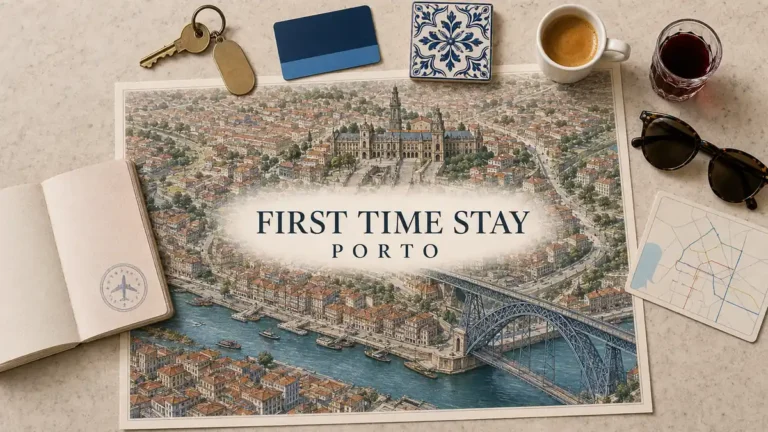
It is worth stating what “safe” means here, precisely. It means you can walk the centre at most hours without calculation, and it does not mean an open tote survives an afternoon in a Ribeira crowd. If Porto is still taking shape in your plans, the complete Porto travel guide handles the orientation this page skips.
Where Porto’s Risk Actually Concentrates
Porto’s theft risk follows crowds, not neighbourhoods. The busiest tourist chokepoints carry nearly all of it, because distraction teams need density, visitors holding phones, and a fast exit. Quiet residential streets — the places a “bad area” list would flag — supply none of those conditions and see almost none of this activity.
The pickpocket map: stations, viewpoints and crowd moments
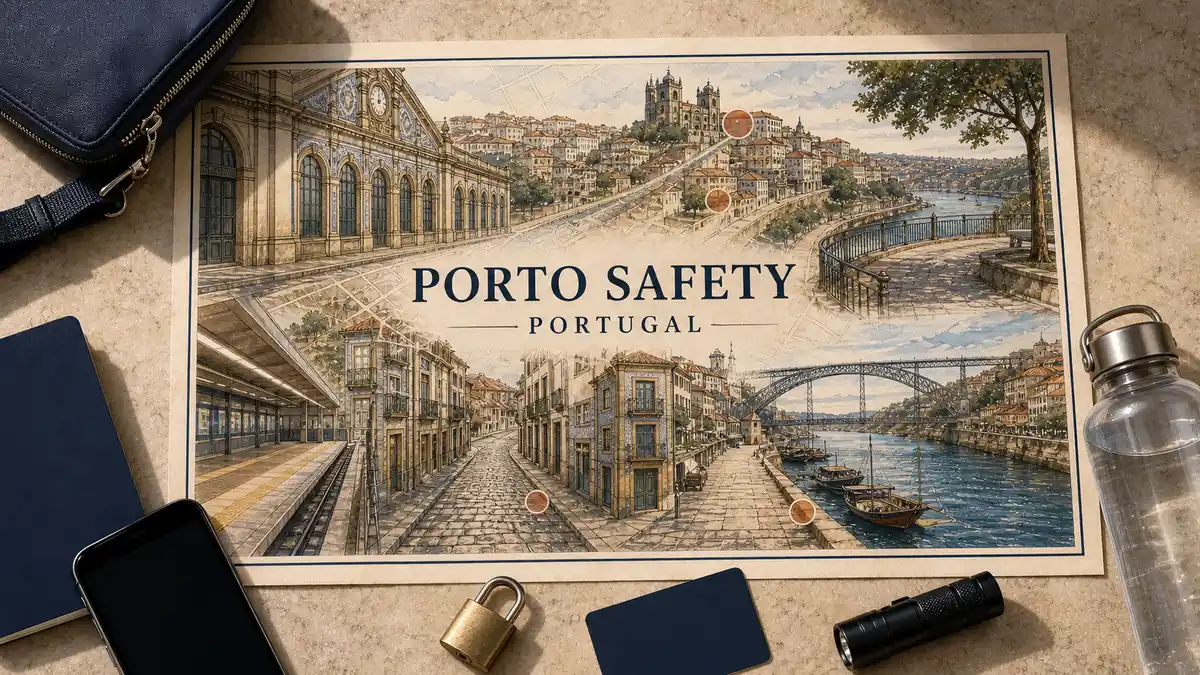
The highest-attention places in Porto are the highest-risk ones, and they are easy to name. São Bento station is the classic example: a tiled concourse where every visitor stops, looks up, and holds out a phone. The corridor climbing from São Bento to the Sé concentrates the same crowd in a narrower space.
The Ribeira riverfront runs the pattern all day, especially where the terrace crowds thicken and bags go over chair backs. Rua Santa Catarina compresses shoppers and visitors into a single pedestrian channel. Crossings of the Dom Luís I bridge bunch people at the entrances. Packed viewpoints do the rest of the work, because a viewpoint is a place where everybody faces the same direction at once.
None of that describes a dangerous city. It describes a small set of predictable moments, and the countermeasures are equally small:
- Carry a bag that zips, worn in front, in any crowd — never slung behind you or hooked over a chair back.
- Keep your phone in a front pocket or in your hand, never resting on a café table.
- Split your money: one card and small cash on you, the rest at your accommodation.
- When someone interrupts you unexpectedly in a crowd, put a hand on your bag first and answer second.
Safe areas — and how to read “avoid this neighbourhood” advice
The tourist core of Porto is uniformly safe throughout the day, and there is no meaningful safety ranking to draw between Ribeira, Baixa, Cedofeita, Bolhão or Vila Nova de Gaia. Visitors sometimes arrive expecting a blacklist of neighbourhoods. Porto does not have one a traveler could act on.
The honest version of that advice is geographic, not moral. Residential districts on the city’s outskirts sit well away from anything on a visitor’s itinerary and have no reason to appear in your route; read “avoid this area” as a map of where you have nothing to do, rather than a danger list. Naming and grading peripheral neighbourhoods is where most safety pages go wrong — the labels are stale, thinly sourced, and describe social conditions instead of visitor risk.
One place-based caution does hold, and it is ordinary. Station surroundings anywhere in Europe attract late-night loitering, and the area around Campanhã is no exception; arriving there very late, walk with purpose to the metro or a taxi instead of lingering outside. That is station-environment behaviour, not a verdict on a district.
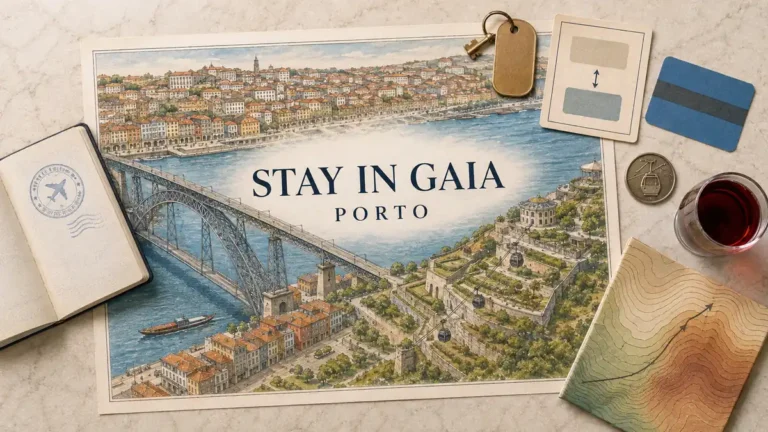
Where you sleep is the lever that actually changes how a night feels — walking distance home, street lighting, how busy your block stays after midnight. That is a base-selection decision, and it is resolved in the guide to where to stay in Porto, area by area.
Is Porto Safe at Night?
Porto is safe at night in the centre, and the shift after dark is behavioural. Streets that feel busy at nine in the evening stay walkable much later. What changes is the concentration of alcohol around nightlife hours, and that is where the rare serious incidents cluster.
Porto’s going-out life is unusually concentrated, which is useful to know. Galerias de Paris and the streets around it hold most of the bar crowd, and the Ribeira quayside holds the rest. Concentration cuts both ways: those streets stay full and overlooked until very late, and they are also where drink, noise and crowd friction accumulate.
Consular guidance is calibrated on this point, and repeating it accurately matters more than softening it. Assault and sexual assault are rare in Portugal, they do occur, and they concentrate late at night around nightlife locations. Drink spiking is officially named as a risk, including GHB. Watching your drink being poured and never leaving it unattended covers most of that exposure.
Day and night differ less here than most visitors expect. Keep to streets with people on them, take a licensed taxi or an app ride home from a quiet corner of the city, and treat the walk down from a viewpoint after dark as a footing problem before a safety one. The stone gets slick long before the street gets risky.
Common Scams in Porto
Porto’s scams are distraction plays run by teams at predictable tourist chokepoints, and each has a learnable shape. None of them depend on you being gullible. They depend on your attention being split for a few seconds. Recognising the shape beats memorising any list.
These are the patterns that recur in Porto’s own tourist geography:
- The team distraction and bag lift — worked at São Bento, along the São Bento to Sé climb, and in Ribeira terrace crowds. Recognise it by the interruption: someone blocks, spills, drops something, or asks a question at close range while a second person moves behind you. Step back out of arm’s reach, hand on your bag, and walk on without engaging.
- The clipboard petition — common on Rua Santa Catarina and at the Dom Luís I bridge entrances. Recognise it by the clipboard held at chest height, which occupies your eyeline and your hands at the same time. Do not stop, do not take the pen, keep moving.
- The ATM helper — anywhere a cash machine faces a busy street. Recognise it by an unsolicited offer of assistance at the keypad, or by a card slot or keypad that feels loose or bulky. Use machines inside bank branches, cover the keypad with your free hand, and decline all help.
- The unmetered ride — taxis picked up at ranks outside stations and major sights. Recognise the mechanism, which is simply a meter that never gets switched on, or a price quoted through the window instead. Ask for the meter before you sit down, or use an app where the fare is agreed in advance.
Carry the principle instead of the list: every one of these is an engineered moment of divided attention. If something unexpected demands your focus in a crowded place, the correct first reflex is your bag, not the person in front of you.
Scam awareness is one layer of city fluency; the everyday habits that sit beside it — how the couvert works, when cash beats card, how tipping actually functions — are covered in the Porto travel tips guide.
Is Porto’s Public Transport Safe?
Porto’s metro and buses are safe, and the only real risk window is pickpocketing during boarding and alighting crushes. The vehicles themselves are modern, well used and well lit. Theft happens in the scramble at the doors, when everyone is pressed together and looking at the gap.
That crush is the whole risk, and it lasts seconds. Peak-hour services and the lines carrying visitors towards the coast and the airport hold the densest tourist loads, which is exactly where a hand can reach an unzipped daypack without anyone noticing. Wear your bag in front while you board, and keep it there until the doors close.
Station environments follow the pattern set out above. São Bento draws visitors, so it draws attention-seeking distraction; Campanhã, as the intercity hub, earns the ordinary late-night caution any big station does. Neither is a place to avoid — both are places to move through deliberately.
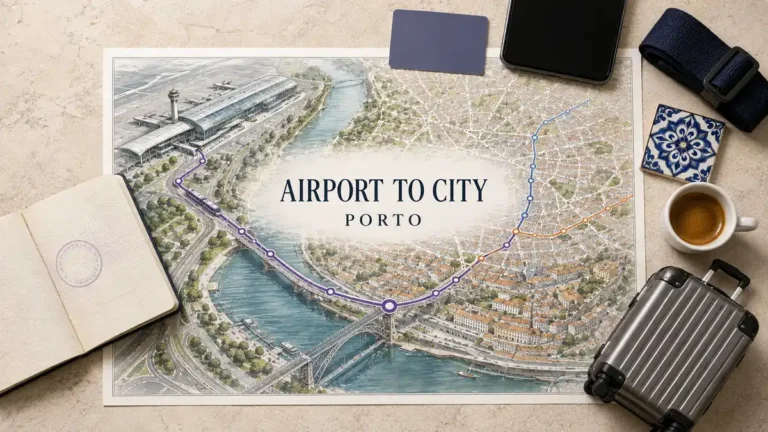
Nothing about ticketing or route mechanics changes the safety picture, so it stays out of this page: validation, passes and line choices are handled in the Porto public transport guide, which is also where arrival questions belong if you are working out how to reach the centre on your first day.
Is Porto Safe for Solo Female Travelers?
Porto is a comfortable city for solo and solo female travelers, and the caveats concentrate in late-night nightlife settings. Ordinary city habits carry you through the daytime and the early evening. Consular guidance describes assault and sexual assault as rare while noting they do occur, mostly late at night near nightlife.
Daytime Porto asks almost nothing extra of a solo visitor. The centre is busy, walkable and full of other travelers; eating alone, riding the metro alone and walking home from a restaurant at a normal hour are unremarkable here. Street harassment exists, as in any European city, and is generally low-key.
The night hours are where habits earn their keep, and they are the same habits that work anywhere. Watch your drink poured, keep it with you, and stay with the group you arrived with. Agree how you are getting home before you go out, so the decision is not being made at two in the morning on a quiet street. An app ride with a tracked route removes the ambiguity entirely.
Framing matters as much as the advice here. These are ordinary precautions, not a special regime for women travelling alone, and Porto does not ask you to shrink your trip in order to stay safe in it.
Porto’s Most Underrated Risk Is Its Own Terrain
Porto’s steepness is its real everyday hazard. A visitor is likelier to be hurt by the ground than by anyone standing on it. The city stacks polished stone cobbles on serious gradients, adds long stair streets between the river and the upper town, and finishes with open water edges.
Wet stone is the specific problem. Porto’s cobbles and pavement slabs are worn smooth by centuries of feet, and rain turns the steeper stretches genuinely slippery — the descents towards the Ribeira most of all, where gradient and polish combine. Grip matters more than any other piece of gear you bring. Trainers with real tread beat smooth-soled boots or fashion shoes by a wide margin.
The stair streets connecting the riverside to the upper town are steeper and longer than they photograph. Handrails are inconsistent, treads are uneven, and coming down tired at the end of a day is when ankles turn. The Dom Luís I upper deck adds height and wind exposure to a shared pedestrian walkway, which is exhilarating in good weather and demands a firmer hold on hats, phones and children in bad.
Water edges deserve one honest sentence. Long stretches of the Ribeira quayside and the Gaia bank are unfenced, with a straight drop to the Douro, and they are busiest exactly when people are relaxed and holding drinks. Keep back from the edge in crowds, and keep small children on the inside.
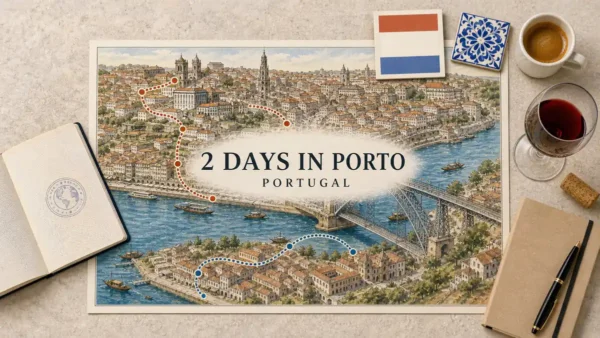
The planning consequence is pacing, not avoidance. Porto punishes itineraries that treat map distance as flat distance — a route that climbs and descends the hill three times will exhaust you long before the kilometres explain why. Building the day around a single climb is the fix, which is how the 2 days in Porto and 3 days in Porto itineraries order their routes.
Do You Need Travel Insurance for a Porto Trip?
Travel insurance is worth buying for a Porto trip if it covers medical treatment and theft of electronics. Those are the two exposures the city realistically creates. It matters less if you already hold adequate cover through a bank card, an annual policy, or an existing health arrangement that travels with you.
Medical cost is the scenario that justifies cover on its own, because it is the one with no ceiling. A turned ankle on a stair street or a fall on wet cobbles is the most plausible claim on this trip, and Porto’s terrain makes that likelier than its crime does. Treatment, a scan, and getting home on a leg you cannot walk on is where an uninsured trip becomes expensive.
Theft of electronics is the second real scenario, and it maps directly onto the one crime pattern this city produces. A lifted phone or camera in a Ribeira crowd is a mid-sized loss, and whether it is recoverable depends entirely on how your policy treats unattended items and on whether you filed a police report. Cancellation cover is a separate judgement about your own flexibility.
Proportion settles it. A policy costing a fraction of one night’s accommodation is trivially worth it across a week-long trip; the same policy on a two-night break with no expensive kit and existing card cover is closer to a coin flip. Weigh it against what the trip actually costs by working through the Porto trip cost breakdown first — the decision moves with the size of the trip, not with the size of the risk.
Travel medical insurance
SafetyWing Nomad Insurance provides travel medical coverage designed for travelers and digital nomads, with flexible Monthly and Annual plans.
Check Nomad Insurance coverage and current pricing →
New Nomad Insurance Essential members can get 8 weeks of electronic theft coverage free with reward code TRIPSTOU8.
Apply the reward before creating your SafetyWing account by looking for the pink camera icon on the Nomad Insurance page.
Tripstou may earn a commission if you purchase through this link, at no extra cost to you.
112 Is the Only Emergency Number You Need in Portugal
Dial 112 for any emergency in Portugal — police, ambulance and fire all answer on one number. That single number is the whole thing you need to remember, and it works from any phone. Everything else after an incident is paperwork, and the order it happens in matters.
The short list of things worth knowing in advance:
- 112 — police, ambulance and fire, from any phone, anywhere in Portugal.
- Report theft to the police. The report is what makes a claim possible; without documentation, an insurance line about a stolen phone goes nowhere.
- Cancel cards immediately and keep your bank’s international number stored somewhere other than the phone you might lose.
Everything act-now lives here, deliberately. Emergency information scattered through an article is emergency information nobody can find at the moment it is needed.
Frequently Asked Questions
Is tap water safe to drink in Porto?
Yes, tap water in Porto is safe to drink, and refilling a bottle from the tap is completely normal. Bottled water is a preference here, not a precaution. If the taste of treated water bothers you, a filter bottle solves it without adding plastic to the trip.
Is Porto safer than Lisbon?
Both cities sit in the same national safety picture, and neither is meaningfully riskier for a visitor. Porto is smaller and its tourist core is more compact, so crowds — and therefore pickpockets — concentrate in fewer places. That makes the risk easier to predict in Porto, not lower overall.
Is Porto safe for families with kids?
Yes, Porto suits families well, and the hazards worth planning around are physical, not criminal. Unfenced riverside quays, long stair streets and slippery cobbles are the real supervision points, especially in Ribeira crowds. Keep small children on the inside away from the water edge, and pace the hill climbs.
Is drink spiking a risk in Porto’s nightlife?
Drink spiking is officially named as a risk in Portugal, including GHB, and Porto’s late nightlife hours are where that exposure sits. The countermeasure is behavioural and simple. Watch your drink being poured, keep it in your hand, and abandon anything you have lost sight of.
Are rental car break-ins a problem in Porto?
Vehicle break-ins follow the same opportunistic pattern as street theft: visible valuables invite the attempt. Cars with rental-company stickers draw more attention, and boot-visible luggage is the classic trigger. Park in a staffed garage where you can, and empty the car completely instead of hiding bags under a seat.
Is Uber safe in Porto?
Yes, ride-hailing apps are safe and widely used in Porto, and they remove the one taxi risk this city produces. The fare is agreed in the app, so the unmetered-ride mechanism cannot happen, and the route is tracked and shared. Match the plate before you get in.
Is Porto walkable with the hills and cobblestones?
Yes for most visitors, with the caveat that Porto is a genuinely steep city. Grippy trainers make the difference; smooth soles do not cope with polished stone. Anyone with knee, hip or balance limitations should plan around the funicular, the bridge decks and taxis instead of the stair streets.
Related Guides
- Porto travel guide — the full orientation: what the city is, how long it needs, and how the neighbourhoods fit together.
- Is Portugal safe? — the national picture, advisory framing and the country-wide scam catalogue behind this city page.
- Where to stay in Porto — the base decision, area by area, including how walkable each one is at night.
- Getting around Porto — metro, buses, funicular and tickets, plus how to reach the centre when you arrive.
- Porto travel tips — the everyday habits: couvert, cash and card, tipping, and the small etiquette that saves friction.
- Porto trip cost — what a trip actually costs, which is the number the insurance decision should be weighed against.
- 2 days in Porto — a route ordered around the hill, so the climbing happens once.
- 3 days in Porto — the same logic with room for Gaia, the coast and a slower pace on the cobbles.
Did this guide save you time or money? Tripstou is independent and reader-funded — if you'd like to give something back, you can support the site with a crypto contribution of any size.