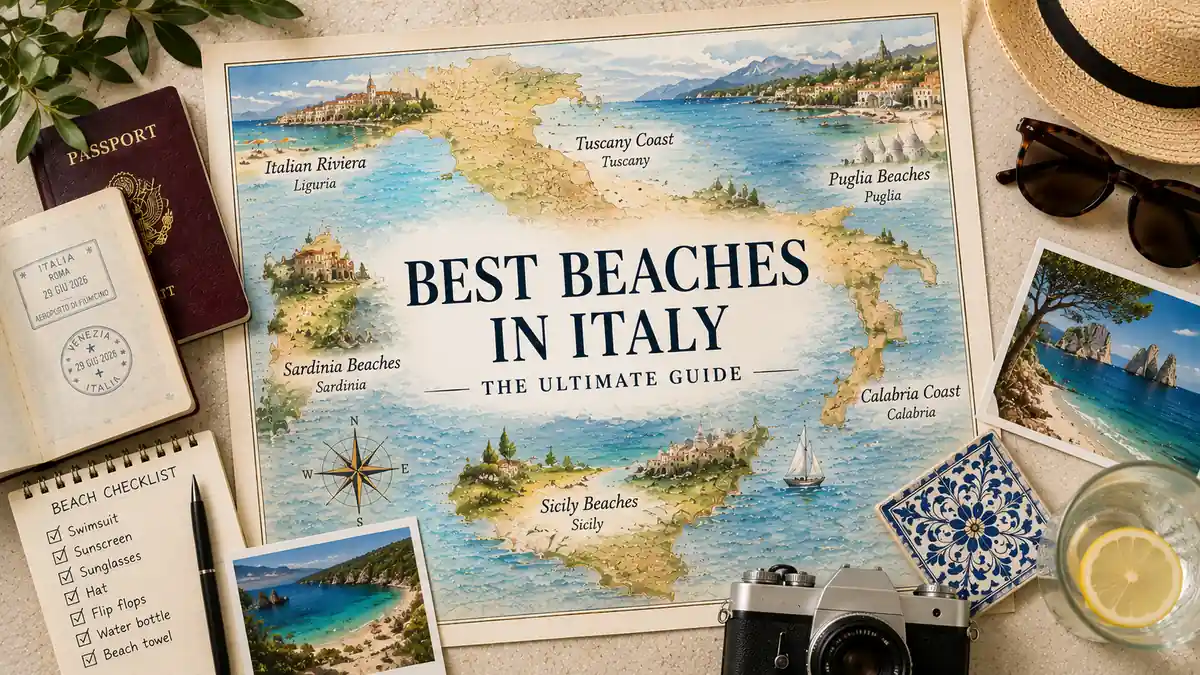
Italy has thousands of kilometres of coast spread across two big islands and a long mainland, so the real question is never whether the beaches are good — it is which ones fit your trip. A family wanting shallow, serviced sand needs a different stretch than a couple chasing an empty cove. This guide cuts that problem down to a shortlist, grouped by region and island and by how you travel, with one clear reason to go for each pick. Use it to narrow Italy’s coast to the few beaches worth your time, then follow the routes deeper into the regional, island, and planning guides where the booking detail lives.
Quick Answer
Sardinia and Sicily hold Italy’s best beaches overall, led by Cala Brandinchi and San Vito Lo Capo. This shortlist groups picks by region and island and by how you travel — families, couples, or wild-beach seekers. For mainland beaches reachable without a ferry, choose Puglia or the Italian Riviera.
Trust Layer
Tripstou selection guide for travelers choosing between multiple places. Covers selection criteria, traveler fit, and trip value.
Produced with AI assistance and reviewed by Alex Perrut, working in tourism since 2015, for the Tripstou editorial team. See our editorial process for details.
Last factual review: June 29, 2026.
Official sources consulted: italia.it, enit.it.
Key Takeaways
- Sardinia and Sicily hold Italy’s best beaches overall, with Cala Brandinchi and San Vito Lo Capo setting the standard for clarity.
- Families do best on San Teodoro in Sardinia or Tuscany’s Versilia coast, where shallow water meets full beach services.
- Couples seeking quiet should target hard-to-reach coves like San Fruttuoso, where boat-only access keeps the crowds away.
- For the sandiest beaches with the clearest water, choose Sardinia or western Sicily; much of the north runs pebbly.
- The islands win on scenery but cost a ferry or flight, so combine fewer of them to keep planning simple.
- For island-grade water without a ferry, pick mainland Puglia or Calabria, and visit in June or September to dodge peak crowds.
Table of Contents
Sardinia and Sicily Hold Italy’s Best Beaches
Sardinia and Sicily hold Italy’s best beaches, combining clear turquoise water, soft sand, and sheer variety. Sardinia leads for Caribbean-style bays, while Sicily pairs warm seas with dramatic coastline. Both islands offer dozens of beaches close together, so you can switch coves by mood instead of committing to one stretch.
The headline picks set the standard for the rest of this list:
- Cala Brandinchi (Sardinia) — shallow, glass-clear water over white sand, nicknamed “Little Tahiti” for good reason.
- La Pelosa (Sardinia) — a wide, pale crescent backed by a watchtower, with water that stays knee-deep far out.
- San Vito Lo Capo (Sicily) — a broad sandy bay under a limestone headland, with some of the warmest swimming on the list.
Choosing between the two islands is the harder call, and it deserves its own decision, not a one-line verdict here. For the full case on each, and which beaches sit where, work through the Sardinia travel guide and the Sicily travel guide; to weigh them against Italy’s other islands in one place, see the guide to Italy’s islands.
The islands win on scenery but cost you a ferry or a flight. The fewer islands you try to combine in one trip, the cheaper and simpler the planning stays — and treat ferry and beach-club costs as ranges to verify before you book.
Best Beaches in Southern Italy: Puglia, Calabria and Campania
Southern mainland Italy delivers long sandy beaches, warm shallow water, and lower costs than the islands. Puglia and Calabria carry the strongest stretches, with easy road and rail access from the rest of Italy. Standouts include Marina di Pescoluse in Puglia and the cliff-backed sand below Tropea in Calabria.
The south is where you get island-grade water without an island budget. Its signature picks:
- Marina di Pescoluse (Puglia) — pale sand and shallow blue water on the Salento tip, often called the “Maldives of Salento.”
- Tropea (Calabria) — a bright sandy beach below a clifftop old town, with a sea-stack monastery as the backdrop.
- Campania coast — the Cilento and Amalfi shorelines trade wide sand for scenic pebble coves tucked under cliffs.
Pescoluse and the wider Salento coast reward a deeper look at logistics and nearby bases, covered in the Puglia travel guide. For Campania’s cliff-hung coves and the scenery around the Amalfi shoreline, route through the Amalfi Coast guide rather than treating it as a sand-beach destination.
Best Beaches in Northern Italy and the Italian Riviera
Northern Italy and the Italian Riviera trade wide sand for scenic coves, pebbles, and dramatic cliffs. Liguria sets the tone, with small rocky bays framed by pastel villages, not broad beaches. The standout is San Fruttuoso, a pebble cove reachable mainly by boat or a coastal trail.
Set your expectations before you go: the north is about setting, not soft sand underfoot. What that looks like in practice:
- San Fruttuoso (Liguria) — a tiny pebble cove with a medieval abbey on the shore, no road access, and clear deep water.
- Cinque Terre coves (Liguria) — mostly rocky swim spots below the famous villages, scenic but small and quickly busy.
- Riviera resort beaches — wider managed strands near towns trade wild character for easy access and full services.
Bring water shoes for the pebbles, and judge these beaches on the views and the village backdrop rather than expecting Sardinian sand. The payoff is scenery you simply do not get on the flatter southern coasts.
Best Beaches in Italy for Families
The best Italian beaches for families have shallow, calm water, soft sand, and on-site services. Gently shelving bays let small children paddle safely, while nearby loungers and snack bars keep long days easy. San Teodoro in Sardinia and the Versilia coast in Tuscany are reliable family choices.
For families, the priority is water that stays shallow far from shore and a beach with shade, food, and clean facilities within reach. The picks that deliver both:
- San Teodoro (Sardinia) — long sandy bays with shallow, sheltered water and plenty of serviced beach clubs.
- Versilia coast (Tuscany) — wide flat sand with the densest run of family-ready facilities in mainland Italy.
- Marina di Pescoluse (Puglia) — shallow water and soft sand that suit toddlers, with easy mainland access.
Serviced beaches cost more than free stretches, but for families the loungers, shade, and shallow water usually justify it. Treat club prices as ranges that shift with season and location, and confirm them locally before committing to a full day.
Best Beaches in Italy for Couples and Quiet Coves
Couples and quiet-seekers should head for hidden coves and scenic stretches that take effort to reach. Harder access is the whole point: a short hike or boat ride filters out the crowds. The Amalfi-area coast and Sardinia’s smaller coves deliver romance without the resort bustle.
The romantic beaches in Italy are rarely the easy ones — they sit at the end of a trail, a boat hop, or a steep path. That friction is exactly what keeps them quiet. Where to aim:
- Hidden Amalfi-area coves — small pebble inlets below the cliffs, several reachable only by boat or steps.
- San Fruttuoso (Liguria) — boat-only access and an abbey backdrop make it one of the country’s most atmospheric swims.
- Smaller Sardinian coves — pockets of sand away from the headline bays, emptiest early and late in the day.
Arrive early or near sunset, when day-trippers thin out and the light turns the water its clearest. The harder a cove is to reach, the more of it you will have to yourselves.
Tours and activities
Book skip-the-line tickets, day trips and local tours with free cancellation on most activities.
You can also browse everything on getyourguide.com.
Tripstou may earn a commission if you book through this link, at no extra cost to you.
Where Are Italy’s Sandiest Beaches with the Clearest Water?
Italy’s sandiest, clearest-water beaches are in Sardinia and western Sicily. Sardinia’s Cala Brandinchi and La Pelosa set the standard for fine white sand and shallow, transparent water. Sicily’s San Vito Lo Capo matches them, while much of mainland and northern Italy runs pebbly instead.
Sandy-versus-pebbly is the single biggest variable in Italian beaches, and it tracks closely with geography. The sand-and-clarity shortlist:
- Cala Brandinchi (Sardinia) — fine white sand and shallow, see-through water, the benchmark for clarity.
- La Pelosa (Sardinia) — pale powder sand and pastel-blue shallows that stay swimmable far out.
- San Vito Lo Capo (Sicily) — a wide sandy bay with warm, clear water under a dramatic headland.
As a rule of thumb, the south and the islands give you sand, while Liguria and much of the north give you pebbles and rock. Neither is better — clear water is common to both — but it decides whether you pack a beach towel or water shoes.
When Is the Best Time to Visit Italian Beaches?
The best time to visit Italian beaches is June and September, just outside the peak summer crush. July and August bring the warmest sea and liveliest beach scene, but also the biggest crowds and highest prices. Shoulder months keep the water warm enough to swim while beaches and towns breathe more easily.
The trade-off is simple: peak summer maximises heat and atmosphere but minimises space and value, while the shoulder months reverse that balance. June and September stay warm enough for comfortable swimming across most of the coast, with thinner crowds and easier bookings, especially on the islands and the southern mainland. If beach timing is one piece of a bigger Italy trip, line it up against the rest of your route using the best places to visit in Italy, and plan the wider logistics from the Italy travel guide hub.
Book ferries, beach clubs, and coastal stays earlier for summer dates — peak-season availability tightens fast on the islands and the Amalfi Coast, and prices follow.
Train and bus tickets
Compare routes, schedules and prices across rail and bus operators in one search, with mobile tickets on your phone.
New to Omio? Code NEW10 takes 10% off your first booking — or APPNEW10 if you book inside the Omio app. Both apply to bookings up to €80.
Search routes and compare prices on Omio →
Tripstou may earn a commission if you book through this link, at no extra cost to you.
Frequently Asked Questions
Are Italian beaches free, or do you pay for beach clubs (stabilimenti)?
Italy has both. Many beaches include free public stretches (spiaggia libera) alongside paid beach clubs called stabilimenti, which rent loungers, umbrellas, and access to facilities. Free sections are common but can be smaller or busier, while clubs cost more in peak summer. Treat any club price as a seasonal range to confirm locally.
Which is better for beaches, Sardinia or Sicily?
Both rank among Italy’s best, so it comes down to priority. Sardinia wins for Caribbean-style white sand and glass-clear shallows like Cala Brandinchi. Sicily pairs warm seas with dramatic scenery, plus richer food and culture nearby. For pure beaches choose Sardinia; for beaches and sightseeing combined, lean toward Sicily.
Can you swim at Italian beaches in September?
Yes, September is one of the best months to swim in Italy. The sea stays warm after the summer, especially in the south and on the islands, while crowds and prices drop from their August peak. Water cools gradually through the month, so early September is warmer and more reliable than late September.
Do you need to book an Italian beach club in advance?
For summer visits, yes — booking a beach club ahead is wise on the islands and the busiest coasts. Popular stabilimenti fill quickly in July and August, and weekends sell out fastest. In June or September you can often arrive without a reservation. Free public beaches never need booking, just an early start.
Are Italy’s best beaches reachable without a car?
Some are, but many of Italy’s best beaches reward having a car. Resort beaches and town strands on the Riviera, Versilia, and near Tropea connect by train or bus. Remote island coves and Sardinian bays are far easier with your own wheels. Boat-only spots like San Fruttuoso need a ferry or coastal trail.
Which Italian region has the warmest sea for swimming?
Southern Italy and the islands have the warmest sea, especially Sicily and Sardinia. Their southern latitude and sheltered bays keep water comfortable from June into October. San Vito Lo Capo in western Sicily is among the warmest swimming on this list. Northern coasts like Liguria run cooler, particularly outside high summer.
Related Guides
Use these guides to take any pick above deeper into the right region, island, or trip plan:
- Sardinia travel guide — the island’s beaches, bases, and logistics in full.
- Sicily travel guide — coastline, towns, and how to plan a Sicily trip.
- Amalfi Coast guide — cliff-hung coves and the scenic Campania shoreline.
- Puglia travel guide — Salento beaches like Pescoluse plus nearby bases.
- Italy’s islands guide — weigh Sardinia, Sicily, and the smaller islands in one place.
- Best places to visit in Italy — fit the coast into a wider where-to-go plan.
- Italy travel guide — the hub for full-trip routing, timing, and transport.
Did this guide save you time or money? Tripstou is independent and reader-funded — if you'd like to give something back, you can support the site with a crypto contribution of any size.