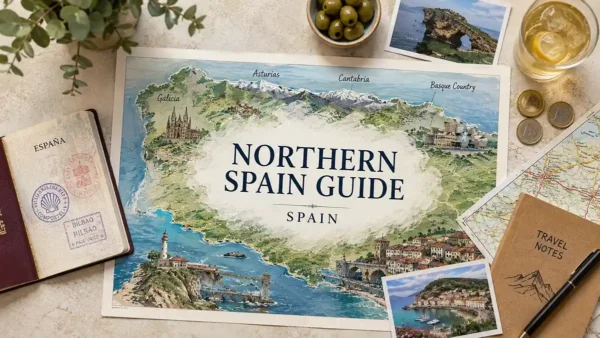
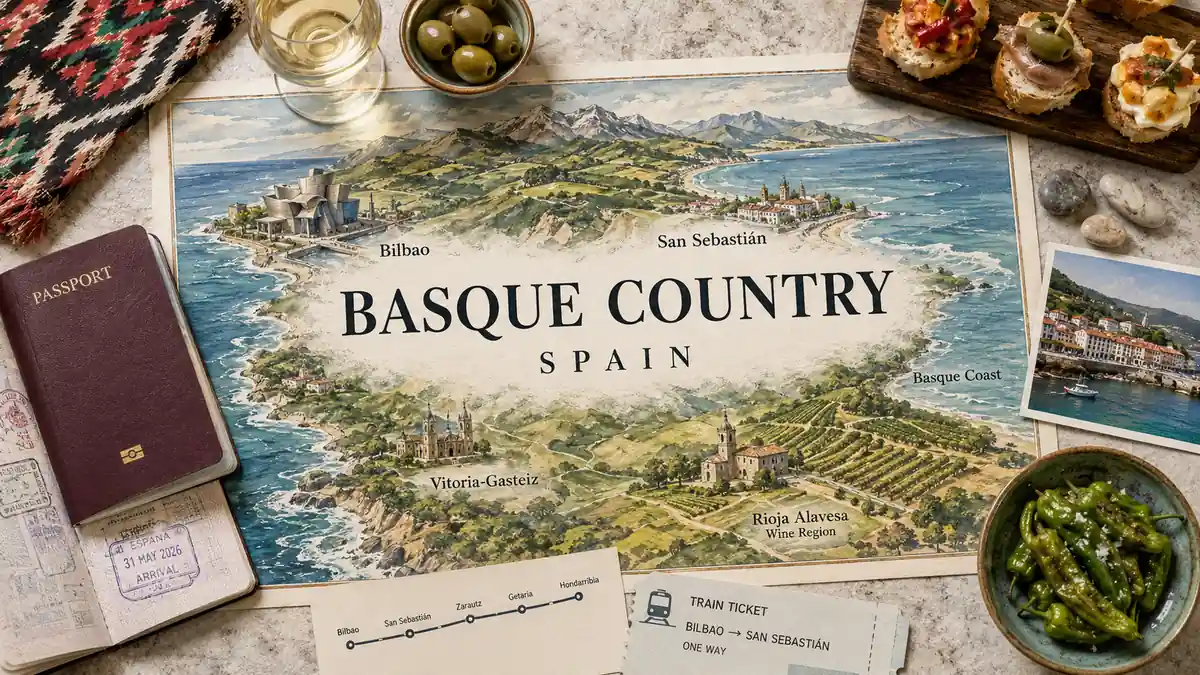
The Basque Country is a compact, distinct corner of northern Spain, built around Bilbao, San Sebastián, the Atlantic coast, and a green inland of hills and valleys. It feels different from the rest of the country, with its own language, deep food culture, and cooler, greener scenery. This guide orients you fast: what the region is, where to go, how to choose a base, and how it slots into a wider Spain trip. It is a regional planner, not a single-city deep dive or a day-by-day route, so you leave knowing how to shape a visit and where to read more.
Quick Answer
Yes, the Basque Country is worth visiting, best for food, Atlantic coast, and distinct culture across Bilbao and San Sebastián. The main decision is trip length: most travelers split a few days between the two cities. It suits food lovers and pairs easily into a wider northern Spain trip.
Trust Layer
Tripstou region guide for travelers planning a regional trip. Covers sub-areas, trip shape, base strategy, timing, and mobility tradeoffs.
Produced with AI assistance and reviewed by Alex Perrut, working in tourism since 2015, for the Tripstou editorial team. See our editorial process for details.
Last factual review: June 19, 2026.
Official sources consulted: European Union, Travel Europe, ETIAS information.
Key Takeaways
- The Basque Country stands out for pintxos, Atlantic coastline, and a distinct Basque identity that feels unlike the rest of Spain.
- Choose San Sebastián for beaches and food, or Bilbao for art and city energy; many travelers split between both.
- Pintxos crawls and San Sebastián’s celebrated dining make food a primary reason to visit, no tasting-menu budget required.
- The coast offers fishing villages and surf, while green inland delivers slower farmhouse cooking and quiet rolling hills.
- Plan three to four days to cover both cities and a coastal trip, or add it to a wider northern-Spain route.
Table of Contents
Why the Basque Country Feels Like Its Own Country
The Basque Country feels like its own country, with its own language, food culture, and Atlantic-green landscape. It stands apart from the rest of Spain in identity and scenery. Euskara, the Basque language, predates the Romance tongues around it. This distinctiveness, paired with world-class food and coastline, is the core reason to visit.
The region, known locally as Euskadi or País Vasco, carries a strong sense of place. Hillsides stay green because the Atlantic keeps the climate cooler and wetter than the sun-baked south, so the landscape reads more like the Atlantic coast of France than Mediterranean Spain. That contrast is exactly why many travelers add it to a trip: it broadens what “Spain” means.
It suits travelers who want culture and food over beach-resort heat, and anyone curious about a regional identity that has survived centuries intact. The tradeoff is weather. You trade reliable sun for greener scenery and cooler air, so it rewards visitors who care more about character than guaranteed beach days. For how this corner sits within the country, see our Spain travel guide, and for where it ranks among national highlights, our guide to the best places to visit in Spain.
The Basque Country’s Main Areas and What Each Offers
The Basque Country splits into four travel choices: Bilbao, San Sebastián, the Atlantic coast, and green inland. Bilbao leads with art and city energy, San Sebastián with beaches and dining, the coast with fishing villages, and the interior with green hills. Each works as a distinct base depending on what you want most.
Think of these as broad orientations rather than full destinations. Bilbao is the urban anchor, reshaped around the Guggenheim and a revived riverfront. San Sebastián is the elegant beach-and-food city, framed by the La Concha bay. The coast strings together small ports and surf beaches, while the inland green belt offers quiet villages and rolling farmland. Pick the one whose draw matches your trip, then go deeper on a dedicated page.
- Bilbao — art, architecture, and a working city with real grit and polish.
- San Sebastián — beach, bay views, and the densest pintxos scene in the region.
- Atlantic coast — fishing villages, surf beaches, and dramatic cliff scenery.
- Green inland — quieter hills, farmhouse cooking, and a slower rural pace.
| Sub-area | Main draw | Best for | Pace |
|---|---|---|---|
| Bilbao | Art, architecture, riverfront | City lovers and culture-first visitors | Lively, urban, walkable |
| San Sebastián | Beach, bay, and pintxos | Food and coast travelers | Relaxed but social |
| Atlantic coast | Fishing villages and surf | Coast and slow-travel seekers | Quiet, scenic, unhurried |
| Green inland | Hills and rural cooking | Travelers wanting countryside | Slow and restful |
Keep the wider boundary in mind: the Basque Country is only one piece of the north. For the broader region around it, see our northern Spain guide, and for the coastline and La Concha in beach context, our guide to the best beaches in Spain. If you are weighing this region against other corners of the country, compare it with Catalonia, Andalusia, the Madrid region, and the Valencia region before deciding where to spend your days.
Pintxos and Basque Food Culture: The Region’s Real Draw
Basque food is a primary reason to visit, led by pintxos, San Sebastián’s dining reputation, and cider houses. Pintxos are small, sharable bar plates eaten standing, hopping from bar to bar. San Sebastián holds one of the world’s densest concentrations of celebrated restaurants. For many travelers, the eating alone justifies the trip.
Eating here is social and mobile. The classic evening is a pintxo crawl: order one or two plates and a drink at each bar, then move on. Beyond the bars, cider houses in the hills serve communal, fixed-format meals, and seafood defines the coast. You do not need a tasting-menu budget to eat exceptionally well, which is part of why the food reputation runs so deep.
This is a regional snapshot rather than a full culinary breakdown, and prices vary by city and season. For national dishes, ingredients, and how Basque cooking fits the bigger picture, see our Spain food guide.
Where to Base Yourself: One City or Two
Most travelers base in both Bilbao and San Sebastián, or pick one as a single base. The two cities sit close enough to combine on a short trip. Choose San Sebastián for beaches and food first, Bilbao for art and a bigger-city feel. The tradeoff is that splitting bases costs you a relocation day.
For a single base, San Sebastián is the easy default for first-timers who want coast, food, and walkability in one place. Bilbao suits travelers who prefer city energy, museums, and a larger, less seasonal feel. Splitting between the two gives you both sides of the region but adds packing, transfers, and a half-day of moving, so weigh that against a short trip.
If you are comparing a Basque base against very different settings, our Spain islands guide shows the alternative end of the spectrum, and for broad budget positioning before you commit, see our Spain trip cost guide.
Hotels and places to stay
Compare hotels, apartments and stays for your dates in one search.
Search hotels and stays on hotels.com →
Tripstou may earn a commission if you book through this link, at no extra cost to you.
How Many Days You Need and How It Fits a Spain Trip
Three to four days suit the Basque Country, enough for both cities plus a coastal or inland excursion. Two days work if you focus on one city. The region stands alone as a short break but slots cleanly into a wider Spain or northern-Spain itinerary. Add it to the north when you want food and coast without long detours.
As a standalone, three to four days lets you settle into one base, day-trip to the other city, and still reach the coast or interior. As part of a longer trip, the Basque Country works as a northern anchor you reach by rail or road before continuing along the coast. It is rich enough to justify its own days but compact enough not to dominate a national route.
For where it fits in a wider plan, start with our Spain itinerary guide, then match your length with the 7-day, 10-day, or 14-day routes. If you are driving the north, our Spain road trip guide shows how this region connects to the rest of the coast.
When to Go and Getting Around the Basque Country
Late spring through early autumn is the best window, with mild, sometimes wet Atlantic weather. Summer brings the warmest seas and the biggest crowds. The region is compact and easy to navigate, with a straightforward connection between Bilbao and San Sebastián. Rain is possible year-round, so pack for changeable skies whenever you go.
The Atlantic setting keeps the climate cooler and greener than southern Spain, which is the tradeoff for those dramatic landscapes. Shoulder-season visits trade some beach warmth for thinner crowds and softer prices. Getting around is genuinely simple: the two main cities and the coast between them are well connected, so you can base in one place and still see a lot without a deep transport plan.
For seasonal detail across the country, see our guide to the best time to visit Spain, and for connecting the region by rail to the rest of your trip, our Spain train itinerary guide.
Frequently Asked Questions
Is the Basque Country part of Spain or France?
The Basque Country sits in both Spain and France, but the main travel region is the Spanish side. Spanish Basque Country covers Bilbao, San Sebastián, and the surrounding coast and hills. A smaller French Basque area lies just across the border near Biarritz, sharing the same language and culture.
What language do they speak in the Basque Country?
People in the Basque Country speak both Euskara, the Basque language, and Spanish. Euskara is unrelated to Spanish or any other European language and predates them locally. You will see bilingual signs everywhere, but Spanish is universally understood, so travelers rarely need any Basque to get around comfortably.
Can you visit Bilbao and San Sebastián in the same trip?
Yes, Bilbao and San Sebastián are easy to combine on one trip. The two cities sit close together and are well connected, so many travelers base in one and day-trip to the other. Splitting nights between both works too, though relocating costs you part of a day in transit.
What are pintxos in the Basque Country?
Pintxos are small, shareable bar snacks that define Basque eating, especially in San Sebastián. You order one or two plates with a drink at each bar, then move on to the next in a relaxed crawl. They range from simple bread-topped bites to elaborate miniature dishes, eaten standing and social.
Do you need a car to travel around the Basque Country?
No, you do not need a car for the main Basque Country. Bilbao and San Sebastián are walkable and connected to each other and the coast by public transport. A car helps mostly for reaching quiet inland villages or remote coastal spots, but most regional trips work fine without one.
Is the Basque Country a good destination for families?
Yes, the Basque Country suits families well, with beaches, walkable cities, and museums that appeal to all ages. San Sebastián’s sheltered La Concha bay is ideal for children, while Bilbao’s Guggenheim and riverfront keep older kids engaged. The compact distances and relaxed food culture make travel with children straightforward.
Related Guides
- Best Places to Visit in Spain — where the Basque Country sits among the national highlights.
- Northern Spain Guide — the wider northern region beyond the Basque Country.
- Spain Food Guide — national dishes and how Basque cooking fits in.
- Spain Itinerary Guide — how to route the region into a full trip.
- Spain Packing List — what to bring for changeable Atlantic weather.
- Spain Scams Guide — common scams and how to avoid them.
- Spain Solo Female Safety — practical safety guidance for solo travelers.
- Things to Do in the Basque Country — the experiences worth your time.
- Hidden Gems in the Basque Country — underrated places beyond the usual list.
Did this guide save you time or money? Tripstou is independent and reader-funded — if you'd like to give something back, you can support the site with a crypto contribution of any size.