Catalonia rewards a multi-area trip and is best for combining a world city with coast and mountains. Trip length is the main variable: Barcelona works as a single base, but splitting time across the Costa Brava and interior unlocks more. It suits first-timers wanting city, beach, and culture together.
Catalonia is one of Spain’s most distinct regions, with its own language, identity, and a landscape that runs from Mediterranean beaches to high Pyrenean peaks. Most travelers know it only through Barcelona, yet the region stretches far beyond the city — into the coves of the Costa Brava, the medieval streets of Girona, the Roman heart of Tarragona, and quiet wine country inland. That breadth is exactly why Catalonia rewards more than a single-city visit. This guide orients you to the whole region: what makes it feel different, its main sub-areas and what each is best for, how many days it needs, and how to balance Barcelona against everything beyond it. It also covers base strategy, broad timing, and how Catalonia slots into a longer Spain trip — so you can shape a route that fits your time.
Barcelona vs Beyond: How to Balance Your Time
Give Barcelona roughly half your Catalonia time and spend the rest beyond it. The city earns two to three days, but Catalonia’s coast, mountains, and smaller cities are where the region’s wider character lives. Weighting everything toward Barcelona is the most common mistake first-time visitors make.
Barcelona deserves its reputation and easily fills two or three full days, but it is one city in a large region. Once you have its highlights, your remaining time pays off more outside the city — on the Costa Brava, in Girona, or up in the Pyrenees. The contrast between the world city and the quieter sub-areas is exactly what makes a Catalonia trip feel complete.
Keep Barcelona as your orientation point rather than the whole trip, and use it to plan outward; our dedicated Barcelona guide handles the city-level detail so this guide can focus on the region. For first-timers, that means capping the city, protecting time for at least one sub-area, and resisting the pull to let Barcelona absorb the entire schedule.
Which Parts of Catalonia to Combine
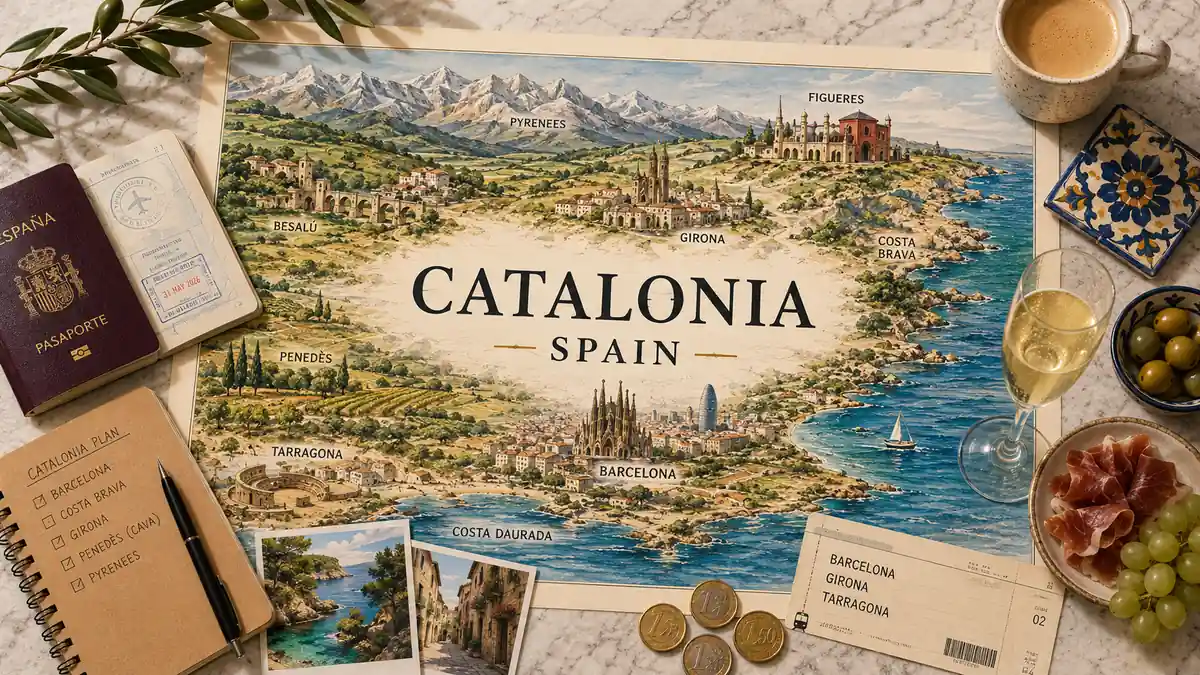
Catalonia divides into a handful of distinct sub-areas, each with a clear draw. Barcelona anchors the region as its world city, the Costa Brava delivers the coast, Girona offers a medieval old town, the Pyrenees bring mountains, and Tarragona carries Roman heritage. The interior adds wine country and quiet villages.
Each sub-area suits a different kind of traveler, and knowing the shape of the region up front makes planning far easier:
- Barcelona — the region’s world city for architecture, food, and nightlife; orient here and go deeper with our Barcelona guide.
- Costa Brava — rugged coves, clear water, and seaside towns north of Barcelona; see how it compares nationally in our best beaches in Spain guide, with offshore alternatives in our Spain islands guide.
- Girona — a compact medieval old town with a strong food scene, ideal as a base or a slow day out.
- The Pyrenees — mountain valleys, hiking, and small villages along the French border for travelers who want nature.
- Tarragona — Roman ruins and a quieter stretch of coast south of Barcelona, good for history without the crowds.
- The interior — wine country, monasteries like Montserrat, and rural villages for a calmer, less-touristed Catalonia.
| Sub-area | Best for | Ideal traveler |
|---|---|---|
| Barcelona | World-class city, architecture, nightlife | First-timers and culture-focused visitors |
| Costa Brava | Mediterranean coves and seaside towns | Beach seekers and slow-coast travelers |
| Girona | Medieval old town and food scene | Day-trippers and history lovers |
| The Pyrenees | Mountain hiking and alpine villages | Active travelers and nature seekers |
| Tarragona | Roman ruins and quieter coastline | History buffs avoiding the crowds |
Tours and activities
Book skip-the-line tickets, day trips and local tours with free cancellation on most activities.
You can also browse everything on getyourguide.com.
Tripstou may earn a commission if you book through this link, at no extra cost to you.
What Makes Catalonia Feel Different from the Rest of Spain
Catalonia feels different because it has its own language, culture, and centuries-old identity within Spain. Catalan is spoken alongside Spanish across the region, and local traditions, food, and politics carry a distinct stamp. This identity shapes everything from signage to festivals, giving the region a character travelers notice immediately on arrival.
Catalan is a full language in its own right, not a dialect of Spanish, and you will see it first on street signs, menus, and transport announcements. Most people switch easily to Spanish or English with visitors, so the language is a cultural marker rather than a barrier. The deeper signal is pride: regional symbols, local festivals, and a strong sense of being Catalan first run through daily life.
That identity carries into the kitchen, where Catalan cooking leans on its own staples and traditions distinct from the rest of the country — explored in our Spain food guide. If you are weighing how Catalonia sits within the bigger picture of the country, our broader Spain guide frames how the regions differ. Treat Catalonia as a region with its own personality, not just a corner of Spain.
How Many Days You Need for Catalonia
Most travelers need about four to seven days to see Catalonia properly. A city-only trip to Barcelona works in three to four days, but adding even one sub-area like the Costa Brava or Girona pushes you toward a week. Longer stays let you reach the Pyrenees without rushing.
The right number depends on how much you want beyond the city. Three to four days covers Barcelona and one easy day trip from Barcelona. Five to seven days lets you pair the city with the coast or Girona at a relaxed pace. Eight days or more opens up the mountains and interior, which sit farther out and reward slower travel.
If you are fitting Catalonia into a structured route, our Spain itinerary guide shows how the region anchors a wider trip, and our 7-day Spain itinerary illustrates how a week can balance city and coast. Too few days forces a Barcelona-only trip; a week or more is what unlocks the region’s range.
One Base or Multiple Bases in Catalonia?
Use one base for a short trip and multiple bases once you go beyond a week. Barcelona makes an efficient single hub thanks to its train and road connections, but day trips eat travel time. Splitting between the coast and a second base unlocks the region without long daily returns.
For three to five days, a single base in Barcelona is the simplest setup — you can reach Girona, Montserrat, and parts of the coast on day trips and return each night. The downside is the daily back-and-forth, which gets tiring once destinations sit farther out, especially toward the Pyrenees or the southern coast.
For longer trips, a second base on the Costa Brava or in the mountains cuts dead travel time and lets you settle into each area. Whether you move by car or rail shapes this choice: our Spain road trip guide covers driving the region, while our Spain train itinerary guide shows how far the rail network reaches. The trade-off is convenience versus reach — one base keeps logistics simple, two bases open up more of Catalonia.
Do you need a car to get around Catalonia?
Not always; Catalonia’s rail and road network connects Barcelona to Girona, the coast, and many towns without a car. A car helps most for the Pyrenees, interior wine country, and quieter Costa Brava coves, where public transport thins out. For city-and-coast trips, trains and buses usually cover the essentials comfortably.
Hotels and places to stay
Compare hotels, apartments and stays for your dates in one search.
Search hotels and stays on hotels.com →
Tripstou may earn a commission if you book through this link, at no extra cost to you.
When to Visit Catalonia
Late spring and early autumn are the strongest windows for visiting Catalonia. These shoulder seasons pair warm coastal weather with manageable crowds, suiting both Barcelona and the Costa Brava. Summer is best for beaches but busiest, while the Pyrenees suit summer hiking and winter snow.
Season choice depends on what you came for. Coast-focused trips peak in summer, when the water is warmest but towns are fullest and prices climb. Cities are most comfortable in the milder shoulder months, when sightseeing is easier without peak heat. The Pyrenees follow their own calendar, with summer for hiking and winter for snow.
For a broader view of how Spain’s seasons compare, see our best time to visit Spain guide, and factor seasonal price swings into planning with our Spain trip cost guide. For a mixed city-and-coast trip, the shoulder seasons balance weather and crowds best.
What should I pack for a Catalonia trip?
Pack for variety, since Catalonia spans warm coastline and cooler mountains. Light, breathable clothing and swimwear suit the Costa Brava, while layers and sturdy shoes help in the Pyrenees or shoulder-season cities. Comfortable walking shoes are essential everywhere; our Spain packing list covers the full season-by-season breakdown.
How Catalonia Fits Into a Wider Spain Trip
Catalonia works both as a standalone trip and as the opening leg of a wider Spain route. Its size and variety justify a dedicated visit, but it also connects naturally to the rest of the country by train. Most travelers pair it with Madrid, Valencia, or the south.
As a standalone, Catalonia has enough range — city, coast, mountains, and history — to fill one to two weeks on its own. As part of a longer route, it makes a strong starting or finishing point, with fast rail links south toward Valencia and inland toward Madrid. The choice comes down to how much time you have and how much of Spain you want to see in one trip.
To see where Catalonia ranks among the country’s regions, start with our best places in Spain guide, then map a multi-region route with our 10-day Spain itinerary or, for a fuller loop, our 14-day Spain itinerary. Catalonia stands alone happily, but it also slots cleanly into a wider Spain trip when time allows.
Catalonia Planning at a Glance
- Give Barcelona about two to three days, roughly half your Catalonia time, and spend the rest on the Costa Brava, Girona, the Pyrenees or Tarragona.
- Four to seven days covers Catalonia properly; eight days or more is what makes the Pyrenees and the interior reachable without rushing.
- A single Barcelona base works for three to five days, while trips beyond a week run better with a second base on the coast or in the mountains.
- Late spring and early autumn suit a mixed city-and-coast trip best, summer is the beach season but the busiest, and the Pyrenees offer hiking in summer and snow in winter.
- Trains and buses cover Barcelona, Girona and the main coast, but a car pays off for the Pyrenees, inland wine country and quieter Costa Brava coves.
- Catalonia can fill one to two weeks on its own or open a wider Spain route, with rail links south to Valencia and inland to Madrid.
Safety Questions Before a Catalonia Trip
Is Catalonia safe for solo female travelers?
Yes, Catalonia is generally safe for solo female travelers, with Barcelona and the smaller towns both welcoming and easy to navigate. Standard urban precautions apply, especially around busy tourist areas. For detailed guidance on staying comfortable and confident, see our Spain solo female safety guide before you travel.
Are pickpockets and scams a problem in Catalonia?
Pickpocketing is the main concern, mostly in crowded Barcelona hotspots like Las Ramblas and busy metro lines. Violent crime is rare, and smaller Catalan towns feel very relaxed. Keep valuables secure and stay alert in tourist crush points; our Spain scams guide explains the common tricks to watch for.
Where to Go Next in Catalonia and Spain
The Catalonia deep dives, the parent shortlist, and the sibling region guides to combine with this one:
- Things to Do in Catalonia — the experiences worth your time.
- Hidden Gems in Catalonia — underrated places beyond the usual list.
- Best places in Spain — where Catalonia sits among the country’s regions.
- Andalusia travel guide — the south’s Moorish cities, white villages, and coast.
- Madrid region guide — the capital and the central plateau around it.
- Valencia region guide — beaches, paella country, and the Mediterranean middle.
- Basque Country guide — green coastline, food culture, and a distinct northern identity.
- Northern Spain guide — the cooler, greener Atlantic side for combining trips.
What This Guide Covers
This is a broad planning guide to Catalonia as a region — Barcelona, the Costa Brava, Girona, the Pyrenees, Tarragona and the interior, and how to combine them. It is not a Barcelona city guide, a day-by-day itinerary, a rail or road deep dive, or a guide to where to stay.
Produced with AI assistance, this guide was checked by Alex Perrut, working in tourism since 2015, for the Tripstou editorial team; our editorial process sets out the steps.
Last factual review: June 19, 2026.
Official sources consulted: European Union, Travel in Europe, ETIAS information.
Did this guide save you time or money? Tripstou is independent and reader-funded — if you'd like to give something back, you can support the site with a crypto contribution of any size.