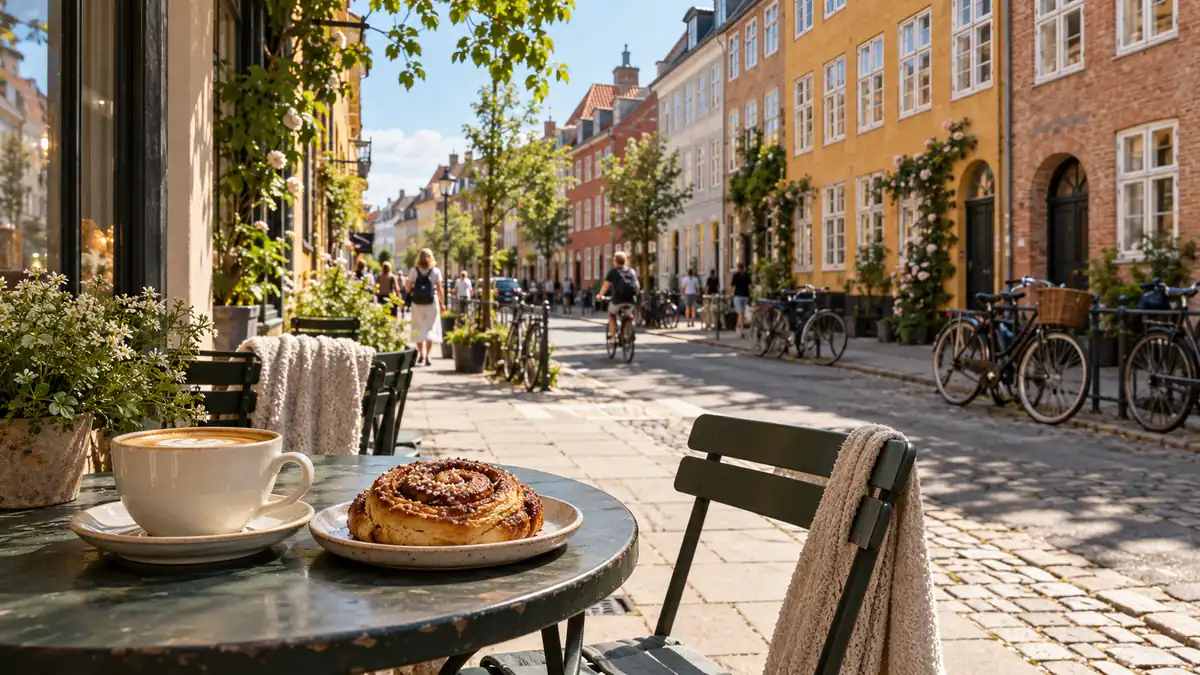
For a first visit, Copenhagen food comes down to four things: smørrebrød at lunch, a hot dog from a pølsevogn on the street, a cinnamon or cardamom pastry from a bakery, and one Danish dinner classic such as stegt flæsk or frikadeller. The occasion matters more than the restaurant. Lunch is where the classics live and where a sit-down meal costs least; dinner is where the bill grows and where New Nordic cooking sits, and that part is optional.
This guide follows a day of eating, from the lunch table to the street stand, the bakery and the dinner plate, then covers markets, New Nordic, cost and drinks.
What Is Copenhagen Food Known For?
Copenhagen food is known for dense rye bread, pork, pickled and smoked fish, a serious pastry and coffee culture, and the New Nordic movement that started in the city. The traditional classics are lunch and street food. Dinner showpieces came later, and they are not where Danish home cooking is at its best.
| Dish | What it is | When and where you eat it |
|---|---|---|
| Smørrebrød | Open-faced sandwich on rye bread with a generous topping | Lunch, at a smørrebrød house or market stall |
| Stjerneskud | Seafood smørrebrød with fried and steamed fish, shrimp and dressing | Lunch, at classic smørrebrød houses |
| Røde pølser | Bright red pork sausage in a bun with sauces and onions | Any time, from a street hot-dog stand |
| Frikadeller, stegt flæsk | Pan-fried meatballs; crisp fried pork belly with parsley sauce, both with potatoes | Dinner, at traditional Danish restaurants |
| Kanelsnegl, spandauer, cardamom bun | Laminated or yeasted bakery pastries | Morning or mid-afternoon, at a bakery |
| Flødeboller | Chocolate-coated sweet foam on a biscuit or marzipan base | A take-away treat from bakeries and sweet shops |
The rest of this page follows that table through the day. Each dish has a moment, and eating it at the wrong one is how visitors end up paying dinner prices for what Danes treat as lunch.
Smørrebrød Is the Lunch You Should Not Skip
Smørrebrød is the open-faced rye-bread lunch that defines Danish eating, and lunch is when the classic smørrebrød houses serve it. It is eaten with a knife and fork. Two or three pieces make a full meal.
What is smørrebrød, and how do you eat it?
Smørrebrød is a slice of buttered rugbrød, dark Danish rye bread, piled with a topping that is the actual point of the dish. The bread is a base, not a sandwich you pick up. Classic toppings include:
- Pickled herring, often with onion and capers
- Egg and shrimp, heaped high
- Roast beef with remoulade and crispy onions
- Liver pâté, served warm or cold
Stjerneskud, the “shooting star”, is the seafood version and one of the richest plates on any smørrebrød menu. Order a few pieces, mix fish and meat, and use the cutlery: the toppings are built too tall to eat by hand.
Where to eat smørrebrød in Copenhagen
Classic smørrebrød houses are the best place to eat it, with modern smørrebrød restaurants and market stalls as the lighter alternatives. The classic houses serve long lunch menus at the table. Modern places rework the toppings with New Nordic produce. Stalls at Torvehallerne sell a quick piece or two to eat standing.
Among the long-standing names on Visit Copenhagen’s lists are Schønnemann, Aamanns 1921 and Restaurant Palægade. Book lunch at the classic houses, because their tables fill at midday.
The Pølsevogn Hot Dog: Copenhagen’s Cheapest Hot Meal
The røde pølser hot dog from a street stand is Copenhagen’s everyday fast food and the cheapest hot meal in the city. Order it with remoulade, raw and crispy onions and sliced pickles, plus ketchup and mustard if you want the full version.
A pølsevogn is a small sausage wagon or kiosk, found on squares and near stations across the centre. The red sausage is the signature. It fits the gaps in a sightseeing day and the late hours after a bar, and it costs a fraction of a sit-down meal. Eat one at least once; it is as Danish as the smørrebrød lunch, just quicker.
Which Danish Pastries Should You Try in Copenhagen?
The pastries to try in Copenhagen are the kanelsnegl, the cardamom bun and the spandauer, bought from a bakery, with flødeboller as the sweet to take away. Danes treat the bakery as a morning and mid-afternoon stop, not as dessert after dinner.
- Kanelsnegl: the cinnamon “snail”, a buttery spiral and the bakery staple.
- Cardamom bun: a knotted yeast bun scented with cardamom, the one most bakeries are proud of.
- Spandauer: a laminated pastry with a custard or jam centre.
- Flødeboller: chocolate-coated foam on a biscuit or marzipan base, sold to take away.
A bakery visit works best early, with coffee, or as the afternoon break Danes take between lunch and dinner. Arrive late and the best trays are often empty. The bakery is also where most travelers taste New Nordic thinking without booking anything: sourdough, heritage grains and seasonal fillings came out of the same ideas that changed the city’s restaurants.
Danish Dinner Classics Worth One Sit-Down Meal
Frikadeller and stegt flæsk med persillesovs are the Danish dinner classics, and one traditional dinner is enough on a short trip. Lunch already covers most of the classic repertoire, at a lower price.
Frikadeller are pan-fried Danish meatballs, usually served with boiled potatoes and a sauce or pickled red cabbage. Stegt flæsk med persillesovs is often called the national dish of Denmark: crisp slices of fried pork belly with boiled potatoes and a thick parsley sauce. Both are hearty, pork-led and deliberately plain.
You will find them at traditional Danish restaurants and at some market-hall counters. Choose the evening you want a slow, warm meal, and keep the other evenings lighter. Pick stegt flæsk if you only have room for one dish, because it is the plate you are least likely to find on a menu back home.
Torvehallerne or Reffen: Which Food Market Fits Your Day?
Torvehallerne at Nørreport is the year-round covered food market and the easy choice on any day. Reffen on Refshaleøen is the harbour street-food market, seasonal and closed in winter, and it is worth the trip on a warm day.
Torvehallerne is a pair of covered halls full of stalls selling smørrebrød, fish, pastries, specialty coffee and produce. It works as a lunch stop in the middle of the city, rain or shine, and it is the simplest place to try several dishes from this guide in one visit.
Reffen is open-air: rows of street-food stalls on the old industrial harbour, with craft beer and long tables by the water. Go in the season for a long, casual evening outdoors. Out of season it is closed, so Torvehallerne and the city’s other indoor street-food halls take over; Tivoli Food Hall is one of them. Pair either market with the sights around it using our guide to things to do in Copenhagen.
Tours and activities
Book skip-the-line tickets, day trips and local tours with free cancellation on most activities.
You can also browse everything on getyourguide.com.
Tripstou may earn a commission if you book through this link, at no extra cost to you.
What Is New Nordic Cuisine, and Do You Need to Book It?
New Nordic is the cooking movement that began in Copenhagen in the early 2000s around seasonal Nordic produce, foraging and fermentation, and Noma is the restaurant most credited with starting it. A traveler meets it in bakeries, wine bars and casual restaurants. Fine dining is optional, and it is booked far ahead.
The movement changed what Copenhagen cooks value: local grains, wild herbs, preserved and fermented flavours, and menus that follow the season. That thinking spread well beyond tasting menus. Today it shapes everyday bread, wine bars and neighbourhood bistros, and the city holds a dense cluster of Michelin-starred restaurants.
If you want one fine-dining night, decide before you travel and book well ahead, because the best-known tables go long before the trip. Everyone else can skip it without missing the point. A good bakery and a casual New Nordic lunch carry most of the same ideas.
Eating Well in Copenhagen Costs Less at Lunch and in Bakeries
The cheapest way to eat well in Copenhagen is to change when you eat, not where. A sit-down smørrebrød lunch, bakeries, the pølsevogn, supermarket hot counters and market halls keep most days affordable, and one dinner becomes the splurge.
- Bakery breakfast: a pastry and coffee replaces a hotel or café breakfast for far less.
- Smørrebrød lunch: the classic sit-down meal of the day, and the cheaper way to eat at a proper table.
- Pølsevogn: the hot meal between sights when you do not want to sit down.
- Supermarket hot counters: ready meals and smørrebrød to go, useful for picnics and late arrivals.
- Market halls: several dishes in one stop, so you can share and sample.
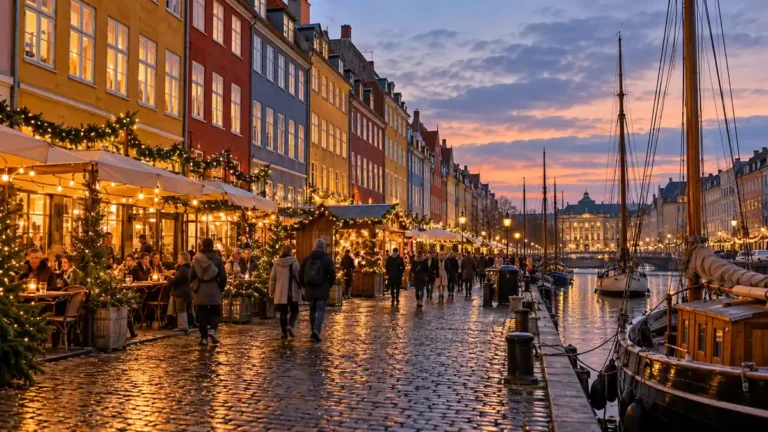
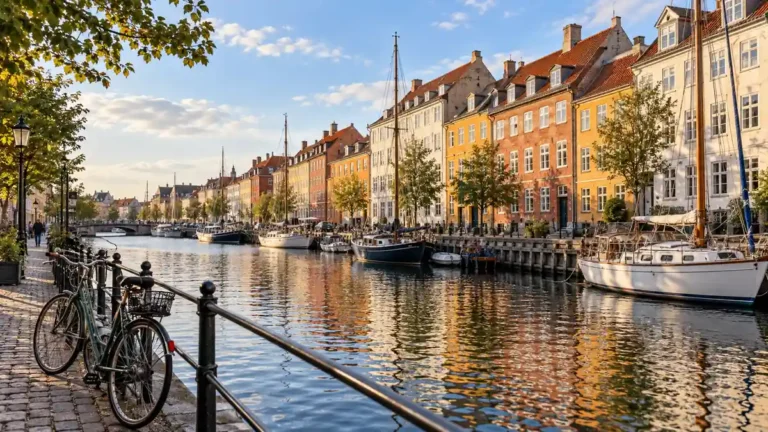
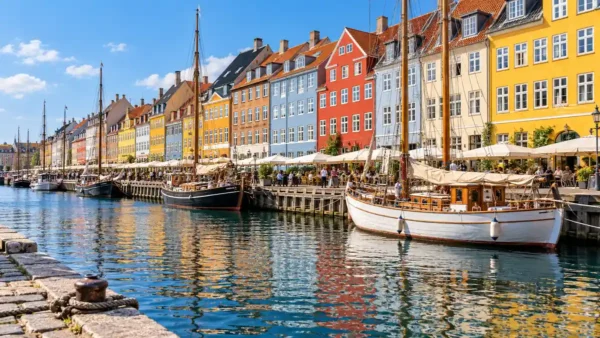
Tap water is safe and good, so ask for it with meals. Waterfront tables at Nyhavn charge for the view more than the food; look at the harbour from there and eat a street or two inland.
For a sense of scale, an inexpensive restaurant meal often runs about DKK 140–160, and a mid-range three-course dinner about DKK 350–450 per person; treat these as ranges and check menus before you sit down. The full budget, daily costs and tipping are covered in our guide to what a trip to Denmark costs.
What Do You Drink with Danish Food?
Danish food is drunk with lager or craft beer at most meals, a cold snaps alongside pickled herring, and specialty coffee as the everyday drink in between.
Beer is the default at a smørrebrød lunch, and Copenhagen’s craft-beer scene has grown well beyond the classic lagers; Reffen and the city’s beer bars are the easiest places to try it. Snaps, a chilled aquavit, belongs with the herring and is sipped with a toast of “skål”. Coffee runs through the whole day, and it is at its best with a pastry from the bakery.
Your Copenhagen Eating Plan
- Make lunch the main meal of the day: two or three pieces of smørrebrød at a classic house, eaten with a knife and fork, cover most of the Danish classics at the lowest sit-down price.
- Eat at least one røde pølser from a pølsevogn, between sights or late at night, because it is the cheapest hot meal in the city.
- Treat the bakery as a morning or mid-afternoon stop for a kanelsnegl, cardamom bun or spandauer, not as dessert after dinner.
- One traditional Danish dinner is enough on a short trip, and stegt flæsk med persillesovs is the dish to choose if you only have room for one.
- The covered market at Nørreport works on any day, while the harbour street-food market on Refshaleøen is seasonal and closed in winter, so save it for a warm evening.
- New Nordic fine dining is optional; if you want one tasting-menu night, decide before you travel and book well ahead.
How This Guide Was Checked
This guide settles one decision, what to eat in Copenhagen and when and where to eat it; it is not a restaurant ranking, a Michelin list, a trip budget or a sightseeing guide.
Alex Perrut, working in tourism since 2015, went over the dishes, markets and meal ranges for the Tripstou editorial team, and the page was written with AI assistance. How we work is set out in our editorial process.
Official sources consulted: VisitDenmark, Visit Copenhagen (traditional food), Visit Copenhagen (street-food markets), Reffen.
Common Questions About Eating in Copenhagen
Is Noma still open?
Check the restaurant’s own site for its current status and bookings before you plan a trip around it. Noma is the restaurant most credited with starting New Nordic cooking, but you do not need a table there to eat that way: Copenhagen’s bakeries, wine bars and casual restaurants carry the same ideas.
What is the national dish of Denmark?
Stegt flæsk med persillesovs is often called the national dish of Denmark. It is crisp fried pork belly served with boiled potatoes and a thick parsley sauce, and in Copenhagen you order it at dinner in a traditional Danish restaurant.
Is there good vegetarian and vegan food in Copenhagen?
Yes, and the market halls, bakeries and casual New Nordic restaurants are where to find it. The traditional classics are pork- and fish-led, so smørrebrød houses and Danish dinner menus offer fewer meat-free plates; plan meat-free meals around the markets and the modern, produce-led places.
Is tap water safe to drink in Copenhagen?
Yes, Copenhagen tap water is safe and good to drink. Ask for tap water with meals and you can skip paying for a bottle.
Keep Planning Copenhagen
- Copenhagen travel guide: the hub for planning the full trip.
- Where to stay in Copenhagen: which area to base yourself in.
- Things to do in Copenhagen: the day around the meals.
- Denmark trip cost: the full budget, meal ranges and tipping.
Did this guide save you time or money? Tripstou is independent and reader-funded — if you'd like to give something back, you can support the site with a crypto contribution of any size.