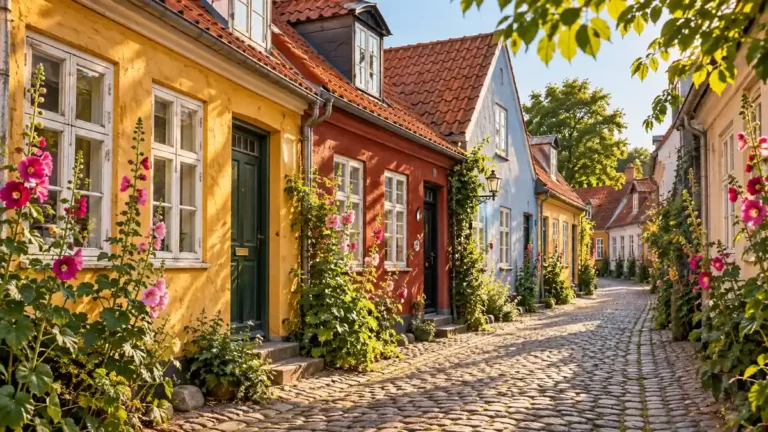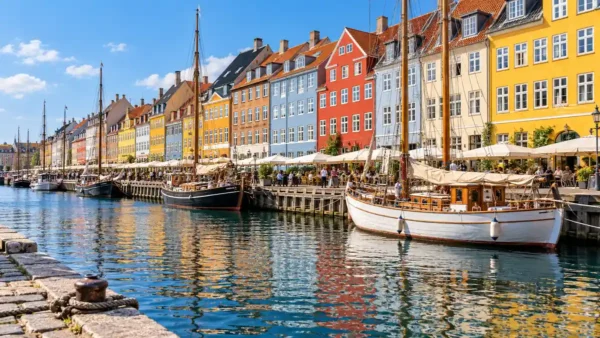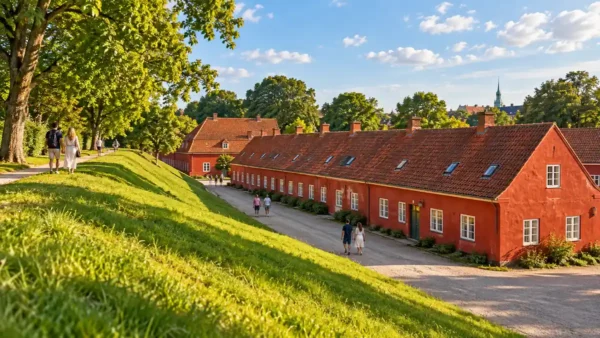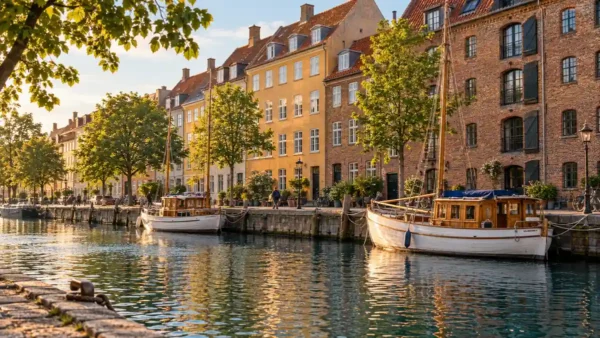
The things to do in Copenhagen that earn a slot on a first visit are Nyhavn and the harbour (best seen from a bike or a canal boat), Rosenborg Castle and the crown jewels, Christiansborg Palace on Slotsholmen, Tivoli Gardens and a walk through Freetown Christiania. This page splits those paid headline sights from the free, outdoor, very Copenhagen things around them, and says who each one suits. A design-and-food traveler or anyone on a budget does better on the free-and-outdoor route (harbour baths, Kastellet, the King’s Garden, neighbourhood walks) than inside Tivoli.
The picks below sit in five groups: the royal sights, the water, the free outdoor city, the neighbourhoods and the museums, followed by the famous names that are not for everyone. Short on time? Take the royal group and the water, and leave the rest for a second trip.
What to Do in Copenhagen on a First Visit: the Shortlist and How It Splits
A first visit to Copenhagen works best as one or two paid sights plus a lot of time outdoors. The paid headliners are Rosenborg, Christiansborg, Tivoli and the big museums; the free side is Nyhavn, the harbour, the harbour baths, the parks and the neighbourhoods. On a two- or three-day stay, buy one or two tickets and spend the rest of the time on foot or on a bike.
This shortlist is built for a first-timer on a short break, including long-haul arrivals with no local knowledge. It assumes you want the city’s character more than a checklist of interiors.
The geography is simple once you see it. The harbour runs through the middle of the city. Christianshavn and the Amager side sit across the water to the east. The royal quarter, with Amalienborg and the Marble Church, lies just north of Nyhavn, and Slotsholmen is the small palace island in the old centre. Almost everything below is within walking or cycling distance of everything else.
The free route beats the paid one in good weather and for anyone who came for design, food and street life. The paid route wins in rain and for travelers who want the royal and historic story told indoors. For arrival, transport and costs, start with planning a trip to Copenhagen; for fitting these picks into days, see a 3-day Copenhagen itinerary.
| Pick | Free or paid | Book ahead? | Who it suits |
|---|---|---|---|
| Rosenborg Castle | Paid | Yes, time slot | First-timers who want one royal interior |
| Christiansborg | Paid | Not usually | History and architecture fans |
| Amalienborg and Marble Church | Free to walk | No | Anyone linking the royal quarter to Nyhavn |
| Nyhavn | Free | No | A first-evening walk and a drink |
| Canal boat tour | Paid | Optional | Orientation on day one, families |
| Harbour baths | Free | No | Summer visitors who want the local ritual |
| Freetown Christiania | Free | No | Curious walkers who respect a residential area |
| David Collection | Free | No | Art lovers wanting a quiet hour |
| Tivoli Gardens | Paid | See Tivoli guide | Families and amusement-park fans |
Rosenborg, Christiansborg and Amalienborg: Which Royal Sight Earns a Paid Ticket
Rosenborg is the one royal ticket most first-timers should buy: it holds the crown jewels, it is a castle on a human scale, and the King’s Garden sits at its door. Christiansborg suits history and architecture travelers with half a day to give it. Amalienborg and the Marble Church are a free walk, not a ticket.
Rosenborg Castle and the crown jewels
Rosenborg is the most rewarding royal interior in Copenhagen for a short stay. It was built as a royal residence, and its rooms still feel lived in, with tapestries, thrones and painted ceilings close enough to study.
The crown jewels are the strongest reason to go. They are the image most visitors carry home.
Rosenborg sells time-slot tickets online in advance because capacity is limited, and it closes on Mondays outside summer. Book the slot before you plan the rest of the day around it.
Pick it if you want one royal building done properly. The cost is space: the rooms are small, queues form on the stairs, and popular slots sell out. Pair it with a stroll through the King’s Garden outside and lunch at Torvehallerne, a short walk away.
Christiansborg Palace on Slotsholmen
Christiansborg is the seat of the Danish parliament and the place where the royal reception rooms, the ruins of earlier castles underneath and a tower view all share one island. It tells the longest story of any sight in the city.
History and architecture travelers get the most from it. For everyone else, the tower view over the old centre is the part worth the detour.
The catch is time. The palace is split into several separately ticketed parts, and doing them all takes most of a morning.
Most visitors only need one royal interior. If Rosenborg is booked out, take the Christiansborg reception rooms instead; doing both on a two-day trip leaves little time for the harbour, which is what people remember.
Amalienborg and the Marble Church make the free half of the royal quarter. The four palaces face an open square where the Royal Life Guards change daily, and the domed Marble Church stands on the same axis. Walk from there to Nyhavn in a few minutes; the guard change is covered in the questions at the end of the page.
Tours and activities
Book skip-the-line tickets, day trips and local tours with free cancellation on most activities.
You can also browse everything on getyourguide.com.
Tripstou may earn a commission if you book through this link, at no extra cost to you.
Nyhavn, a Canal Boat and the Harbour Baths: Copenhagen Is Best Seen from the Water
The harbour is the defining Copenhagen experience, and most of it is free or cheap. Walk Nyhavn, take one canal boat, swim at a harbour bath in summer and ride a bike along the water. This is where a short stay should spend its unstructured hours.
Nyhavn: a walk and a drink, not dinner
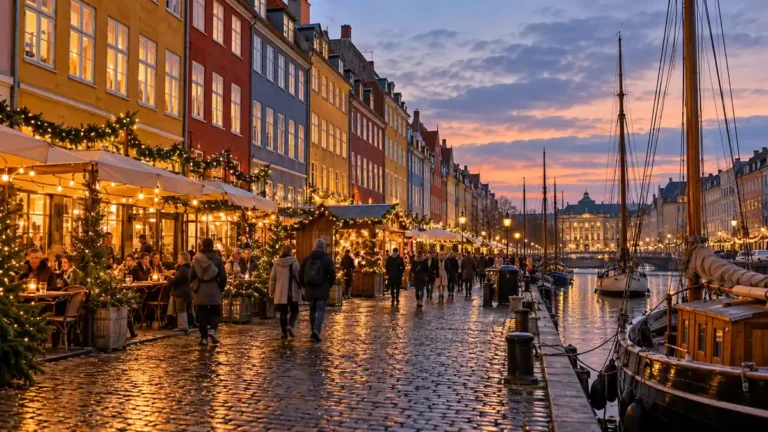
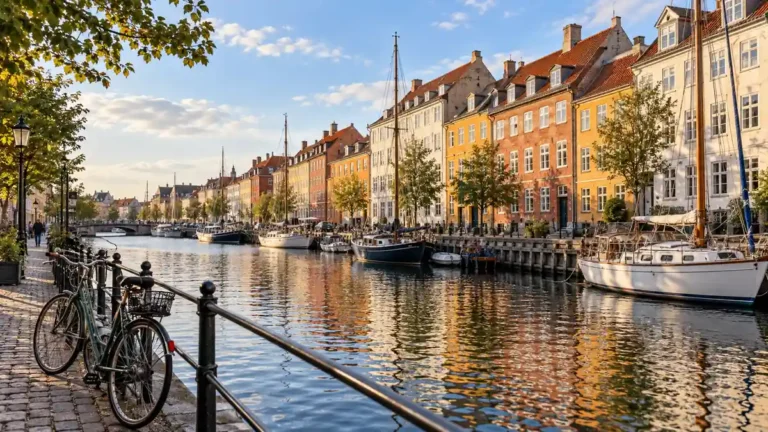
Nyhavn is the postcard quay of painted townhouses and old wooden ships, and it deserves a walk on your first evening. It is the image of the city, and seeing it in person is quick.
Go for a first look and a drink by the water. It is a poor place for dinner value: the crowds are thick and the quayside restaurants price for the view. Eat elsewhere and come back for a beer at sunset.
Several canal boat tours leave from Nyhavn itself, so the quay doubles as the starting point for the next pick.
The canal boat tour
A canal boat ride is the fastest way to understand Copenhagen’s layout. One loop passes the Christianshavn canals, the Opera House, the Black Diamond library and the Little Mermaid from the water.
Take it in the first hours of a first day, when the orientation pays off for the rest of the trip. Families like it because nobody has to walk.
Weather is the catch. On a grey, windy day the water is a cold place to sit, so save the ride for a dry spell if your dates allow it.
Harbour baths: free swimming in the centre
Copenhagen’s harbour baths are free to use, and in summer they are one of the most local things a visitor can do. Islands Brygge, across the water from the centre, is the best-known.
The baths are lifeguarded in summer, and on warm evenings locals arrive after work with towels and a drink. Joining them tells you more about the city than any museum.
They are made for warm-weather visitors and anyone who wants the ritual. Outside summer the baths lose their point, and even in season the water is bracing.
Cycling the harbour as a visitor
A bike is how Copenhagen moves, and riding one is the best way to see the harbour in a day. The cycle bridges make a loop: Inderhavnsbroen links Nyhavn to Christianshavn, and Cykelslangen, the orange “bicycle snake”, swings over the water further south.
Confident riders and anyone staying two days or more will get the most from it. The bike lanes are fast and busy at rush hour, and locals expect visitors to follow the same rules:
- Keep right and let faster riders pass on the left.
- Raise a hand before you stop and signal before you turn.
- Never ride on the pavement or stop in the lane to take photos.
- Use lights after dark.
A canal boat shows you the harbour once; a bike lets you stop at Islands Brygge, the Opera and Christianshavn in the same afternoon for the cost of the rental.
Copenhagen’s Best Free Things Are Outdoors
A budget traveler can fill two days in Copenhagen without buying a ticket. Kastellet’s star fort, the King’s Garden, Assistens Cemetery, the David Collection, the harbour baths and a walk through Christiania all cost nothing. The free route is the design-and-outdoors version of the city, not a consolation prize.
- Kastellet: a star-shaped fortress with grassy ramparts you can walk on top of. The Little Mermaid stands just beyond it on the waterfront.
- The King’s Garden: the royal park beside Rosenborg, full of picnics in good weather.
- Assistens Cemetery: a leafy cemetery in Nørrebro that locals use as a park (more in the neighbourhoods section).
- The David Collection: free year-round, with Islamic and European art in a townhouse by the King’s Garden.
- Harbour baths: free swimming in summer, with Islands Brygge the best-known.
- Nyhavn and the waterfront: free to walk at any hour.
- Freetown Christiania: open to visitors who follow its house rules.
Several museums also have a free-entry day; check the museum’s own site before you plan around it.
The free route works for anyone who came for the city’s streets, water and parks. What it misses is the crown jewels and Tivoli’s atmosphere, which is why most visitors still add one paid sight to it.
Christiania, Nørrebro, Vesterbro and Christianshavn: the Neighbourhoods Worth a Half-Day on Foot
Four districts each earn a half-day as experiences in their own right. Christiania is the freetown with its own rules, Nørrebro has the city’s most mixed street life and Assistens Cemetery, Vesterbro has the Meatpacking District, and Christianshavn has the quiet canals. Pick by what you want: counter-culture, food or water.
Freetown Christiania
Freetown Christiania is a residential community with its own house rules: no hard drugs, no weapons, no violence and no cars. Visitors are welcome to walk through its lanes, workshops, lakeside paths and self-built houses.
Ask before photographing residents or their homes. People live here, and treating the place as a theme park is the fastest way to be unwelcome.
Curious walkers interested in how the city’s alternative side lives will get the most from it. It is not for everyone, and the right attitude is that of a guest in someone’s neighbourhood.
Nørrebro and Assistens Cemetery
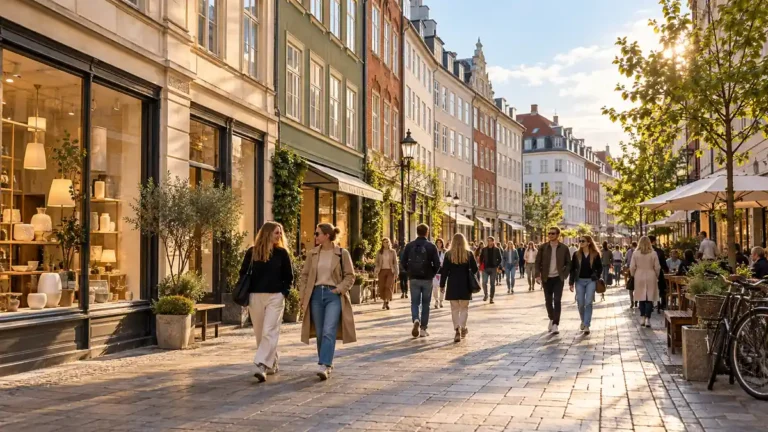
Nørrebro is Copenhagen’s most mixed and youngest-feeling district, and it is the place to see everyday local life. Jægersborggade is a short street of small cafés and makers, and Superkilen is a long, colourful urban park that locals use for skating, games and meeting up.
Assistens Cemetery sits at its heart. Hans Christian Andersen and Søren Kierkegaard are buried there, and on sunny days locals picnic and cycle between the graves.
Nørrebro rewards travelers who like wandering without a list. Its sights are low-key, so anyone expecting monuments will find it underwhelming.
Vesterbro and the Meatpacking District
Vesterbro is the evening district, and the Meatpacking District at its centre is where the city goes to eat and drink. Former slaughterhouse buildings now hold restaurants, bars and galleries.
Come here for food and nightlife. By day it is quieter and less interesting than Nørrebro. For food halls, smørrebrød and where to book, see our Copenhagen food guide.
Christianshavn’s canals
Christianshavn is the calmest of the four, with house-lined canals and moored boats. The Church of Our Saviour has a spire you can climb on an outside spiral staircase for a paid view over the harbour.
It sits a short walk from Christiania and across the Inner Harbour Bridge from Nyhavn, so it fits easily into a harbour day. Give it a slow afternoon; it has little to do after dark.
These are places to explore, not a guide to choosing a base. If you are deciding which neighbourhood to sleep in, see where to stay in Copenhagen.
Which Museums in Copenhagen Are Worth Your Time?
The National Museum, the Glyptotek, the Designmuseum and the David Collection are the four worth your time, and most visitors need only one or two. Choose by interest: Danish history, sculpture and architecture, design, or Islamic art in a quiet setting.
- National Museum: the clearest telling of the Danish story from the Vikings to the modern state. Go first if you want context for everything else on this page; it is large, so pick two or three galleries.
- Ny Carlsberg Glyptotek: visited as much for the building as for the collection, with a palm-filled winter garden at its centre and rooms of classical and French sculpture. Architecture lovers and anyone needing a calm, warm hour belong here.
- Designmuseum Denmark: chairs, lamps and everyday objects that explain why Danish design travels. It is the museum for anyone who came for design, and less compelling for anyone who did not.
- The David Collection: free, small and quiet, with Islamic art across a few floors of a townhouse. It suits art lovers who prefer an hour without crowds.
A museum beats an outdoor pick on a rainy day, in winter, and on a design-led trip. In good weather, most first-timers get more from the harbour and save the museums for a second visit.
Tivoli, the Little Mermaid and the Day Trips: When the Famous Pick Is Not Your Best Choice
The three names every list leads with are the three to question on a short stay. Tivoli is worth it for atmosphere, families and fans of a classic amusement park, and skippable for a design-and-food traveler on a budget. The Little Mermaid is small and crowded, so pair it with Kastellet or skip it. The castles and museums outside the city are a day-trip decision, not part of a city visit.
Tivoli Gardens: who it is for
Tivoli is worth a visit for families, for anyone who loves old-fashioned amusement parks, and for an evening when the gardens are lit up. It is the city’s most atmospheric paid attraction.
It is open only in certain seasons, so check before you plan around it. Travelers on a budget, or those who came for design and food, can skip it without missing the city’s character. Tickets, seasons and rides are in our guide to visiting Tivoli Gardens.
The Little Mermaid: keep it short or skip it
The Little Mermaid disappoints most visitors because the statue is small and the waterfront around it fills with coach groups. Seeing it is a quick stop, not a destination.
It still works as the end point of a walk through Kastellet along the water, or as a sight glimpsed from the canal boat. Go if you are passing; do not cross the city for it.
Louisiana Museum of Modern Art, Kronborg Castle, Frederiksborg Castle and Roskilde often appear on lists of things to do in Copenhagen, but each is a trip out of the city that deserves its own day. Choosing between them is covered in our guide to day trips from Copenhagen, and Malmö, across the bridge in Sweden, is the cross-border option.
The Short Version
- Rosenborg is the one royal ticket most first-timers should buy, for the crown jewels and the King’s Garden at its door.
- Book Rosenborg’s time slot online before planning the rest of the day, because capacity is limited and popular slots sell out.
- The harbour is the defining Copenhagen experience: walk Nyhavn, take one canal boat early on day one and swim at a harbour bath in summer.
- A budget traveler can fill two days without a ticket on Kastellet, the King’s Garden, Assistens Cemetery, the David Collection and a walk through Christiania.
- Design-and-food travelers get more from Nørrebro, the Meatpacking District and the Designmuseum than from an evening inside Tivoli.
- Keep the Little Mermaid to a quick stop at the end of a Kastellet walk, or skip it.
How This Shortlist Was Put Together
This page picks what to do in Copenhagen on a first, short visit and explains who each choice suits and what it costs in time; it does not plan the trip itself, sequence days, or cover Tivoli, food, accommodation or day trips in depth.
Alex Perrut, working in tourism since 2015, read through this shortlist and its booking notes for the Tripstou editorial team. Produced with AI assistance, the draft followed the steps in our editorial process.
Official sources consulted: Parkmuseerne (Rosenborg Castle), VisitCopenhagen, City of Copenhagen.
Questions First-Timers Still Ask
Can you see the changing of the guard at Amalienborg?
Yes. The Royal Life Guards change daily on the palace square at Amalienborg, and watching is free. Fold it into the royal-quarter walk: the square, the Marble Church on the same axis, then Nyhavn a few minutes away.
Is the Copenhagen Card worth it?
Only for heavy sightseers. It makes sense if you plan to stack several paid museums and palaces and ride public transport a lot over two or three days. On the free-and-outdoor route this page recommends for most short stays, with one or two tickets and the rest of the time on foot or by bike, you are unlikely to use enough of it.
Did this guide save you time or money? Tripstou is independent and reader-funded — if you'd like to give something back, you can support the site with a crypto contribution of any size.