Planning a trip to Madrid, Spain is mostly a series of decisions: how long to stay, when to go, where to base yourself, and how much of the rest of the country to build around it. Madrid is Spain’s capital, sitting almost exactly in the geographic centre of the country. That position shapes a first visit more than anything else — the city is easy to reach, easy to leave, and easy to hang a wider Spain route on. This guide settles the decisions in order: whether Madrid earns its slot and what it is best for, how many days it needs once day trips enter the picture, what each season trades, what style of base suits you, how you will actually move around, roughly what it costs by spend style, and the late daily rhythm that catches first-timers out. Attractions, day-by-day routes, neighborhoods and transport mechanics live on their own pages.
Quick Answer
Madrid is worth visiting for capital-city energy, world-class art, and a late food-and-nightlife rhythm. Trip length is the main decision: the core city works in two to three days, longer if you add day trips or a slower pace. Stay central and walk; it suits first-time visitors starting a wider Spain trip.
Trust Layer
Tripstou city guide for travelers planning a city trip. Covers trip length, stay style, season, cost, and mobility tradeoffs.
Produced with AI assistance and reviewed by Alex Perrut, working in tourism since 2015, for the Tripstou editorial team. See our editorial process for details.
Official sources consulted: spain.info, tourspain.es, EMT Madrid, Museo del Prado.
Key Takeaways
- Madrid earns its slot for the Prado–Reina Sofía–Thyssen art axis, capital-city energy and late food culture, not beach scenery.
- Two to three days covers the city core; add a full day for every day trip you plan.
- Spring and autumn are the comfortable seasons; midsummer trades heat for emptier streets and easier rooms, winter for calm museums.
- Book central on a first visit: the walk home after a midnight dinner is what the premium actually buys.
- Walking covers the historic centre end to end, so the metro is mainly an arrival, outer-neighborhood and late-night tool.
- Eat on Madrid’s clock — mid-afternoon lunch, late dinner — or you will find half-empty rooms and the wrong crowd.
Table of Contents
Is Madrid Worth Visiting — and What Is It Best For?
Madrid is worth visiting, and it is best for world-class art, late food culture, and capital-city energy. It rewards travelers who enjoy a working city with big museums and busy streets. It is a weaker fit for anyone whose picture of Spain is beaches, tiles, and small whitewashed towns.
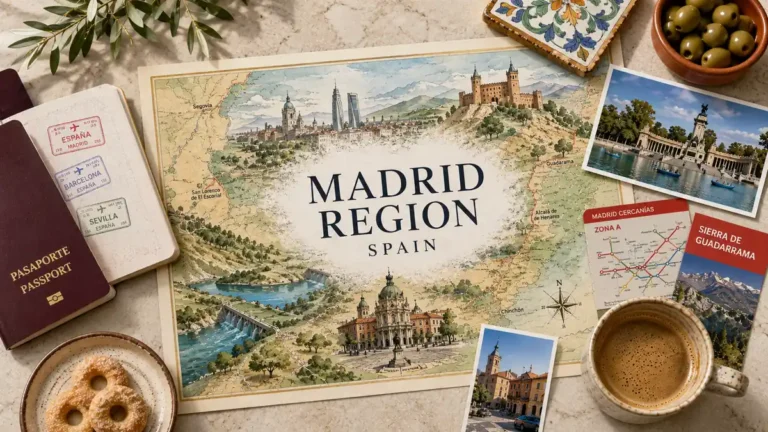
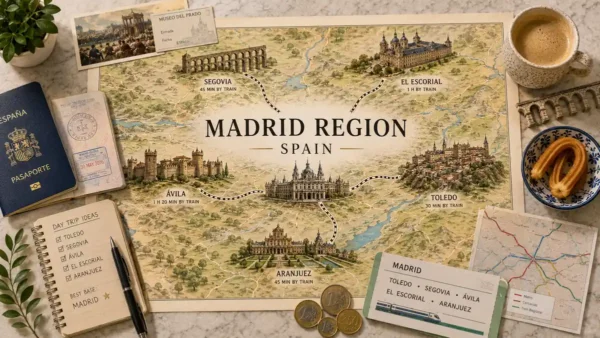
The city also anchors a wider region. Madrid sits inland on the central plateau, with historic towns close enough to visit and return the same day, which is why so many Spain routes start here. Our Madrid region guide covers what surrounds the capital.
The three museums are the part of Madrid that genuinely cannot be swapped for another Spanish city. If they do not interest you, the weight of the trip shifts almost entirely to eating and evenings — a good trip still, but a shorter one.
Tours and activities
Book skip-the-line tickets, day trips and local tours with free cancellation on most activities.
You can also browse everything on getyourguide.com.
Tripstou may earn a commission if you book through this link, at no extra cost to you.
What Madrid Is Known For
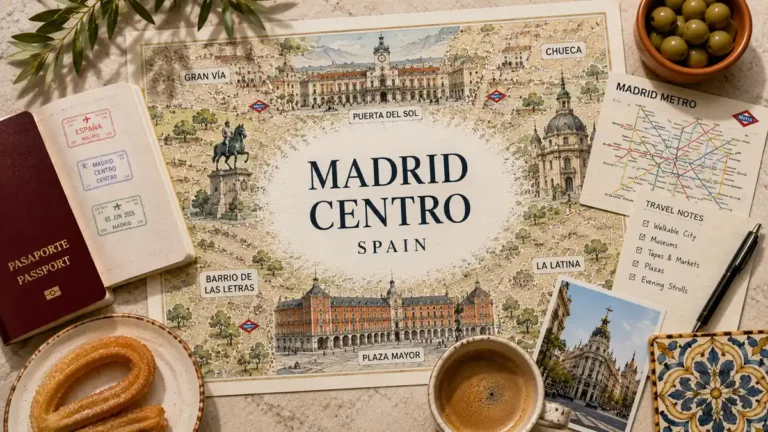
Madrid is known for three things: a museum axis you can walk end to end, a historic centre built for evenings, and neighborhoods that each carry one function. The Prado, the Reina Sofía and the Thyssen-Bornemisza sit a few minutes apart along the Paseo del Prado, with Retiro Park directly behind them.
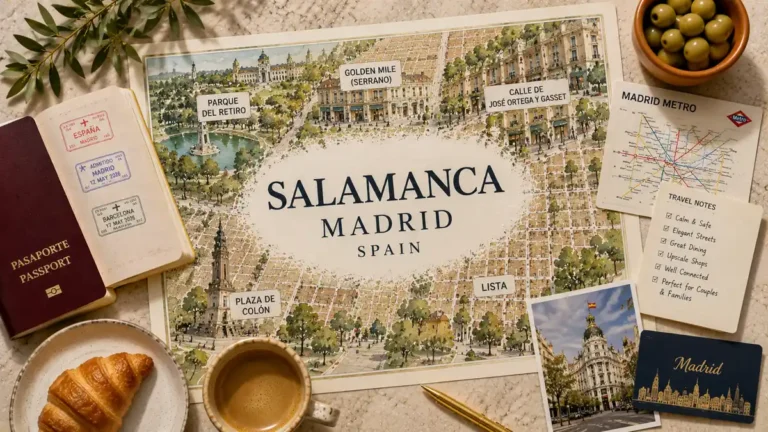
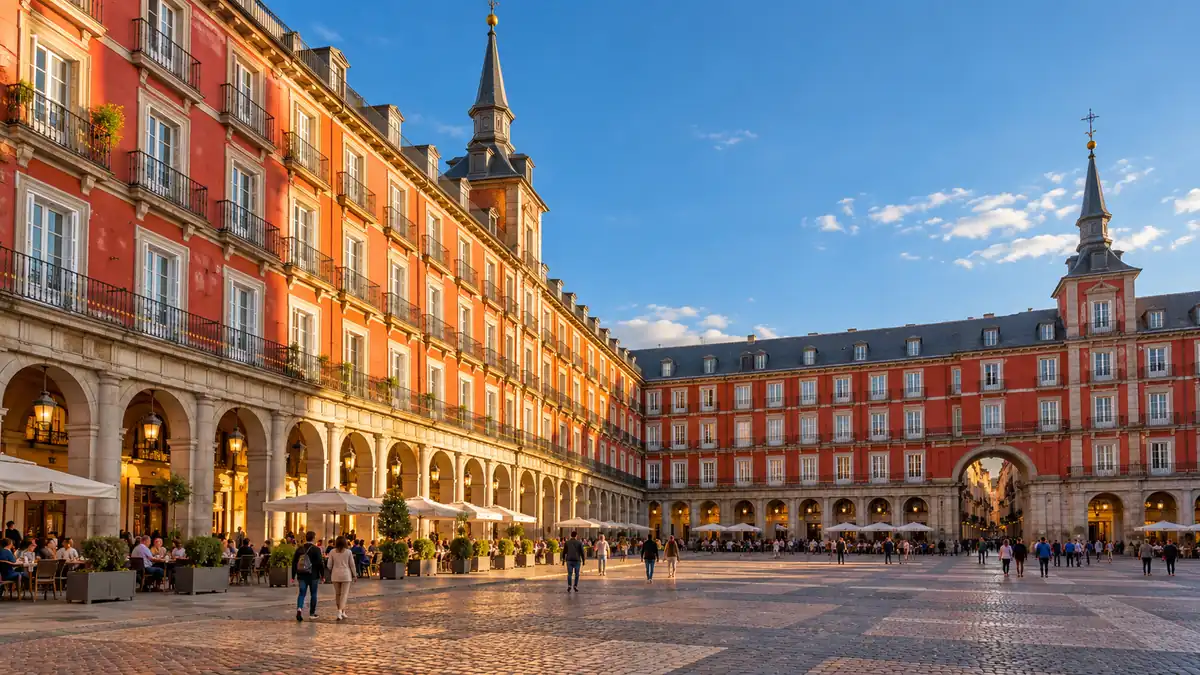
West of that axis, the historic centre runs from Puerta del Sol through Plaza Mayor to the Royal Palace, with Gran Vía as the big commercial street cutting across the top. The palace is a visit as well as a landmark: a timed-entry ticket takes you through its state rooms, among them the Hall of Mirrors and the Columns Room, with paintings by Velázquez and Goya on the walls, and the Royal Armoury stands beside it. The whole span is walkable in an afternoon, which is the orientation fact that matters: on a first visit you do not need the metro to see the core, you need it to get home late. The neighborhoods sort themselves by what they are for — the Barrio de las Letras for a central, bookish base, Malasaña and Chueca for bars that run past midnight, La Latina for Sunday tapas and the Rastro market, Salamanca for upscale shopping and calm streets. The Santiago Bernabéu sits north of the centre and is the one sight that pulls visitors who otherwise skip museums. Its stadium tour takes in the club museum, a panoramic view of the stands from inside, and the changing rooms and dugouts, though those last two close on match days and the day before, so check the fixture list before you pick a date, then book the stadium tour.
The one booking fact to know before you fix dates: the Prado runs on timed entry, so a general ticket is a chosen date and slot, not a walk-up (book a timed ticket). General admission is €15, and the last two hours before closing are free for the permanent collection, but only at the ticket office and subject to capacity, so the free slot means a queue, not a guarantee. Which of these places deserve your hours, and in what order, belongs to our guide to things to do in Madrid.
How Many Days You Need in Madrid
Two to three days covers Madrid’s core: the art axis, the historic centre, and one slow evening. Add a day for every day trip you plan, since Toledo and Segovia each take a full day. Four to five days suits travelers who want the city plus a proper look at what surrounds it.
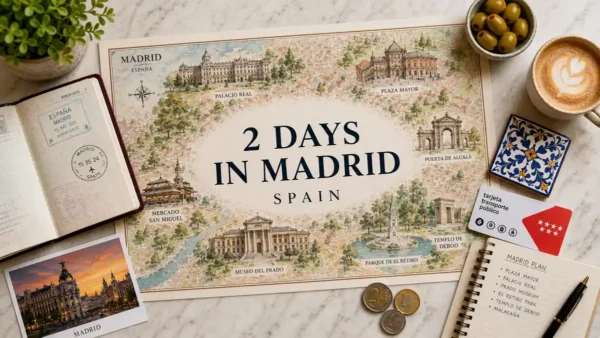
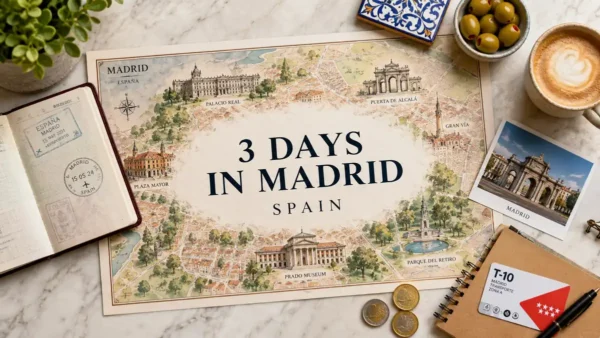
Each length buys something different. Two days is a compression: one museum block, one long walk through the centre, one late dinner, and no margin. Three days is the comfortable version of the same trip, with room for a second museum, Retiro in the morning, and an evening that runs on Madrid’s clock instead of yours. Four days or more is where the region opens up. The 2 days in Madrid itinerary and the 3 days in Madrid itinerary show how each length actually plays out day by day.
| Trip length | What it buys | Best for | Main tradeoff |
|---|---|---|---|
| Two days | The art axis and the historic centre, briskly | Weekend visitors and tight multi-city routes | No day trips and no slow time |
| Three days | The same core at a comfortable pace, one late night | Most first-time visitors to Spain | Adding a day trip means cutting a museum |
| Four days | The full city core plus one day trip out | First-timers who want a historic town too | One whole day spent outside Madrid |
| Five days or more | City, two day trips, unhurried evenings and parks | Slow travelers and returning visitors | Those days may serve another region better |
The day-trip arithmetic is what breaks most Madrid plans. The ride out is short — Renfe’s high-speed Avant reaches Toledo from Atocha in 33 minutes, and Segovia is a comparable hop from Chamartín — but a trip to Toledo or Segovia still does not slot into a spare afternoon; it replaces a city day outright, so a three-day visit with one excursion is really a two-day city visit. Decide the excursions first and count the city days after — our guide to the best day trips from Madrid shows what each one costs you in time.
The other variable is the wider route. If Madrid is one stop in a two-week Spain trip, three days is usually the ceiling before the country starts competing for attention; if it is your only city, five is easy to fill. Our Spain itinerary planner shows how the capital fits alongside the coast, the south, and the north.
Best Time to Visit Madrid: What Each Season Trades
Spring and autumn are the best times to visit Madrid. Both bring walkable temperatures, long useful days, and a city running at full pace. Midsummer trades comfort for quieter streets and easier rooms as residents leave; winter trades warmth for the thinnest crowds and the calmest museums.
Madrid’s seasons are sharper than the coast’s because the city sits inland and high. Summer afternoons are genuinely hot, and the sensible response is not to fight them: locals move indoors or out of town, and visitors who plan mornings and evenings around the heat do fine. Winter is cold and dry with short evenings, which pushes the trip indoors — a fair trade if museums are the point of the visit.
| Season | What it buys | What it costs | Best for |
|---|---|---|---|
| Spring | Walkable warmth, open terraces, full city pace | Strong demand for central rooms | First-timers doing the museums on foot |
| Summer | Emptier streets, easier rooms, very long evenings | Hot afternoons and some seasonal closures | Night owls who can rest mid-afternoon |
| Autumn | Comfortable days and the cultural season restarting | Daylight shortening as the season goes on | Travelers pairing the city with day trips |
| Winter | Thin crowds and the calmest museum visits | Cold, dark evenings and quieter street life | Culture-first visitors avoiding queues |
High summer is the season most travelers misread. Madrid does not fill up in the hottest weeks — it empties, because its own residents leave, which is why the streets feel calm and rooms get easier. The catch is that a share of the small, family-run bars you came for close at the same time, so the city is more comfortable and slightly less itself.
Madrid’s pattern is not Spain’s pattern, and a trip that also touches the coast or the north needs the country-level view. Check the best time to visit Spain before locking dates for a multi-stop route.
Where to Stay in Madrid (by Travel Style)
Stay central on a first visit to Madrid. A central base puts the museums, the plazas, and the late-night streets within walking distance, which is what makes a short trip work at all. The price is noise and higher rates; quieter districts one step out trade a few metro minutes for calm.
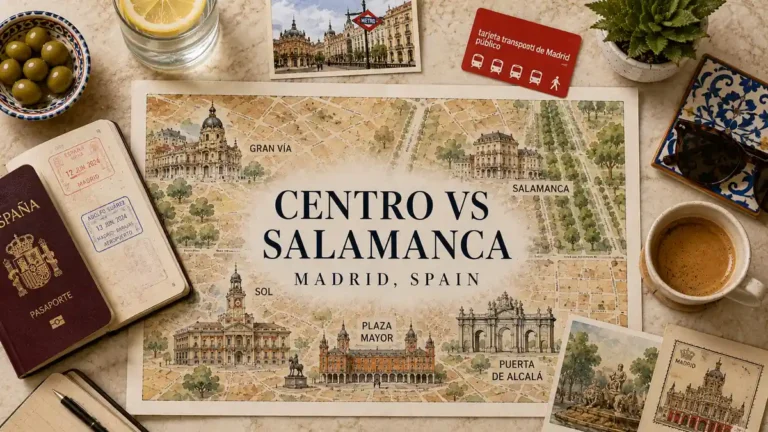
The stay decision resolves at style level before it resolves at neighborhood level. Central puts you inside the walkable core and inside the noise. Quieter, more upscale districts sit a short ride away and buy sleep, space, and better-value rooms. Nightlife-adjacent areas put the bars on your doorstep and keep them there until very late. Our guide to where to stay in Madrid resolves the actual neighborhoods.
Madrid’s nights outlast its metro, and that is the real argument for paying the central premium. What you are buying is not the walk to the Prado — it is the walk home after dinner ends at midnight.
- First-time visitors: the central core around Sol and the Barrio de las Letras, for maximum walking access — see the best Madrid areas for first-time visitors.
- Budget travelers: one zone out from the busiest squares, with a short metro ride in — see budget areas to stay in Madrid.
- Couples: calmer, characterful central streets over the busiest tourist blocks — see the best Madrid areas for couples.
- Families: quieter districts with space, parks nearby, and easy transport — see the best Madrid areas for families.
- Night owls: Malasaña and the bar-dense streets around it, accepting noise that runs late — see the best Madrid areas for nightlife.
- Luxury travelers: Salamanca and the upscale, orderly districts — see the best Madrid areas for a luxury stay and our pick of luxury hotels in Madrid.
Hotels and places to stay
Compare hotels, apartments and stays for your dates in one search.
Search hotels and stays on hotels.com →
Tripstou may earn a commission if you book through this link, at no extra cost to you.
How to Get Around Madrid
Madrid’s historic centre is walkable end to end, and the metro covers everything beyond it, including the airport. Most first trips need nothing else. Walking handles the museum axis, Plaza Mayor, and the Royal Palace; the metro earns its place for outer neighborhoods, late returns, and arrival day.
Most visitors overbuy transport here. The sights that fill a two- or three-day trip sit inside one continuous walk, so the metro works out as an evening and arrival tool more than a daily one. It becomes essential in two situations: when you are staying outside the core, and when the afternoon heat makes a long walk a bad idea. Ticket types, lines, and travel-card logic are covered in our guide to getting around Madrid.
Arrival is simple: metro line 8 links the terminals with Nuevos Ministerios in 12 to 20 minutes on the standard fare plus a €3 airport supplement, the Airport Express bus runs 24 hours and reaches the centre in about 40 minutes for €5, the Cercanías train from Terminal 4 costs €2.60 to Chamartín or Atocha, and a taxi is a fixed €33 into the centre — with luggage on a first visit the Express bus is the simplest, one ride and no changes, and the whole comparison sits in our Madrid airport transport guide.
Is Madrid Walkable?
Yes, central Madrid is walkable. The historic core is compact, largely flat in the places you will spend most time, and dense enough that the major landmarks connect to each other on foot. Beyond that ring, distances stretch quickly and the metro takes over.
How Much a Trip to Madrid, Spain Costs
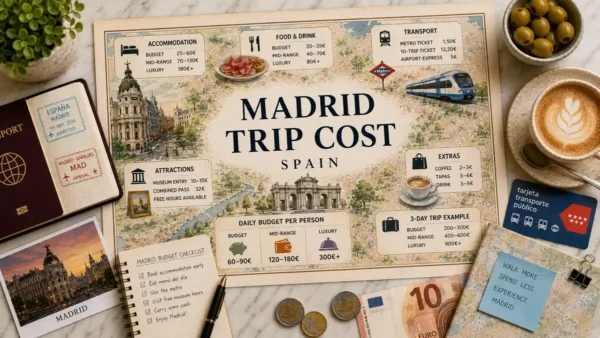
Madrid is good value for a major European capital, and spend style sets the budget more than the city does: budget days run roughly €50–€80 per person, mid-range €100–€180, and high-end from €250 upward. The same days built around taxis, tasting menus, and top-end hotels cost several times more, in any season.
Museums, walking, and casual eating keep a trip modest — the Prado charges €15 and lets everyone in free for the last two hours before closing, 6 pm to 8 pm Monday to Saturday and 5 pm to 7 pm on Sundays and public holidays. Three spend styles describe almost every Madrid trip:
- Budget: hostels or simple rooms a zone out, market and neighborhood-bar eating, metro and walking only. Madrid is unusually kind to this style, because the walkable core removes most transport spend.
- Mid-range: a central three-star or apartment, sit-down lunches, one or two paid attractions a day, occasional taxis late at night. This is where most first-time trips land.
- High-end: upscale districts, reserved restaurants, private guiding, taxis by default. Madrid supports it comfortably, though the city rarely forces it — the best experiences are not the expensive ones.
Madrid punishes one spending pattern in particular: eating on the main tourist plazas. Two streets back from the same square, the same money buys noticeably better food, and that single habit moves a week’s budget more than any booking trick.
Season and lead time matter too, mostly through accommodation, which is the item that swings hardest between a quiet week and a busy one. For actual figures, our Madrid trip cost breakdown handles the city line by line, and the Spain travel budget guide sets the country-wide picture if Madrid is one stop among several.
Madrid’s Daily Rhythm: When to Eat and When to Go Out
Madrid runs late. Lunch lands in the mid-afternoon, dinner rarely starts before nine in the evening, and bars fill after that. Plan around it: sightsee early, take a slow afternoon, and eat late. Arriving on northern-European meal times is the fastest way to eat badly in Madrid.
The shape of a Madrid day is the thing official guides never quite explain. Mornings are for museums and walking, when the light is good and the crowds are thinnest. The middle of the day belongs to a long lunch, and in summer to doing very little afterwards. The evening starts late and stretches: a drink before dinner, dinner itself well after most visitors have already eaten, and then whatever the night turns into. A flamenco show in one of the city’s tablaos fits that rhythm well: the art has Andalusian roots, but many of its leading artists live in Madrid, and several tablaos pair the show with dinner, so the evening’s entertainment and its late meal become one plan (book a show).
The late rhythm is not an inconvenience to be endured — it is where the city’s character actually lives. A trip built around seven o’clock dinners will find half-empty rooms and the wrong crowd, and will miss the hour when locals finally show up.
Two adjustments make it work for a jet-lagged, long-haul first-timer: eat a real lunch instead of a quick one, and treat the afternoon as rest rather than dead time. Then a late night costs nothing the next morning. What to actually order is covered in our Spanish food guide, and the practical habits that smooth out a first visit sit in our Madrid travel tips.
Who Madrid Suits — and How It Fits a Wider Spain Trip
Madrid suits first-time, long-haul visitors best as the opening stop of a wider Spain trip. It is the country’s rail hub, so onward trains fan out from here in every direction. Travelers set on beaches, islands, or a slow coastal pace should give the city fewer days.
As a first stop, Madrid does three useful things: it absorbs jet lag in a city where the day starts late anyway, it delivers the country’s heaviest cultural hitters while you still have energy for them, and it puts you at the centre of the rail map for whatever comes next. Our Spain travel guide frames the whole country, and the Spain train itinerary shows how the capital connects outward to the south, the east, and the north.
Madrid also works better at the beginning of a route than at the end. It sets a pace and a standard — late, urban, art-heavy — that smaller cities are then measured against, and the comparison flatters them more than the reverse order does.
Madrid and Barcelona in one trip is the most common Spain plan, and it works better than the rivalry suggests. The high-speed line between them takes about two and a half hours city centre to city centre, with several operators on the route, so the pair costs you an afternoon of travel, not a day. Start in Madrid, give each city two to three days, and treat the train as the hinge; the 2 days in Madrid itinerary covers the capital’s share, and the Spain train itinerary above shows where a third city fits if you have the days.
Madrid is a generally safe capital for visitors, with pickpocketing in crowded tourist spots as the main practical concern; our Madrid safety guide, our rundown of common scams in Spain, and our solo female travel safety guide for Spain cover it properly.
Frequently Asked Questions
Is Madrid expensive?
Madrid is inexpensive for a capital city but pricier than smaller Spanish destinations. Accommodation carries most of that gap; eating and museum-going stay reasonable at every level. Travelers coming from elsewhere in Spain notice the jump, while travelers arriving from northern Europe usually find the city good value.
What is the cheapest time to visit Madrid?
Winter is the cheapest time to visit Madrid, outside the Christmas and New Year weeks. Demand for rooms drops once the cold sets in, museums are at their quietest, and lead times shorten. High summer is the second-cheapest window, since residents leave and the city empties.
How hot does Madrid get in summer?
Madrid gets genuinely hot in midsummer, with dry afternoon heat that makes long walks unwise. The practical consequence is a split day: museums and shaded parks before lunch, indoors or resting through the worst hours, then the city again from early evening. Air conditioning is worth checking before booking a room.
Do you need to speak Spanish in Madrid?
No, you do not need Spanish to visit Madrid. English is widely understood in hotels, museums, and central restaurants, and the metro is straightforward to navigate without it. A few phrases still help in neighborhood bars away from the tourist core, where staff may prefer Spanish and menus are rarely translated.
Should you choose Madrid or Barcelona for a first trip to Spain?
Choose Madrid when art, food and city life matter more than sea and architecture-led sightseeing. Madrid is inland and urban, with Spain’s heaviest concentration of major art museums and its most central rail position. Travelers whose Spain picture includes a beach afternoon should compare the wider options in our guide to the best places to visit in Spain.
How many days do you need in Madrid with day trips?
Plan four to five days if day trips matter to you. One excursion consumes a full day, so a four-day visit leaves three in the city and a five-day visit leaves three plus a second trip out. Travelers with only three days should keep them all in Madrid.
How far in advance should you book a Madrid trip?
Book accommodation two to three months ahead for spring and autumn travel, and a month or so for winter or high summer. Central rooms are the constraint, not flights or museums. If your dates fall over a major holiday weekend or a big event, treat the lead time as longer.
Related Guides
Build the rest of the Spain trip around your Madrid days with these guides:
- 7 days in Spain itinerary — a short route with Madrid as the anchor.
- 10 days in Spain itinerary — capital plus two more regions at a fair pace.
- 14 days in Spain itinerary — the full loop for a long-haul first trip.
- Spain road trip routes — when driving beats the train network.
- Best beaches in Spain — the coastal contrast to an inland capital.
- Spanish islands guide — choosing between the Balearics and the Canaries.
- Spain packing list — what to bring for city days and hot afternoons.
Did this guide save you time or money? Tripstou is independent and reader-funded — if you'd like to give something back, you can support the site with a crypto contribution of any size.