This Europe Packing List gives you a carry-on-only plan to avoid overpacking—built for Europe’s real friction: cobblestones, stairs, tight stations, and budget airline rules. Most first-timers pack “just in case,” then lose time, money, and energy every time they move cities. This guide fixes that with a simple system: season-by-season layers, a capsule wardrobe, and the two-shoe rule. Pack lighter, move faster, and keep your bag working for your itinerary—not against it.
At-a-glance: the smart packing logic
If you only remember three things from this Europe Packing List, let it be these:
- Default approach: Carry-on only (40–45L backpack or a small roller you can lift easily).
- Clothing system: Layers + a capsule wardrobe (neutral pieces that all mix together).
- Non-negotiable rule: Two pairs of shoes max (walking pair + one nicer pair).
Bottom line: Pack for your destination climate and route pace, not the flight.
Table of Contents
- 1. The carry-on-only plan: carry-on vs checked luggage in Europe
- 2. Europe packing list by season (what actually changes)
- 3. The Europe clothing strategy (less clothes, more outfits)
- 4. Shoes: the most important packing decision
- 5. Non-obvious essentials travelers forget
- 6. Common packing mistakes to avoid
- 7. City and country nuance: where packing changes
- 8. Europe packing list checklist (copy/paste)
- 9. FAQs
- 10. What to Read Next (Master Hub)
1. The carry-on-only plan: carry-on vs checked luggage in Europe

The infrastructure of Europe heavily favors the carry-on traveler. Moving between cities and countries is often done by train or budget flight, where checked bags introduce friction, cost, and delay.
- Train travel and stairs logic: Many train stations and older accommodations lack elevators. You will be carrying your bag up and down stairs.
- Cobblestones and walking reality: Rolling a large suitcase over cobblestones is a guaranteed way to damage your bag and frustrate yourself.
- Budget airline restrictions: Budget carriers (Ryanair, EasyJet, Wizz Air) charge high fees for checked luggage, often making the flight more expensive than planned.
- Who should still check a bag: Families with small children or travelers on a single, long-term, fixed-base trip (e.g., a month in Rome).
Tip: If you cannot comfortably lift your bag above your head and carry it for 10 minutes, it is too heavy for efficient European travel. For more on movement, see our guide on Getting Around Europe.
Hotels and flights
Compare hotels, apartments and flight options for your dates in one search.
Compare hotels and flights on expedia.com →
Tripstou may earn a commission if you book through this link, at no extra cost to you.
2. Europe packing list by season (what actually changes)

Packing for Europe is about adapting your layering system, not changing your entire wardrobe. The core difference is the weight of your outer layers.
Spring (March–May)
The most unpredictable season. Focus on waterproof layers and a mid-weight jacket. Days can be warm, but evenings are cool. This is the perfect time for light layers and a reliable trench coat.
Summer (June–August)
Lightweight, breathable fabrics are essential, especially in Southern Europe. Focus on sun protection and comfortable walking sandals. Evenings in the Nordics or mountains can still require a light jacket.
Fall (September–November)
Similar to spring, but with more consistent cooling. A light down jacket or fleece is necessary. This is the best time for a versatile scarf and waterproof walking shoes.
Winter (December–February)
The only time heavy packing is justified. Focus on thermal base layers, a waterproof outer shell, and warm, waterproof boots. Remember that indoor heating is often very strong, so layers are crucial for comfort.
In short: The strategic traveler packs for the season’s temperature range, not the season’s name. Always include one waterproof layer and focus on layers that can be worn together.
Get online the moment you land
An eSIM installs before you fly — no SIM swap, no roaming bill, no queue at an airport kiosk. Two options, depending on how you travel:
Holafly — unlimited-data plans, so nothing counts against a
cap. Best for longer stays, remote work, and heavy map and video use.
Code TRIPSTOU applies automatically: 5% off any travel eSIM,
reusable on every order, or 10% off Holafly Plans.
Get a Holafly eSIM →
Airalo — pay for the data you need, across 200+ destinations,
trusted by 20M+ travelers. Best for short trips and light use.
Use code NEWTOAIRALO15 for 15% off your first order:
Get an Airalo eSIM →
Tripstou may earn a commission if you purchase through these links, at no extra cost to you.
3. The Europe clothing strategy (less clothes, more outfits)

The goal is to create a capsule wardrobe where every top can be worn with every bottom. This maximizes your outfit options while minimizing luggage weight.
- Neutral colors: Black, grey, navy, and white are your friends. They hide dirt, mix easily, and always look appropriate.
- Mix-and-match logic: Bring three bottoms and five tops. This gives you 15 different outfits.
- Laundry frequency: Plan to do laundry every 7–10 days. This allows you to pack for a week, even if your trip is a month long.
- City vs countryside differences: Europe is generally casual, but avoid overly athletic wear in major cities like Paris or Vienna.
Tours and activities
Book skip-the-line tickets, day trips and local tours with free cancellation on most activities.
You can also browse everything on getyourguide.com.
Tripstou may earn a commission if you book through this link, at no extra cost to you.
4. Shoes: the most important packing decision
You will walk more in Europe than you think. Your shoes must be comfortable, supportive, and appropriate for the weather.
- Walking distances: Assume 10,000–20,000 steps per day. Comfort is non-negotiable.
- What not to bring: High heels, brand-new shoes, or flip-flops (unless strictly for the beach/hostel).
- How many pairs is enough: Two pairs: one comfortable, versatile walking shoe (sneaker or boot) and one dressier, comfortable shoe for evenings.
Travel medical insurance
SafetyWing Nomad Insurance provides travel medical coverage designed for travelers and digital nomads, with flexible Monthly and Annual plans.
Check Nomad Insurance coverage and current pricing →
New Nomad Insurance Essential members can get 8 weeks of electronic theft coverage free with reward code TRIPSTOU8.
Apply the reward before creating your SafetyWing account by looking for the pink camera icon on the Nomad Insurance page.
Tripstou may earn a commission if you purchase through this link, at no extra cost to you.
5. Non-obvious essentials travelers forget
These small items make a huge difference in comfort and convenience.
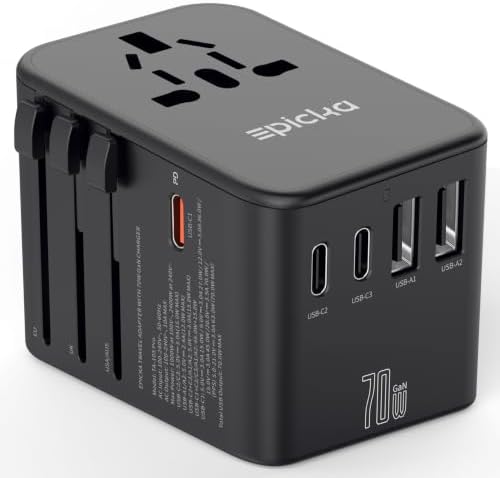
- Power adapters: Europe uses two main plug types (Type C and F). Bring a universal adapter.
- Day bag / anti-theft logic: A small, cross-body bag or lightweight backpack for daily use. Ensure it has secure zippers.
- Documents and copies: Physical and digital copies of your passport, visa, and insurance.
- Medications and basics: Bring a small supply of common over-the-counter medications, as European pharmacies may require a prescription.
Tip: A small, portable power bank is essential for keeping your phone charged for navigation and communication. For more on phone usage, see our guide on Connectivity in Europe.
Hotels and places to stay
Compare hotels, apartments and stays for your dates in one search.
Search hotels and stays on hotels.com →
Tripstou may earn a commission if you book through this link, at no extra cost to you.
6. Common packing mistakes to avoid
- Overpacking clothes: You will wear the same few outfits repeatedly.
- Packing for “what if” scenarios: If you need a specific item (e.g., a formal suit), it is usually cheaper to buy it there than to carry it for weeks.
- Ignoring weather microclimates: The weather in Reykjavik is not the same as in Athens.
- Bringing unnecessary valuables: Leave expensive jewelry and watches at home.
Train and bus tickets
Compare routes, schedules and prices across rail and bus operators in one search, with mobile tickets on your phone.
New to Omio? Code NEW10 takes 10% off your first booking — or APPNEW10 if you book inside the Omio app. Both apply to bookings up to €80.
Search routes and compare prices on Omio →
Tripstou may earn a commission if you book through this link, at no extra cost to you.
7. City and country nuance: where packing changes
While the core packing list remains the same, a few items should be adjusted based on your destination.
- Nordic Cold: Focus on high-quality thermal base layers for countries like Norway and Iceland, even in summer.
- Southern Heat: Lightweight linen and cotton are crucial for the intense heat of Greece and Italy.
- Eastern Europe: While modern, a slightly more conservative approach to clothing is sometimes appropriate when visiting religious sites in countries like Ukraine or Poland.
8. Europe packing list checklist (copy/paste)
- Luggage: Carry-on bag (backpack or small roller).
- Clothing: 3 bottoms, 5 tops, 1 versatile jacket, 1 waterproof shell.
- Shoes: 1 comfortable walking shoe, 1 dressier shoe.
- Essentials: Universal adapter, portable power bank, secure day bag.
- Documents: Passport, visa (if needed), insurance, digital copies.
Tip: For a full list of financial essentials, see our guide on Money in Europe (cards, cash, ATMs and tipping).
9. FAQ (selected questions)
Q: Can I really travel Europe with carry-on only?
A: Yes. Europe’s transport system favors light travel. With a capsule wardrobe and laundry every 7–10 days, carry-on-only is not just possible—it’s the most efficient strategy.
Q: What size backpack works best for Europe?
A: A 40–45L travel backpack is ideal. It fits airline carry-on limits, handles stairs and cobblestones, and forces smart packing decisions.
Q: How many outfits do I actually need?
A: Three bottoms and five tops create 15 outfits. That’s more than enough when combined with layers and one versatile jacket.
Q: Is it okay to wear sneakers in Europe?
A: Yes—clean, neutral sneakers are completely normal. What stands out are bulky athletic shoes, flip-flops in cities, or worn gym footwear.
Q: Do I need different clothes for each country?
A: No. Pack for climate and activity, not borders. A single capsule wardrobe works across most of Europe with small seasonal adjustments.
Q: What’s the biggest packing mistake in Europe?
A: Overpacking shoes. More than two pairs adds weight without adding flexibility.
Q: Should I pack for worst-case weather?
A: No. Pack one waterproof layer and adaptable insulation. Extreme “just in case” items create friction without real payoff.
Q: Can I buy things I forget in Europe?
A: Absolutely. Europe has excellent pharmacies and clothing stores. It’s often cheaper to buy one item there than carry it across multiple cities.
Q: Is checked luggage ever worth it?
A: Only for long, single-base stays or family travel with children. For multi-city trips, checked luggage adds cost, time, and stress.
Q: Do Europeans dress better than tourists?
A: In general, yes—but it’s about simplicity, not fashion. Europeans favor neutral colors, well-fitted basics, and practical shoes. You don’t need to “dress up”—just dress clean, neutral, and intentional.
10. What to read next (curated internal hub)
Start with the Hub
Core Europe Planning Clusters
- Money in Europe Money in Europe (cards vs cash, ATMs & tipping)
- Connectivity in Europe (eSIM vs SIM and coverage)
- Europe Safety Tips (scams, pickpockets and smart habits)
- Getting Around Europe (trains, flights and friction)
- Best Europe Itineraries and Routes
- Where to Stay in Europe (accommodation logic, hotel vs Airbnb & neighborhood strategy)
- Best time to visit Europe (weather, crowds & prices)
- Europe Travel Budget (real cost logic)
City Examples (Packing Contrast)
Next Country to visit
🇪🇺 Western Europe Countries
- France Travel Guide
- Spain Travel Guide
- Portugal Travel Guide
- Netherlands Travel Guide
- Belgium Travel Guide
- Luxembourg Travel Guide
- Ireland Travel Guide
- England Travel Guide
🇪🇺 Southern Europe & Balkans Countries
- Italy Travel Guide
- Greece Travel Guide
- Croatia Travel Guide
- Montenegro Travel Guide
- Albania Travel Guide
- Malta Travel Guide
- Bosnia and Herzegovina Travel Guide
- Serbia Travel Guide
- North Macedonia Travel Guide
- Kosovo Travel Guide
🇪🇺 Northern Europe & Nordics Countries
- Sweden Travel Guide
- Norway Travel Guide
- Finland Travel Guide
- Denmark Travel Guide
- Iceland Travel Guide
- Scotland Travel Guide
🇪🇺 Central Europe Countries
- Germany Travel Guide
- Austria Travel Guide
- Switzerland Travel Guide
- Poland Travel Guide
- Czechia Travel Guide
- Hungary Travel Guide
- Slovakia Travel Guide
- Slovenia Travel Guide
🇪🇺 Eastern Europe & Baltics Countries
- Romania Travel Guide
- Bulgaria Travel Guide
- Ukraine Travel Guide
- Moldova Travel Guide
- Lithuania Travel Guide
- Latvia Travel Guide
- Estonia Travel Guide
- Belarus Travel Guide
🇲🇨 Microstates and Special Territories
- Vatican City Travel Guide
- Monaco Travel Guide
- Andorra Travel Guide
- Liechtenstein Travel Guide
- San Marino Travel Guide
Spending money abroad
A Wise account converts your money at the mid-market exchange rate and shows every fee upfront, with a card you can spend in the local currency.
Check Wise’s rates and fees for your currency →
Tripstou may earn a commission if you sign up through this link, at no extra cost to you.

Did this guide save you time or money? Tripstou is independent and reader-funded — if you'd like to give something back, you can support the site with a crypto contribution of any size.