

Europe is so well-connected that the easiest mistake is choosing the wrong transport — and quietly losing a half-day to airport friction, slow connections, or hidden fees. This Getting Around Europe guide gives you a simple decision framework to choose between trains, flights, buses, cars, and ferries using what actually changes your trip: door-to-door time, true cost, comfort, and season. This page serves as the central transport reference for all our Europe itineraries, city guides, and country routes. For the complete planning system, start with our Europe Travel Guide, then align timing and costs with Best Time to Visit Europe and Europe Travel Budget.
At a glance: the fastest way to choose
The 30-second rule: Don’t choose by the timetable. Choose by door-to-door time + true cost (fees, baggage, transfers).
- Under ~4 hours door-to-door → Train. Usually faster overall, more comfortable, and you arrive in the city center.
- Over ~6 hours door-to-door → Compare flights. Flying starts to win when rail is indirect/slow or the trip is roughly 700–800+ km.
- 50%+ cheaper and you can “pay with time” → Bus. Especially useful where rail coverage is limited (common in parts of the Balkans and Eastern Europe).
- Rural regions and flexible stops → Car. Best for countryside loops (villages, wineries, national parks), not capitals.
- Islands or sea crossings → Ferry. The default option—always check reduced schedules outside summer.
Use the rule above to pick your default winner, then confirm it with the distance framework and friction points later in this guide.
Table of Contents
- 1. The Main Transport Options in Europe
- 2. City Transport vs. Intercity Transport
- 3. Trains in Europe: Speed, Comfort, and City-to-City Logic
- 4. Flights in Europe: When Flying Actually Makes Sense
- 5. Buses in Europe: The Underrated Budget Tool
- 6. Cars in Europe: Freedom vs. Friction
- 7. Ferries in Europe: Connecting Islands and Coasts
- 8. Distance-Based Decision Framework
- 9. Common Friction Points & Accessibility
- 10. How Transport Choices Shape Your Itinerary
- 11. FAQ (Concise, High-Value)
- 12. What to Read Next (Selected Hub)
1. The Main Transport Options in Europe
The European transport network is defined by its density and its focus on inter-city movement. Understanding how each mode functions is the first step in strategic planning.
- Trains: The default choice for speed and convenience in Western and Central Europe. They are designed to move you from one city center to the next with minimal friction.
- Flights: Highly efficient for long-distance travel, leveraging a vast network of low-cost carriers and major flag carriers. They are best used for crossing large geographic distances or water.
- Buses: The backbone of budget and regional travel, especially in areas where rail infrastructure is less developed. They offer the lowest cost but demand the most time.
- Cars: A tool for exploring rural and remote areas, offering maximum flexibility at the cost of significant friction in urban environments.
- Ferries: A critical link for island nations and coastal regions, ranging from massive car ferries to small passenger-only vessels.
Looking for the best hotel or flight deals?
Plan your trip with ease using the Expedia search tool below. From charming boutique hotels to luxury resorts, this widget helps you compare top options in seconds — flights included!
2. City Transport vs. Intercity Transport
It is crucial to distinguish between two different types of transport. This guide focuses on intercity transport (moving between cities and countries). Once you arrive in a city, you will use city transport (metro, trams, local buses, ride-sharing) to get around. Never use a rental car for exploring a major European city; it is expensive, slow, and stressful.
Worried about landing with no signal? Get an Airalo eSIM for your trip — trusted by 20M+ travelers with coverage in 200+ destinations, often cheaper than roaming.
3. Trains in Europe: Speed, Comfort, and City-to-City Logic

Trains are the most comfortable and efficient way to travel between major European cities. The system is built around moving people quickly from one urban core to another, bypassing the time-consuming logistics of airports.
- Strengths of Trains: Speed on high-speed lines, comfort, central station locations, and the ability to work or relax during the journey.
- When Trains are Clearly the Best Option: For distances where the total door-to-door time is less than flying (typically under 500 km). This is the ideal choice for Corridor routes (e.g., Vienna to Budapest).
- Hidden Limitations: Prices can be high if not booked in advance. Crossing certain borders (e.g., into some Eastern European countries) can involve delays.
- Typical Distance Range: 150 km to 700 km.
4. Flights in Europe: When Flying Actually Makes Sense
While often the cheapest option initially, flights come with a high friction cost. They are best reserved for specific, strategic situations where the time saved outweighs the logistical hassle.
- When Flights Beat Trains: For distances over 800 km, or when crossing water (e.g., from France to Greece).
- Time vs Friction Trade-off: A 1.5-hour flight requires 4–5 hours of total travel time (check-in, security, airport transfers). This friction often makes them slower than trains for short distances.
- Cost Traps: A cheap ticket often excludes baggage fees, seat selection, and airport transfer costs, making the final price comparable to a train ticket.
- Seasonal Effects: Winter weather can significantly affect flight reliability, leading to delays and cancellations. This risk is lower in the summer, but prices are higher.
5. Buses in Europe: The Underrated Budget Tool

Buses are the most flexible and budget-friendly option, making them a critical tool for travelers prioritizing cost over speed. They are particularly valuable in regions with less developed rail networks.
- When Buses are the Smartest Choice: When the cost of a train or flight is prohibitive, or when connecting smaller towns not on the main rail lines.
- Who Should Prioritize Buses: Budget-tier travelers who have the time flexibility to absorb longer travel times. This choice directly impacts your Europe Travel Budget.
- Comfort and Time Trade-offs: Buses are slower and less comfortable than trains, but they often offer direct routes where trains require multiple changes.
- Regional Advantage: In the Balkans and parts of Eastern Europe (e.g., Albania, Bosnia), buses are often the most reliable and efficient way to travel between countries.
6. Cars in Europe: Freedom vs. Friction

Renting a car provides the ultimate freedom to explore rural areas but comes with significant costs and stress in urban environments.
- When to Rent a Car: For exploring regions with poor public transport, such as Tuscany (Italy), the Cotswolds (England), or the countryside of France.
- When to Avoid a Car: Never use a car for travel between major cities or for exploring within them. Parking is expensive and difficult, and many city centers have restricted driving zones.
- The True Cost: The rental price is only the beginning. Factor in fuel, tolls, parking, and cross-border fees.
Want to save on train tickets? Search routes and compare prices on Omio — and check for available discounts or referral credit when you book (offers can vary by location/account).
7. Ferries in Europe: Connecting Islands and Coasts
Ferries are an essential part of the transport network in countries with extensive coastlines and islands. They range from high-speed catamarans to large, overnight vessels with cabins.
- When Ferries are Necessary: For island hopping in Greece or Croatia, or for crossing between countries like England and France, or Spain and Morocco.
- Seasonal Reliability: Ferry schedules are highly seasonal. Many routes run on a reduced schedule or stop completely in the winter. Always check in advance.
8. Distance-Based Decision Framework
The most effective way to choose your transport is to use distance as your primary metric. This framework assumes a standard level of European infrastructure:
- Under ~300 km: Train is the default winner. The total door-to-door time for a train is almost always faster than flying, and the cost is often comparable when booked in advance.
- 300–700 km: Train vs. Flight is a strategic choice. If you value comfort and city-center arrival, choose the train. If you find a flight significantly cheaper (after all fees) and are willing to accept the airport friction, choose the flight.
- 700+ km: Flight is the default winner. The time saved by flying over this distance is usually worth the airport friction. This is your “long jump” distance.
9. Common Friction Points & Accessibility
Even the best-planned trips can face disruptions. Understanding these common friction points helps you build a more resilient itinerary.
- Strikes and Delays: Transport strikes (especially rail and air) are a common reality in some European countries. Always have a backup plan for major travel days.
- Rural Gaps: High-speed transport networks are designed for cities. Reaching smaller towns and rural areas often requires a switch to slower, regional trains or buses.
- Seasonality: As mentioned, winter weather can cause delays, and peak summer demand can lead to sellouts. The shoulder seasons offer the least friction.
- Accessibility: While improving, accessibility can be a challenge. Older train stations and metro systems (like Paris) often lack elevators. Newer trains and airports are generally well-equipped. It is always best to check with transport providers in advance.
10. How Transport Choices Shape Your Itinerary
Your transport choice is not a detail; it is the foundation of your itinerary. The decision between train, flight, and bus defines your pace and the shape of your route.
- Corridors vs. Long Jumps: Trains create natural, low-friction corridors (e.g., Berlin to Prague). Flights are reserved for long jumps that connect distant corridors (e.g., Dublin to Rome).
- Pace and Budget: Choosing buses over trains saves money but forces a slower pace. Choosing flights over trains saves time but increases friction.
Understanding this relationship is the first step in strategic itinerary planning. Once you have mastered the transport logic, you are ready to move on to the full itineraries and routes logic.
FAQ (Concise, High-Value)
Q: Is flying cheaper than trains in Europe?
A: Not always. A cheap flight ticket often becomes more expensive than a pre-booked train ticket once baggage fees and airport transfer costs are included.
Q: Are rail passes worth it?
A: Rail passes are generally only worth the cost if you plan to travel long distances (700+ km) on high-speed trains on many days within a short period. For most travelers, point-to-point tickets are cheaper.
Q: Is it easy to travel between countries?
A: Yes. Within the Schengen Area, border crossings are seamless, especially by train. Outside the Schengen Area, a quick passport check is usually the only requirement.
Q: What’s the most comfortable option?
A: Trains offer the most comfort, with more space, the ability to move around, and better scenery. They are the premium choice for inter-city travel.
12. What to Read Next (Selected Hub)
Master Hub
Core Europe Planning Clusters
- Packing for Europe (carry-on logic and seasons)
- Money in Europe Money in Europe (cards vs cash, ATMs & tipping)
- Connectivity in Europe (eSIM vs SIM and coverage)
- Europe Safety Tips (scams, pickpockets and smart habits)
- Best Europe Itineraries and Routes
- Where to Stay in Europe (accommodation logic, hotel vs Airbnb & neighborhood strategy)
- Best time to visit Europe (weather, crowds & prices)
- Europe Travel Budget (real cost logic)
Europe Country Hubs
🇪🇺 Western Europe Countries
- France Travel Guide
- Spain Travel Guide
- Portugal Travel Guide
- Netherlands Travel Guide
- Belgium Travel Guide
- Luxembourg Travel Guide
- Ireland Travel Guide
- England Travel Guide
🇪🇺 Southern Europe & Balkans Countries
- Italy Travel Guide
- Greece Travel Guide
- Croatia Travel Guide
- Montenegro Travel Guide
- Albania Travel Guide
- Malta Travel Guide
- Bosnia and Herzegovina Travel Guide
- Serbia Travel Guide
- North Macedonia Travel Guide
- Kosovo Travel Guide
🇪🇺 Northern Europe & Nordics Countries
- Sweden Travel Guide
- Norway Travel Guide
- Finland Travel Guide
- Denmark Travel Guide
- Iceland Travel Guide
- Scotland Travel Guide
🇪🇺 Central Europe Countries
- Germany Travel Guide
- Austria Travel Guide
- Switzerland Travel Guide
- Poland Travel Guide
- Czechia Travel Guide
- Hungary Travel Guide
- Slovakia Travel Guide
- Slovenia Travel Guide
🇪🇺 Eastern Europe & Baltics Countries
- Romania Travel Guide
- Bulgaria Travel Guide
- Ukraine Travel Guide
- Moldova Travel Guide
- Lithuania Travel Guide
- Latvia Travel Guide
- Estonia Travel Guide
- Belarus Travel Guide
🇲🇨 Microstates and Special Territories
- Vatican City Travel Guide
- Monaco Travel Guide
- Andorra Travel Guide
- Liechtenstein Travel Guide
- San Marino Travel Guide
Looking for a smarter way to manage your travel money? Wise offers real exchange rates with no hidden fees, making it the perfect companion for international trips.

Mrsdry Travel Bottles for Toiletries, Tsa Approved 3oz Travel Size Containers BPA Free Leak Proof Refillable Liquid Silicone Squeezable Travel Accessories for Shampoo Conditioner Lotion (4 Pack)
$9.99 (as of March 6, 2026 15:28 GMT +02:00 - More infoProduct prices and availability are accurate as of the date/time indicated and are subject to change. Any price and availability information displayed on [relevant Amazon Site(s), as applicable] at the time of purchase will apply to the purchase of this product.)
Uygafly Gifts for Teen Girls Kids,Birthday Gifts for 4 5 6 7 8 9 10 11 12 13 Year Old Girls,Gift for Daughter Sister Her,Fanny Pack Crossbody Bag Belt Bag Cute Trendy Stuff | Cream,A
$9.99 (as of March 6, 2026 15:28 GMT +02:00 - More infoProduct prices and availability are accurate as of the date/time indicated and are subject to change. Any price and availability information displayed on [relevant Amazon Site(s), as applicable] at the time of purchase will apply to the purchase of this product.)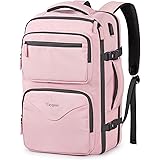
Taygeer 18 x 14 x 8 Inches Personal Item Bag, Travel Personal Item Bag with Type C Charging Port & Shoe Pouch, TSA Approved Under Seat Carry on Backpack Fits 15.6 inch Laptop for Women Airplanes, Pink
$21.99 (as of March 6, 2026 15:28 GMT +02:00 - More infoProduct prices and availability are accurate as of the date/time indicated and are subject to change. Any price and availability information displayed on [relevant Amazon Site(s), as applicable] at the time of purchase will apply to the purchase of this product.)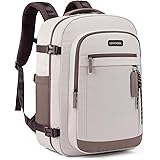
LOVEVOOK 40L Travel Backpack for Women, Airline Approved Carry On Luggage, TSA Personal Item Bag fits 15.6 Inch Laptop, Waterproof Weekender Overnight Suitcase for Work
$30.99 (as of March 6, 2026 15:28 GMT +02:00 - More infoProduct prices and availability are accurate as of the date/time indicated and are subject to change. Any price and availability information displayed on [relevant Amazon Site(s), as applicable] at the time of purchase will apply to the purchase of this product.)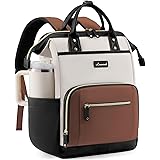
LOVEVOOK Laptop Backpack for Women with Giant Tumbler Holder,15.6 inch Professional Nurse Teacher Backpack Computer Laptop Bag,Cute Waterproof Travel Backpack Purse Work College Bag, Beige-Black-Brown
$29.59 (as of March 6, 2026 15:28 GMT +02:00 - More infoProduct prices and availability are accurate as of the date/time indicated and are subject to change. Any price and availability information displayed on [relevant Amazon Site(s), as applicable] at the time of purchase will apply to the purchase of this product.)As an Amazon Associate, we earn from qualifying purchases.

